
Congress Just Made Isr*el Harder To Hold Accountable

The Man Who Tried To Stop It

On June 4, 2026, Democratic Rep. Ro Khanna stood in the House Armed Services Committee and introduced an amendment to strip Section 224 from America’s annual defense bill. He called it a reward to Netanyahu. He called it a threat to American sovereignty. He said the American people were tired of being told what to do by a foreign prime minister.

The committee voted his amendment down. Only Khanna and Rep. Sara Jacobs of California voted to remove it. Every other member let it through.

Section 224 now advances to the full House floor, where the fight is not over. But the committee has spoken.

The U.S.-Isr*el Military Relationship Is Moving From Aid To Infrastructure

For decades, U.S. military support for Isr*el was debated mostly through aid packages, weapons transfers and annual congressional votes.

Now the fight is shifting into something harder to see and harder to reverse.

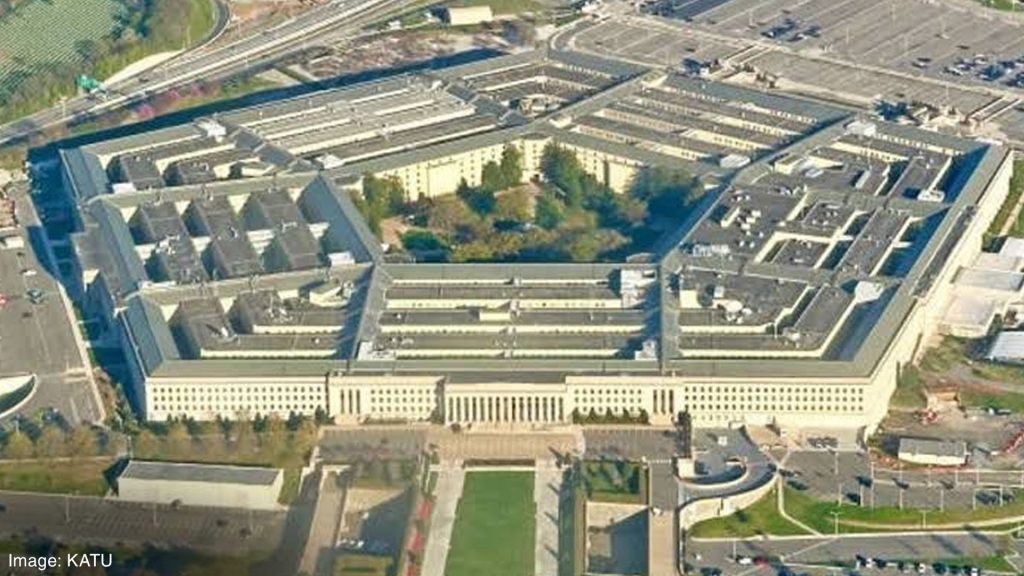
Buried inside the FY2027 National Defense Authorization Act is a provision known as Section 224, the United States-Isr*el Defense Technology Cooperation Initiative. It would require the Pentagon to designate an executive agent to coordinate U.S.-Isr*el defense technology cooperation across research, development, testing, evaluation, integration and industrial cooperation.

In plain terms, this is not just about sending more weapons. It is about building a formal military-tech pipeline.

Military aid can be voted down. A supply chain is much harder to unwind.

What Section 224 Would Actually Do

The official House language would direct the Secretary of Defense to name a senior executive to synchronize defense technology cooperation between the U.S. and Isr*el across artificial intelligence, cyberwarfare, autonomous systems, biotechnology, weapons production, industrial cooperation and future military technologies.

Supporters say this is only coordination. AIPAC argues the provision creates no new aid, no joint command structure and no transfer of U.S. decision-making power to Isr*el.

But critics argue that is exactly why the provision matters. If military cooperation moves from visible aid packages into procurement channels, co-production, licensing, joint ventures and defense supply chains, it becomes harder for future lawmakers to cut off.

That is the accountability problem. No other country in the world has a designated Pentagon executive agent to synchronize and accelerate its bilateral military relationship with the United States.

The Lobby Trail That Built This Bill

Section 224 did not emerge from inside the committee. According to The Intercept, its text is closely derived from a bill called the FUTURES Act, introduced in February 2026 by Sens. Ted Budd and Kirsten Gillibrand and Reps. Ronny Jackson and Don Davis. That bill stalled in Congress. Many of its provisions then reappeared inside the NDAA as Section 224.

All four sponsors of the FUTURES Act had received substantial campaign support from AIPAC and other pro-Isr*el groups, according to The Intercept. The legislation also received public backing from both AIPAC and FDD Action, the advocacy arm of the Foundation for Defense of Democracies.

When the bill died, the provisions did not. They were inserted into a must-pass defense bill instead.

Netanyahu’s Own Words Explain The Strategy

Critics say the intent of Section 224 becomes clearer when you read Netanyahu’s own words.

In a letter to Republican Rep. Marlin Stutzman of Indiana, Netanyahu wrote: “The time has now arrived for us to move from aid recipient to partner.”

That sentence matters. Traditional aid is visible. It is voted on. It can be cut. Partnership embedded in defense infrastructure is far harder to challenge through normal democratic pressure.

Sen. Bernie Sanders put it plainly on X: Netanyahu is lobbying for a provision that expands military cooperation with “almost zero oversight.” The American people, Sanders wrote, do not want more U.S. military aid to Isr*el.

Why Further Integration With Isr*el Is Bad News For Americans

A May 2026 Institute for Global Affairs poll found that only 16% of Americans want the U.S. to keep supplying Isr*el with weapons without new restrictions. Another 38% want weapons transfers stopped entirely, while 24% want them conditioned on how they are used.

That means a clear majority of Americans want either restrictions or a full stop. Yet Congress is considering a structure that could move the relationship into systems the public barely sees: defense contracts, technology transfers, co-production agreements and industrial infrastructure.

This is how democratic accountability gets bypassed. Not always through one dramatic vote, but through a thousand procurement decisions no ordinary person is ever meant to read.

And the timing could not be worse. Days before the committee vote, NBC News and the New York Times reported that the Pentagon’s own Defense Intelligence Agency had raised its counterintelligence threat assessment of Isr*el to “critical,” the highest level in its system, over concerns that Isr*eli intelligence had intensified efforts to surveil U.S. officials. Congress voted to deepen the military relationship anyway.

The American Reaction Could Be Explosive

The American public is already turning against unconditional support for Isr*el. The old bipartisan consensus has weakened sharply, especially after Gaza and years of escalating regional warfare.

If Congress deepens U.S.-Isr*el military integration while most Americans want weapons restricted or stopped, the backlash will not stay limited to foreign policy circles. It could feed anger at both parties, strengthen anti-establishment politics and intensify primary challenges against lawmakers seen as protecting Isr*el from accountability.
For pro-Palestinian Americans, Arab Americans, Muslim Americans, anti-war voters and younger voters, this will not look like coordination. It will look like Congress saw mass civilian death, surveillance abuses and public opposition, then responded by making the relationship harder to break.

Why This Is Bad News For The World

This is not only an American story.

Isr*el’s defense-tech ecosystem is closely tied to surveillance, cyber tools, drones, border control, AI targeting and military systems marketed globally. Technologies developed or refined in occupation and war do not stay there. They travel into other countries’ border systems, police departments, intelligence agencies and militarized security markets.

Section 224 could give Isr*eli military technology a more formal pathway into the world’s most powerful defense infrastructure. Once embedded in Pentagon procurement, that technology does not just serve Isr*el. It can become part of U.S. doctrine, U.S. exports and U.S.-backed security systems worldwide.

The Bipartisan Pushback Shows This Is Not A Fringe Concern

Khanna argued from the progressive left. Republican Rep. Thomas Massie argued from the libertarian right, framing the issue as one of American sovereignty, and has promised to introduce an amendment to strip Section 224 when the NDAA reaches the full House floor.

Their shared concern is simple: the U.S. should not quietly lock its military future into another country’s defense industry through a provision buried inside a must-pass defense bill.

Why This Moment Matters

The U.S. is not just deciding whether to send Isr*el more weapons. It is deciding whether Isr*eli military technology should become part of America’s defense infrastructure for years to come.

At a time when only 16% of Americans support unrestricted weapons transfers to Isr*el, that should be a public fight. Not a buried provision. Not a quiet pipeline. Not a military-tech lock-in hidden inside a defense bill most Americans will never read.

Military aid can be voted down.

A supply chain is much harder to unwind.

By Verity Quill

Sources

Adalah Justice Project | Section 224 analysis

The Intercept | Section 224 and FUTURES Act lobbying trail | June 8, 2026

Al Jazeera | US-Isr*el military integration bill | May 30, 2026

Al Jazeera | Khanna amendment fails | June 4, 2026

Responsible Statecraft | Section 224 analysis

Newsweek | Section 224 explained

NBC News | Pentagon raises Isr*eli espionage threat to critical | June 5, 2026

Institute for Global Affairs | US weapons poll May 2026

AIPAC | Section 224 bill summary

House Armed Services Committee | FY2027 NDAA Chairman’s Mark | May 26, 2026

The Man Who Tried To Stop It

On June 4, 2026, Democratic Rep. Ro Khanna stood in the House Armed Services Committee and introduced an amendment to strip Section 224 from America’s annual defense bill. He called it a reward to Netanyahu. He called it a threat to American sovereignty. He said the American people were tired of being told what to do by a foreign prime minister.

The committee voted his amendment down. Only Khanna and Rep. Sara Jacobs of California voted to remove it. Every other member let it through.

Section 224 now advances to the full House floor, where the fight is not over. But the committee has spoken.

The U.S.-Isr*el Military Relationship Is Moving From Aid To Infrastructure

For decades, U.S. military support for Isr*el was debated mostly through aid packages, weapons transfers and annual congressional votes.

Now the fight is shifting into something harder to see and harder to reverse.

Buried inside the FY2027 National Defense Authorization Act is a provision known as Section 224, the United States-Isr*el Defense Technology Cooperation Initiative. It would require the Pentagon to designate an executive agent to coordinate U.S.-Isr*el defense technology cooperation across research, development, testing, evaluation, integration and industrial cooperation.

In plain terms, this is not just about sending more weapons. It is about building a formal military-tech pipeline.

Military aid can be voted down. A supply chain is much harder to unwind.

What Section 224 Would Actually Do

The official House language would direct the Secretary of Defense to name a senior executive to synchronize defense technology cooperation between the U.S. and Isr*el across artificial intelligence, cyberwarfare, autonomous systems, biotechnology, weapons production, industrial cooperation and future military technologies.

Supporters say this is only coordination. AIPAC argues the provision creates no new aid, no joint command structure and no transfer of U.S. decision-making power to Isr*el.

But critics argue that is exactly why the provision matters. If military cooperation moves from visible aid packages into procurement channels, co-production, licensing, joint ventures and defense supply chains, it becomes harder for future lawmakers to cut off.

That is the accountability problem. No other country in the world has a designated Pentagon executive agent to synchronize and accelerate its bilateral military relationship with the United States.

The Lobby Trail That Built This Bill

Section 224 did not emerge from inside the committee. According to The Intercept, its text is closely derived from a bill called the FUTURES Act, introduced in February 2026 by Sens. Ted Budd and Kirsten Gillibrand and Reps. Ronny Jackson and Don Davis. That bill stalled in Congress. Many of its provisions then reappeared inside the NDAA as Section 224.

All four sponsors of the FUTURES Act had received substantial campaign support from AIPAC and other pro-Isr*el groups, according to The Intercept. The legislation also received public backing from both AIPAC and FDD Action, the advocacy arm of the Foundation for Defense of Democracies.

When the bill died, the provisions did not. They were inserted into a must-pass defense bill instead.

Netanyahu’s Own Words Explain The Strategy

Critics say the intent of Section 224 becomes clearer when you read Netanyahu’s own words.

In a letter to Republican Rep. Marlin Stutzman of Indiana, Netanyahu wrote: “The time has now arrived for us to move from aid recipient to partner.”

That sentence matters. Traditional aid is visible. It is voted on. It can be cut. Partnership embedded in defense infrastructure is far harder to challenge through normal democratic pressure.

Sen. Bernie Sanders put it plainly on X: Netanyahu is lobbying for a provision that expands military cooperation with “almost zero oversight.” The American people, Sanders wrote, do not want more U.S. military aid to Isr*el.

Why Further Integration With Isr*el Is Bad News For Americans

A May 2026 Institute for Global Affairs poll found that only 16% of Americans want the U.S. to keep supplying Isr*el with weapons without new restrictions. Another 38% want weapons transfers stopped entirely, while 24% want them conditioned on how they are used.

That means a clear majority of Americans want either restrictions or a full stop. Yet Congress is considering a structure that could move the relationship into systems the public barely sees: defense contracts, technology transfers, co-production agreements and industrial infrastructure.

This is how democratic accountability gets bypassed. Not always through one dramatic vote, but through a thousand procurement decisions no ordinary person is ever meant to read.

And the timing could not be worse. Days before the committee vote, NBC News and the New York Times reported that the Pentagon’s own Defense Intelligence Agency had raised its counterintelligence threat assessment of Isr*el to “critical,” the highest level in its system, over concerns that Isr*eli intelligence had intensified efforts to surveil U.S. officials. Congress voted to deepen the military relationship anyway.

The American Reaction Could Be Explosive

The American public is already turning against unconditional support for Isr*el. The old bipartisan consensus has weakened sharply, especially after Gaza and years of escalating regional warfare.

If Congress deepens U.S.-Isr*el military integration while most Americans want weapons restricted or stopped, the backlash will not stay limited to foreign policy circles. It could feed anger at both parties, strengthen anti-establishment politics and intensify primary challenges against lawmakers seen as protecting Isr*el from accountability.

For pro-Palestinian Americans, Arab Americans, Muslim Americans, anti-war voters and younger voters, this will not look like coordination. It will look like Congress saw mass civilian death, surveillance abuses and public opposition, then responded by making the relationship harder to break.

Why This Is Bad News For The World

This is not only an American story.

Isr*el’s defense-tech ecosystem is closely tied to surveillance, cyber tools, drones, border control, AI targeting and military systems marketed globally. Technologies developed or refined in occupation and war do not stay there. They travel into other countries’ border systems, police departments, intelligence agencies and militarized security markets.

Section 224 could give Isr*eli military technology a more formal pathway into the world’s most powerful defense infrastructure. Once embedded in Pentagon procurement, that technology does not just serve Isr*el. It can become part of U.S. doctrine, U.S. exports and U.S.-backed security systems worldwide.

The Bipartisan Pushback Shows This Is Not A Fringe Concern

Khanna argued from the progressive left. Republican Rep. Thomas Massie argued from the libertarian right, framing the issue as one of American sovereignty, and has promised to introduce an amendment to strip Section 224 when the NDAA reaches the full House floor.

Their shared concern is simple: the U.S. should not quietly lock its military future into another country’s defense industry through a provision buried inside a must-pass defense bill.

Why This Moment Matters

The U.S. is not just deciding whether to send Isr*el more weapons. It is deciding whether Isr*eli military technology should become part of America’s defense infrastructure for years to come.

At a time when only 16% of Americans support unrestricted weapons transfers to Isr*el, that should be a public fight. Not a buried provision. Not a quiet pipeline. Not a military-tech lock-in hidden inside a defense bill most Americans will never read.

Military aid can be voted down.

A supply chain is much harder to unwind.

By Verity Quill

Sources

Adalah Justice Project | Section 224 analysis

The Intercept | Section 224 and FUTURES Act lobbying trail | June 8, 2026

Al Jazeera | US-Isr*el military integration bill | May 30, 2026

Al Jazeera | Khanna amendment fails | June 4, 2026

Responsible Statecraft | Section 224 analysis

Newsweek | Section 224 explained

NBC News | Pentagon raises Isr*eli espionage threat to critical | June 5, 2026

Institute for Global Affairs | US weapons poll May 2026

AIPAC | Section 224 bill summary

House Armed Services Committee | FY2027 NDAA Chairman’s Mark | May 26, 2026

spot_img

Explore more

spot_img
Global Affairs

British Muslims Say They No Longer Feel Safe. The Attacks Are...

Britain Is Getting Its Seventh Prime Minister In A Decade.

Pakistan Helped Build A Peace Roadmap in Switzerland. Isr*el And Its...

The Lebanon Ceasefire Was Supposed To Stop The Strikes. It Barely...

The Plan To End Al-Aqsa Has Already Started.

The War On Pakistan’s Trade Routes

Isr*el Wasn’t At The Table. But Its War In Lebanon Just...

A President Tried To Manufacture A War Scare. South Korea Gave...