
A Sermon, Then An Arrest
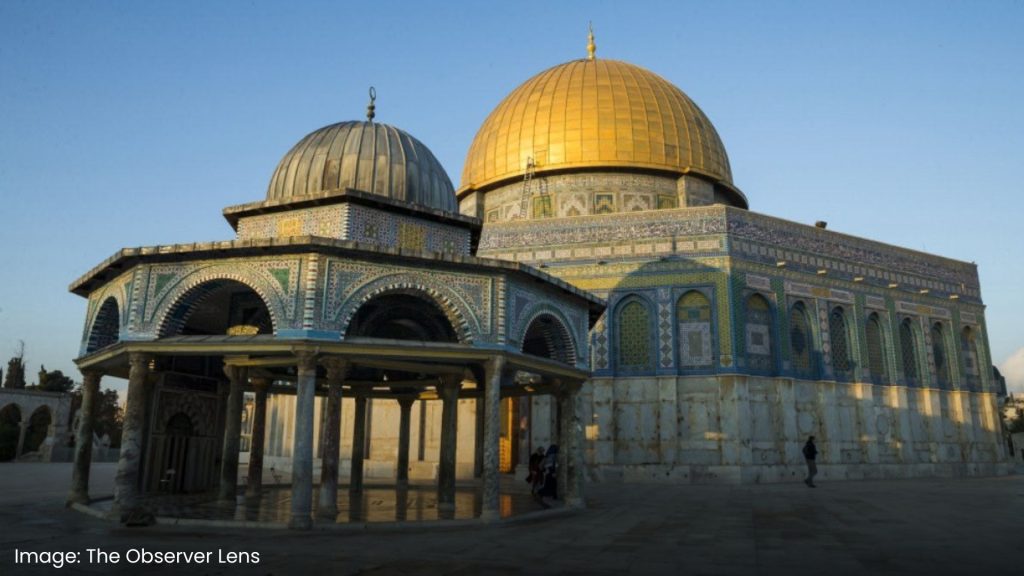
Sheikh Muhammad Hussein had just finished leading Friday prayers at Al-Aqsa Mosque when Isr*eli police moved in. The Grand Mufti of Jerusalem and Palestine was taken into custody near the Mughrabi Gate, held for several hours, then released with an order barring him from the compound for a week and a summons for further interrogation the same day. His sermon had condemned Isr*eli conduct against Palestinians from Rafah to Jenin, and included prayers for the dead and for those held in Isr*eli detention. That, according to the Jerusalem Governorate, was the stated reason for his arrest. Isr*eli police have not issued any public comment on why a sermon warranted a detention inside the mosque itself, a detail that Palestinian officials have pointed to as evidence the arrest was about content, not conduct.
Not His First Time
This wasn’t an isolated punishment. Last year, Isr*el handed Hussein a six-month ban from Al-Aqsa after a sermon condemning the starvation policy in Gaza. A sermon about starving children cost him half a year away from his own mosque. That precedent makes this arrest look less like an overreaction and more like a rule he already knew he was breaking, and one Isr*eli authorities have shown no hesitation about enforcing again.
A Pattern Bigger Than One Man
Hussein isn’t the only Al-Aqsa preacher who’s paid a price for his words. In April, Sheikh Muhammad Salim was arrested for referring to the war in his own sermon and banned for a week. His predecessor, former grand mufti Ikrima Sabri, faced years of repeated interrogations and bans over the course of his tenure. Three men, three separate punishments, one pulpit. Whoever leads Al-Aqsa’s sermons seems to inherit the same fate, regardless of how measured or how pointed their words actually are.
Same Mosque, Two Different Experiences
The arrest didn’t happen in isolation from a wider squeeze on the site. Palestine’s Ministry of Awqaf and Religious Affairs reported that Isr*eli forces carried out 26 incursions into Al-Aqsa in June alone, while more than 4,000 Isr*eli visitors entered through the Mughrabi Gate under police protection during the same month. Palestinian worshippers, meanwhile, routinely face ID checks, blocked gates, and detentions, especially on Fridays, the mosque’s busiest day of the week. Despite the restrictions, tens of thousands of Palestinians still turned out for Friday prayers, a scale of attendance that makes the ongoing bans and incursions harder to frame as a minor security footnote.
Hours after Hussein’s arrest that same Friday, six Palestinians, including children, were reportedly injured in a settler attack in Huwara, near Nablus. Local sources say settlers used pepper spray and physical violence against a family on land that belonged to them, with an elderly relative among those hurt. Isr*eli forces were reportedly present and protected the settlers during the attack, then arrested three members of the Palestinian family instead, including an 80-year-old man.
What The Numbers Add Up To
Rights groups have already drawn the wider conclusion. Amnesty International’s most recent report accused the Isr*eli government of running a state-led campaign in the occupied West Bank, explicitly rejecting the idea that this is the work of rogue settlers or fringe officials acting alone. More than 1,100 Palestinians have been killed in the West Bank since October 2023, including at least 243 children, according to figures cited alongside this incident.
Al-Aqsa’s legal custodianship sits with Jordan, under a peace treaty that has underpinned regional stability for decades. Every renewed ban, every arrested preacher, and every unpunished settler attack adds pressure that Jordan’s government has to publicly answer for, both domestically and on the international stage. A mosque that millions of Muslims worldwide consider sacred is, functionally, being managed under a standard where sermon content can trigger arrest and access to the holy site itself differs sharply depending on nationality.
Every individual arrest can be explained away on its own. A sermon here, a ban there, a scuffle at a checkpoint. But three preachers punished in fifteen months, 26 raids in a single month, and a settler attack met with arrests of the victims rather than the attackers is not a coincidence stacking up by accident. It’s what a state-led campaign looks like once you stop counting incidents one at a time and start counting the pattern.
By Verity Quill