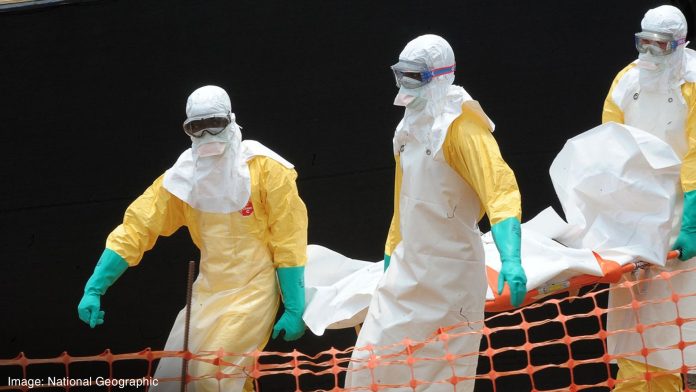
The Patient Who Crossed A Border Before Anyone Knew
The outbreak began in two mining towns in eastern Congo, Mongbwalu and Rwampara, where workers travel constantly in and out for employment, creating the worst possible conditions for a virus trying to find new hosts.
By the time health officials confirmed what they were dealing with, it was already too late to contain it to those towns.
Health officials now believe the Bundibugyo strain of Ebola was spreading silently through communities for weeks before it was formally identified. By the time the world found out, the virus had already been moving.
Then came the detail that changed the psychology of this outbreak entirely.
A man infected with the virus traveled from Congo into Uganda. He did not travel privately. He took public transport through active border corridors and reached Kampala, Uganda’s capital city of roughly 4 million people, before falling ill and dying in hospital.
After his death, his body was transported back across the international border into Congo for burial, potentially exposing everyone involved in that process to the virus a second time.
The infected traveler had moved through public systems, crossed an international border, reached a capital city, and died. All before the full scale of the outbreak was understood.
That sequence is now the defining image of this crisis.
A Strain With No Vaccine. A World Underprepared.
On May 17, the World Health Organization declared a Public Health Emergency of International Concern, its highest global public-health alarm.
The outbreak has already spread from Congo’s Ituri province into Uganda, including confirmed cases in Kampala.
Current figures show 10 confirmed cases, 336 suspected cases and at least 88 deaths in Congo, with 2 confirmed cases including 1 death recorded in Uganda. Those numbers are almost certainly undercounts. In outbreak zones with limited infrastructure and ongoing insecurity, confirmed figures consistently lag behind reality.
Among the dead are at least four healthcare workers who died in clinical settings showing symptoms consistent with the virus. Healthcare worker deaths are one of the most alarming signals in any Ebola outbreak. They indicate the virus is reaching people who are supposed to be protected, and they warn of gaps in infection prevention inside the facilities meant to contain the spread.
The Bundibugyo strain is particularly alarming because existing Ebola vaccine stockpiles were developed primarily for the Zaire strain, not this variant. There is currently no approved vaccine and no approved treatment specifically for Bundibugyo.
That means the world is significantly less prepared than many people assume.
Why A Bus Ride Changed The Calculus Of This Outbreak
Public transport routes create exposure chains that are difficult to trace quickly, especially in heavily trafficked urban corridors and border regions.
Uganda and Congo share active trade, migration and transportation networks that move thousands of people daily.
Once an infected person reaches a capital city, the psychology of the outbreak changes immediately. The concerns shift from rural containment to urban spread, hospital exposure, border transmission, delayed detection and tracing systems that were never designed for a capital city outbreak.
The fact that the infected traveler reached Kampala before the outbreak was fully identified has intensified concerns across the region.
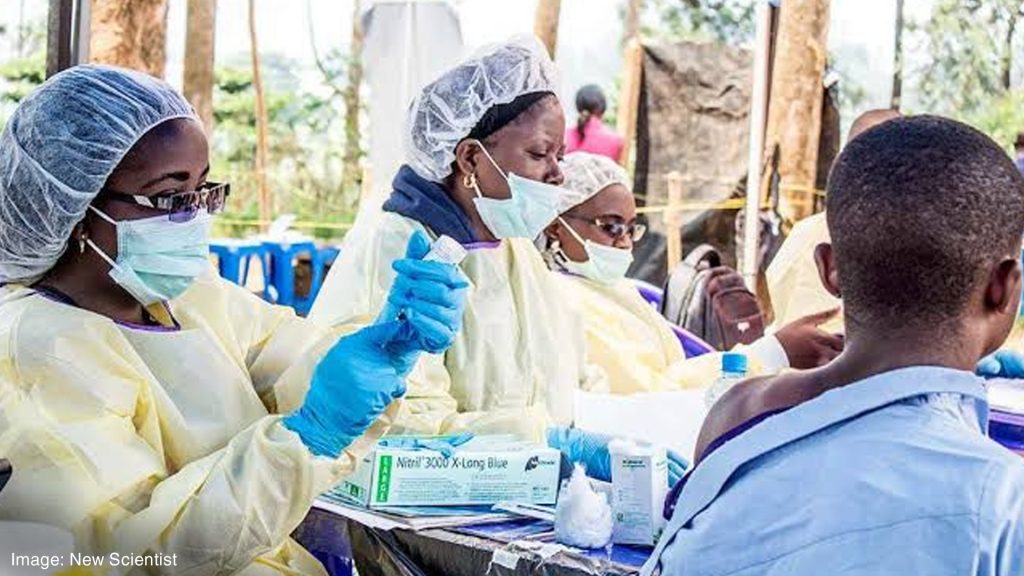
The Last Time The World Ignored These Signs, 11,000 Died
The Ebola outbreak of 2014 also began with scattered cases before escalating into one of the deadliest public-health crises in modern African history.
More than 11,000 people died during that outbreak across West Africa.
Today’s situation is different in meaningful ways. Surveillance systems are stronger. Outbreak response teams are faster. Global coordination has improved significantly since COVID.
But none of that changes one critical fact: there is currently no approved vaccine for the Bundibugyo strain now spreading across borders. The tools that gave the world confidence against previous Ebola outbreaks do not exist for this one.
The DRC is also one of the world’s most important sources of cobalt, a mineral essential to electric vehicle batteries and global technology supply chains. A sustained outbreak in the region disrupts not only lives but the mining operations and trade corridors the world depends on. The consequences of this outbreak extend well beyond East Africa.
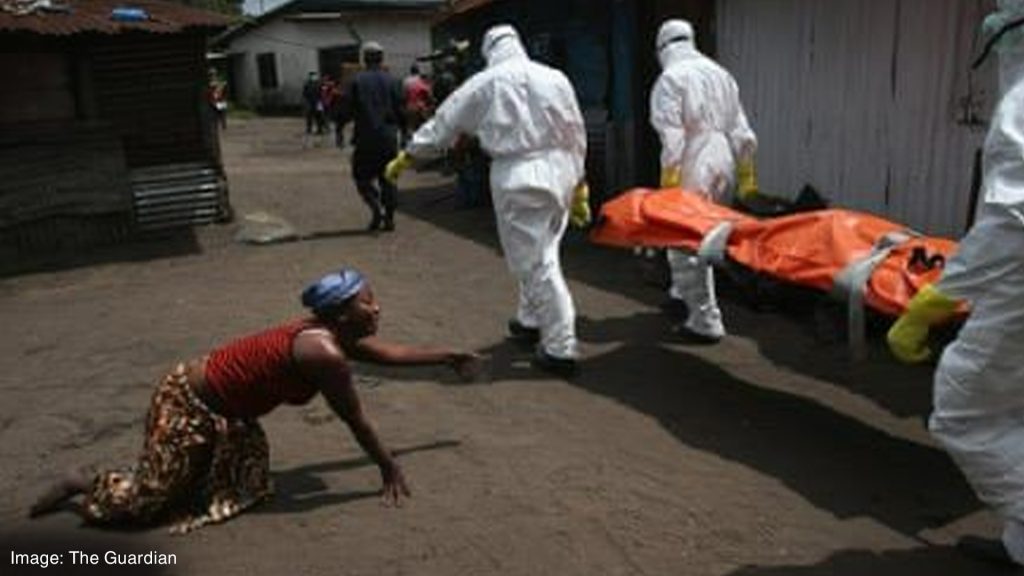
The last major Ebola outbreak was also dismissed as containable in its early weeks. More than 11,000 people later, the world stopped dismissing it.
By Shizza Farooqui
Sources
WHO, NPR, CDC, Africa CDC, Washington Post, Reuters, Associated Press, Uganda Ministry of Health