
The Jurassic Park Era Of De-Extinction Begins

The Artificial Egg Breakthrough

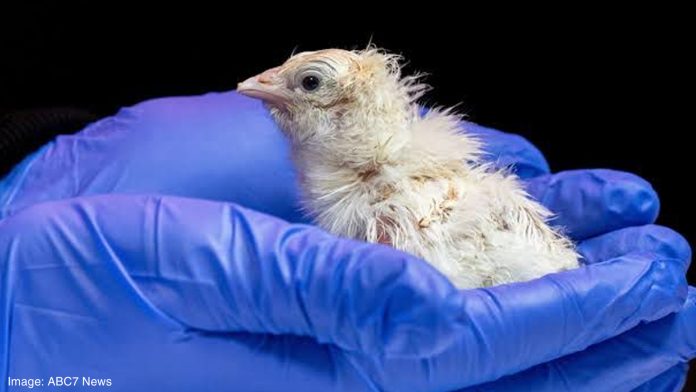
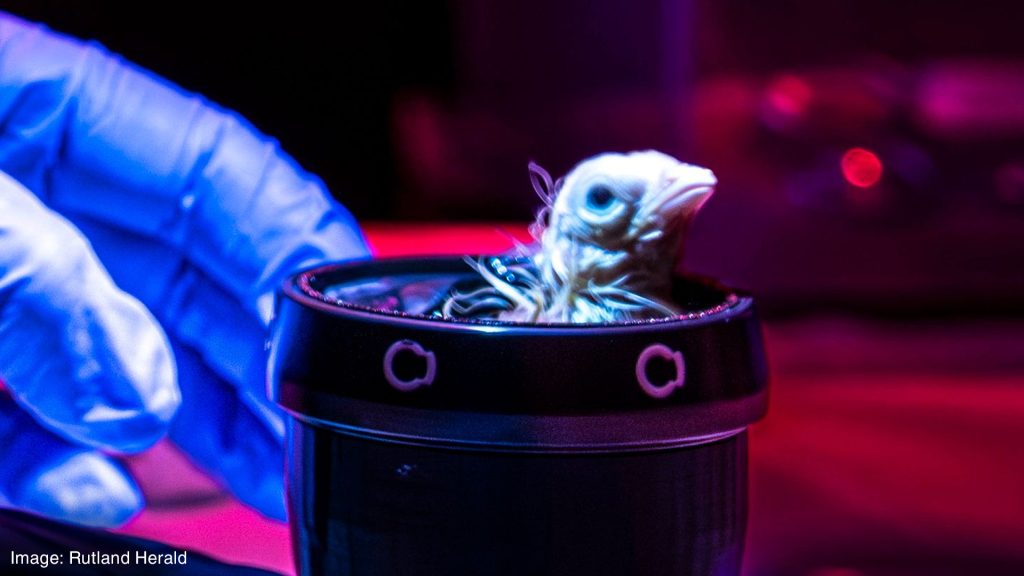
In a Dallas laboratory, scientists watched a chick push through a transparent plastic pod. No shell. No hen. Just a living bird developing inside a 3D-printed cup, breathing through a silicone membrane engineered to behave like a real egg.

On 19 May 2026, Colossal Biosciences announced that it had successfully hatched 26 live chicks using this fully artificial incubation system. The embryos began inside real eggs before being carefully transferred into the synthetic shells, where they continued developing until hatch under normal atmospheric conditions without supplemental oxygen.

The company is calling it a world first. Scientists are not all convinced. And the internet has already started comparing it to Jurassic Park.

What The Egg Actually Looks Like

The device resembles futuristic laboratory equipment far more than anything found in a nest.
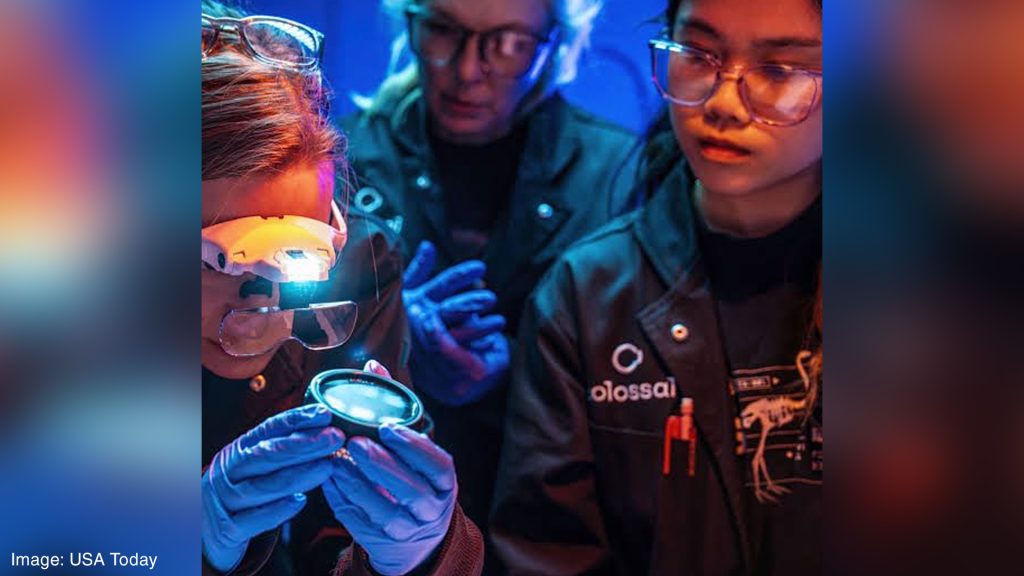
It is black with a honeycomb-like base and a transparent flat top that allows scientists to observe embryo development in real time. Inside, researchers could watch heartbeat activity, eye development, feather growth, limb formation, beak movement, and the first appearance of tiny claws throughout incubation.

The system uses a specially engineered silicone-based membrane designed to match the oxygen transfer properties of a natural eggshell. Previous shell-less incubation experiments dating back to the 1980s required high concentrations of pure oxygen, which researchers believed could damage DNA and reduce survival rates. Colossal claims its membrane solves that problem while remaining compatible with conventional commercial incubators.

The shells are currently 3D-printed but are designed to transition into injection-molded systems for lower-cost mass production. Larger versions capable of supporting embryos beyond the size of any modern bird are already under development.

Why Scientists Built It

The artificial egg was not created simply to hatch chickens.

It was built because Colossal believes future de-extinction projects will require synthetic incubation systems no living bird could ever provide. Nearly 3 billion birds have vanished from North America alone since 1970, and one in eight bird species worldwide is now threatened with extinction. The company says the platform gives conservationists something they have never had before: a way to rescue compromised embryos, hatch endangered species too rare or fragile to breed in captivity, and put decades of biobanked genetic material to actual use.

Colossal CEO Ben Lamm described the engineering challenge directly. “Restoring species like the South Island Giant Moa isn’t just about reconstructing ancient genomes. It requires building an entirely new incubation system where no surrogate exists and scales in ways that ordinary biology simply doesn’t. At Colossal, we didn’t just replicate the egg. We re-engineered it from first principles.”

And that leads directly to the moa problem.
The Moa Problem

Until around 600 years ago, New Zealand was home to the giant moa, a group of massive flightless birds that disappeared after the arrival of Polynesian settlers. Some species stood over 3.5 metres tall and weighed up to 230 kilograms, far larger than today’s ostriches.

Their eggs were enormous. A South Island Giant Moa egg is estimated to have been roughly 80 times the volume of a chicken egg, eight times the size of an emu egg, and approximately the length of a rugby ball. No bird alive today is physically capable of incubating something that large.

That is exactly why Colossal believes artificial incubation is not optional for the moa project. It is the only path forward.

The company’s plan involves extracting ancient moa DNA from museum samples, identifying defining genetic traits, and editing those traits into the genomes of living relatives such as emus or tinamous. At some point during development, the embryo would outgrow any biological shell and need to be transferred into a synthetic system scaled up to moa dimensions.

Peter Jackson’s De-Extinction Project

The project has attracted enormous celebrity investment.

Colossal is currently valued at around $10 billion. Peter Jackson and his partner Fran Walsh reportedly invested $15 million into the moa project and are said to own one of the world’s largest private collections of moa bones. Jackson reportedly pushed Lamm to include the moa on the de-extinction list and continues to press for a faster timeline. Lamm has publicly said he believes a moa-related breakthrough could happen within five to eight years.

Other investors include Paris Hilton, Tom Brady, and Chris Hemsworth.

Beyond the moa, Colossal is actively working on the dodo, the woolly mammoth, the Tasmanian tiger, and has just added a sixth species to its list: the bluebuck, a South African antelope hunted to extinction in the 1800s. Last year, the company generated global headlines after producing genetically modified gray wolves in a project it linked to recreating the dire wolf.

Can Extinct Animals Really Return?

This is where the scientific debate becomes far more complicated.

Many researchers argue that true de-extinction is not actually possible. Critics say Colossal is not literally resurrecting extinct species but instead creating genetically modified modern animals designed to resemble them. When the company announced its dire wolf project, evolutionary biologist Vincent Lynch was direct: “They made genetically modified gray wolves, not dire wolves. You can’t put a mutation into a related species and call that thing the extinct thing.”

On the artificial egg itself, Katsuya Obara of the University of Tsukuba challenged the company’s claim to have built the first-ever shell-less incubation system, pointing to his own transparent film experiments in 2024. MIT Technology Review noted that “artificial eggshell” would probably be a more accurate description of the device, since the embryos started inside real eggs before being transferred.

The Announcement With No Peer Review

The most pointed criticism of this announcement is not about the science itself. It is about the process.

The artificial egg has not been published in any scientific journal or submitted as a preprint. That means it has not passed peer review. No independent scientists have been able to scrutinise the methodology, the data, or the survival rates.

Colossal’s CEO has confirmed the company has no current plans to publish a paper, saying instead it hopes to commercialise the technology.

Dr. Louise Johnson, an expert in evolutionary genetics at the University of Reading, responded to the announcement by saying that until there is a peer-reviewed paper, she might as well give her expert opinion on a YouTube advertisement.

A $10 billion company announced a potential species revival with a press release and a video. No independent review. No published data. And the internet celebrated it as though the science was settled.

Whether Colossal ultimately succeeds or fails, that question deserves an answer: if a company this powerful can declare a breakthrough without submitting to scrutiny, who is actually checking the science?

By Shizza Farooqui

SOURCES

Associated Press, The Guardian, Vanity Fair, New Zealand Herald, Nature News, MIT Technology Review, Sky News, People Magazine, Audacy, Colossal Biosciences statements

The Artificial Egg Breakthrough

In a Dallas laboratory, scientists watched a chick push through a transparent plastic pod. No shell. No hen. Just a living bird developing inside a 3D-printed cup, breathing through a silicone membrane engineered to behave like a real egg.

On 19 May 2026, Colossal Biosciences announced that it had successfully hatched 26 live chicks using this fully artificial incubation system. The embryos began inside real eggs before being carefully transferred into the synthetic shells, where they continued developing until hatch under normal atmospheric conditions without supplemental oxygen.

The company is calling it a world first. Scientists are not all convinced. And the internet has already started comparing it to Jurassic Park.

What The Egg Actually Looks Like

The device resembles futuristic laboratory equipment far more than anything found in a nest.

It is black with a honeycomb-like base and a transparent flat top that allows scientists to observe embryo development in real time. Inside, researchers could watch heartbeat activity, eye development, feather growth, limb formation, beak movement, and the first appearance of tiny claws throughout incubation.

The system uses a specially engineered silicone-based membrane designed to match the oxygen transfer properties of a natural eggshell. Previous shell-less incubation experiments dating back to the 1980s required high concentrations of pure oxygen, which researchers believed could damage DNA and reduce survival rates. Colossal claims its membrane solves that problem while remaining compatible with conventional commercial incubators.

The shells are currently 3D-printed but are designed to transition into injection-molded systems for lower-cost mass production. Larger versions capable of supporting embryos beyond the size of any modern bird are already under development.

Why Scientists Built It

The artificial egg was not created simply to hatch chickens.

It was built because Colossal believes future de-extinction projects will require synthetic incubation systems no living bird could ever provide. Nearly 3 billion birds have vanished from North America alone since 1970, and one in eight bird species worldwide is now threatened with extinction. The company says the platform gives conservationists something they have never had before: a way to rescue compromised embryos, hatch endangered species too rare or fragile to breed in captivity, and put decades of biobanked genetic material to actual use.

Colossal CEO Ben Lamm described the engineering challenge directly. “Restoring species like the South Island Giant Moa isn’t just about reconstructing ancient genomes. It requires building an entirely new incubation system where no surrogate exists and scales in ways that ordinary biology simply doesn’t. At Colossal, we didn’t just replicate the egg. We re-engineered it from first principles.”

And that leads directly to the moa problem.

The Moa Problem

Until around 600 years ago, New Zealand was home to the giant moa, a group of massive flightless birds that disappeared after the arrival of Polynesian settlers. Some species stood over 3.5 metres tall and weighed up to 230 kilograms, far larger than today’s ostriches.

Their eggs were enormous. A South Island Giant Moa egg is estimated to have been roughly 80 times the volume of a chicken egg, eight times the size of an emu egg, and approximately the length of a rugby ball. No bird alive today is physically capable of incubating something that large.

That is exactly why Colossal believes artificial incubation is not optional for the moa project. It is the only path forward.

The company’s plan involves extracting ancient moa DNA from museum samples, identifying defining genetic traits, and editing those traits into the genomes of living relatives such as emus or tinamous. At some point during development, the embryo would outgrow any biological shell and need to be transferred into a synthetic system scaled up to moa dimensions.

Peter Jackson’s De-Extinction Project

The project has attracted enormous celebrity investment.

Colossal is currently valued at around $10 billion. Peter Jackson and his partner Fran Walsh reportedly invested $15 million into the moa project and are said to own one of the world’s largest private collections of moa bones. Jackson reportedly pushed Lamm to include the moa on the de-extinction list and continues to press for a faster timeline. Lamm has publicly said he believes a moa-related breakthrough could happen within five to eight years.

Other investors include Paris Hilton, Tom Brady, and Chris Hemsworth.

Beyond the moa, Colossal is actively working on the dodo, the woolly mammoth, the Tasmanian tiger, and has just added a sixth species to its list: the bluebuck, a South African antelope hunted to extinction in the 1800s. Last year, the company generated global headlines after producing genetically modified gray wolves in a project it linked to recreating the dire wolf.

Can Extinct Animals Really Return?

This is where the scientific debate becomes far more complicated.

Many researchers argue that true de-extinction is not actually possible. Critics say Colossal is not literally resurrecting extinct species but instead creating genetically modified modern animals designed to resemble them. When the company announced its dire wolf project, evolutionary biologist Vincent Lynch was direct: “They made genetically modified gray wolves, not dire wolves. You can’t put a mutation into a related species and call that thing the extinct thing.”

On the artificial egg itself, Katsuya Obara of the University of Tsukuba challenged the company’s claim to have built the first-ever shell-less incubation system, pointing to his own transparent film experiments in 2024. MIT Technology Review noted that “artificial eggshell” would probably be a more accurate description of the device, since the embryos started inside real eggs before being transferred.

The Announcement With No Peer Review

The most pointed criticism of this announcement is not about the science itself. It is about the process.

The artificial egg has not been published in any scientific journal or submitted as a preprint. That means it has not passed peer review. No independent scientists have been able to scrutinise the methodology, the data, or the survival rates.

Colossal’s CEO has confirmed the company has no current plans to publish a paper, saying instead it hopes to commercialise the technology.

Dr. Louise Johnson, an expert in evolutionary genetics at the University of Reading, responded to the announcement by saying that until there is a peer-reviewed paper, she might as well give her expert opinion on a YouTube advertisement.

A $10 billion company announced a potential species revival with a press release and a video. No independent review. No published data. And the internet celebrated it as though the science was settled.

Whether Colossal ultimately succeeds or fails, that question deserves an answer: if a company this powerful can declare a breakthrough without submitting to scrutiny, who is actually checking the science?

By Shizza Farooqui

SOURCES

Associated Press, The Guardian, Vanity Fair, New Zealand Herald, Nature News, MIT Technology Review, Sky News, People Magazine, Audacy, Colossal Biosciences statements

spot_img

Explore more

spot_img
Global Affairs

British Muslims Say They No Longer Feel Safe. The Attacks Are...

Britain Is Getting Its Seventh Prime Minister In A Decade.

Pakistan Helped Build A Peace Roadmap in Switzerland. Isr*el And Its...

The Lebanon Ceasefire Was Supposed To Stop The Strikes. It Barely...

The Plan To End Al-Aqsa Has Already Started.

Congress Just Made Isr*el Harder To Hold Accountable

The War On Pakistan’s Trade Routes

Isr*el Wasn’t At The Table. But Its War In Lebanon Just...