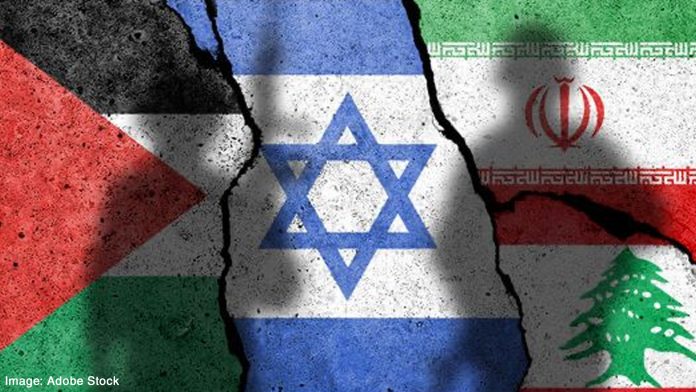
What Is Happening At Al-Aqsa Right Now

The Words That Shocked the Muslim World

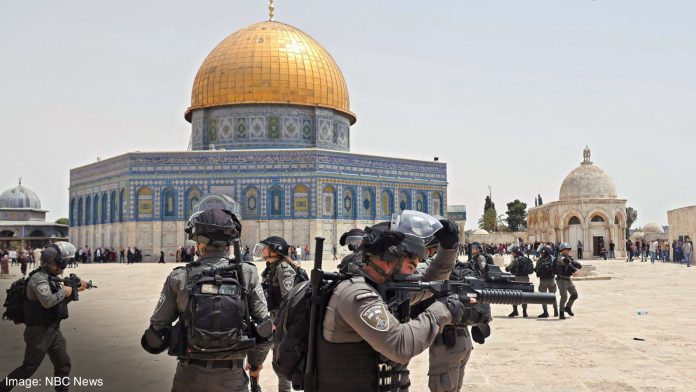
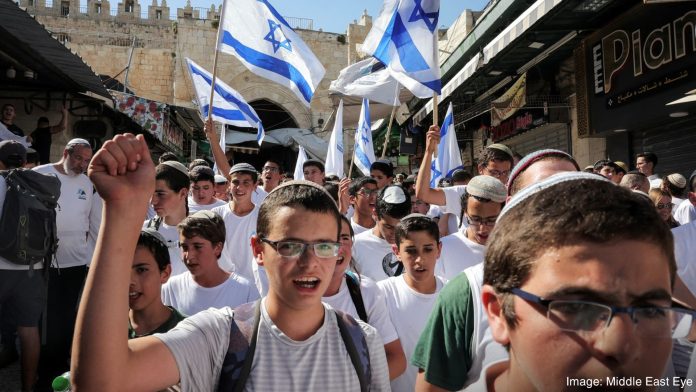
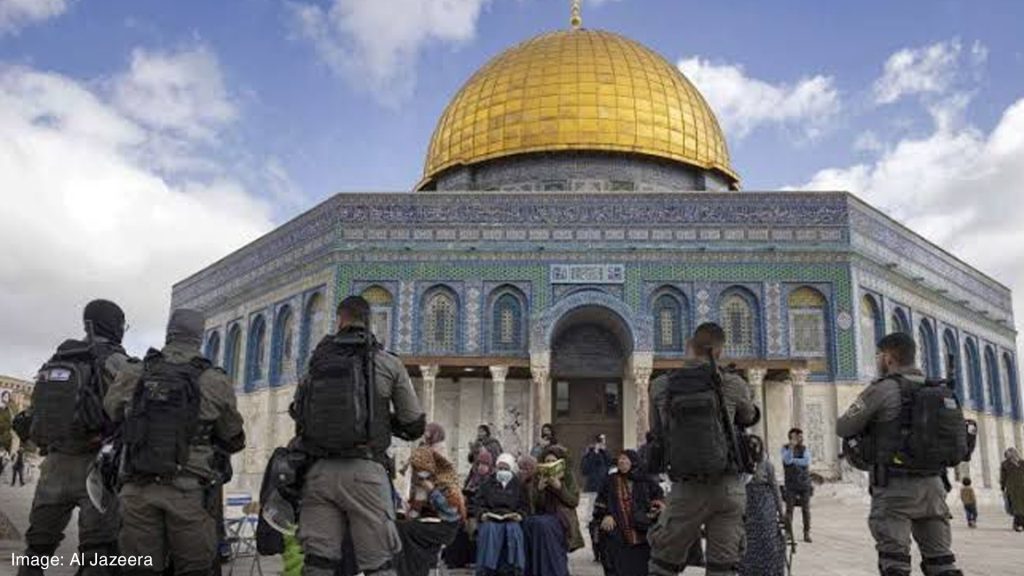
Inside Al-Aqsa Mosque, Israeli ministers and lawmakers danced and sang next to the Dome of the Rock. Outside, tens of thousands of ultra-nationalist Israelis marched through the Muslim Quarter of Jerusalem’s Old City chanting “Death to Arabs” and “May your villages burn.”

Then a sitting member of Israel’s parliament posted publicly on Facebook: “The time has come to get rid of all the mosques and work to construct the Temple.”

That was Jerusalem Day. 14 May 2026. Not a fringe gathering. A state-sanctioned annual march, attended and led by government ministers.

For many Muslims watching around the world, it felt like a threshold had been crossed.
Who These Men Are

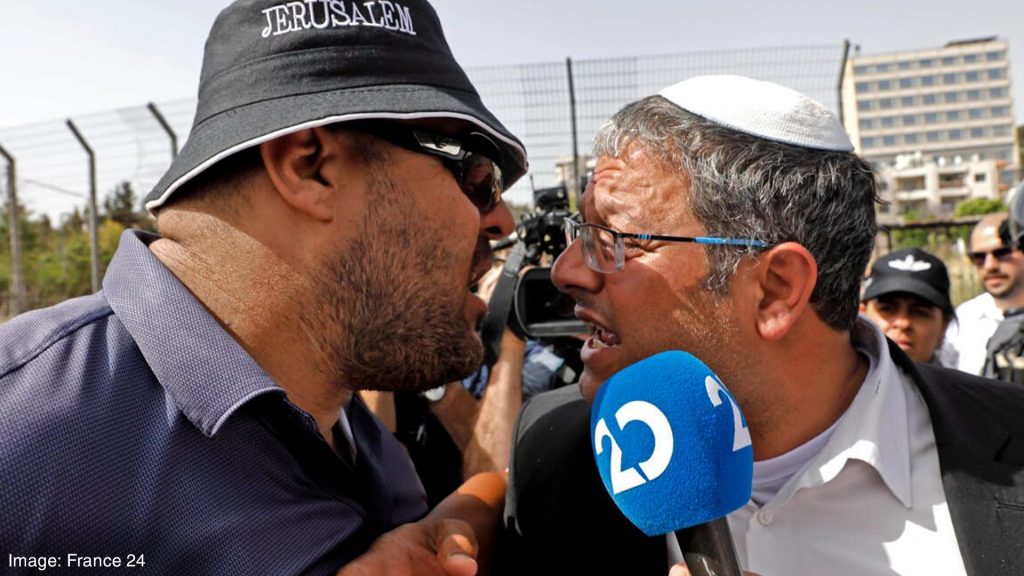
The minister at the center of events is Itamar Ben-Gvir, Isr*el’s National Security Minister and the man who controls Israeli police operations. A longtime follower of the late extremist rabbi Meir Kahane, whose movement was designated a terrorist organisation by the United States, Ben-Gvir entered the Al-Aqsa compound alongside hundreds of settlers, raised an Israeli flag, and declared: “The Temple Mount is in our hands.”

Standing beside him was Knesset member Yitzhak Kroizer, who danced and sang next to the Dome of the Rock before posting his call for the mosques to be demolished. A third minister, Yitzhak Wasserlauf, declared during the raid: “Jews no longer walk around the Temple Mount like thieves and no longer need to hide.”

These were not isolated voices. Justice Minister Yariv Levin, Defense Minister Israel Katz, and Energy Minister Eli Cohen all signed a formal letter demanding Jewish access to the compound be maintained even on the Friday of the march, the day when Israeli incursions are typically suspended for Muslim prayers. This was coordinated at cabinet level.

The Palestinian Foreign Ministry condemned the raids as part of “the genocide, displacement, Judaization, and annexation to which the Palestinian people are subjected” and called for urgent international action.

The Three-Stage Plan

The events of Jerusalem Day did not emerge from nowhere.

Haaretz, one of Isr*el’s most respected newspapers, has documented what it describes as a structured three-stage strategy by Ben-Gvir’s movement to transform control of Al-Aqsa. Stage one is already underway: mass settler incursions into the compound, Jewish prayer inside the mosque, Israeli flags raised, and police authority consolidated under Ben-Gvir himself. Stage two involves normalising permanent shared religious control and eventually establishing Jewish prayer infrastructure alongside Islamic holy sites. Stage three is the stated goal of the broader Temple movement: full Israeli sovereignty over the compound and the construction of the Third Temple.

Supporters of Jewish access to the site reject accusations that demolition plans are imminent and argue they are seeking religious rights. But the Islamic Waqf, the body that administers Al-Aqsa, has told reporters the compound has effectively already been divided between Muslims and settlers. The director of international affairs at the Waqf described recent events as “a pivotal stage aimed at forcibly imposing Jewish sovereignty over Al-Aqsa Mosque.”

The comparison many Palestinians now draw is to the Ibrahimi Mosque in Hebron. What began there as “shared access” ended with the mosque being physically partitioned after a settler massacre in 1994. Over 2,000 people died in the communal violence that followed. Many Palestinians believe Al-Aqsa is following the same path, one stage at a time.

The Third Temple Movement

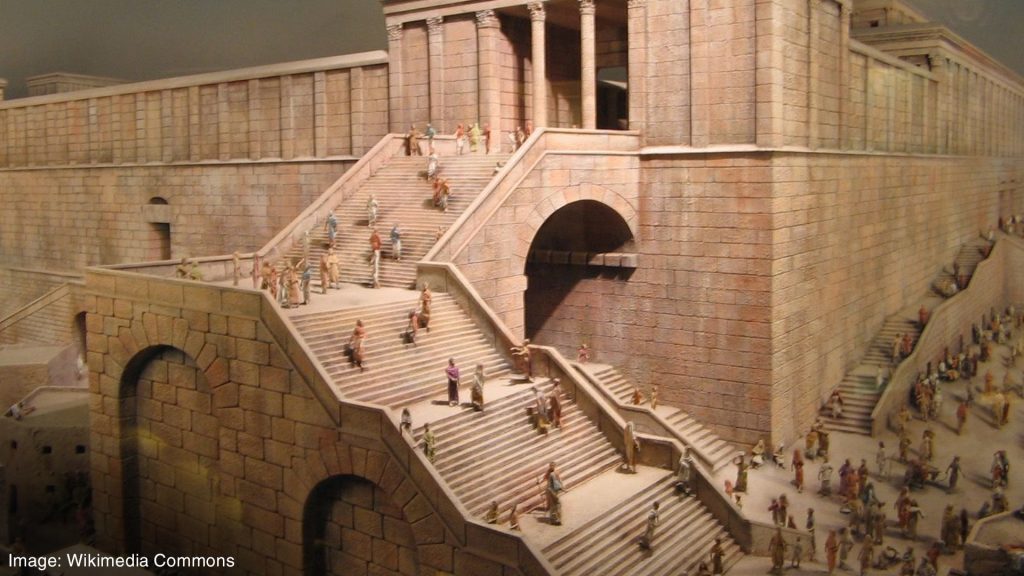
The movement to rebuild the Jewish Temple on the site of Al-Aqsa is rooted in ancient religious belief. The First Temple was destroyed by Babylon in 586 BCE. The Second Temple was destroyed by Rome in 70 CE. A significant strand of messianic Jewish theology holds that a Third Temple must be built before the coming of the Messiah.

For decades this remained on the religious fringe. What has changed is who now holds power. Groups such as the Temple Institute have recreated temple vessels to biblical specifications, trained ritual priests through DNA-verified lineage programmes, developed detailed architectural blueprints, and established what they call a functioning Sanhedrin, or Jewish high court. The infrastructure of intent has been building quietly for a generation. The political protection for it is now inside the cabinet.

The Red Heifers From Texas

One of the most widely discussed and least understood elements of this story involves five red heifers raised in Texas and transported to Israel.

According to the Book of Numbers, a flawless red heifer must be sacrificed and its ashes used for ritual purification before Temple ceremonies can resume. For Temple movement adherents this is not metaphor. It is a literal religious prerequisite. In July 2025, a full-scale rehearsal of the red heifer purification ritual took place near Jerusalem on the Mount of Olives.

What made this detail cross from religious practice into geopolitical reality was what Hamas said about it. Their military spokesman Abu Obeida explicitly cited the transportation of red heifers to Israel as one of the stated motivations behind the October 7 attack. The arrival of those animals was not treated as symbolism by Hamas. It was treated as evidence that Temple preparations had entered a new operational phase.

The Babri Masjid Warning

Analysts who study religious nationalism have consistently drawn one historical parallel when discussing Al-Aqsa: the Babri Masjid in Ayodhya, India.

For decades, Hindu nationalist groups claimed the 16th-century mosque stood on the birthplace of the god Ram and called for its demolition. In December 1992, a mob tore it down. The communal violence that followed killed over 2,000 people across India. The site now hosts a Hindu temple, inaugurated in 2024.

Scholars including historian Ilan Pappe have explicitly compared the trajectory of Al-Aqsa to the Babri Masjid, noting that what makes both cases similar is not just the religious claim, but the gradual mainstreaming of an idea once considered unthinkable until the moment it was acted upon.

Why the Entire Region Is Watching

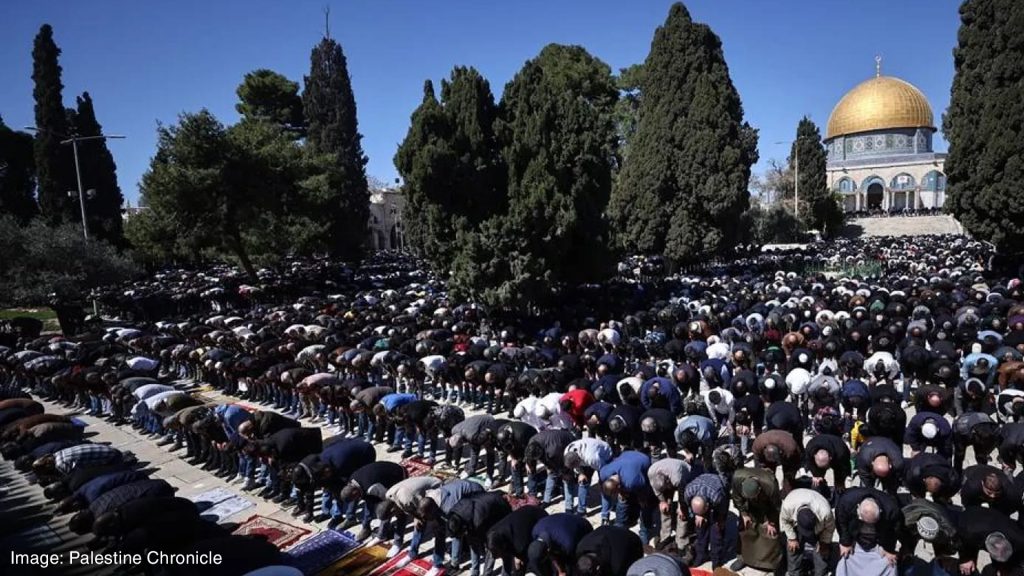
Al-Aqsa is Islam’s third holiest site. For 1.8 billion Muslims worldwide it carries religious, prophetic, and civilisational significance that transcends politics. At the same time, the Temple Mount is Judaism’s holiest location. That overlap is what makes this compound uniquely explosive.

The stakes extend beyond religion. Jordan holds legal custodianship over the Islamic holy sites in Jerusalem under the 1994 peace treaty, the cornerstone of the only warm peace Isr*el has with an Arab neighbour. Any formal alteration of Al-Aqsa’s status would threaten that treaty, destabilise Gulf normalisation efforts, and rupture diplomatic frameworks that have taken decades to construct.

Right now there is no verified evidence of an imminent demolition plan. That distinction matters and Verum states it clearly.

But what is already documented, by Israeli newspapers, international journalists, and the body that administers the mosque itself, is this: the status quo that protected Al-Aqsa for decades is being dismantled, one incursion, one declaration, and one stage at a time.

The question the world has not yet answered is what happens when stage three is no longer a plan but a demand.

By Shizza Farooqui

SOURCES

Reuters, Associated Press, Haaretz, Al Jazeera, Middle East Eye, Times of Isr*el, Jewish Telegraphic Agency, Mondoweiss, Palestinian Authority WAFA, UNESCO documentation, Fourth Geneva Convention references

The Words That Shocked the Muslim World

Inside Al-Aqsa Mosque, Israeli ministers and lawmakers danced and sang next to the Dome of the Rock. Outside, tens of thousands of ultra-nationalist Israelis marched through the Muslim Quarter of Jerusalem’s Old City chanting “Death to Arabs” and “May your villages burn.”

Then a sitting member of Israel’s parliament posted publicly on Facebook: “The time has come to get rid of all the mosques and work to construct the Temple.”

That was Jerusalem Day. 14 May 2026. Not a fringe gathering. A state-sanctioned annual march, attended and led by government ministers.

For many Muslims watching around the world, it felt like a threshold had been crossed.
Who These Men Are

The minister at the center of events is Itamar Ben-Gvir, Isr*el’s National Security Minister and the man who controls Israeli police operations. A longtime follower of the late extremist rabbi Meir Kahane, whose movement was designated a terrorist organisation by the United States, Ben-Gvir entered the Al-Aqsa compound alongside hundreds of settlers, raised an Israeli flag, and declared: “The Temple Mount is in our hands.”

Standing beside him was Knesset member Yitzhak Kroizer, who danced and sang next to the Dome of the Rock before posting his call for the mosques to be demolished. A third minister, Yitzhak Wasserlauf, declared during the raid: “Jews no longer walk around the Temple Mount like thieves and no longer need to hide.”

These were not isolated voices. Justice Minister Yariv Levin, Defense Minister Israel Katz, and Energy Minister Eli Cohen all signed a formal letter demanding Jewish access to the compound be maintained even on the Friday of the march, the day when Israeli incursions are typically suspended for Muslim prayers. This was coordinated at cabinet level.

The Palestinian Foreign Ministry condemned the raids as part of “the genocide, displacement, Judaization, and annexation to which the Palestinian people are subjected” and called for urgent international action.

The Three-Stage Plan

The events of Jerusalem Day did not emerge from nowhere.

Haaretz, one of Isr*el’s most respected newspapers, has documented what it describes as a structured three-stage strategy by Ben-Gvir’s movement to transform control of Al-Aqsa. Stage one is already underway: mass settler incursions into the compound, Jewish prayer inside the mosque, Israeli flags raised, and police authority consolidated under Ben-Gvir himself. Stage two involves normalising permanent shared religious control and eventually establishing Jewish prayer infrastructure alongside Islamic holy sites. Stage three is the stated goal of the broader Temple movement: full Israeli sovereignty over the compound and the construction of the Third Temple.

Supporters of Jewish access to the site reject accusations that demolition plans are imminent and argue they are seeking religious rights. But the Islamic Waqf, the body that administers Al-Aqsa, has told reporters the compound has effectively already been divided between Muslims and settlers. The director of international affairs at the Waqf described recent events as “a pivotal stage aimed at forcibly imposing Jewish sovereignty over Al-Aqsa Mosque.”

The comparison many Palestinians now draw is to the Ibrahimi Mosque in Hebron. What began there as “shared access” ended with the mosque being physically partitioned after a settler massacre in 1994. Over 2,000 people died in the communal violence that followed. Many Palestinians believe Al-Aqsa is following the same path, one stage at a time.

The Third Temple Movement

The movement to rebuild the Jewish Temple on the site of Al-Aqsa is rooted in ancient religious belief. The First Temple was destroyed by Babylon in 586 BCE. The Second Temple was destroyed by Rome in 70 CE. A significant strand of messianic Jewish theology holds that a Third Temple must be built before the coming of the Messiah.

For decades this remained on the religious fringe. What has changed is who now holds power. Groups such as the Temple Institute have recreated temple vessels to biblical specifications, trained ritual priests through DNA-verified lineage programmes, developed detailed architectural blueprints, and established what they call a functioning Sanhedrin, or Jewish high court. The infrastructure of intent has been building quietly for a generation. The political protection for it is now inside the cabinet.

The Red Heifers From Texas

One of the most widely discussed and least understood elements of this story involves five red heifers raised in Texas and transported to Israel.

According to the Book of Numbers, a flawless red heifer must be sacrificed and its ashes used for ritual purification before Temple ceremonies can resume. For Temple movement adherents this is not metaphor. It is a literal religious prerequisite. In July 2025, a full-scale rehearsal of the red heifer purification ritual took place near Jerusalem on the Mount of Olives.

What made this detail cross from religious practice into geopolitical reality was what Hamas said about it. Their military spokesman Abu Obeida explicitly cited the transportation of red heifers to Israel as one of the stated motivations behind the October 7 attack. The arrival of those animals was not treated as symbolism by Hamas. It was treated as evidence that Temple preparations had entered a new operational phase.

The Babri Masjid Warning

Analysts who study religious nationalism have consistently drawn one historical parallel when discussing Al-Aqsa: the Babri Masjid in Ayodhya, India.

For decades, Hindu nationalist groups claimed the 16th-century mosque stood on the birthplace of the god Ram and called for its demolition. In December 1992, a mob tore it down. The communal violence that followed killed over 2,000 people across India. The site now hosts a Hindu temple, inaugurated in 2024.

Scholars including historian Ilan Pappe have explicitly compared the trajectory of Al-Aqsa to the Babri Masjid, noting that what makes both cases similar is not just the religious claim, but the gradual mainstreaming of an idea once considered unthinkable until the moment it was acted upon.

Why the Entire Region Is Watching

Al-Aqsa is Islam’s third holiest site. For 1.8 billion Muslims worldwide it carries religious, prophetic, and civilisational significance that transcends politics. At the same time, the Temple Mount is Judaism’s holiest location. That overlap is what makes this compound uniquely explosive.
The stakes extend beyond religion. Jordan holds legal custodianship over the Islamic holy sites in Jerusalem under the 1994 peace treaty, the cornerstone of the only warm peace Isr*el has with an Arab neighbour. Any formal alteration of Al-Aqsa’s status would threaten that treaty, destabilise Gulf normalisation efforts, and rupture diplomatic frameworks that have taken decades to construct.

Right now there is no verified evidence of an imminent demolition plan. That distinction matters and Verum states it clearly.

But what is already documented, by Israeli newspapers, international journalists, and the body that administers the mosque itself, is this: the status quo that protected Al-Aqsa for decades is being dismantled, one incursion, one declaration, and one stage at a time.

The question the world has not yet answered is what happens when stage three is no longer a plan but a demand.

By Shizza Farooqui

SOURCES

Reuters, Associated Press, Haaretz, Al Jazeera, Middle East Eye, Times of Isr*el, Jewish Telegraphic Agency, Mondoweiss, Palestinian Authority WAFA, UNESCO documentation, Fourth Geneva Convention references
spot_img

Explore more

spot_img
Global Affairs

British Muslims Say They No Longer Feel Safe. The Attacks Are...

Britain Is Getting Its Seventh Prime Minister In A Decade.

Pakistan Helped Build A Peace Roadmap in Switzerland. Isr*el And Its...

The Lebanon Ceasefire Was Supposed To Stop The Strikes. It Barely...

The Plan To End Al-Aqsa Has Already Started.

Congress Just Made Isr*el Harder To Hold Accountable

The War On Pakistan’s Trade Routes

Isr*el Wasn’t At The Table. But Its War In Lebanon Just...