
On 11 August 2025, a small release of genetically modified mosquitoes took place in Souroukoudinga village in Burkina Faso. Seven days later, the government ordered everything stopped. Facilities were sealed. Remaining mosquito stocks were destroyed. Reports suggest even the mosquitoes already released were targeted with insecticides in the field.
It was one of the fastest reversals of an internationally approved science project in recent memory.
The project, known as Target Malaria, had operated in Burkina Faso since 2012. It was backed heavily by the Bill and Melinda Gates Foundation alongside scientific institutions across the United Kingdom, Italy and the United States. Its mission was straightforward: genetically modify mosquitoes to reduce malaria transmission in Africa, where the disease kills hundreds of thousands of people every year.
But in Burkina Faso, Target Malaria became something far larger than a laboratory experiment. It became a national argument about sovereignty, trust and who gets to decide when African land and African bodies become part of a scientific trial.
What The Project Actually Did
Target Malaria focused on modifying Anopheles mosquitoes, the primary malaria carriers across Africa.
Scientists developed modified male mosquitoes designed to reduce mosquito populations over time. The long-term goal was to eventually deploy gene drive technology, allowing specific genetic traits to spread rapidly and permanently through wild mosquito populations.
Supporters argued it could become one of humanity’s most powerful tools against a disease that, according to the World Health Organization, still kills nearly 600,000 people globally every year, with the overwhelming majority of deaths occurring in Africa, particularly among children under five.
Burkina Faso alone recorded more than eight million malaria cases and over 16,000 deaths in 2023. The human cost is not abstract.
Why Africa Said No
For critics inside Burkina Faso and across the continent, the issue was never purely scientific.
The deeper fear was that African communities were once again becoming testing grounds for technologies designed, funded and politically controlled by outside powers. The project’s partnerships spanned institutions in the UK, Italy and the US. Funding flowed heavily from the Gates Foundation. Reporting also linked parts of the broader research ecosystem to DARPA, the US military’s Defense Advanced Research Projects Agency.
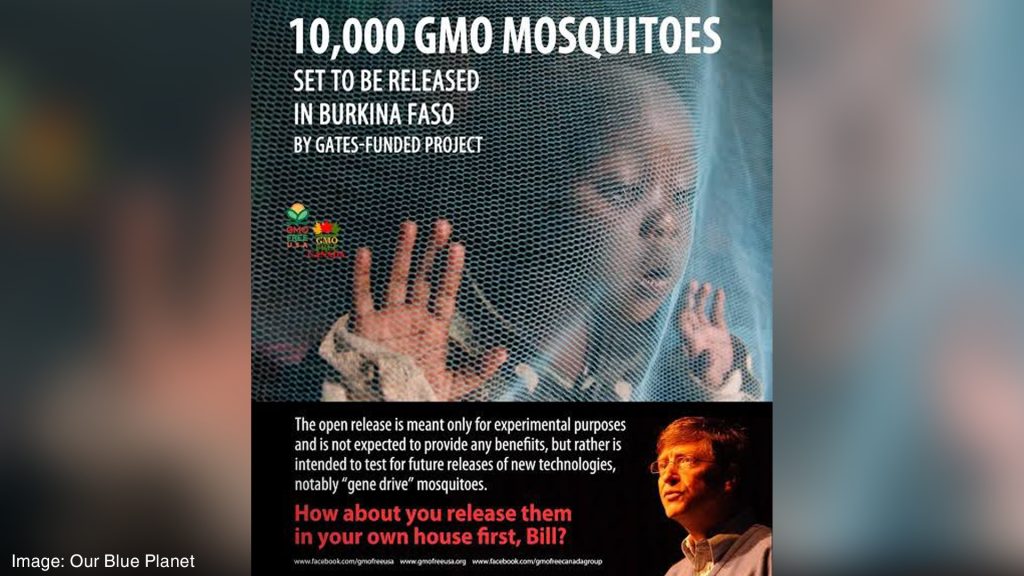
That combination triggered significant suspicion among civil society groups, who argued that local communities could not meaningfully consent to technology capable of permanently altering ecosystems far beyond village borders. Poorer countries, critics said, were being asked to accept risks that wealthier nations would never absorb domestically first.
Some groups inside Burkina Faso also accused the project of weak transparency during earlier community engagement phases.
Target Malaria has denied wrongdoing, stating it followed national laws, received full regulatory approvals and secured community agreements before any release occurred. Burkina Faso’s own National Biosafety Agency and health ethics committee had signed off on the August release before the government reversed course.
The Political Context
The shutdown did not happen in a vacuum.
Burkina Faso is governed by a military administration under Ibrahim Traoré that has systematically repositioned the country away from traditional western partners, including France, while asserting a harder line on African sovereignty across multiple policy areas.
International researchers also noted that disinformation about the project had intensified in the country before the ban, making a clean separation between legitimate scientific concern and manufactured political pressure difficult to establish.
Africa carries a long and documented memory of extraction, of outside powers making consequential decisions on behalf of local populations without accountability. That history does not disappear because a project has good intentions or genuine humanitarian value.
A Line That Is Being Drawn
Burkina Faso is not alone. Across the continent, governments and communities are increasingly scrutinising the terms under which foreign-funded science operates on African soil. The question being forced into the open is not whether the technology works.
It is who holds the power to decide when an ecosystem, a village or a population becomes part of an experiment.
And whether the countries carrying the highest risk will ever hold genuinely equal standing in those decisions.
By Shizza Farooqui
Sources
Target Malaria | Nature | Science Magazine | Scientific American | WHO Malaria Factsheet | The Africa Report