Gaza’s Mass Graves: Children Found Bound And Buried

Inside Gaza’s Hospital Mass Graves And The Investigation That Never Came

“We found a mass grave in Gaza containing 300 bodies. Small children were killed with their hands tied behind their backs.”

That was the testimony of a French aid worker whose footage went viral in May 2026, reigniting global outrage over one of the most disturbing and unresolved humanitarian stories of the Gaza war. The account is consistent with documented discoveries at Nasser Hospital in Khan Younis, where Palestinian Civil Defence teams recovered hundreds of bodies following an Israeli military withdrawal in April 2024.

What they found inside that hospital compound has never been independently investigated.

What Was Found At Nasser Hospital

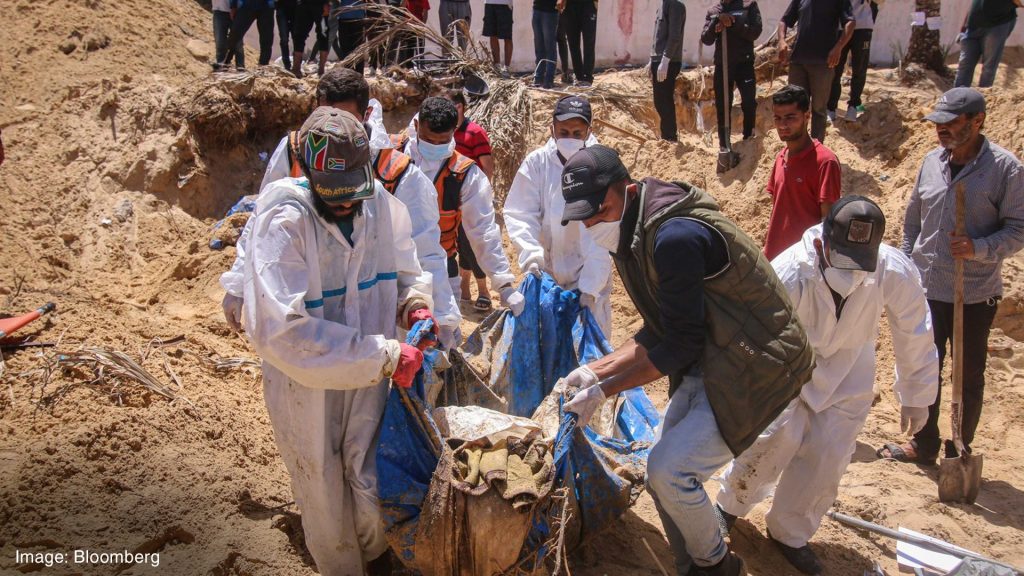
Over several days of excavation, rescue workers recovered more than 390 bodies from multiple grave sites at the Nasser Hospital compound, according to Palestinian Civil Defence officials cited by NBC News, Reuters, and UN reporting. Among the dead were reportedly 78 children.

Investigators and rescue teams said some bodies appeared to show signs of execution-style killings, torture, severe decomposition, and possible mistreatment. Palestinian officials reported that some bodies were found with hands bound by zip ties, stripped of clothing, buried in hospital gowns, or still connected to medical equipment including IV cannulas. At least 20 bodies were believed to have been buried alive. Signs consistent with field executions were documented across multiple sites.

The Civil Defence head confirmed that bones of children, women, and men were found together. Bodies had been dealt with, in the words of one official, “savagely,” with no respect for the dead. Many were not in shrouds.

What The UN And International Bodies Said

The United Nations High Commissioner for Human Rights described the discoveries as “horrifying” and demanded that independent forensic investigators be granted unimpeded access to all grave sites across Gaza.
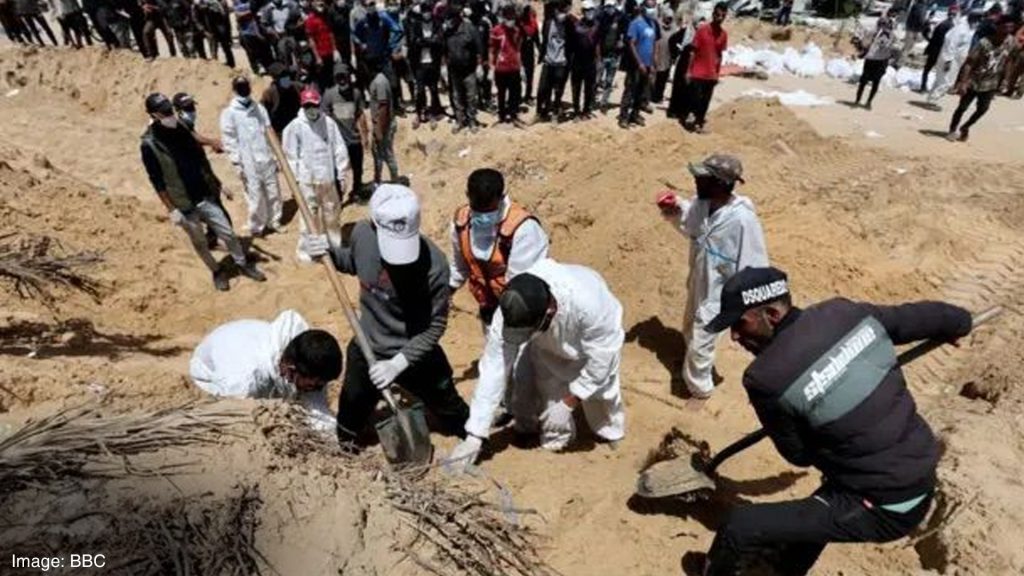
UN officials stated that bodies reportedly included women, older people, wounded patients, medical staff still in their hospital scrubs, and children. Some were found stripped, tied, or buried in conditions raising serious questions about possible violations of international humanitarian law.

In May 2024, the UN Security Council formally called for immediate independent investigations, unrestricted forensic access, transparent examination, and accountability for any potential war crimes. As of May 2026, international investigators still have not received the unrestricted access originally demanded.

Isr*el rejected allegations surrounding the mass graves and dismissed claims of abuse as false or politically motivated. Israeli officials argued some graves had existed before military operations and accused Hamas of misinformation. That dispute remains unresolved.

The Scale Of Gaza’s Missing-Person Crisis

The graves uncovered at Nasser Hospital were only part of a much larger collapse unfolding across Gaza. Euro-Med Human Rights Monitor has documented over 130 mass grave sites across the territory since October 2023. Seven mass grave sites across three Gaza hospitals alone contained approximately 520 bodies. Across the entire territory, an estimated 8,000 people remain missing, with another 8,000 bodies believed still buried beneath rubble in areas too dangerous or inaccessible for rescue crews to reach.

Gaza’s forensic system has effectively collapsed under the weight of the crisis. The head of Gaza’s forensic medicine department told Wired that identification depends almost entirely on the naked eye. Gaza has no biometric database, no fingerprint records, no dental archives, and no DNA comparison infrastructure. Even if advanced forensic machines were available, there would be nothing to compare samples against.

Across the entire territory there are only two excavators available for body recovery, according to the Red Cross. Only ten forensic medicine specialists remain operational. The Civil Defence chief told ITV News: “My civil defence team doesn’t have a single excavator. We depend on the Red Cross to give us a few hours with their excavator so that we can recover bodies.”

In the new makeshift graves being dug across Gaza, breeze blocks stand where headstones should be. Numbers mark where names should appear. Each nameless body is buried with a unique code, in the quiet hope that someone, someday, might be able to identify them.

Lina’s Story

One of the clearest human faces of this crisis came through Lina, a survivor interviewed by ITV News in May 2026.

An Israeli airstrike destroyed her family’s residential building, killing 28 of her relatives. Lina alone survived. She had just graduated. She described the moment rescue workers told families there was nothing they could do, that the building was too close to Israeli-controlled zones for crews to safely enter.
More than two years after the strike, her family members remain beneath the rubble. She cannot recover them. She cannot bury them. She cannot name them.

Her story is not exceptional in Gaza. It is ordinary.

The Debate Around Evidence And Accountability

The mass-grave discoveries have become one of the most politically contested dimensions of the Gaza war. Palestinian authorities, rights organisations, and UN officials argue the findings demand a fully independent international forensic investigation into possible war crimes. Human rights groups have repeatedly warned that evidence is deteriorating as decomposition continues, forensic resources remain absent, and conflict conditions persist.

Isr*el has continued rejecting accusations linked to the graves and disputes many of the allegations surrounding the recovered bodies. Without unrestricted independent investigations, many of the claims surrounding these sites remain impossible to conclusively prove or disprove.

The Bigger Meaning Of The Graves

The graves themselves are only part of the story.

The larger crisis is what they represent: thousands still missing, a collapsed forensic system, families unable to recover their relatives, hospitals transformed into burial grounds, and a war whose dead still cannot fully be counted. Over 130 documented mass grave sites. Breeze blocks instead of headstones. Numbers instead of names.

For many Palestinians, the fear is no longer only about dying. It is about disappearing without ever being identified.

By Shizza Farooqui

Sources

NBC News, Reuters, AP, UN News, OHCHR, ITV News (May 2026), Al Jazeera, UN Security Council statements, Euro-Med Human Rights Monitor, Wired, Electronic Intifada
Inside Gaza’s Hospital Mass Graves And The Investigation That Never Came

“We found a mass grave in Gaza containing 300 bodies. Small children were killed with their hands tied behind their backs.”

That was the testimony of a French aid worker whose footage went viral in May 2026, reigniting global outrage over one of the most disturbing and unresolved humanitarian stories of the Gaza war. The account is consistent with documented discoveries at Nasser Hospital in Khan Younis, where Palestinian Civil Defence teams recovered hundreds of bodies following an Israeli military withdrawal in April 2024.

What they found inside that hospital compound has never been independently investigated.

What Was Found At Nasser Hospital

Over several days of excavation, rescue workers recovered more than 390 bodies from multiple grave sites at the Nasser Hospital compound, according to Palestinian Civil Defence officials cited by NBC News, Reuters, and UN reporting. Among the dead were reportedly 78 children.

Investigators and rescue teams said some bodies appeared to show signs of execution-style killings, torture, severe decomposition, and possible mistreatment. Palestinian officials reported that some bodies were found with hands bound by zip ties, stripped of clothing, buried in hospital gowns, or still connected to medical equipment including IV cannulas. At least 20 bodies were believed to have been buried alive. Signs consistent with field executions were documented across multiple sites.

The Civil Defence head confirmed that bones of children, women, and men were found together. Bodies had been dealt with, in the words of one official, “savagely,” with no respect for the dead. Many were not in shrouds.

What The UN And International Bodies Said

The United Nations High Commissioner for Human Rights described the discoveries as “horrifying” and demanded that independent forensic investigators be granted unimpeded access to all grave sites across Gaza.

UN officials stated that bodies reportedly included women, older people, wounded patients, medical staff still in their hospital scrubs, and children. Some were found stripped, tied, or buried in conditions raising serious questions about possible violations of international humanitarian law.

In May 2024, the UN Security Council formally called for immediate independent investigations, unrestricted forensic access, transparent examination, and accountability for any potential war crimes. As of May 2026, international investigators still have not received the unrestricted access originally demanded.

Isr*el rejected allegations surrounding the mass graves and dismissed claims of abuse as false or politically motivated. Israeli officials argued some graves had existed before military operations and accused Hamas of misinformation. That dispute remains unresolved.

The Scale Of Gaza’s Missing-Person Crisis

The graves uncovered at Nasser Hospital were only part of a much larger collapse unfolding across Gaza. Euro-Med Human Rights Monitor has documented over 130 mass grave sites across the territory since October 2023. Seven mass grave sites across three Gaza hospitals alone contained approximately 520 bodies. Across the entire territory, an estimated 8,000 people remain missing, with another 8,000 bodies believed still buried beneath rubble in areas too dangerous or inaccessible for rescue crews to reach.

Gaza’s forensic system has effectively collapsed under the weight of the crisis. The head of Gaza’s forensic medicine department told Wired that identification depends almost entirely on the naked eye. Gaza has no biometric database, no fingerprint records, no dental archives, and no DNA comparison infrastructure. Even if advanced forensic machines were available, there would be nothing to compare samples against.

Across the entire territory there are only two excavators available for body recovery, according to the Red Cross. Only ten forensic medicine specialists remain operational. The Civil Defence chief told ITV News: “My civil defence team doesn’t have a single excavator. We depend on the Red Cross to give us a few hours with their excavator so that we can recover bodies.”

In the new makeshift graves being dug across Gaza, breeze blocks stand where headstones should be. Numbers mark where names should appear. Each nameless body is buried with a unique code, in the quiet hope that someone, someday, might be able to identify them.

Lina’s Story

One of the clearest human faces of this crisis came through Lina, a survivor interviewed by ITV News in May 2026.

An Israeli airstrike destroyed her family’s residential building, killing 28 of her relatives. Lina alone survived. She had just graduated. She described the moment rescue workers told families there was nothing they could do, that the building was too close to Israeli-controlled zones for crews to safely enter.

More than two years after the strike, her family members remain beneath the rubble. She cannot recover them. She cannot bury them. She cannot name them.

Her story is not exceptional in Gaza. It is ordinary.

The Debate Around Evidence And Accountability

The mass-grave discoveries have become one of the most politically contested dimensions of the Gaza war. Palestinian authorities, rights organisations, and UN officials argue the findings demand a fully independent international forensic investigation into possible war crimes. Human rights groups have repeatedly warned that evidence is deteriorating as decomposition continues, forensic resources remain absent, and conflict conditions persist.

Isr*el has continued rejecting accusations linked to the graves and disputes many of the allegations surrounding the recovered bodies. Without unrestricted independent investigations, many of the claims surrounding these sites remain impossible to conclusively prove or disprove.

The Bigger Meaning Of The Graves

The graves themselves are only part of the story.

The larger crisis is what they represent: thousands still missing, a collapsed forensic system, families unable to recover their relatives, hospitals transformed into burial grounds, and a war whose dead still cannot fully be counted. Over 130 documented mass grave sites. Breeze blocks instead of headstones. Numbers instead of names.

For many Palestinians, the fear is no longer only about dying. It is about disappearing without ever being identified.

By Shizza Farooqui

Sources

NBC News, Reuters, AP, UN News, OHCHR, ITV News (May 2026), Al Jazeera, UN Security Council statements, Euro-Med Human Rights Monitor, Wired, Electronic Intifada

spot_img

Explore more

spot_img
Global Affairs

British Muslims Say They No Longer Feel Safe. The Attacks Are...

Britain Is Getting Its Seventh Prime Minister In A Decade.

Pakistan Helped Build A Peace Roadmap in Switzerland. Isr*el And Its...

The Lebanon Ceasefire Was Supposed To Stop The Strikes. It Barely...

The Plan To End Al-Aqsa Has Already Started.

Congress Just Made Isr*el Harder To Hold Accountable

The War On Pakistan’s Trade Routes

Isr*el Wasn’t At The Table. But Its War In Lebanon Just...