
EVs Are Winning. But Ferrari Just Lost.

The World Has Already Chosen Electric Cars

The electric car debate is over.

In 2025, global EV sales passed 20 million vehicles for the first time. One in every four new cars sold worldwide was electric. China sold 13 million EVs alone. Europe recorded its strongest growth in years, with sales rising more than 30% to reach 4.2 million units. Nearly 40 countries now have electric vehicles accounting for at least 10% of all new car sales.

The International Energy Agency expects global EV sales to reach 23 million vehicles in 2026, representing almost 30% of all new cars sold worldwide.

Electric cars are no longer the future. They are the present.

That is the world Ferrari walked into on May 25, 2026.
Ferrari’s Most Ambitious Gamble

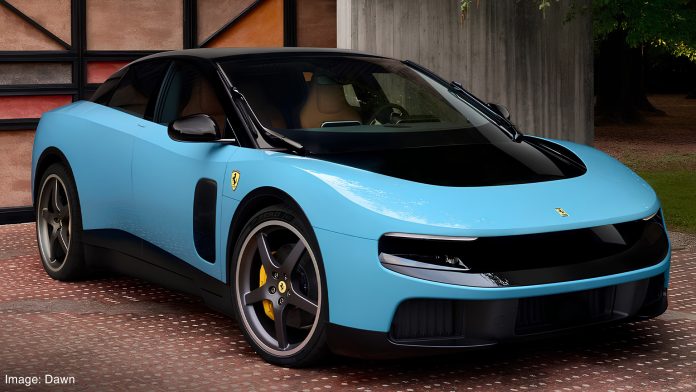
At a tightly controlled launch event in Rome, Ferrari unveiled the Luce, its first fully electric vehicle. Nothing about the reveal was ordinary.

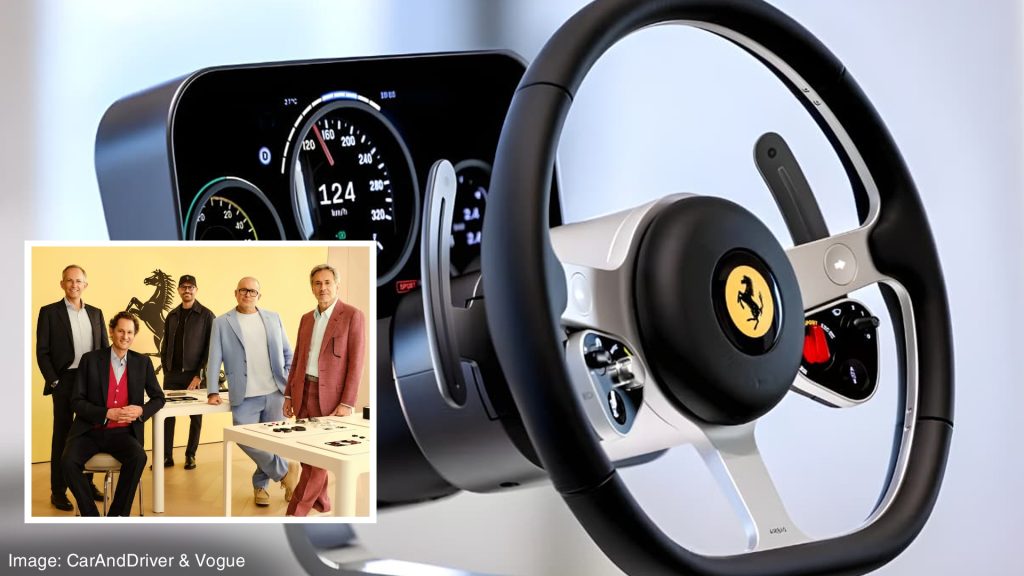
Guests were transported in dark vans under police escort. Phone and laptop cameras were physically stickered over by security to prevent any leaks. The car had been developed over five years with LoveFrom, the design studio founded by former Apple design chief Sir Jony Ive and legendary industrial designer Marc Newson.

The Luce is unlike any Ferrari that came before it. Ferrari’s first five-seat production car. Its most expensive model. One thousand and thirty-five horsepower. Zero to sixty in 2.5 seconds. A range of 330 miles. A price tag of EUR 550,000, roughly $640,000.

Pope Leo XIV was given a personal test drive at Castel Gandolfo. Sitting in the driver’s seat, the Pope’s first question to Ferrari president John Elkann was: “Is this the first four-door Ferrari?” Ferrari gifted him not the car but the Luce’s three-spoke steering wheel, machined from recycled aluminium, displayed inside a glass case. Italian President Sergio Mattarella inspected the vehicle at a separate event.

Ferrari spent years hiding this car. Security blocked cameras. Police escorted the guests. And the moment the world saw it, the backlash arrived within hours.

The Apple Car That Never Was

For many observers, the Luce immediately became something else entirely.

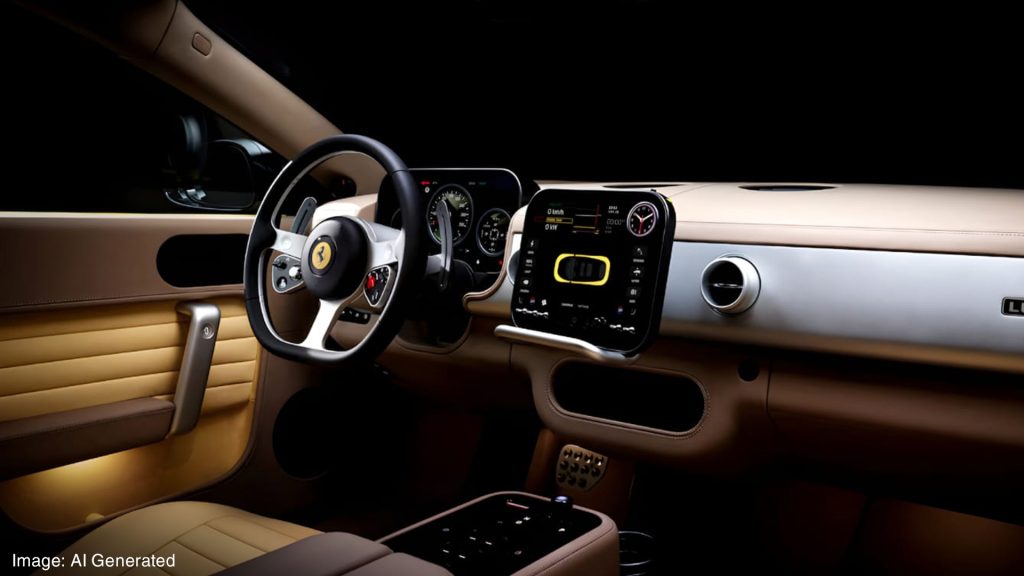
Apple reportedly spent more than $10 billion trying to build its own vehicle before abandoning the project. Jony Ive was one of the key creative forces behind that vision. Now, many of those same design instincts appear in the Luce. The panoramic glass house. The minimalist interior. The insistence on physical controls over touchscreen overload. The seamless visual language across every surface.

Analysts and design critics noted what observers widely described as the Luce’s resemblance to a cancelled Apple product finally brought to life, wearing a Ferrari badge.

That should have been a compliment.

Instead, it became part of the problem.

The Backlash

The reaction was immediate.

Online, users compared the Luce to a Nissan Leaf, a vacuum cleaner, a toaster, and a Hyundai Ioniq 6. When ChatGPT was asked to comment, it replied: “If this is supposed to be a Ferrari concept, it looks like someone asked AI to mix a Ferrari, a 1980s vacuum cleaner, a Hyundai Ioniq 6, and a toaster.”
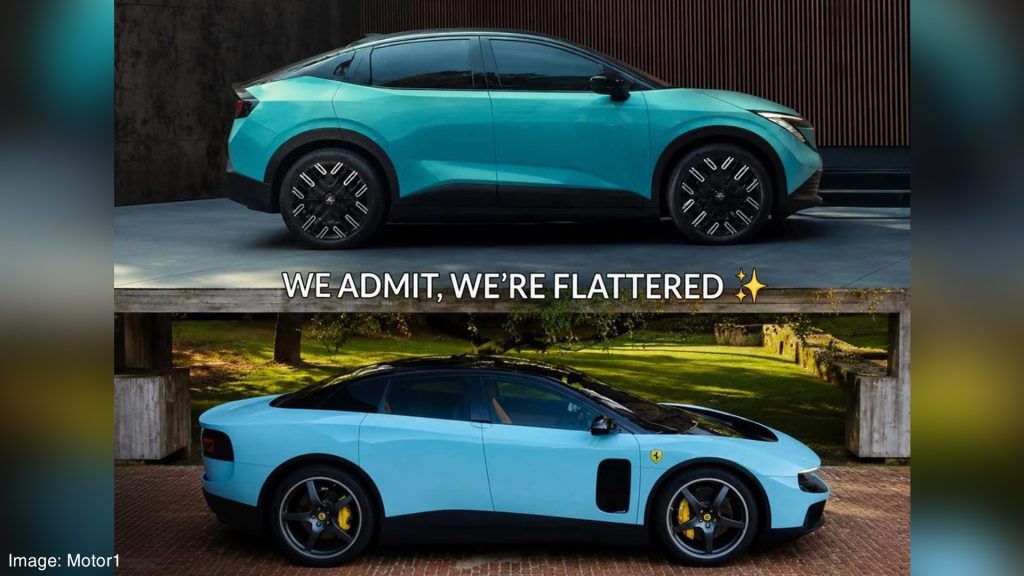
Then Nissan Ireland entered the conversation.

The Japanese automaker’s Irish social media account posted side-by-side images of the Luce and its Nissan Leaf and wrote: “They say imitation is the sincerest form of flattery, so thank you Ferrari. Nissan. Always a smart choice.” The Nissan Leaf starts at $28,140. The Ferrari Luce starts at $640,000. The post went viral instantly.

The criticism spread far beyond social media.

Luca di Montezemolo, who served as Ferrari’s chairman for more than two decades and personally oversaw the company’s most dominant era in Formula 1, watched the Luce’s unveiling and shook his head on camera in a clip that has since gone viral. “If I say what I think, I would cause harm to Ferrari,” he said. “We risk destroying a legend. I am very sorry about that. I hope they at least remove the prancing horse from that car.” He then added a line that cut deeper than any meme: “This is certainly a car that at least the Chinese won’t copy.”

Italy’s Deputy Prime Minister and Transport Minister Matteo Salvini posted on X: “Electric, outrageously expensive, and from an aesthetic point of view, it speaks for itself. It looks like anything but a car from the Prancing Horse.”

One Ferrari collector who owns 40 of the brand’s cars told the Wall Street Journal: “Oh boy, how ugly she is. How do you justify 400,000 to 500,000 euros for this?”

The Brand That Banned Kim Kardashian

To understand why the reaction hit so hard, it helps to understand what Ferrari has always stood for.

This is a company that permanently banned Paris Hilton for painting her Ferrari pink. That sent a cease-and-desist letter to Kim Kardashian for modifying her 458. That blacklisted Justin Bieber from future purchases for wrapping his Ferrari in neon blue.

Ferrari has historically treated aesthetic integrity as an existential matter. Not a preference. Not a guideline. An existential matter.

The fact that its own former chairman of 23 years is now publicly asking the company to remove the prancing horse from its newest model is not, in that context, a minor criticism. It is a statement about identity.

The Ripple Effect

The damage extended beyond Ferrari’s own fanbase.

Lamborghini’s CEO, watching the reaction unfold, told reporters that cancelling his own company’s electric vehicle plans was the right decision. His comments were a direct response to the Luce controversy, and they signalled that the luxury automotive industry is watching carefully and drawing its own conclusions.

Ferrari’s stock fell 8.4% on the Milan exchange the day after the reveal. US-listed shares dropped 5.3%. More than $3 billion was wiped from the company’s market value within 24 hours. Analysts attributed the fall to both design hate and broader uncertainty about Ferrari’s direction.

What Ferrari May Actually Be Doing

The most important detail in this story has nothing to do with styling.

Ferrari reportedly expects around 80% of Luce buyers to be first-time Ferrari customers.

Read that again. Ferrari is not building the Luce for the people who already love Ferrari.

It is building it for people who have never owned one. Wealthy first-time buyers in China, where EV sales now represent nearly 55% of all new car purchases. Tech-savvy buyers in Silicon Valley. A new generation of luxury consumers who care more about software than exhaust notes.
Europe is also accelerating hard. In March 2026, the continent recorded its strongest ever month for EV sales, surpassing half a million units for the first time. France saw EV sales jump 69% year-on-year in a single month. Italy, Germany, Spain, and the UK all posted record numbers. Higher fuel prices driven by the Middle East conflict are pushing buyers toward electric faster than almost any policy ever could.

Ferrari is not ignoring these numbers. It is responding to them.

The Real Question

Ferrari has never sold transportation. It has never sold efficiency. It has never sold engineering alone.

Ferrari sells emotion.

The Luce may ultimately become a commercial success. Orders may prove strong. A new generation of buyers may embrace it entirely.

But the launch exposed a fear that runs through every iconic brand now entering the electric era.

You can build a future-proof car. You can hire the world’s greatest designer. You can get the Pope to sit in it.

What you cannot buy is the feeling that made people fall in love with you in the first place.

Ferrari has never had to earn that feeling before. It simply came with the badge.

Now, for the first time, it has to prove it.

By Shizza Farooqui

SOURCES

IEA Global EV Outlook 2026, Reuters, Associated Press, CNBC, CNN Business, Fortune, Wall Street Journal, Bloomberg, Benchmark Mineral Intelligence, Motor1, Autoblog, Jalopnik, Carscoops, Dezeen, Ferrari.com, Electrek


The World Has Already Chosen Electric Cars

The electric car debate is over.

In 2025, global EV sales passed 20 million vehicles for the first time. One in every four new cars sold worldwide was electric. China sold 13 million EVs alone. Europe recorded its strongest growth in years, with sales rising more than 30% to reach 4.2 million units. Nearly 40 countries now have electric vehicles accounting for at least 10% of all new car sales.

The International Energy Agency expects global EV sales to reach 23 million vehicles in 2026, representing almost 30% of all new cars sold worldwide.

Electric cars are no longer the future. They are the present.

That is the world Ferrari walked into on May 25, 2026.

Ferrari’s Most Ambitious Gamble

At a tightly controlled launch event in Rome, Ferrari unveiled the Luce, its first fully electric vehicle. Nothing about the reveal was ordinary.

Guests were transported in dark vans under police escort. Phone and laptop cameras were physically stickered over by security to prevent any leaks. The car had been developed over five years with LoveFrom, the design studio founded by former Apple design chief Sir Jony Ive and legendary industrial designer Marc Newson.

The Luce is unlike any Ferrari that came before it. Ferrari’s first five-seat production car. Its most expensive model. One thousand and thirty-five horsepower. Zero to sixty in 2.5 seconds. A range of 330 miles. A price tag of EUR 550,000, roughly $640,000.

Pope Leo XIV was given a personal test drive at Castel Gandolfo. Sitting in the driver’s seat, the Pope’s first question to Ferrari president John Elkann was: “Is this the first four-door Ferrari?” Ferrari gifted him not the car but the Luce’s three-spoke steering wheel, machined from recycled aluminium, displayed inside a glass case. Italian President Sergio Mattarella inspected the vehicle at a separate event.

Ferrari spent years hiding this car. Security blocked cameras. Police escorted the guests. And the moment the world saw it, the backlash arrived within hours.

The Apple Car That Never Was

For many observers, the Luce immediately became something else entirely.

Apple reportedly spent more than $10 billion trying to build its own vehicle before abandoning the project. Jony Ive was one of the key creative forces behind that vision. Now, many of those same design instincts appear in the Luce. The panoramic glass house. The minimalist interior. The insistence on physical controls over touchscreen overload. The seamless visual language across every surface.

Analysts and design critics noted what observers widely described as the Luce’s resemblance to a cancelled Apple product finally brought to life, wearing a Ferrari badge.

That should have been a compliment.

Instead, it became part of the problem.

The Backlash

The reaction was immediate.

Online, users compared the Luce to a Nissan Leaf, a vacuum cleaner, a toaster, and a Hyundai Ioniq 6. When ChatGPT was asked to comment, it replied: “If this is supposed to be a Ferrari concept, it looks like someone asked AI to mix a Ferrari, a 1980s vacuum cleaner, a Hyundai Ioniq 6, and a toaster.”

Then Nissan Ireland entered the conversation.

The Japanese automaker’s Irish social media account posted side-by-side images of the Luce and its Nissan Leaf and wrote: “They say imitation is the sincerest form of flattery, so thank you Ferrari. Nissan. Always a smart choice.” The Nissan Leaf starts at $28,140. The Ferrari Luce starts at $640,000. The post went viral instantly.

The criticism spread far beyond social media.

Luca di Montezemolo, who served as Ferrari’s chairman for more than two decades and personally oversaw the company’s most dominant era in Formula 1, watched the Luce’s unveiling and shook his head on camera in a clip that has since gone viral. “If I say what I think, I would cause harm to Ferrari,” he said. “We risk destroying a legend. I am very sorry about that. I hope they at least remove the prancing horse from that car.” He then added a line that cut deeper than any meme: “This is certainly a car that at least the Chinese won’t copy.”

Italy’s Deputy Prime Minister and Transport Minister Matteo Salvini posted on X: “Electric, outrageously expensive, and from an aesthetic point of view, it speaks for itself. It looks like anything but a car from the Prancing Horse.”

One Ferrari collector who owns 40 of the brand’s cars told the Wall Street Journal: “Oh boy, how ugly she is. How do you justify 400,000 to 500,000 euros for this?”

The Brand That Banned Kim Kardashian

To understand why the reaction hit so hard, it helps to understand what Ferrari has always stood for.

This is a company that permanently banned Paris Hilton for painting her Ferrari pink. That sent a cease-and-desist letter to Kim Kardashian for modifying her 458. That blacklisted Justin Bieber from future purchases for wrapping his Ferrari in neon blue.

Ferrari has historically treated aesthetic integrity as an existential matter. Not a preference. Not a guideline. An existential matter.

The fact that its own former chairman of 23 years is now publicly asking the company to remove the prancing horse from its newest model is not, in that context, a minor criticism. It is a statement about identity.

The Ripple Effect

The damage extended beyond Ferrari’s own fanbase.

Lamborghini’s CEO, watching the reaction unfold, told reporters that cancelling his own company’s electric vehicle plans was the right decision. His comments were a direct response to the Luce controversy, and they signalled that the luxury automotive industry is watching carefully and drawing its own conclusions.

Ferrari’s stock fell 8.4% on the Milan exchange the day after the reveal. US-listed shares dropped 5.3%. More than $3 billion was wiped from the company’s market value within 24 hours. Analysts attributed the fall to both design hate and broader uncertainty about Ferrari’s direction.

What Ferrari May Actually Be Doing

The most important detail in this story has nothing to do with styling.

Ferrari reportedly expects around 80% of Luce buyers to be first-time Ferrari customers.

Read that again. Ferrari is not building the Luce for the people who already love Ferrari.

It is building it for people who have never owned one. Wealthy first-time buyers in China, where EV sales now represent nearly 55% of all new car purchases. Tech-savvy buyers in Silicon Valley. A new generation of luxury consumers who care more about software than exhaust notes.

Europe is also accelerating hard. In March 2026, the continent recorded its strongest ever month for EV sales, surpassing half a million units for the first time. France saw EV sales jump 69% year-on-year in a single month. Italy, Germany, Spain, and the UK all posted record numbers. Higher fuel prices driven by the Middle East conflict are pushing buyers toward electric faster than almost any policy ever could.

Ferrari is not ignoring these numbers. It is responding to them.

The Real Question

Ferrari has never sold transportation. It has never sold efficiency. It has never sold engineering alone.

Ferrari sells emotion.

The Luce may ultimately become a commercial success. Orders may prove strong. A new generation of buyers may embrace it entirely.

But the launch exposed a fear that runs through every iconic brand now entering the electric era.

You can build a future-proof car. You can hire the world’s greatest designer. You can get the Pope to sit in it.

What you cannot buy is the feeling that made people fall in love with you in the first place.

Ferrari has never had to earn that feeling before. It simply came with the badge.

Now, for the first time, it has to prove it.

By Shizza Farooqui

SOURCES

IEA Global EV Outlook 2026, Reuters, Associated Press, CNBC, CNN Business, Fortune, Wall Street Journal, Bloomberg, Benchmark Mineral Intelligence, Motor1, Autoblog, Jalopnik, Carscoops, Dezeen, Ferrari.com, Electrek

spot_img

Explore more

spot_img
Business

The Ban That Built America’s Rival

The House Is Testing Trump’s Power

No Vaccine. No Trust. No Time.

The New Global Enemy Is The Migrant

Albania Is Not For Sale

Myanmar: The Genocide Nobody Is Watching

Sweden Stripped Islamophobia From Official Language. Muslims Are Asking Why.

808km. Nine Days. Pakistan Found Its Hero.