The US Is Squeezing Cuba Harder Than Ever and an Entire Country Is Running Out of Light, Food and Water.

Cuba Is Facing Blackouts, Hunger and a Healthcare Collapse. The US Just Made It Harder.

Isla Montclair

Fresh US sanctions on five of Cuba’s most critical state companies landed on June 23, 2026. They came days after Cuba announced its biggest economic reforms in six decades, and they came as the island was already living through one of the worst humanitarian crises in its modern history. Here is the full picture of what is happening, why it is happening and where it is heading.

What the New US Sanctions Actually Target

On June 23, 2026, US Secretary of State Marco Rubio announced new sanctions on five Cuban state entities. Three are directly linked to GAESA, formally known as Grupo de Administración Empresarial S.A., the business conglomerate run by Cuba’s Revolutionary Armed Forces. GAESA is not just one company among many. It controls nearly 40 percent of Cuba’s entire gross domestic product and held $14.5 billion in liquid reserves as recently as early 2024. Targeting it is targeting the financial spine of the Cuban state.

The five sanctioned entities are Almacenes Universales S.A., Cuba’s main logistics and warehousing company and the primary operator at the port of Mariel. Rafin S.A., described by analysts as the corporate financial arm operating within GAESA. Banco Financiero Internacional S.A., a commercial bank that serves as the main banking institution for foreign investors operating in Cuba. Geominera S.A., a state-owned mining company. And Empresa Siderúrgica Jose Martí, Cuba’s largest raw steel producer. Annalie Lilliam Rueda Cardero, daughter-in-law of former President Raúl Castro, was also personally sanctioned.

Michael Bustamante, a professor and chair in Cuban and Cuban-American Studies at the University of Miami, said the designations send a direct message to anyone doing business with Cuba. “By designating specific entities, they’re making it clear to foreign investors: If your business in Cuba touches any of these folks, you risk being banned,” he said. For most foreign companies, he added, that risk is simply too high.

What Life in Cuba Actually Looks Like Right Now

To understand what these sanctions mean in practice, it is important to understand the conditions they are landing into.

Cuba has been under a de facto US oil blockade since January 2026. On January 11, Trump cut off Venezuelan oil supplies to Cuba following a US military operation against Venezuela. On January 29, he signed an executive order threatening tariffs against any country that ships fuel to the island. Since then, only one tanker, a Russian vessel carrying 730,000 barrels of oil, has reached Havana’s harbour.

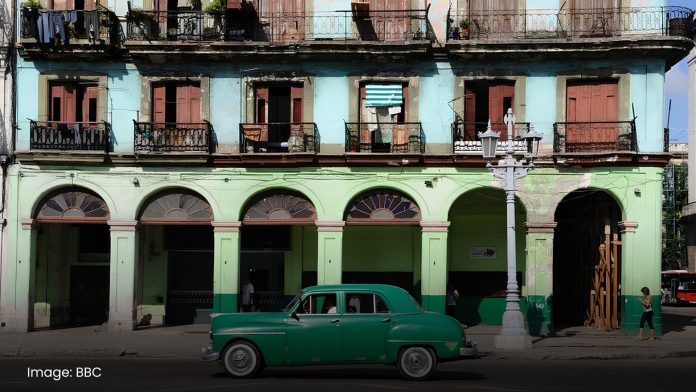
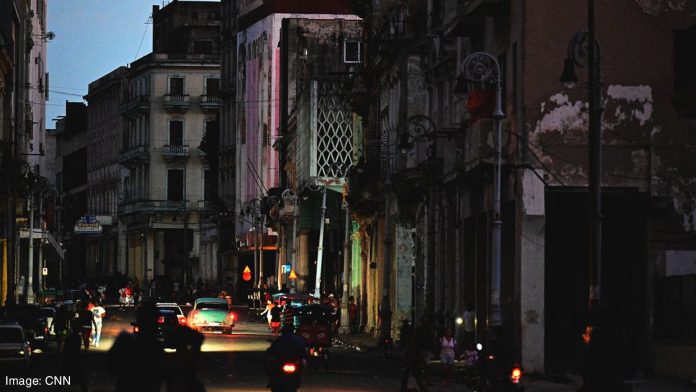
The consequences have been severe. Nationwide blackouts now stretch between 24 and 30 consecutive hours in rural areas. In Havana, residents face up to 15 hours a day without electricity. Hospitals have been forced to halt standard surgeries because staff cannot get to work and power cannot be guaranteed for operating rooms. Water systems have failed because the pumps that move water through the island’s pipes run on electricity. Public transport has effectively stopped. Rubbish trucks have no fuel. People in Havana are cooking on wood fires.
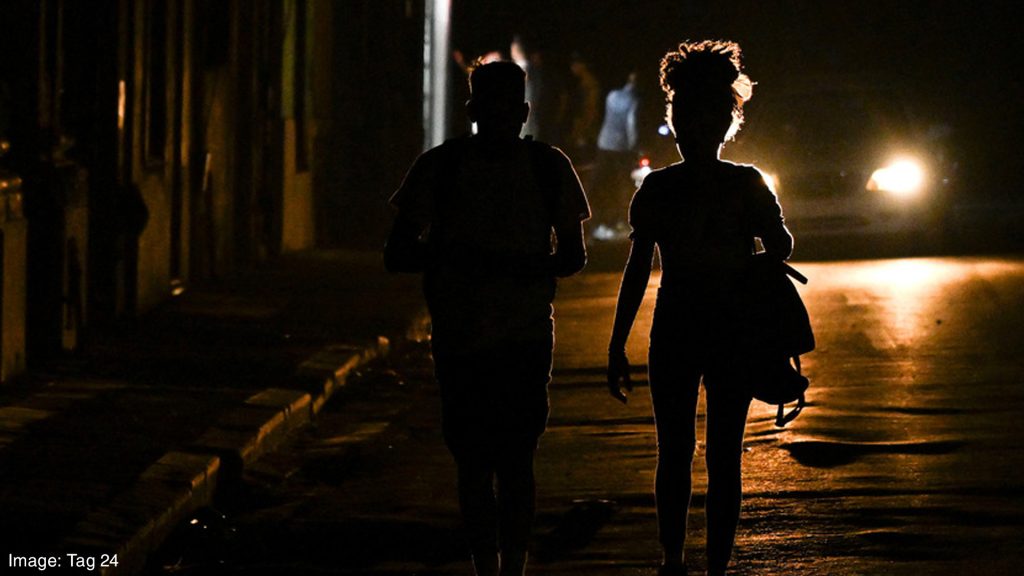
Journalist Ed Augustin, reporting from Havana for Al Jazeera, described the crisis as “absolutely eviscerating every part of life.” He also made a point that gets lost in the political framing of the Cuba debate. “Sanctions kill,” he said. “There’s a lot of academic literature that shows that sanctions kill.” He cited a 2025 study in The Lancet Global Health journal estimating that 564,000 excess deaths per year globally are linked to economic sanctions. He noted that Cuba’s infant mortality rate is rising this year because medical staff cannot reach hospitals and because basic prenatal vitamins and milk are not reaching mothers and children.

The United Nations has warned of a possible humanitarian collapse in Cuba as a direct result of the fuel shortages.

Cuba’s Biggest Economic Reforms in 60 Years and Washington’s Response

One week before the new sanctions landed, Cuba announced 176 economic reforms. Analysts described the package as potentially the most significant liberalisation of the Cuban economy since the 1959 revolution. The reforms include allowing the private sector to bypass the state when importing goods, a measure that if operational would represent a meaningful structural shift.

Washington’s response was immediate and dismissive. A US State Department spokesperson called the reforms “modest, long overdue and ultimately superficial smoke signals from the Cuban regime.” The statement added that the US administration would continue applying pressure until the regime is “a different beast entirely.”

The US has simultaneously offered $100 million in humanitarian aid to address Cuba’s food and medicine shortages, with one condition: the aid must be distributed exclusively through the Catholic Church and independent non-profits, with no involvement from the Cuban government. Cuba’s foreign minister rejected the offer, calling the conditions insincere and demanding the US lift the energy blockade instead.

Who Actually Runs Cuba and What Comes Next

Cuban President Miguel Díaz-Canel is the visible face of the government but analysts say real power in Cuba does not rest with the presidency. “The real power in Cuba really rests with the Castro clan, Raúl Castro and his family, and then GAESA, the military-controlled conglomerate,” said Orlando Perez, a political science professor at the University of North Texas at Dallas.

Reports have emerged that the Trump administration is actively pressuring other powerful Cuban figures to remove Díaz-Canel. Cuba has lost roughly one tenth of its entire population to emigration since 2019, one of the largest migration waves since the 1960s. Protests have continued. A Communist Party office in the city of Morón was set on fire in March. Residents in multiple cities continue the traditional protest practice of banging pots and pans at night.
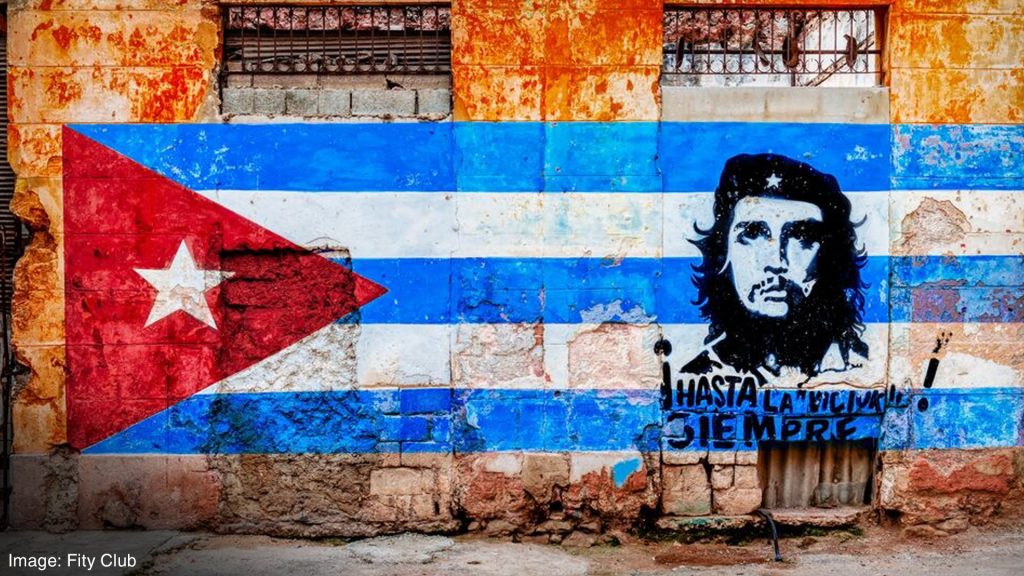
Analysts say three figures have emerged as possible successors to Díaz-Canel: Oscar Perez-Oliva Fraga, a great-nephew of Raúl Castro and current deputy prime minister who rose through GAESA. Raúl Guillermo Rodríguez Castro, known as Raulito, Raúl Castro’s grandson and a reported back-channel contact for Secretary of State Rubio. And Roberto Morales Ojeda, the secretary of organisation of the Communist Party’s Central Committee, described by most analysts as the conventional institutional successor.

Experts are sceptical that replacing Díaz-Canel changes anything fundamental. “You can easily replace Diaz-Canel, and that would not change anything,” said Sebastian Arcos of Florida International University. “That position is hollow. Cuba is really a military-run system.”

The gap between what the US is demanding and what Cuba’s leadership is willing to give has remained unbridged for over six decades. The new sanctions tighten the squeeze. Whether they produce political change or simply deepen the suffering of 10 million people who did not choose this standoff is the question that no sanctions designation answers.

Sources:

·  US slaps new sanctions on Cuban companies key to island’s crumbling economy, AP: https://apnews.com/article/cuba-sanctions-gaesa-rubio-trump-economy

·  Cuba crisis explained: Who holds power, and could Diaz-Canel be replaced, Al Jazeera: https://www.aljazeera.com/news/2026/3/31/cuba-crisis-explained-who-holds-power-and-could-diaz-canel-be-replaced

·  How the US plunged Cuba into darkness, Al Jazeera: https://www.aljazeera.com/features/2026/3/31/how-the-us-plunged-cuba-into-darkness

·  Inside Trump’s quiet plan to take Cuba, Al Jazeera video report: https://www.aljazeera.com/program/the-take/2026/3/31/inside-trumps-quiet-plan-to-take-cuba

·  US maximum pressure campaign on Cuba explained, Foundation for Defense of Democracies research: https://www.fdd.org

·  The Lancet Global Health study on sanctions and excess mortality, 2025: https://www.thelancet.com/journals/langlo/home

Cuba Is Facing Blackouts, Hunger and a Healthcare Collapse. The US Just Made It Harder.

Isla Montclair

Fresh US sanctions on five of Cuba’s most critical state companies landed on June 23, 2026. They came days after Cuba announced its biggest economic reforms in six decades, and they came as the island was already living through one of the worst humanitarian crises in its modern history. Here is the full picture of what is happening, why it is happening and where it is heading.

What the New US Sanctions Actually Target

On June 23, 2026, US Secretary of State Marco Rubio announced new sanctions on five Cuban state entities. Three are directly linked to GAESA, formally known as Grupo de Administración Empresarial S.A., the business conglomerate run by Cuba’s Revolutionary Armed Forces. GAESA is not just one company among many. It controls nearly 40 percent of Cuba’s entire gross domestic product and held $14.5 billion in liquid reserves as recently as early 2024. Targeting it is targeting the financial spine of the Cuban state.

The five sanctioned entities are Almacenes Universales S.A., Cuba’s main logistics and warehousing company and the primary operator at the port of Mariel. Rafin S.A., described by analysts as the corporate financial arm operating within GAESA. Banco Financiero Internacional S.A., a commercial bank that serves as the main banking institution for foreign investors operating in Cuba. Geominera S.A., a state-owned mining company. And Empresa Siderúrgica Jose Martí, Cuba’s largest raw steel producer. Annalie Lilliam Rueda Cardero, daughter-in-law of former President Raúl Castro, was also personally sanctioned.

Michael Bustamante, a professor and chair in Cuban and Cuban-American Studies at the University of Miami, said the designations send a direct message to anyone doing business with Cuba. “By designating specific entities, they’re making it clear to foreign investors: If your business in Cuba touches any of these folks, you risk being banned,” he said. For most foreign companies, he added, that risk is simply too high.

What Life in Cuba Actually Looks Like Right Now

To understand what these sanctions mean in practice, it is important to understand the conditions they are landing into.

Cuba has been under a de facto US oil blockade since January 2026. On January 11, Trump cut off Venezuelan oil supplies to Cuba following a US military operation against Venezuela. On January 29, he signed an executive order threatening tariffs against any country that ships fuel to the island. Since then, only one tanker, a Russian vessel carrying 730,000 barrels of oil, has reached Havana’s harbour.

The consequences have been severe. Nationwide blackouts now stretch between 24 and 30 consecutive hours in rural areas. In Havana, residents face up to 15 hours a day without electricity. Hospitals have been forced to halt standard surgeries because staff cannot get to work and power cannot be guaranteed for operating rooms. Water systems have failed because the pumps that move water through the island’s pipes run on electricity. Public transport has effectively stopped. Rubbish trucks have no fuel. People in Havana are cooking on wood fires.

Journalist Ed Augustin, reporting from Havana for Al Jazeera, described the crisis as “absolutely eviscerating every part of life.” He also made a point that gets lost in the political framing of the Cuba debate. “Sanctions kill,” he said. “There’s a lot of academic literature that shows that sanctions kill.” He cited a 2025 study in The Lancet Global Health journal estimating that 564,000 excess deaths per year globally are linked to economic sanctions. He noted that Cuba’s infant mortality rate is rising this year because medical staff cannot reach hospitals and because basic prenatal vitamins and milk are not reaching mothers and children.

The United Nations has warned of a possible humanitarian collapse in Cuba as a direct result of the fuel shortages.

Cuba’s Biggest Economic Reforms in 60 Years and Washington’s Response

One week before the new sanctions landed, Cuba announced 176 economic reforms. Analysts described the package as potentially the most significant liberalisation of the Cuban economy since the 1959 revolution. The reforms include allowing the private sector to bypass the state when importing goods, a measure that if operational would represent a meaningful structural shift.

Washington’s response was immediate and dismissive. A US State Department spokesperson called the reforms “modest, long overdue and ultimately superficial smoke signals from the Cuban regime.” The statement added that the US administration would continue applying pressure until the regime is “a different beast entirely.”

The US has simultaneously offered $100 million in humanitarian aid to address Cuba’s food and medicine shortages, with one condition: the aid must be distributed exclusively through the Catholic Church and independent non-profits, with no involvement from the Cuban government. Cuba’s foreign minister rejected the offer, calling the conditions insincere and demanding the US lift the energy blockade instead.

Who Actually Runs Cuba and What Comes Next

Cuban President Miguel Díaz-Canel is the visible face of the government but analysts say real power in Cuba does not rest with the presidency. “The real power in Cuba really rests with the Castro clan, Raúl Castro and his family, and then GAESA, the military-controlled conglomerate,” said Orlando Perez, a political science professor at the University of North Texas at Dallas.

Reports have emerged that the Trump administration is actively pressuring other powerful Cuban figures to remove Díaz-Canel. Cuba has lost roughly one tenth of its entire population to emigration since 2019, one of the largest migration waves since the 1960s. Protests have continued. A Communist Party office in the city of Morón was set on fire in March. Residents in multiple cities continue the traditional protest practice of banging pots and pans at night.

Analysts say three figures have emerged as possible successors to Díaz-Canel: Oscar Perez-Oliva Fraga, a great-nephew of Raúl Castro and current deputy prime minister who rose through GAESA. Raúl Guillermo Rodríguez Castro, known as Raulito, Raúl Castro’s grandson and a reported back-channel contact for Secretary of State Rubio. And Roberto Morales Ojeda, the secretary of organisation of the Communist Party’s Central Committee, described by most analysts as the conventional institutional successor.

Experts are sceptical that replacing Díaz-Canel changes anything fundamental. “You can easily replace Diaz-Canel, and that would not change anything,” said Sebastian Arcos of Florida International University. “That position is hollow. Cuba is really a military-run system.”

The gap between what the US is demanding and what Cuba’s leadership is willing to give has remained unbridged for over six decades. The new sanctions tighten the squeeze. Whether they produce political change or simply deepen the suffering of 10 million people who did not choose this standoff is the question that no sanctions designation answers.

Sources:

·  US slaps new sanctions on Cuban companies key to island’s crumbling economy, AP: https://apnews.com/article/cuba-sanctions-gaesa-rubio-trump-economy

·  Cuba crisis explained: Who holds power, and could Diaz-Canel be replaced, Al Jazeera: https://www.aljazeera.com/news/2026/3/31/cuba-crisis-explained-who-holds-power-and-could-diaz-canel-be-replaced

·  How the US plunged Cuba into darkness, Al Jazeera: https://www.aljazeera.com/features/2026/3/31/how-the-us-plunged-cuba-into-darkness

·  Inside Trump’s quiet plan to take Cuba, Al Jazeera video report: https://www.aljazeera.com/program/the-take/2026/3/31/inside-trumps-quiet-plan-to-take-cuba

·  US maximum pressure campaign on Cuba explained, Foundation for Defense of Democracies research: https://www.fdd.org

·  The Lancet Global Health study on sanctions and excess mortality, 2025: https://www.thelancet.com/journals/langlo/home
spot_img

Explore more

spot_img
Global Affairs

France Bans Social Media for Kids Under 15

Satellite Images Show Israel’s Is Building a Wall Going Past Gaza’s...

US to Let Saudi Enrich Uranium, the Same Thing It Fought...

Delaware County’s First Muslim Sheriff Targeted With Racist Death Threats

Gaza’s Population Has Dropped by Nearly 10 Percent Since October 2023

Venezuela, Iran, Cuba: The Oil Pattern Behind Trump’s Three Targets

US Senators Push Bill to Punish India and China for Buying...

Behind the Cockroach Protests: A Broken Exam System That’s Cost Students...