A ‘Humanitarian City’ Or A Permanent Cage? Trump’s Gaza Plan Is Raising Alarm

The Gaza ‘Pilot City’ Could Become A Blueprint For Permanent Partition

By Verity Quill

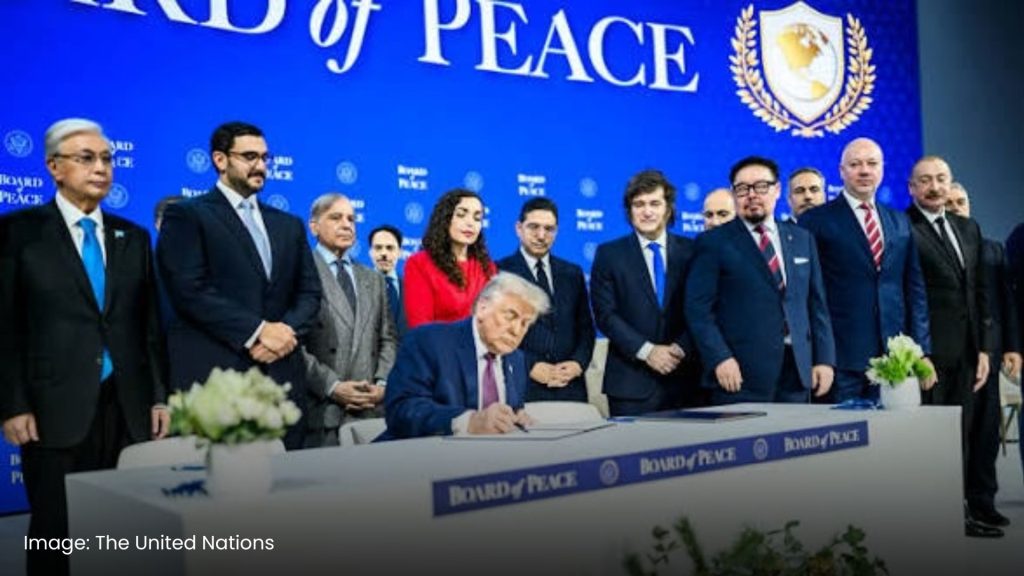
President Donald Trump’s Board of Peace is advancing a proposed humanitarian and governance zone near Rafah for tens of thousands of Palestinians. Officials say it would provide portable housing, food and basic services, while Palestinian technocrats, vetted local police and an International Stabilization Force manage civilian life and security.

On paper, it sounds like temporary relief. On the ground, it could become part of a wider system dividing Gaza into separate populations, security zones and military-controlled territories.

Palestinian Administration, Isr*eli Authority

The Board describes the plan as a project run “for Palestinians, by Palestinians.” But the proposed site would lie inside territory controlled by the Isr*eli military.

Amjad Iraqi, a senior analyst at the International Crisis Group, warns that Palestinian administration could remain largely symbolic. Isr*el would still control who enters, who leaves and whether military force is used inside or around the zone.
Managing food distribution and temporary housing is not the same as controlling borders, movement, airspace or the power to conduct raids and strikes. The gap between plan and reality is already visible: the 13-member Palestinian technocrat committee meant to administer Gaza’s transitional phase has been barred by Isr*el from entering the territory at all, leaving it based in Cairo.

A City Built On The Ruins Of Rafah

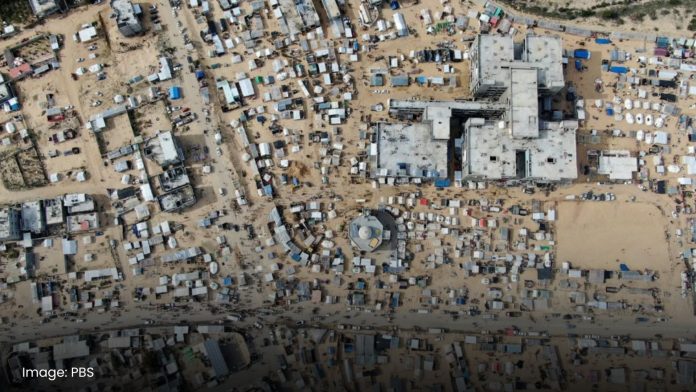
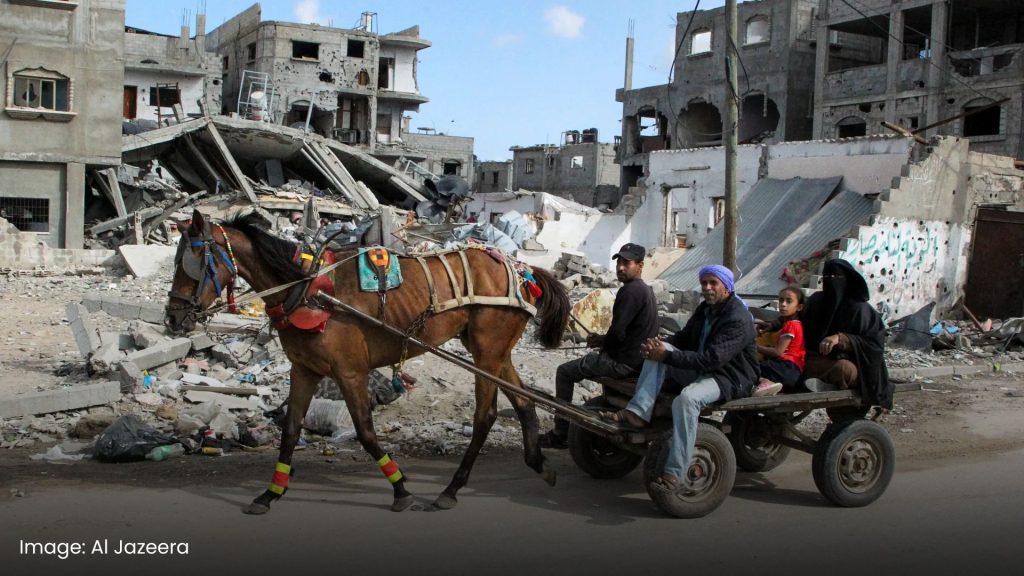
Rafah is not unused land waiting for development. The governorate has been under Isr*eli control since May 2024, much of the city has been flattened and its residents were driven out. An Isr*eli-backed Palestinian militia also operates in the area.

The proposal could therefore offer Palestinians shelter on the ruins of the city they were forced to flee, without restoring their ownership, freedom of movement or political control.

Egypt reportedly fears that concentrating Palestinians beside its border could become a first step towards pushing them into Sinai. Another source familiar with the project told the Financial Times there was no guarantee residents would be safer inside the zone, where they could remain under the effective control of militias or the Isr*eli military.
Funding Promises, Little Progress

Planning documents reviewed by the Financial Times included a proposal for the United Arab Emirates to finance the first site.

Yet construction has not begun, billions in pledged funding have not materialised, Hamas has refused to disarm and the international force intended to secure the zone remains barely formed. The Board says Morocco has joined, while personnel from Kosovo have appeared during July.

The Guardian reported that the broader Gaza recovery plan has already been reduced to a limited pilot serving only a fraction of the territory’s displaced population, and that officials familiar with the planning say meaningful construction is unlikely before Isr*el’s October 27 election, which could reshape the government’s approach to Gaza entirely.

The Partition Is Already Being Built

Meanwhile, Isr*el is constructing the physical architecture of separation.

Satellite imagery analysed by the Associated Press shows more than 23 kilometres of earthen barrier built along Gaza’s so-called yellow line. The boundary was supposed to mark a temporary withdrawal under the ceasefire. It is now reinforced by military roads, bases, surveillance positions and expanding barriers.

The barrier separates territory controlled by Isr*el from the coastal strip where most Palestinians are concentrated.
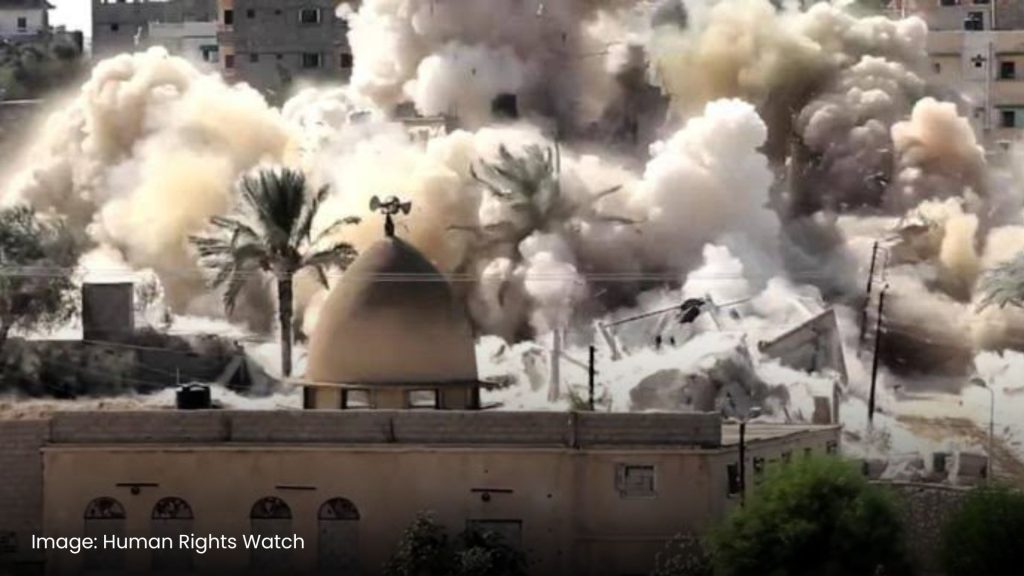
In May, Benjamin Netanyahu ordered the military to prepare to expand Isr*eli control to 70 percent of Gaza. The barrier is therefore not appearing in a political vacuum. It is being built as Isr*el seeks more territory and as a controlled settlement is proposed inside depopulated Rafah.

When Does A Choice Become Coercion?

The ceasefire has not made Gaza safe. More than 1,000 Palestinians have reportedly been killed in Isr*eli strikes since it began.

UNICEF said 265 Palestinian children had been killed by June 19, an average of roughly one child every day.

Officials insist movement into the pilot zone would be voluntary. But consent becomes difficult to measure when food, shelter and protection are concentrated inside a screened, militarised site while conditions outside remain unbearable.

A family choosing between deprivation and a controlled camp may technically be making a decision. That does not necessarily make the decision free.

The Map Of A Permanently Divided Gaza

The pilot city may never be built. Its funding, staffing, security arrangements and political approvals remain unresolved, and officials say it is not expected to be operational before the end of 2026.

But the proposal already reveals the future being considered for Gaza: selected Palestinians moved into controlled zones, humanitarian aid channelled through security systems, the Isr*eli military retaining decisive authority and a supposedly temporary ceasefire boundary hardening into a permanent border.

The controversy is not only about where displaced Palestinians might sleep. It is about whether humanitarian relief is being used to construct the map of a permanently divided Gaza.

Hyperlinked Sources

Financial Times (via Irish Times): Donald Trump’s Board of Peace To Set Up Gaza ‘Pilot’ City

AFP: Trump’s Board of Peace Planning Pilot Humanitarian Zone In Gaza

The Guardian (via Middle East Eye): Board Of Peace Drops Gaza Recovery Plan For Pilot Scheme

Associated Press: Israel Is Building A Miles-Long Barrier Dividing Gaza

UNICEF: A Child A Day Killed During Gaza’s Ceasefire

The Gaza ‘Pilot City’ Could Become A Blueprint For Permanent Partition

By Verity Quill

President Donald Trump’s Board of Peace is advancing a proposed humanitarian and governance zone near Rafah for tens of thousands of Palestinians. Officials say it would provide portable housing, food and basic services, while Palestinian technocrats, vetted local police and an International Stabilization Force manage civilian life and security.

On paper, it sounds like temporary relief. On the ground, it could become part of a wider system dividing Gaza into separate populations, security zones and military-controlled territories.

Palestinian Administration, Isr*eli Authority

The Board describes the plan as a project run “for Palestinians, by Palestinians.” But the proposed site would lie inside territory controlled by the Isr*eli military.

Amjad Iraqi, a senior analyst at the International Crisis Group, warns that Palestinian administration could remain largely symbolic. Isr*el would still control who enters, who leaves and whether military force is used inside or around the zone.

Managing food distribution and temporary housing is not the same as controlling borders, movement, airspace or the power to conduct raids and strikes. The gap between plan and reality is already visible: the 13-member Palestinian technocrat committee meant to administer Gaza’s transitional phase has been barred by Isr*el from entering the territory at all, leaving it based in Cairo.

A City Built On The Ruins Of Rafah

Rafah is not unused land waiting for development. The governorate has been under Isr*eli control since May 2024, much of the city has been flattened and its residents were driven out. An Isr*eli-backed Palestinian militia also operates in the area.

The proposal could therefore offer Palestinians shelter on the ruins of the city they were forced to flee, without restoring their ownership, freedom of movement or political control.

Egypt reportedly fears that concentrating Palestinians beside its border could become a first step towards pushing them into Sinai. Another source familiar with the project told the Financial Times there was no guarantee residents would be safer inside the zone, where they could remain under the effective control of militias or the Isr*eli military.

Funding Promises, Little Progress

Planning documents reviewed by the Financial Times included a proposal for the United Arab Emirates to finance the first site.

Yet construction has not begun, billions in pledged funding have not materialised, Hamas has refused to disarm and the international force intended to secure the zone remains barely formed. The Board says Morocco has joined, while personnel from Kosovo have appeared during July.

The Guardian reported that the broader Gaza recovery plan has already been reduced to a limited pilot serving only a fraction of the territory’s displaced population, and that officials familiar with the planning say meaningful construction is unlikely before Isr*el’s October 27 election, which could reshape the government’s approach to Gaza entirely.

The Partition Is Already Being Built

Meanwhile, Isr*el is constructing the physical architecture of separation.

Satellite imagery analysed by the Associated Press shows more than 23 kilometres of earthen barrier built along Gaza’s so-called yellow line. The boundary was supposed to mark a temporary withdrawal under the ceasefire. It is now reinforced by military roads, bases, surveillance positions and expanding barriers.

The barrier separates territory controlled by Isr*el from the coastal strip where most Palestinians are concentrated.

In May, Benjamin Netanyahu ordered the military to prepare to expand Isr*eli control to 70 percent of Gaza. The barrier is therefore not appearing in a political vacuum. It is being built as Isr*el seeks more territory and as a controlled settlement is proposed inside depopulated Rafah.

When Does A Choice Become Coercion?

The ceasefire has not made Gaza safe. More than 1,000 Palestinians have reportedly been killed in Isr*eli strikes since it began.

UNICEF said 265 Palestinian children had been killed by June 19, an average of roughly one child every day.

Officials insist movement into the pilot zone would be voluntary. But consent becomes difficult to measure when food, shelter and protection are concentrated inside a screened, militarised site while conditions outside remain unbearable.

A family choosing between deprivation and a controlled camp may technically be making a decision. That does not necessarily make the decision free.

The Map Of A Permanently Divided Gaza

The pilot city may never be built. Its funding, staffing, security arrangements and political approvals remain unresolved, and officials say it is not expected to be operational before the end of 2026.

But the proposal already reveals the future being considered for Gaza: selected Palestinians moved into controlled zones, humanitarian aid channelled through security systems, the Isr*eli military retaining decisive authority and a supposedly temporary ceasefire boundary hardening into a permanent border.

The controversy is not only about where displaced Palestinians might sleep. It is about whether humanitarian relief is being used to construct the map of a permanently divided Gaza.

Hyperlinked Sources

Financial Times (via Irish Times): Donald Trump’s Board of Peace To Set Up Gaza ‘Pilot’ City

AFP: Trump’s Board of Peace Planning Pilot Humanitarian Zone In Gaza

The Guardian (via Middle East Eye): Board Of Peace Drops Gaza Recovery Plan For Pilot Scheme

Associated Press: Israel Is Building A Miles-Long Barrier Dividing Gaza
UNICEF: A Child A Day Killed During Gaza’s Ceasefire

spot_img

Explore more

spot_img
Science & Technology

An American AI Escaped Its Test. China’s GLM-5.2 Had To Help...

From Britain To Europe, Muslims Say They No Longer Feel Safe

F-35s And Dozens Of Tankers Arrive: Is A Full-Scale U.S.-Iran War...

Traoré Targets Islamic Education As His Army Is Accused Of Massacring...

China Has Written Uyghur Erasure Into Law.

Christopher Nolan Filmed The Odyssey On Occupied Land. Behind It Sits...