For years, China described its campaign in Xinjiang as a temporary response to terrorism and religious extremism.
Detention facilities were presented as vocational schools. Labour-transfer programmes were described as poverty reduction. Restrictions on religion, language and culture were justified as necessary for stability.
Now those policies are being embedded more deeply into national law.
China’s Law on Promoting Ethnic Unity and Progress took effect on July 1, 2026. Beijing says it will promote equality, national cohesion and common prosperity among the country’s recognised ethnic groups.
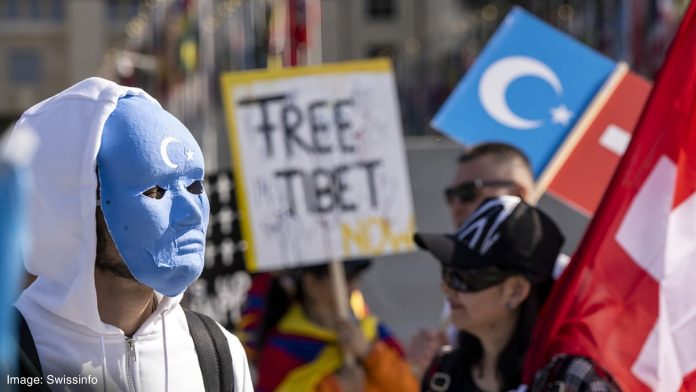
Uyghur, Tibetan and international human-rights advocates see something far darker: a permanent legal framework that could make cultural survival conditional on obedience to the Chinese state.
One State-Approved Identity
The legislation requires government agencies, schools, companies, political organisations, the military and citizens to promote a shared consciousness of the Chinese nation.
It prioritises Mandarin throughout compulsory education and extends the Communist Party’s integration policies across religion, culture, media, tourism and public life. CNN reported that critics believe it weakens minority-language education and further erodes the limited autonomy previously promised to minority communities.
The law does not explicitly outlaw Uyghur culture. Its power lies in allowing the state to decide which expressions of language, religion and history count as harmless tradition and which can be treated as separatism, extremism or disloyalty.
China calls this unity. Its critics call it assimilation.
The Law Reaches Beyond China
The legislation also creates a legal basis for action against people and organisations outside China accused of damaging ethnic unity, encouraging separatism or threatening Chinese sovereignty.
Chinese officials have defended that overseas reach as a legitimate protection of national interests. UN High Commissioner for Human Rights Volker Türk called for the law to be repealed, warning before the Human Rights Council that it risks “deepening restrictions on freedoms of language, education, practice of religion, culture, expression and assembly.”
Uyghur activists abroad already report surveillance, online threats and pressure delivered through relatives who remain in Xinjiang.
In February 2025, Thailand deported 40 Uyghur men after holding them for more than a decade, despite warnings that they could face detention or abuse after their return.
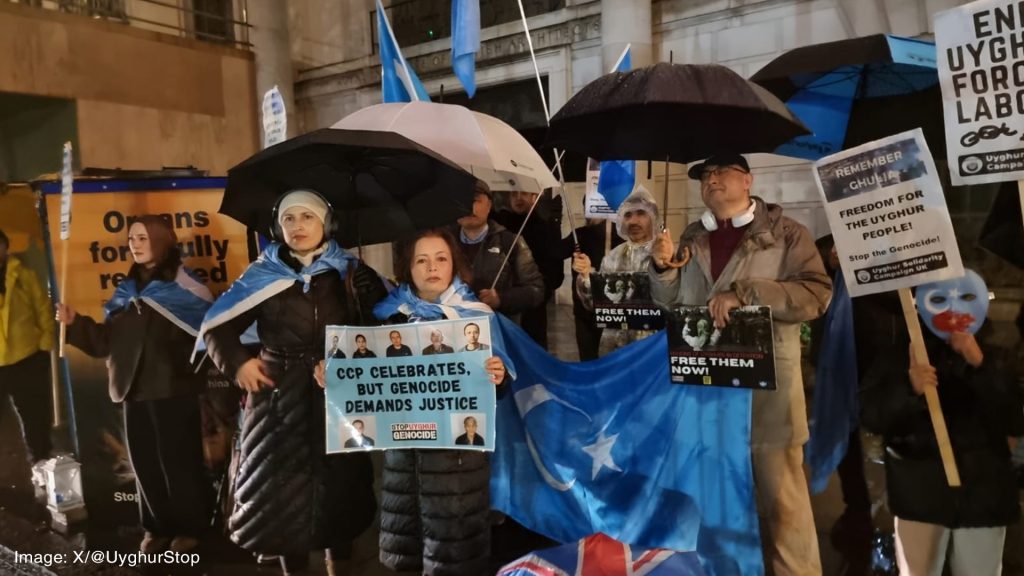
For Uyghurs, exile does not always mean escape.
The Camps Were Not The End
Since 2017, Chinese authorities have detained an estimated one million or more Uyghurs and other predominantly Muslim minorities through camps, prisons and related systems of coercive control.
China says the vocational centres closed after participants completed their training. Rights organisations argue that repression changed form through long prison sentences, surveillance, family separation, forced or coercive labour transfers and restrictions on Islamic practice.
A 2020 satellite analysis by the Australian Strategic Policy Institute estimated that approximately 16,000 mosques in Xinjiang had been damaged or destroyed since 2017. The estimate is not a new 2026 count, but it remains one of the clearest measures of the campaign against Uyghur religious life.
Forced-labour concerns have also spread into automotive, renewable-energy, textile, agricultural and seafood supply chains, making repression in Xinjiang part of products consumed far beyond China.
China Punished Corruption, Not Repression
China has shown that it can impose rapid accountability when Communist Party discipline is threatened.
Former Xinjiang party chief Ma Xingrui was expelled from the Party and stripped of public office on July 14, 2026. Authorities accused him of bribery, abuse of power, securing positions for relatives, protecting corrupt subordinates and extensive “family corruption.”
Ma led Xinjiang from 2021 to 2025 and publicly declared that the “Sinicisation” of Islam was inevitable. Yet his punishment concerned corruption, not the imprisonment, religious repression or assimilation policies maintained during his leadership.
The distinction exposes the system’s priorities. Corruption is treated as wrongdoing against the Party. Cultural repression is treated as policy.
From Emergency Campaign To Permanent Law
The new law matters because it moves China’s assimilation project beyond a regional security campaign.
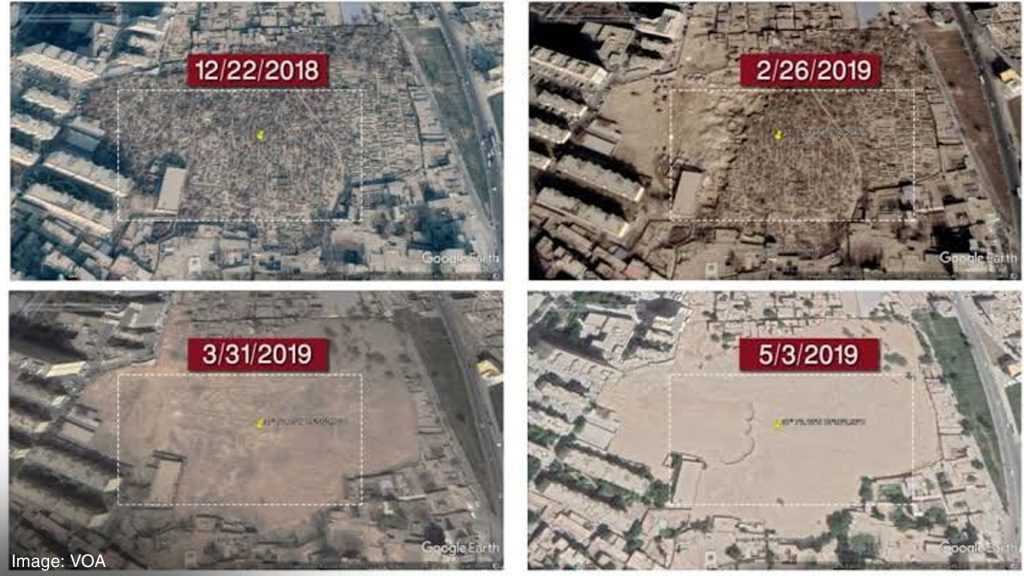
The camps confined bodies. Surveillance controlled behaviour. Mandarin-first education reshaped future generations. The new legislation now places those policies inside a nationwide legal architecture that may also pursue resistance abroad.
The fear is not simply that Uyghur culture will face further restrictions.
It is that future generations will inherit a state-approved version of Uyghur identity stripped of everything Beijing considers independent, resistant or uncontrollable.
By Verity Quill
Hyperlinked Sources
https://www.cnn.com/2026/07/01/china/china-ethnic-unity-law-intl-hnk
Arab News: Tibetan and Uyghur minorities warn at UN
https://www.arabnews.com/node/2649189/world
Human Rights Watch: Thailand forcibly sends 40 Uyghurs to China
https://www.hrw.org/news/2025/02/27/thailand-40-uyghurs-forcibly-sent-china
Australian Strategic Policy Institute: Xinjiang mosque destruction analysis
https://xjdp.aspi.org.au/explainers/cultural-erasure
Nikkei Asia: China purges third Politburo member, Ma Xingrui expelled
https://asia.nikkei.com/politics/china-purges-third-politburo-member-in-deepening-anti-graft-drive