

Sam Altman’s Metered Intelligence Warning
Sam Altman just described a future where AI is not treated like an app, a chatbot, or a subscription. It is treated like infrastructure.
At BlackRock’s 2026 Infrastructure Summit, the OpenAI CEO said AI could become a utility, like electricity or water, where people buy “intelligence” on a meter. He was speaking to Bayo Ogunlesi, chairman of BlackRock’s Global Infrastructure Partners and an OpenAI board member. Business Insider reported that Altman framed the model around tokens, the units AI systems use to process and price work.
That may sound technical. It is not.
It means the industry is imagining a future where intelligence itself becomes something people consume, measure, and pay for by usage.
AI Was Sold As Access For Everyone
The promise of AI was simple: more people could suddenly write, code, research, design, plan, translate, learn, and build at a higher level.
That promise still matters. But Altman’s comment exposes the pricing logic underneath it. If intelligence becomes a utility, then the key question is no longer only how powerful AI becomes. It is who owns the meter, who sets the price, and who gets the best version.
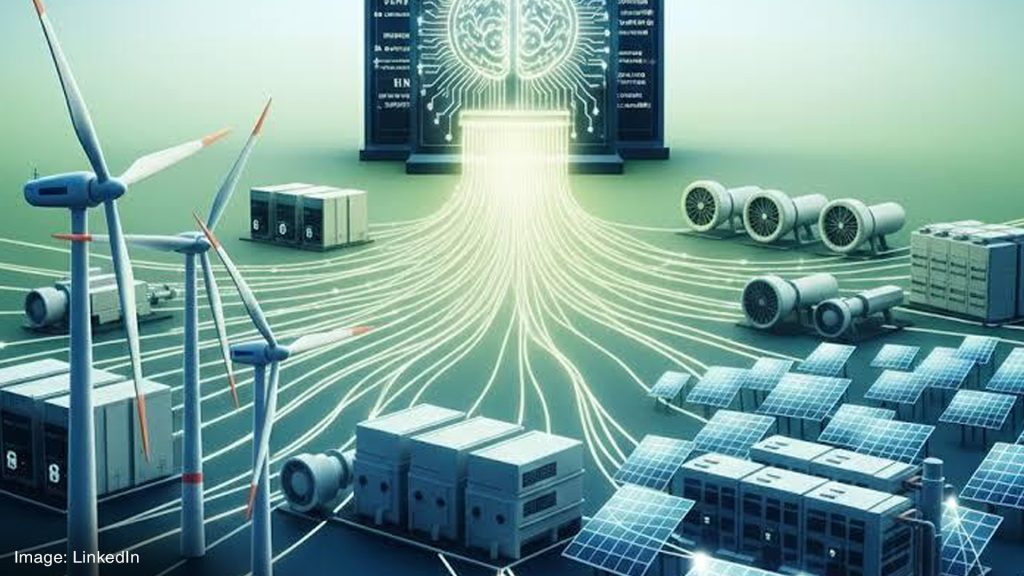
Altman himself warned that if there is not enough AI infrastructure, access could become expensive and tilt toward wealthy users. That is the part of the quote that should worry people most. The danger is not that AI costs money. The danger is that high-quality intelligence becomes another unequal layer in society.
The rich may not just get better tools. They may get better thinking.
The Internet Did Not Take It Well
The clip went viral within hours. The responses were not kind.
Gizmodo wrote that the quote “conjures up the nightmarish image of someone being unable to pay their intelligence bill.” One user on X called it “the beginning of a Black Mirror episode.” Matt Stoller, research director at the American Economic Liberties Project, put it more bluntly: “He’s saying a really big spreadsheet and a baby are morally equivalent.”
The backlash was not just about pricing. It was about what the vision reveals. Altman was not speaking to ordinary users. He was speaking to infrastructure investors at a BlackRock summit. The audience for this idea was never the public. It was the people who would build and own the pipes.
The AI Bill May Come Twice
Here is the deeper contradiction.
Before AI companies send people an intelligence bill, the infrastructure powering AI may already be raising real utility costs.
One in six US households is currently behind on their energy bills, according to the National Energy Assistance Directors Association. That is before AI data centers fully arrive in their region.
AI runs on data centers. Data centers need chips, land, cooling, water, transformers, transmission lines, and enormous amounts of electricity. The International Energy Agency says global data-center electricity consumption is projected to more than double to around 945 terawatt-hours by 2030, slightly more than Japan’s total electricity consumption today. Goldman Sachs projects household electricity prices will rise an additional 6% through 2027 directly because of AI data center demand. Power bills in the US have already risen 40% since 2021.
Every prompt feels weightless on a screen. But somewhere, a server runs, electricity moves, cooling systems work, and a grid absorbs the demand.

The Infrastructure Race Is Already Here
OpenAI is not talking about this in theory. It is building toward it.
In January 2025, OpenAI announced the Stargate Project, a plan to invest $500 billion over four years in AI infrastructure in the United States, beginning with $100 billion deployed immediately. By April 2026, OpenAI said it had already surpassed its original 10-gigawatt US AI infrastructure goal, with more than 3 gigawatts added in just 90 days.
That is the real story: AI is becoming infrastructure before most people have fully understood the cost of that infrastructure.
Communities Are Already Feeling The Pressure
The public backlash is no longer hypothetical.
In Ireland, a report commissioned by Friends of the Earth Ireland and Beyond Fossil Fuels claimed data centers consumed 22% of national electricity in 2023 and added hundreds of euros to household bills between 2015 and 2023. The data-center industry disputes parts of that framing. But the political tension is clear: communities are beginning to ask whether they are subsidizing Big Tech’s AI future through their own electricity bills.
In the US, modelling from Carnegie Mellon University’s Open Energy Outlook Initiative showed that data-center growth through 2030 could raise average US electricity generation costs by 8%, and by as much as 25% in some regional markets.
The Next Inequality May Be Intelligence
This is why Altman’s quote landed so hard.
If AI becomes a utility, access may feel normal at first. People already pay for electricity, water, internet, cloud storage, and software. But intelligence is different. It affects school, work, business, creativity, research, legal access, medical understanding, and decision-making.
If the best intelligence is metered, the future may not divide people between those who use AI and those who do not. It may divide people between those who can afford to think clearly and those who cannot.
One in six households already cannot pay their electricity bill. The meter for intelligence has not even been installed yet.
By Shizza Farooqui
Sources: Business Insider, IEA, OpenAI, Carnegie Mellon University, The Guardian, Tom’s Guide, Consumer Reports, Goldman Sachs, Gizmodo, National Energy Assistance Directors Association, Cybernews.