Eurovision Is Tearing Europe Apart

The Contest That Almost Did Not Happen

Eurovision 2026 nearly did not exist.

Behind the sequins and the stage lights in Vienna this week, a quiet emergency was unfolding. Five countries had already withdrawn. But according to a highly placed source cited by The Hollywood Reporter, additional countries including Belgium and several Scandinavian nations were on the verge of pulling out entirely. Had they followed through, the financial losses would have been insurmountable. The 70th edition of the Eurovision Song Contest could realistically have been cancelled.

They were talked back. The show went on. But the contest that emerged from those negotiations looks nothing like the one Eurovision’s founders imagined.

Only 35 countries are competing in Vienna this year. That is the lowest number since 2003, before the introduction of semi-finals. Tickets for the Grand Final are still available, something the president of the Irish Eurovision Fan Club described as “kind of unheard of.” Around 800 Irish fans would normally travel to the host city. This year approximately 40 made the trip.

Eurovision was watched by 166 million people last year. Tonight, it is being watched by a world asking whether it can survive.

Five Countries. Two Trophies. One Genocide.

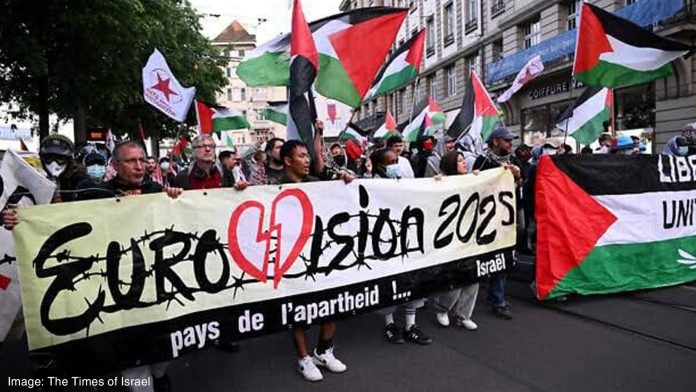
Ireland, Spain, the Netherlands, Slovenia, and Iceland withdrew from Eurovision 2026 in protest at Isr*el’s continued participation during the genocide in Gaza. It is the largest boycott in the contest’s history since 1970 and the first time the “Big Five” financial contributors have been incomplete since Italy joined the group in 2011. Spain’s withdrawal alone represents a significant financial and cultural blow to the contest.

The boycott arrived with symbols as powerful as the walkout itself.
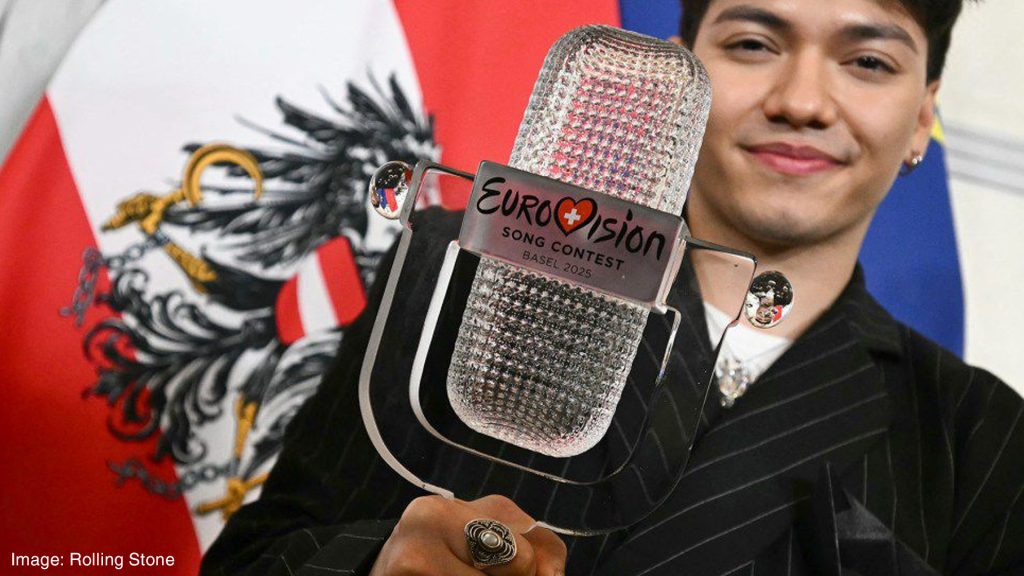
Swiss winner Nemo, who won Eurovision for Switzerland in 2024, returned their trophy to the EBU after organisers decided not to hold a vote on banning Isr*el in late 2025. Irish winner Charlie McGettigan, who won in 1994, announced he would also return his trophy.

More than 1,100 musicians and cultural figures signed an open letter demanding Isr*el’s exclusion. Signatories included Massive Attack, Brian Eno, Macklemore, Kneecap, Sigur Ros, Paloma Faith, and former Eurovision winners. The letter asked: “How can any performer or Eurovision fan in good conscience participate at the contest’s next edition in Austria amidst US-Israeli plans for hyper-surveilled concentration camps in New Gaza?”

Some boycotting broadcasters replaced Eurovision coverage entirely. Ireland’s RTE aired an episode of the beloved sitcom Father Ted in which the main characters perform in Eurovision. Slovenia’s national broadcaster aired a series of Palestine-focused films and documentaries under the banner “Voices of Palestine.”

The Double Standard Europe Cannot Ignore

The argument at the heart of the boycott is simple and devastating.

In 2022, Eurovision removed Russia from the contest within days of its invasion of Ukraine. The decision was swift, unanimous, and presented as a moral necessity.

Isr*el has now participated through two years of a genocide that has killed over 72,500 people in Gaza. It remains on the Eurovision stage.

Critics across Europe, including broadcasters, former contestants, musicians, and fans, have openly asked why the same institution that removed Russia in days has spent two years finding reasons to keep Isr*el in. Eurovision organisers have not provided an answer that has satisfied the boycotting nations.

That comparison has now spread far beyond activists. It has reached the centre of mainstream European cultural debate.

The Million Dollar Soft Power Operation

Isr*el is represented at Eurovision 2026 by singer-songwriter Noam Bettan, performing a French-Hebrew song. Bettan advanced to the Grand Final from the semi-finals.

But his participation has been shadowed by a voting controversy that goes beyond this year’s contest.

The Times of London reported that Isr*el spent more than one million US dollars on Eurovision marketing specifically to enhance its soft power image internationally. In 2025, the Israeli Government Advertising Agency ran a Eurovision campaign that generated over 68 million online impressions. The existence of a similar 2024 campaign was confirmed directly by the Israeli Ministry of Foreign Affairs.

This year, Eurovision organisers formally warned Israeli broadcaster KAN after it posted videos instructing viewers to use all 10 of their available votes for Isr*el’s entry. Eurovision reduced the maximum votes per person from 20 to 10 this year following growing accusations that the public vote system was being manipulated.

Eurovision director Martin Green acknowledged Isr*el’s actions were “excessive” but said they did not affect the contest’s outcome. Many of the boycotting nations disagreed.

Pinkwashing On The Eurovision Stage

Eurovision has long been one of the world’s most significant cultural events for the global LGBTQ community. For decades it has provided a platform for queer artists, queer audiences, and queer expression at a scale few other events can match.

That history has made Isr*el’s Eurovision strategy particularly controversial.

Critics have long accused Isr*el of using its progressive domestic LGBTQ policies as a shield against international criticism of its treatment of Palestinians, a strategy known as pinkwashing. Eurovision, with its enormous LGBTQ audience and cultural significance, has been identified as one of the primary stages for that strategy.

For many LGBTQ Eurovision fans, the question has become impossible to ignore: can a contest built on queer joy and inclusion continue to provide a platform for a state conducting a genocide, regardless of its domestic social policies?

That tension is running through Vienna this week in ways that have no easy resolution.

The Night That Landed On Nakba Day

The Grand Final of Eurovision 2026 is taking place as Palestinians around the world mark Nakba Day, the 78th anniversary of the violent displacement of more than 750,000 Palestinians from their homeland in 1948.

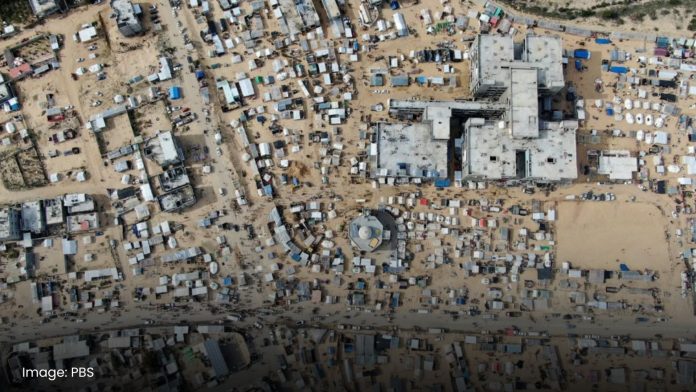
The collision of those two events is not accidental. It is a reflection of where Europe finds itself in 2026: unable to separate its cultural celebrations from the political realities its institutions keep trying to bracket away.

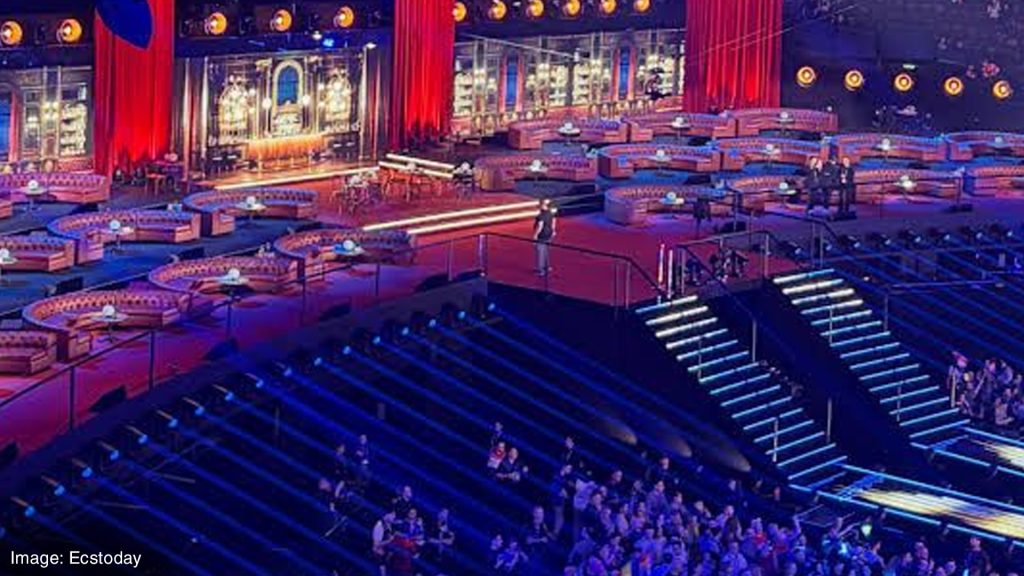
On one screen, sequins and spotlights in Vienna. On another, mourning and memory for a catastrophe that began 78 years ago and has not ended.
What Happens If Isr*el Wins Tonight

One question is hanging over the Grand Final in Vienna.

If Noam Bettan wins Eurovision 2026, Isr*el would host the contest in 2027. Multiple boycotting countries have signaled they would not return under those circumstances. Additional countries currently on the fence would face enormous pressure to withdraw as well. The financial model that keeps Eurovision viable would face a challenge it may not survive.

That is the stakes of tonight’s vote.

The contest that once symbolised European unity now looks like a mirror reflecting Europe’s deepest political, cultural, and moral divisions back at itself.

The sequins are still there. The divisions are deeper than ever.

By Shizza Farooqui

Sources

Reuters, CNN, CBC, Hollywood Reporter, Al Jazeera, Middle East Eye, NPR, AP, The Times of London
The Contest That Almost Did Not Happen

Eurovision 2026 nearly did not exist.

Behind the sequins and the stage lights in Vienna this week, a quiet emergency was unfolding. Five countries had already withdrawn. But according to a highly placed source cited by The Hollywood Reporter, additional countries including Belgium and several Scandinavian nations were on the verge of pulling out entirely. Had they followed through, the financial losses would have been insurmountable. The 70th edition of the Eurovision Song Contest could realistically have been cancelled.

They were talked back. The show went on. But the contest that emerged from those negotiations looks nothing like the one Eurovision’s founders imagined.

Only 35 countries are competing in Vienna this year. That is the lowest number since 2003, before the introduction of semi-finals. Tickets for the Grand Final are still available, something the president of the Irish Eurovision Fan Club described as “kind of unheard of.” Around 800 Irish fans would normally travel to the host city. This year approximately 40 made the trip.

Eurovision was watched by 166 million people last year. Tonight, it is being watched by a world asking whether it can survive.

Five Countries. Two Trophies. One Genocide.

Ireland, Spain, the Netherlands, Slovenia, and Iceland withdrew from Eurovision 2026 in protest at Isr*el’s continued participation during the genocide in Gaza. It is the largest boycott in the contest’s history since 1970 and the first time the “Big Five” financial contributors have been incomplete since Italy joined the group in 2011. Spain’s withdrawal alone represents a significant financial and cultural blow to the contest.

The boycott arrived with symbols as powerful as the walkout itself.

Swiss winner Nemo, who won Eurovision for Switzerland in 2024, returned their trophy to the EBU after organisers decided not to hold a vote on banning Isr*el in late 2025. Irish winner Charlie McGettigan, who won in 1994, announced he would also return his trophy.

More than 1,100 musicians and cultural figures signed an open letter demanding Isr*el’s exclusion. Signatories included Massive Attack, Brian Eno, Macklemore, Kneecap, Sigur Ros, Paloma Faith, and former Eurovision winners. The letter asked: “How can any performer or Eurovision fan in good conscience participate at the contest’s next edition in Austria amidst US-Israeli plans for hyper-surveilled concentration camps in New Gaza?”

Some boycotting broadcasters replaced Eurovision coverage entirely. Ireland’s RTE aired an episode of the beloved sitcom Father Ted in which the main characters perform in Eurovision. Slovenia’s national broadcaster aired a series of Palestine-focused films and documentaries under the banner “Voices of Palestine.”

The Double Standard Europe Cannot Ignore

The argument at the heart of the boycott is simple and devastating.

In 2022, Eurovision removed Russia from the contest within days of its invasion of Ukraine. The decision was swift, unanimous, and presented as a moral necessity.

Isr*el has now participated through two years of a genocide that has killed over 72,500 people in Gaza. It remains on the Eurovision stage.

Critics across Europe, including broadcasters, former contestants, musicians, and fans, have openly asked why the same institution that removed Russia in days has spent two years finding reasons to keep Isr*el in. Eurovision organisers have not provided an answer that has satisfied the boycotting nations.

That comparison has now spread far beyond activists. It has reached the centre of mainstream European cultural debate.

The Million Dollar Soft Power Operation

Isr*el is represented at Eurovision 2026 by singer-songwriter Noam Bettan, performing a French-Hebrew song. Bettan advanced to the Grand Final from the semi-finals.

But his participation has been shadowed by a voting controversy that goes beyond this year’s contest.

The Times of London reported that Isr*el spent more than one million US dollars on Eurovision marketing specifically to enhance its soft power image internationally. In 2025, the Israeli Government Advertising Agency ran a Eurovision campaign that generated over 68 million online impressions. The existence of a similar 2024 campaign was confirmed directly by the Israeli Ministry of Foreign Affairs.

This year, Eurovision organisers formally warned Israeli broadcaster KAN after it posted videos instructing viewers to use all 10 of their available votes for Isr*el’s entry. Eurovision reduced the maximum votes per person from 20 to 10 this year following growing accusations that the public vote system was being manipulated.

Eurovision director Martin Green acknowledged Isr*el’s actions were “excessive” but said they did not affect the contest’s outcome. Many of the boycotting nations disagreed.

Pinkwashing On The Eurovision Stage

Eurovision has long been one of the world’s most significant cultural events for the global LGBTQ community. For decades it has provided a platform for queer artists, queer audiences, and queer expression at a scale few other events can match.

That history has made Isr*el’s Eurovision strategy particularly controversial.

Critics have long accused Isr*el of using its progressive domestic LGBTQ policies as a shield against international criticism of its treatment of Palestinians, a strategy known as pinkwashing. Eurovision, with its enormous LGBTQ audience and cultural significance, has been identified as one of the primary stages for that strategy.

For many LGBTQ Eurovision fans, the question has become impossible to ignore: can a contest built on queer joy and inclusion continue to provide a platform for a state conducting a genocide, regardless of its domestic social policies?

That tension is running through Vienna this week in ways that have no easy resolution.

The Night That Landed On Nakba Day

The Grand Final of Eurovision 2026 is taking place as Palestinians around the world mark Nakba Day, the 78th anniversary of the violent displacement of more than 750,000 Palestinians from their homeland in 1948.

The collision of those two events is not accidental. It is a reflection of where Europe finds itself in 2026: unable to separate its cultural celebrations from the political realities its institutions keep trying to bracket away.

On one screen, sequins and spotlights in Vienna. On another, mourning and memory for a catastrophe that began 78 years ago and has not ended.

What Happens If Isr*el Wins Tonight

One question is hanging over the Grand Final in Vienna.

If Noam Bettan wins Eurovision 2026, Isr*el would host the contest in 2027. Multiple boycotting countries have signaled they would not return under those circumstances. Additional countries currently on the fence would face enormous pressure to withdraw as well. The financial model that keeps Eurovision viable would face a challenge it may not survive.

That is the stakes of tonight’s vote.

The contest that once symbolised European unity now looks like a mirror reflecting Europe’s deepest political, cultural, and moral divisions back at itself.

The sequins are still there. The divisions are deeper than ever.

By Shizza Farooqui

Sources

Reuters, CNN, CBC, Hollywood Reporter, Al Jazeera, Middle East Eye, NPR, AP, The Times of London
spot_img

Explore more

spot_img
Business

From Settlement Sales To Celebrity Ads: The Business Of Selling Israeli...

Bodies Of Evidence: The Explosive Al Jazeera Film Exposing Horrors Inside...

Isr*el Is Burning Lebanon From The Sky

Saudi Arabia Just Dug Up The Words Of Islam’s Second Caliph,...

The Most Hostile World Cup Ever

The Ceasefire Died Near Hormuz Last Night.

Your Closest Ally Is Spying On You.

AJK Is At A Crossroads. What Happens Next?