
A Generational Rewrite Of Adulthood
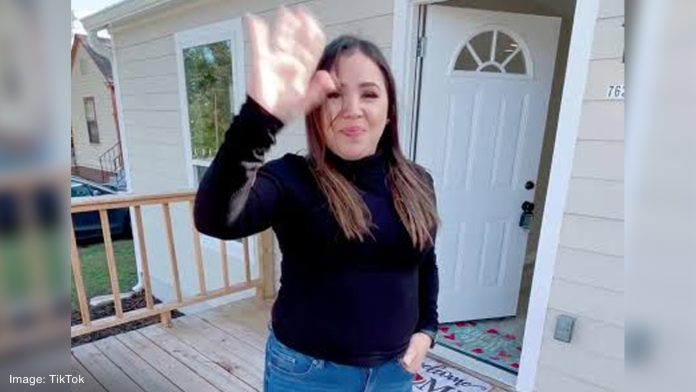
Single Gen Z women are now buying more homes alone than any other Gen Z group in America. What looks like a housing statistic on paper is quickly becoming something much bigger: a generational rewrite of adulthood itself.
According to the National Association of Realtors’ 2026 Home Buyers and Sellers Generational Trends Report, 35 percent of Gen Z homebuyers are single women. That figure was 30 percent just one year earlier, a five percentage point jump in a single year. At that rate of growth, single women could represent nearly half of all Gen Z buyers within a few years. By comparison, only 18 percent of Gen Z homebuyers are single men.
The shift becomes even more striking when looking at the broader picture. 53 percent of Gen Z buyers purchased homes alone. In 2013, the first year NAR released its generational trends report, singles represented just 22 percent of homebuyers aged 32 and under. In little more than a decade, that number has more than doubled.
First-time homebuyers now compose the smallest share ever recorded since NAR started collecting data in 1981. Gen Z women are buying homes in the worst conditions for first-time buyers ever measured. And they are still doing it.
For many young Americans, especially women, homeownership is no longer tied to marriage or traditional family timelines. An economist cited by CNBC described single women seeing homeownership specifically as “a wealth-building tool.” Not a milestone. Not a romantic gesture. A strategy.
84 Percent Are Delaying Marriage To Afford A Home
The data reveals something more complicated than simple independence.
A 2025 Coldwell Banker survey found that 84 percent of Gen Z respondents said they are delaying major life milestones including marriage specifically to afford a home. The median age of first-time homebuyers has now reached a record high of 40 years old.
Gen Z women are not simply choosing independence over relationships. Many are choosing a home over a wedding because they cannot afford both. In a housing market where prices have surged far beyond wage growth, marriage has become a luxury that competes directly with financial security.
The old sequence of adulthood often looked predictable: relationship, marriage, home, children.
For Gen Z, the sequence is increasingly becoming: stabilize income, survive inflation, buy property alone, then maybe think about relationships later.
That shift is now visible in the housing data.
How COVID Quietly Reshaped An Entire Generation
The timing matters.
Jessica Lautz, deputy chief economist at the National Association of Realtors, believes the COVID pandemic disrupted partnership formation at exactly the wrong moment for older Gen Z adults. Many were graduating college, entering unstable job markets, and delaying relationships at the same time housing prices were rapidly rising.
“I asked around the office to try and understand what’s happening here and I was reminded, COVID,” Lautz said. “So I think perhaps delays in getting marriage started, and partners started, could be one of the things going on here for these young adults.”
The result is a generation adapting to adulthood differently from every generation before it. And building wealth independently in the process.
52 Years Ago, They Could Not Even Get A Mortgage
This detail stops most people.
Women in the United States only gained the legal right to obtain a mortgage without a male co-signer in 1974. That was 52 years ago. Many Gen Z women buying homes today have grandmothers who were legally barred from doing the same thing.
And yet even today, real estate agents working with Gen Z women say many still unconsciously assume buying alone is unrealistic. The belief gap persists long after the legal barrier was removed.
Some agents now actively coach their young female clients toward raises, savings plans, and additional income streams specifically to counter that assumption. One agent described her approach: “We don’t ever want to say no. We always want to say maybe later, like, what can we do to get your income higher?”
The generation that grew up being told homeownership required a partner is now the generation proving it does not.
TikTok Became The Financial Adviser
One of the most overlooked parts of the trend is how deeply social media shaped it.
Economists and housing experts say Gen Z buyers are using TikTok, Instagram, and YouTube for financial guidance at levels no previous generation has matched. Mortgage explainers, budgeting tutorials, side-hustle advice, and first-home buying videos have functionally replaced the financial conversations earlier generations had with parents or professional advisers.
Lautz described Gen Z as “embracing the knowledge that is at hand.”
For many young women, the internet became the place where they first learned that buying a home alone was even possible.
The Human Stories Behind The Numbers
Twenty-five-year-old Joanna Belechak recently bought a beige brick townhouse in Pittsburgh entirely on her own. She does not know many close friends who are also homeowners yet. Her Gen Z friends renting in far more expensive cities find it “crazy” that she actually bought a house. When appliances break or strange noises appear, she Googles solutions herself.
She described the experience in one word: “powerful.”
Twenty-seven-year-old Francisco Vazquez took a different route. He purchased a three-bedroom home with a basement, garage, and yard in Milwaukee after saving $72,000 in just over two years by putting 70 percent of each paycheck into a broad index stock fund. At $220,000, his home was nearly half the national median price. He has a 15-year fixed rate mortgage and a clear goal: early retirement.
“Buying a home helps me buy myself more freedom in general,” he said.
The methods Gen Z buyers are using reflect their circumstances. Fourteen percent relied on government or community down payment assistance programmes, more than three times the rate young millennials used. Others tapped retirement savings accounts, lived below their means in affordable cities, or used proceeds from previous property sales to make ownership possible.
They Are Building Wealth. But Not Protecting It.
There is a side to this story that almost nobody is discussing.
As more single young women build wealth independently, many are doing so without protecting it.
Trust and Will’s 2026 Estate Planning Report found that 60 percent of women have no estate planning documents in place, compared with 50 percent of men. Only 16 percent of single people have a will, compared with 37 percent of married individuals.
Homeownership does appear to improve financial planning behaviour. Forty percent of homeowners have a will, compared with only 16 percent of renters. As the wave of single Gen Z women enter homeownership, some of that gap may close over time.

But right now, an entirely new class of young independent homeowners is building assets faster than they are building legal protections around those assets.
They are not waiting for a partner to hand them stability. They are building it themselves.
And most of them have not yet written a will.
By Shizza Farooqui
Sources
National Association of Realtors 2026 Home Buyers and Sellers Generational Trends Report, CNBC, NPR, Fortune, Newsweek, Coldwell Banker 2025 Survey, Trust and Will 2026 Estate Planning Report