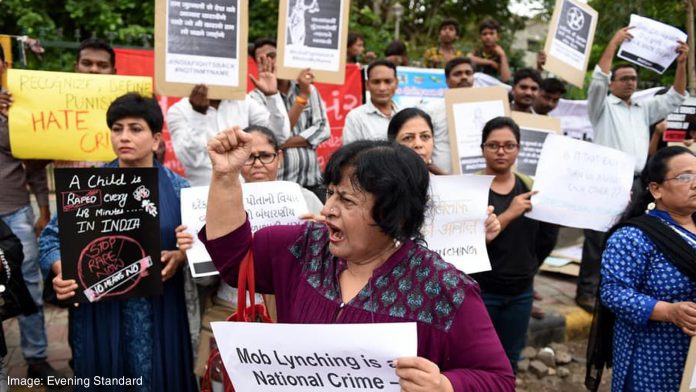
“It’s Like They Are Trying To Erase Us”
Jaibuna was the wife of Pehlu Khan, a 55-year-old Muslim dairy farmer from Haryana. In April 2017, Khan and his sons were driving home from a cattle fair with cows they had legally purchased when strangers on motorcycles surrounded them. The attackers tore up their receipts and beat them with hockey sticks. Khan died from his injuries two days later. His attackers filmed the assault and posted it on social media.
‘It’s like they are trying to erase us,’ Jaibuna told NPR. ‘Erase all of my people.’
Pehlu Khan’s case was not an exception. It was a template.
How A Rumour Becomes A Public Accusation
In India, a fake forward does not always stay inside a phone. Sometimes it moves into a village lane, a market, a train station or a public road, where suspicion can turn into violence before the truth has time to arrive.
The rumours are not always the same. In one place, the warning may be about child-lifters. In another, organ thieves. Somewhere else, cow smugglers. Often, the accusation lands hardest on Muslims, migrants, workers, travellers or anyone who already looks like an outsider to the crowd watching them.
That is what makes India’s fake-forward violence so dangerous. It is not just misinformation. It is misinformation dropped into a country already shaped by communal tension, caste anxiety, religious suspicion and vigilante politics.
The WhatsApp Lynching Crisis Did Not Vanish
India’s WhatsApp lynching crisis became globally visible in 2018, when rumours about child kidnappers spread across villages and towns, triggering mob attacks in multiple states. WhatsApp introduced forwarding limits and warning labels, trying to slow how quickly viral messages could move.
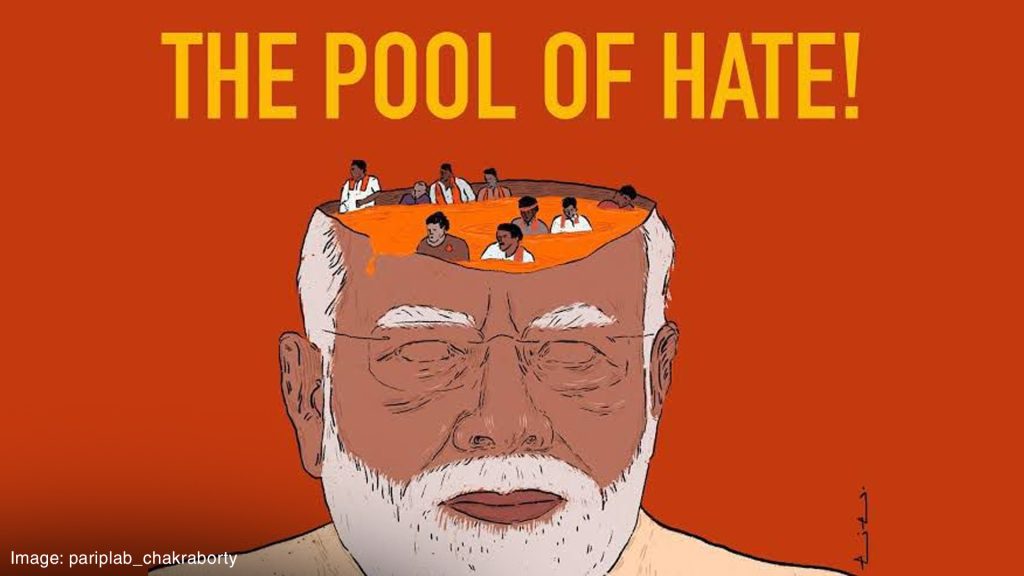
But slowing a message is not the same as removing the conditions that make people believe it.
Research projects approximately 15 mob lynching incidents in India in 2025, a 15 percent increase from 13 cases in 2024, which resulted in 11 fatalities. According to the Centre for Study of Society and Secularism, 70 percent of incidents are now ignited by WhatsApp forwards. The violence did not disappear. It continued, more quietly, with less coverage, and with near-total impunity.
The Numbers The Government Refuses To Count
The Indian government does not officially track public lynchings. There are no national statistics from the Indian Crime Records Bureau recording their occurrence. Independent documentation of violence rose sharply from 2015 onward, while official government numbers barely moved.
That gap between what the public witnessed and what the state was willing to count is not an accident. It is a choice.
The conviction rate for mob lynching in India stands at 10 percent. Law enforcement agencies frequently respond late, averaging a two-hour delay according to the National Human Rights Commission. The Supreme Court in 2018 ordered states to designate nodal officers, create victim compensation schemes and fast-track trials. A dedicated national anti-lynching law still does not exist. Even after a new provision under the Bharatiya Nyaya Sanhita came into force in July 2024 classifying lynching as a distinct offence, police have ignored it in at least nine documented cases across six states.
Why Muslims And Outsiders Face Greater Danger
86 percent of lynching victims since 2010 have been Muslim. In cow-related hate crimes specifically, 100 percent of victims in 2018 were Muslim. 82 out of 109 documented lynching incidents have taken place in BJP-ruled states.
For Muslims in India, a fake forward can become especially lethal because it enters a climate already shaped by cow vigilantism, anti-Muslim rhetoric and public suspicion. A message claiming cow slaughter, cattle theft or a communal ‘threat’ can become an accusation before anyone checks whether it is true.
The same danger affects migrants and outsiders. When a rumour says strangers are kidnapping children, people passing through an area become targets. Their unfamiliarity becomes the proof. Their language, clothes, religion or presence is enough for a crowd already primed to act.
The Political Cover No One Talks About
The violence does not operate in a vacuum. A Union Minister was photographed congratulating eight men convicted of killing a Muslim cattle trader in his constituency, assisting with their legal defence and celebrating their bail release with sweets and garlands. The convicted killers were garlanded. The victim’s family received nothing.
The mobs film themselves. Attackers record assaults and post them to WhatsApp groups mid-lynching. Crowds cheer. Bystanders watch. The violence is not hidden. It is performed, shared and in many cases celebrated, because the perpetrators understand, correctly, that the consequences are minimal.
The Platform Changed. The Politics Did Not
WhatsApp’s changes mattered technically. But India’s fake-forward crisis reveals the limit of platform fixes when the social and political environment remains combustible.
A rumour does not need to be believed by everyone. It only needs enough people to feel afraid, angry or morally justified. Once a crowd forms, the burden of proof shifts dangerously. The accused is no longer a citizen with rights. They become a threat to be punished.
The app can be updated. The political impunity that sustains the mob cannot be patched.
The Real Danger Is Not The Forward. It Is What Happens After
India’s fake-forward violence reveals a brutal truth about modern misinformation: digital lies are most dangerous when they confirm offline prejudice, and when the state has quietly decided not to interfere.
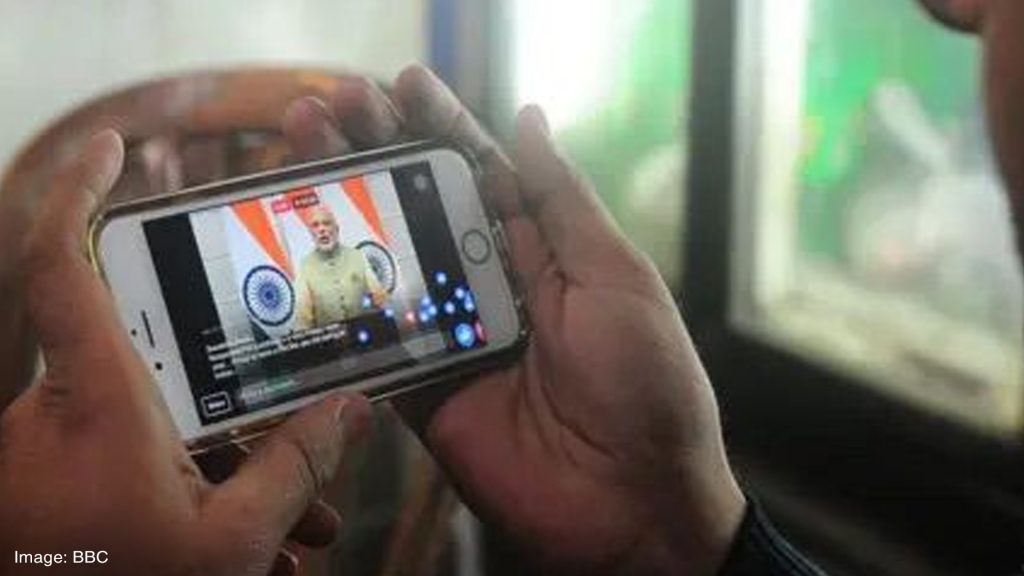
A message about a child-lifter, cow smuggler or Muslim ‘threat’ spreads in seconds. But the reason it becomes violent is older than the technology carrying it. It depends on fear, communal suspicion, a public culture where mobs feel entitled to act before facts arrive, and a government that stopped counting the bodies.
That is why a fake forward in India can become more than a message. It can become a sentence.
Sources
Al Jazeera — Cow vigilantes and Modi 3.0
Human Rights Watch — Violent cow protection in India
BuzzFeed News — WhatsApp destroyed a village
South Asia Justice Campaign — India Persecution Tracker 2025
Article 14 — Police ignore anti-lynching lawAl Jazeera Media Institute — Indian media silence on Muslim lynchings