
Lahore Is Bringing Back Names Once Removed From Its Streets
Pakistan’s Punjab government has approved one of the most symbolically powerful heritage projects the country has seen in decades.
Under the Lahore Heritage Areas Revival project, authorities are restoring pre-Partition Hindu, Sikh, Jain, and colonial-era names across Lahore, reversing decades of official renaming that reshaped the city’s identity after 1947.
The initiative was approved by the Punjab Cabinet under Chief Minister Maryam Nawaz and is being overseen by the Lahore Authority for Heritage Revival, established in March 2025. Former Prime Minister Nawaz Sharif serves as Patron-in-Chief.
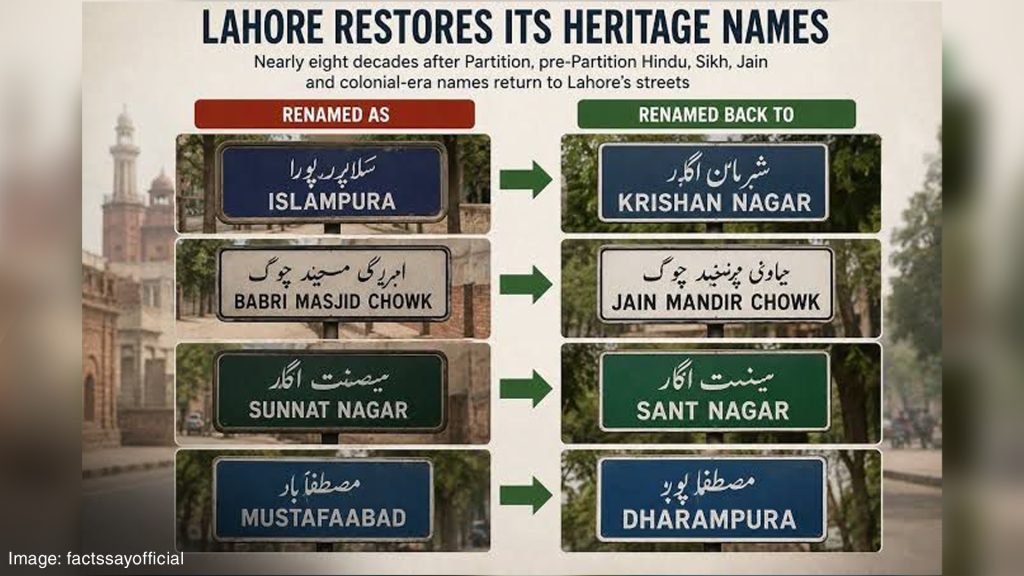
Official signboards have already changed in several areas. Islampura now officially reads Krishan Nagar. Babri Masjid Chowk has reverted to Jain Mandir Chowk. Rehman Gali once again reads Ram Gali. Other restored or approved names include Sant Nagar, Dharampura, Lakshmi Chowk, Queens Road, Lawrence Gardens, Davis Road, and Jail Road.
The wider project is valued at nearly 50 billion PKR and includes restoration work across 48 colonial-era buildings, upgrades around Bhati Gate and Shahdara Complex, and conservation efforts near Lahore Fort and Shalimar Gardens.
The Lahore That Partition Nearly Erased
Before Partition, Lahore was one of South Asia’s most multicultural cities.
Muslims made up roughly 64 percent of Lahore’s population in 1941, while Hindus and Sikhs together accounted for more than one third of the city. Entire neighbourhoods, Krishan Nagar, Sant Nagar, Bhagwan Pura, and Dharampura, were heavily Hindu and Sikh communities. Many of Lahore’s schools, markets, cinemas, and commercial districts were built or owned by Hindu and Sikh families before 1947.
Then Partition came.
As violence spread across Punjab during the creation of India and Pakistan, Lahore’s Hindu and Sikh population disappeared within weeks. There were 300,000 Hindus and Sikhs in Lahore as independence approached. By 19 August 1947, that number had fallen to 10,000. By the end of August, just 1,000 remained. Historians estimate that between half a million and two million people died across Punjab during Partition violence.
Successive Pakistani governments later renamed many areas associated with Hindu, Sikh, Jain, or colonial identity. Krishan Nagar became Islampura in 1992 after protests by religious groups. Ram Gali became Rehman Gali. Jain Mandir Chowk became Babri Masjid Chowk.
The Streets Were Renamed. The Memory Was Not.
Here is the detail that made this story land differently online.
According to Kamran Lashari, former Director-General of Walled City of Lahore and current secretary of the heritage authority, ordinary Lahoris often never stopped privately using the original names. Even after official signboards changed, residents continued calling neighbourhoods by the names their families had always used. “In many cases, even when the names have been officially changed, the people still call them by the old names,” Lashari told The Print.
The streets were renamed. The memory survived socially.
When news of the restoration broke, the reaction across social media was unlike a typical government announcement. People cried. They shared old photographs and historical maps. They posted stories their grandparents had told them about streets they once lived on before Partition permanently reshaped the subcontinent. For diaspora communities scattered across India, Pakistan, the UK, and Canada, the restoration of names like Krishan Nagar and Ram Gali was not an administrative update. It was official acknowledgment that their history in that city had been real.
Why The India Comparison Made This Story Global
The story resonated globally because audiences immediately drew comparisons to India’s own renaming campaigns.
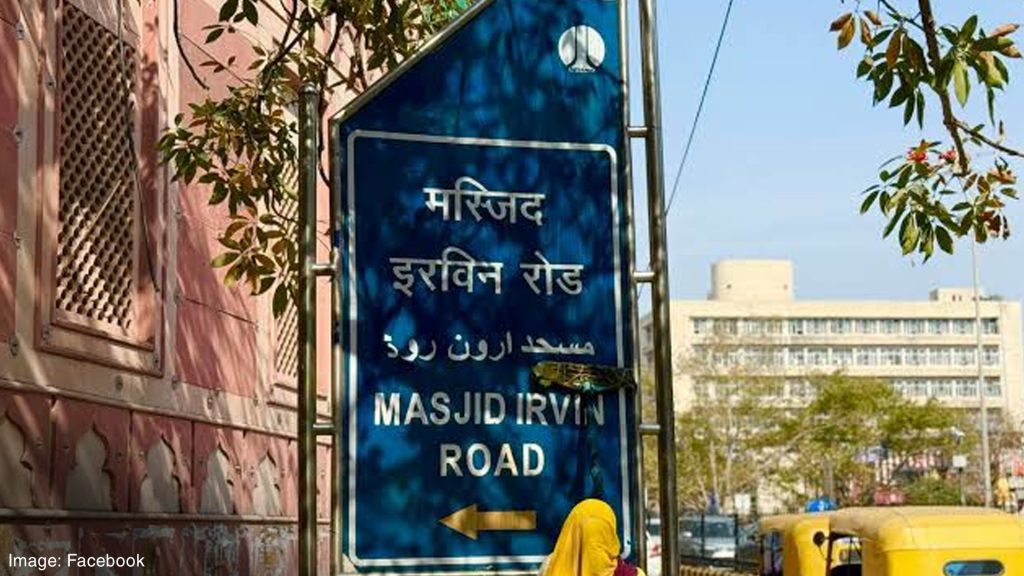
Over the last decade, India has renamed several cities and landmarks associated with Mughal or Muslim-era history. Allahabad became Prayagraj. Faizabad became Ayodhya. Mughal Gardens became Amrit Udyan. Aurangabad became Chhatrapati Sambhajinagar. Supporters say those changes restore indigenous Hindu identity. Critics argue they erase visible traces of India’s Muslim historical legacy.
One country is removing Muslim names from its streets. The other is restoring Hindu ones. Both are doing it in the name of history.
That single contrast is what drove the story across borders.
Heritage, Politics, And Tourism
Punjab officials say the project is primarily about heritage restoration, tourism, and reviving Lahore’s historical identity after decades of urban neglect. Officials have referenced European cities that preserve historic multicultural architecture as inspiration.
But analysts also see political calculations at work. At a time when Pakistan faces economic pressure and international scrutiny over extremism, restoring multicultural heritage allows the government to project a softer image globally while expanding heritage tourism revenue.
Whether driven by reconciliation, economics, or politics, one thing is becoming clear.
Lahore is publicly reopening a version of its history that once seemed permanently buried. For the millions of Partition descendants who have never been able to cross the border and see the streets their grandparents described, a restored street sign is not a small thing. It is the closest some of them may ever get to going home.
By Shizza Farooqui
Sources
The Tribune India | WION News | The Print | Zee News | PGurus | India TV News | BBC India renaming coverage | Britannica Partition of India | Historical sources: Ian Talbot, Divided Cities; Abdul Hameed eyewitness account, India of the Past