Pakistan’s Militancy Crisis Is Moving Inward
Pakistan’s Afghanistan problem is no longer only a border story. It is now being felt inside the country’s cities, provinces and security institutions.
The clearest warning came in Karachi, where militants drove an explosive-laden vehicle into the main gate of the Pakistan Rangers Sindh camp in Gulistan-i-Jauhar at around 8pm on a Saturday. The blast tore through the entrance before attackers stormed the compound and opened indiscriminate fire. The assault killed three Rangers personnel and wounded four others, turning what is often framed as a frontier security issue into an urban shock. Jamaat-ul-Ahrar, a faction linked to the Pakistani Taliban ecosystem, claimed responsibility for the attack. The camp sits in Block 5 of Gulistan-i-Jauhar, near several universities and Pakistan’s meteorological department, a densely populated area where residents scrambled for safety as gunfire continued late into the night.
Karachi Became The Shock Point
The attack mattered because of where it happened. Karachi is not a border district. It is Pakistan’s largest city, its commercial centre and one of the country’s most sensitive security environments.
When militants can drive a car bomb into a Rangers facility there, the message is larger than one blast. It suggests Pakistan’s Afghanistan-linked militancy problem is no longer contained to border areas, tribal districts or remote mountain terrain. It is moving deeper into the national map.
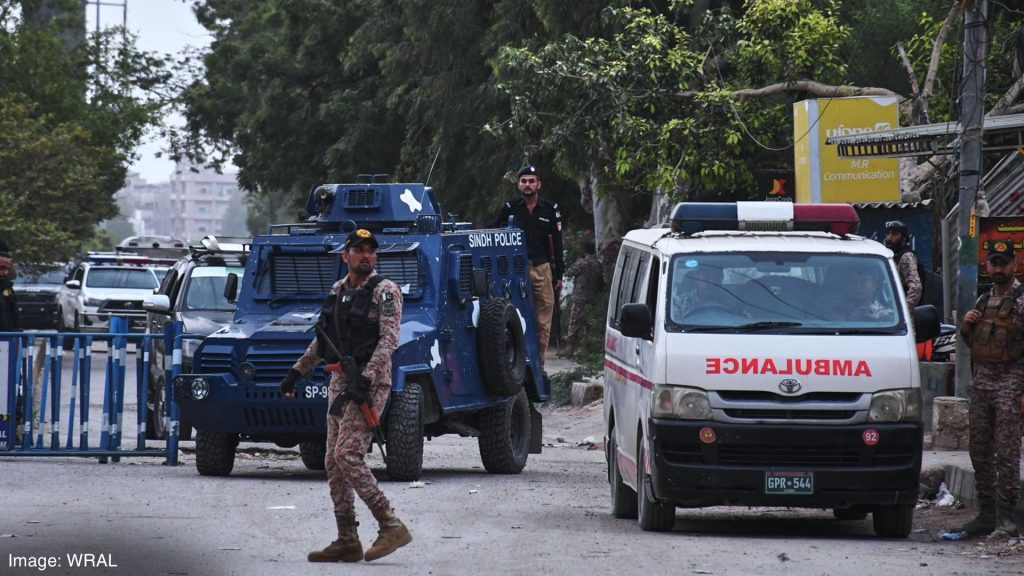
Security forces killed six attackers and captured one. Pakistani authorities identified the arrested attacker as Usman Ali. Dawn reported that, according to security sources, he said he came to Pakistan from Jalalabad, Afghanistan, around a week before the attack and had received training there before entering Pakistan.
Three Countries, One Blame Game
Pakistan’s military did not stop at Afghanistan. ISPR officially labelled Jamaat-ul-Ahrar an ‘Indian proxy’ in its public statement, a claim echoed by President Asif Ali Zardari and Interior Minister Mohsin Naqvi. No evidence was presented publicly.
India’s Ministry of External Affairs responded the same day. Spokesperson Randhir Jaiswal said Pakistan’s allegations were ‘baseless’ and categorically rejected. He added that Pakistan would do better to look inwards, take credible action against the terror infrastructure on its own territory, and stop relying on terrorism as an instrument of state policy.
Three countries are now implicated in the fallout from a single Saturday night attack: Afghanistan, where the attacker allegedly trained; Pakistan, which carried out retaliatory strikes; and India, which Pakistan accused without evidence and which fired back publicly.
Pakistan Says The Trail Led To Afghanistan
Those claims are central to Islamabad’s case. Pakistan has repeatedly accused militant networks based in Afghanistan of enabling attacks inside Pakistan. Afghanistan’s Taliban authorities deny sheltering such groups.
But the Karachi attack gave Pakistan a new and highly visible example to present: an attack inside its largest city, an arrested suspect, and a claimed trail leading back to Jalalabad. That is why the incident quickly became bigger than Karachi itself.
Jamaat-ul-Ahrar has its own history worth noting. The group was formed in 2014 after Abdul Wali, known as Omar Khalid Khorasani, split from the TTP. The two organisations rejoined in 2024, meaning JuA is now part of a reunified militant structure, not a fringe splinter.
Pakistan’s Response Crossed The Border
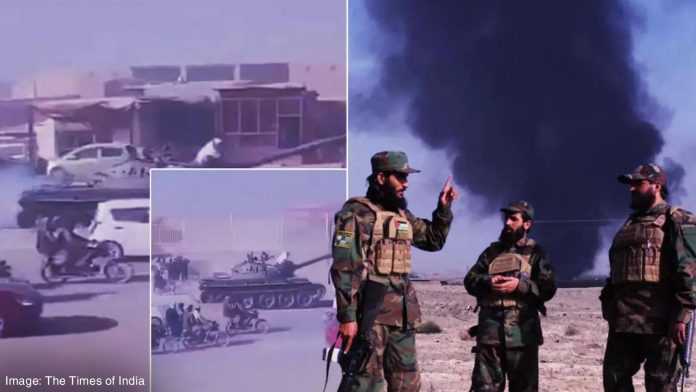
After the Karachi attack, Pakistan announced a border-area ground operation and precision strikes in Afghanistan’s Paktia, Paktika and Kunar provinces under Operation Ghazab Lil Haq, the military campaign Pakistan launched earlier this year against cross-border militant targets.
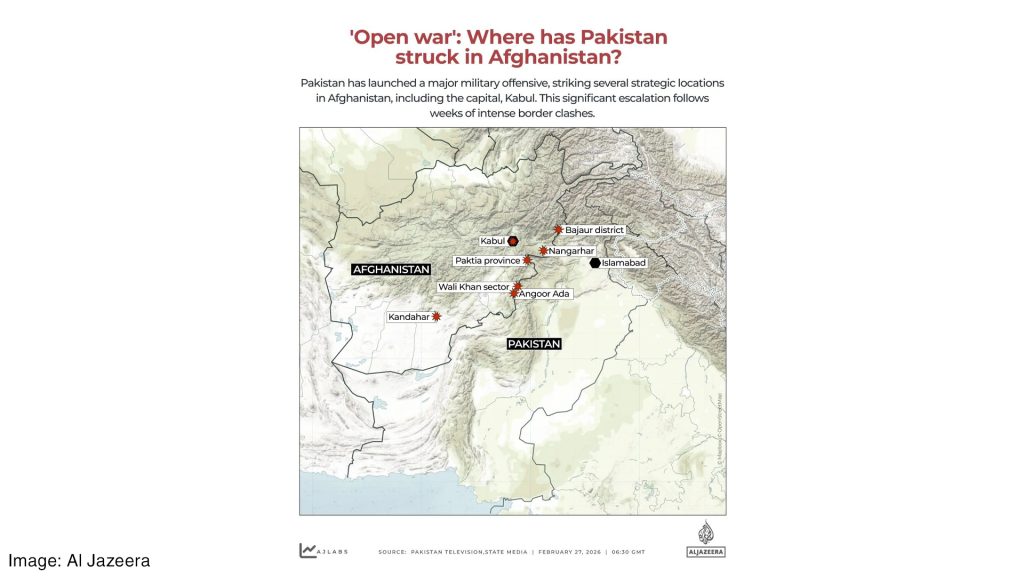
Information Minister Attaullah Tarar said the operations targeted hideouts and safe havens linked to Jamaat-ul-Ahrar and TTP-linked militants. Pakistan says 29 militants were killed, including high-value commander Khan Farosh alias Zabal.
Kabul’s Denial, Pakistan’s Escalation
Afghanistan’s Taliban government rejected Pakistan’s account of the strikes. Deputy spokesman Hamdullah Fitrat said Pakistani forces targeted a home in Chamkani district in Paktia, killing an elderly man and a child, before a second wave struck the same area as rescuers arrived, killing 28 villagers and wounding 158. Six more people, mostly women and children, were killed in Giyan district in Paktika. In total, Afghan officials put the civilian death toll at 36 killed and 163 wounded.
Pakistan says it targeted militant hideouts. The two accounts cannot both be true.
The Crisis Is Bigger Than One Attack
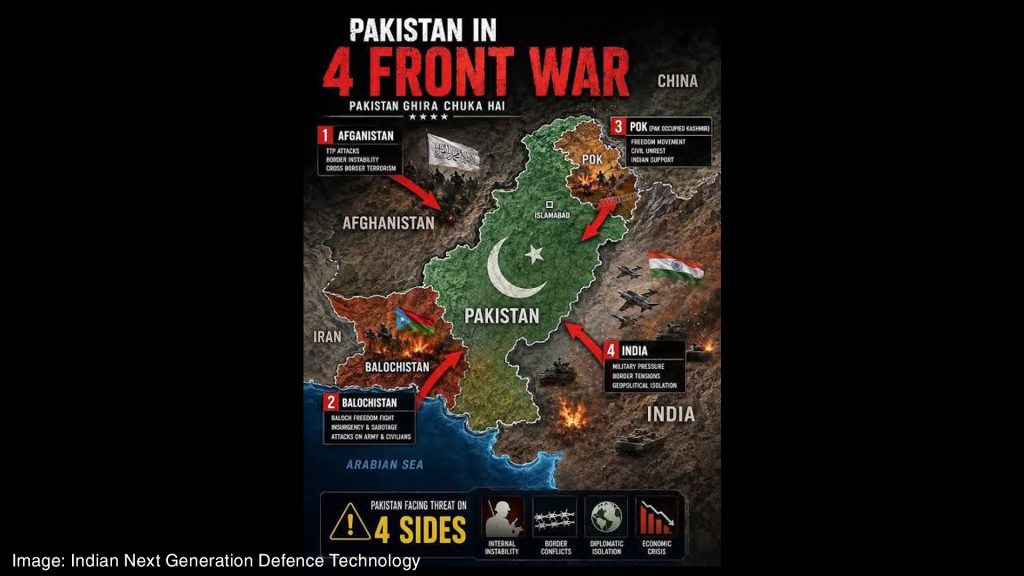
The Karachi attack did not start Pakistan’s militancy crisis. It exposed how far that crisis has already spread. Pakistan has been facing renewed militant violence across multiple fronts. KP remains under pressure from TTP-linked attacks. Balochistan continues to face separatist and militant violence. Karachi has now been pulled into the same wider security frame through an attack on a major paramilitary facility. The geography of the threat is changing. What begins near the Afghan border is no longer staying there.
What This Means For Pakistan’s Economy
The consequences of Karachi’s vulnerability extend beyond security. Karachi handles the majority of Pakistan’s trade, banking activity and foreign investment. A city that appears exposed to coordinated militant attacks is a city that becomes harder to do business in, harder to insure, and harder to present to international creditors and investors as a stable base. Pakistan is already navigating a fragile economic recovery. Every attack in Karachi adds a cost that never appears in a military briefing.
Sources
Dawn — Rangers camp attack foiled
Dawn — Terrorist reveals Afghanistan training
Al Jazeera — Pakistan kills 29 fighters
Reuters via US News — Three Rangers killed
The Express Tribune — Pakistan strikes under Ghazab Lil Haq
NBC News — Pakistan airstrikes Afghanistan