Pakistan’s EV Revolution Began on Two Wheels. One Electric Scooter at a Time.

Pakistan’s Electric Scooter Revolution Has Already Started

Pakistan has 30 million petrol motorcycles. Together they burn through roughly $6 billion in imported fuel every single year, money that leaves the country with every fill-up, at every pump, every day. Electric scooters are beginning to change that equation. And in doing so, they are changing something far bigger than transport.

A Revolution Built on Rising Prices and Falling Patience

When Iran blocked shipping through the Strait of Hormuz after the US and Isr*eli attacks in late February, two electric motorbike outlets 1,400 kilometres away in Pakistan found themselves overwhelmed with enquiries within days. A mechanic in Rawalpindi who retrofits petrol bikes with battery-powered motors saw his March sales surge 70 per cent. Ali Gohar Khan, who owns a seven-year-old electric motorbike franchise across Pakistan, called it the steepest sales surge he had ever seen. “People have this fear that maybe in the near future, they might not get petrol at all,” Khan told Reuters.

EV sales in Pakistan surged 191 per cent in 2025, reaching approximately 90,000 units. That momentum has continued into 2026, with electric scooters now accounting for more than 10 per cent of monthly two-wheeler sales for the first time in the country’s history.

What Freedom Actually Looks Like

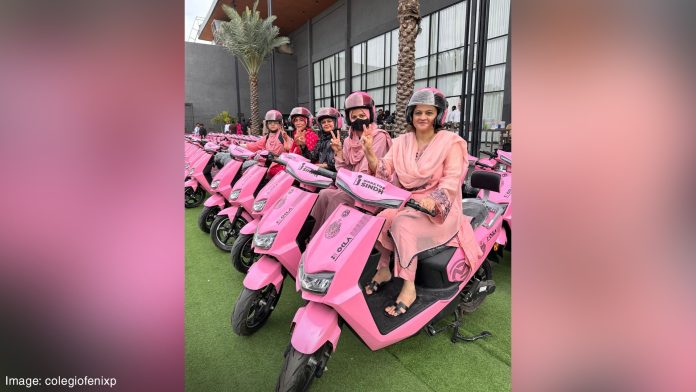
A Dawn investigation found that behind the sales numbers are individual lives being quietly reshaped. Esha, 22, named her electric scooter Riri, after herself. It cost Rs420,000. She has not spent a single rupee more on transport since. She charges it overnight and rides more than 60 kilometres without stopping at a pump or asking anyone for a lift. She understands exactly why the argument for women riding independently meets resistance. “The control only works when we’re dependent,” she told Dawn.

Sana, 24, a NUST student from Rawalpindi, chose her scooter not because it was trendy but because petrol bikes frightened her: the weight, the kick-start, the dread of breaking down alone. The electric scooter was something she could manage entirely on her own terms.
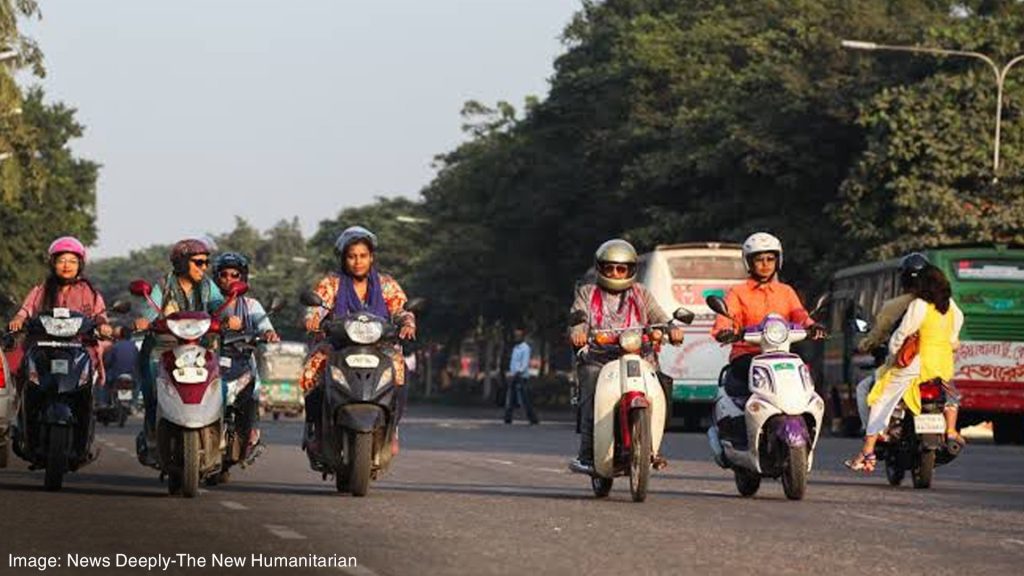
In a country where a woman’s movement is still being negotiated, the sight of a young woman riding an electric bike is its own argument.

The Gap Between the Revolution and the People Who Need It Most

Forty kilometres from where Esha rides, Nazia, 30, a house helper from Rawalpindi, makes the same daily commute on a petrol bike that belongs to her brother. She spends Rs700 on fuel every day, navigates pump queues where men stare and workers are hostile, and has no margin for mechanical failure. Her employer’s daughter recently bought a red Honda electric bike. Nazia has never walked inside a showroom. “Forget buying, even the showrooms feel out of reach,” she says.

The fault lines are already forming. Rural women are excluded as charging infrastructure clusters in major cities. Low-income buyers hit financing walls. Informal workers are rejected by credit systems built for salaried employees. Women without digital banking are locked out of app-dependent mobility platforms altogether. Underneath it all sits a slow-burning problem: battery replacement costs that could convert today’s savings into tomorrow’s debt.

The federal PAVE initiative targets 116,000 electric bikes for the current fiscal year. As of the last reported period, only 5,409 units had been distributed, roughly 4.5 per cent of the annual target. Commercial banks approved only around 9 per cent of EV loan applications, rejecting the rest.

Punjab’s New Road for Young Riders

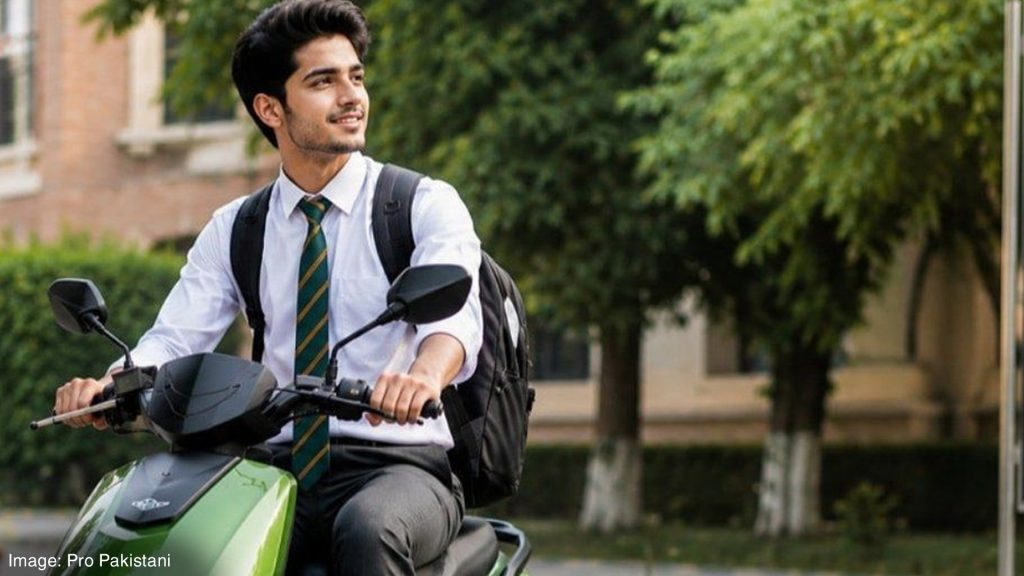
The Punjab Assembly’s Standing Committee on Interior approved the Motor Vehicles Amendment Bill 2026, introducing a Juvenile Driving Permit for riders aged 16 to 18, establishing for the first time a clear and legal pathway for young people to ride motorcycles. The law came after videos of uniformed schoolchildren being handcuffed by police for riding without licences spread across social media, prompting Chief Minister Maryam Nawaz to intervene publicly and lower the riding age.
A permit can open the legal road. But it cannot make scooters affordable, build charging points, fix broken roads, or make families comfortable with girls riding independently. For this change to matter, it has to be paired with affordability, safety training and real access for the young people who need mobility most.

A Small Machine, a Bigger Question

Pakistan’s e-scooter rise is not just an EV story. It is about who gets to move. It is about women who want to travel without waiting on male family members. Students who need reliable transport to reach class. Young commuters trying to escape rising fuel costs. Families looking for cheaper ways to survive daily travel.

A small electric scooter will not end Pakistan’s mobility problems. It will not fix unsafe roads, expensive batteries or social restrictions overnight. But for the people who can access one, it can turn a daily question into an answer.

Not “Who will take me?”

But “I can go myself.”

SOURCES

Dawn — Scooty for the beti and EV for the biwi | Reuters / Express Tribune — Soaring costs drive Pakistan to EVs | ProPakistani — 16-Year-Olds in Punjab to Legally Ride Motorcycles | Express Tribune — Govt to offer electric bikes on easy instalments | MotorCyclesData — Pakistan Electric 2-Wheelers 2026 | Dawn — Motorcycle licences at 16 in Punjab
Pakistan’s Electric Scooter Revolution Has Already Started

Pakistan has 30 million petrol motorcycles. Together they burn through roughly $6 billion in imported fuel every single year, money that leaves the country with every fill-up, at every pump, every day. Electric scooters are beginning to change that equation. And in doing so, they are changing something far bigger than transport.

A Revolution Built on Rising Prices and Falling Patience

When Iran blocked shipping through the Strait of Hormuz after the US and Isr*eli attacks in late February, two electric motorbike outlets 1,400 kilometres away in Pakistan found themselves overwhelmed with enquiries within days. A mechanic in Rawalpindi who retrofits petrol bikes with battery-powered motors saw his March sales surge 70 per cent. Ali Gohar Khan, who owns a seven-year-old electric motorbike franchise across Pakistan, called it the steepest sales surge he had ever seen. “People have this fear that maybe in the near future, they might not get petrol at all,” Khan told Reuters.

EV sales in Pakistan surged 191 per cent in 2025, reaching approximately 90,000 units. That momentum has continued into 2026, with electric scooters now accounting for more than 10 per cent of monthly two-wheeler sales for the first time in the country’s history.

What Freedom Actually Looks Like

A Dawn investigation found that behind the sales numbers are individual lives being quietly reshaped. Esha, 22, named her electric scooter Riri, after herself. It cost Rs420,000. She has not spent a single rupee more on transport since. She charges it overnight and rides more than 60 kilometres without stopping at a pump or asking anyone for a lift. She understands exactly why the argument for women riding independently meets resistance. “The control only works when we’re dependent,” she told Dawn.

Sana, 24, a NUST student from Rawalpindi, chose her scooter not because it was trendy but because petrol bikes frightened her: the weight, the kick-start, the dread of breaking down alone. The electric scooter was something she could manage entirely on her own terms.

In a country where a woman’s movement is still being negotiated, the sight of a young woman riding an electric bike is its own argument.

The Gap Between the Revolution and the People Who Need It Most

Forty kilometres from where Esha rides, Nazia, 30, a house helper from Rawalpindi, makes the same daily commute on a petrol bike that belongs to her brother. She spends Rs700 on fuel every day, navigates pump queues where men stare and workers are hostile, and has no margin for mechanical failure. Her employer’s daughter recently bought a red Honda electric bike. Nazia has never walked inside a showroom. “Forget buying, even the showrooms feel out of reach,” she says.

The fault lines are already forming. Rural women are excluded as charging infrastructure clusters in major cities. Low-income buyers hit financing walls. Informal workers are rejected by credit systems built for salaried employees. Women without digital banking are locked out of app-dependent mobility platforms altogether. Underneath it all sits a slow-burning problem: battery replacement costs that could convert today’s savings into tomorrow’s debt.

The federal PAVE initiative targets 116,000 electric bikes for the current fiscal year. As of the last reported period, only 5,409 units had been distributed, roughly 4.5 per cent of the annual target. Commercial banks approved only around 9 per cent of EV loan applications, rejecting the rest.

Punjab’s New Road for Young Riders

The Punjab Assembly’s Standing Committee on Interior approved the Motor Vehicles Amendment Bill 2026, introducing a Juvenile Driving Permit for riders aged 16 to 18, establishing for the first time a clear and legal pathway for young people to ride motorcycles. The law came after videos of uniformed schoolchildren being handcuffed by police for riding without licences spread across social media, prompting Chief Minister Maryam Nawaz to intervene publicly and lower the riding age.

A permit can open the legal road. But it cannot make scooters affordable, build charging points, fix broken roads, or make families comfortable with girls riding independently. For this change to matter, it has to be paired with affordability, safety training and real access for the young people who need mobility most.

A Small Machine, a Bigger Question

Pakistan’s e-scooter rise is not just an EV story. It is about who gets to move. It is about women who want to travel without waiting on male family members. Students who need reliable transport to reach class. Young commuters trying to escape rising fuel costs. Families looking for cheaper ways to survive daily travel.

A small electric scooter will not end Pakistan’s mobility problems. It will not fix unsafe roads, expensive batteries or social restrictions overnight. But for the people who can access one, it can turn a daily question into an answer.

Not “Who will take me?”

But “I can go myself.”

SOURCES

Dawn — Scooty for the beti and EV for the biwi | Reuters / Express Tribune — Soaring costs drive Pakistan to EVs | ProPakistani — 16-Year-Olds in Punjab to Legally Ride Motorcycles | Express Tribune — Govt to offer electric bikes on easy instalments | MotorCyclesData — Pakistan Electric 2-Wheelers 2026 | Dawn — Motorcycle licences at 16 in Punjab
spot_img

Explore more

spot_img
Global Affairs

China Has Written Uyghur Erasure Into Law.

Christopher Nolan Filmed The Odyssey On Occupied Land. Behind It Sits...

From Teen Suicide To Fake Nudes: The Human Cost Of The...

She Was Blinded At 14. Bollywood Called It “Limited Damage.”

Isr*el’s Sexual Abuse Crisis Is Not A Scandal. It Is A...

Qualified, Shortlisted, Then Shut Out: Black Doctors In The UK Face...

Behind Messi’s Silence On Gaza Lies A Web Of Isr*eli Ties

The Fight For Jerusalem Begins With Who Controls Its Story