
Sheikh Hamad Dies At 74
Former Qatari Emir Sheikh Hamad bin Khalifa Al Thani died in Doha on 12 July 2026 at the age of 74, closing the life of the ruler who transformed Qatar from a small Gulf monarchy into one of the Middle East’s most influential states.
He ruled from 1995 until 2013 after removing his father in a bloodless palace coup. Under his leadership, Qatar expanded its natural-gas wealth, launched Al Jazeera, built an international diplomatic network and developed Al Udeid Air Base into the most important US military hub in the region.
Yet Sheikh Hamad’s legacy cannot be explained through one alliance or ideology. Qatar’s rise was built on maintaining relationships that appeared to contradict one another.
America’s Military Hub In The Gulf
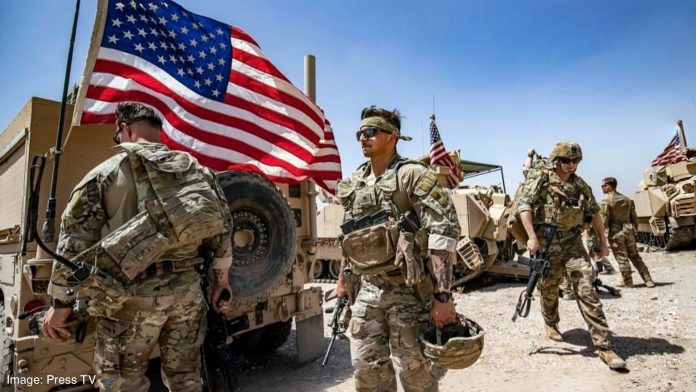
During Sheikh Hamad’s rule, Qatar financed and expanded Al Udeid Air Base, which became home to major US air-command operations and thousands of American personnel.
The base supported US military campaigns connected to Afghanistan, Iraq, Syria and operations against ISIS. Hosting it gave Qatar a powerful security relationship with Washington and helped protect the small state from pressure by larger regional neighbours.
But the arrangement also tied Qatar closely to wars that caused enormous destruction across Muslim-majority countries.
Al Udeid therefore represented both protection and dependence. It increased Qatar’s ability to pursue an independent regional policy while making that independence partly reliant on American military power.
Hamas Praised Him After His Death
At the same time, Sheikh Hamad built close political ties with Hamas and openly supported Gaza.
In 2012, he became the first head of state to visit Hamas-governed Gaza after its isolation. Qatar pledged hundreds of millions of dollars for reconstruction, strengthening Hamas politically and challenging efforts to keep it diplomatically isolated.
After Sheikh Hamad’s death, Hamas praised him as a major Arab leader and highlighted his support for the Palestinian cause.
That reaction complicates attempts to portray him as either an unquestioning American ally or a straightforward supporter of Palestinian resistance.
Qatar’s value came from being useful to both Washington and Hamas.

Contacts With Isr*el
Sheikh Hamad’s government also maintained limited commercial and political contacts with Isr*el. Qatar hosted an Israeli trade office in Doha until it was ordered closed in 2008, after Israel HYPERLINK “https://www.timesofisrael.com/qatars-transformative-former-ruler-sheikh-hamad-bin-khalifa-al-thani-dies-at-74/”‘ HYPERLINK “https://www.timesofisrael.com/qatars-transformative-former-ruler-sheikh-hamad-bin-khalifa-al-thani-dies-at-74/”s military operation in Gaza that year. In 2007, Sheikh Hamad HYPERLINK “https://www.timesofisrael.com/qatars-transformative-former-ruler-sheikh-hamad-bin-khalifa-al-thani-dies-at-74/”‘ HYPERLINK “https://www.timesofisrael.com/qatars-transformative-former-ruler-sheikh-hamad-bin-khalifa-al-thani-dies-at-74/”s government held a direct meeting between Qatari officials and then-Israeli foreign minister Tzipi Livni at the United Nations General Assembly.
Qatar also allowed Israeli officials and analysts to appear on Al Jazeera, introducing many Arab audiences to direct debates with Israeli voices.
At the same time, Doha supported Palestinian reconstruction, hosted Hamas leaders and positioned itself as a mediator in repeated Gaza negotiations.
Qatar did not maintain these relationships because they were ideologically compatible. It maintained them because access to opposing sides gave Doha influence.
Washington could use Qatar as a military partner. Hamas could use it as a political channel. Isr*el could use it as an indirect line of communication.
Al Jazeera And The Limits Of Reform
Sheikh Hamad launched Al Jazeera in 1996, reshaping Arab media by giving space to dissidents, opposition movements and political debates that government broadcasters avoided.
The network challenged rulers across the region and became one of Qatar’s most powerful instruments of influence, at real political cost. Former Al Jazeera news director Ahmed al-Sheikh has said a CIA official once urged Sheikh Hamad to silence the network. Sheikh Hamad refused, reportedly telling the official: “You are the ones who always spoke to us about media, freedom of the press, the opinion and the other opinion, and democracy, and now you are asking me to muzzle Al Jazeera? How can this happen?”
Yet Qatar remained a hereditary monarchy with limited political participation and tightly controlled domestic media.
Al Jazeera widened debate across the Arab world without fully applying the same standard of scrutiny to the state that funded it.
That contradiction did not make the network meaningless. It revealed the boundaries of Sheikh Hamad’s reform model: modernisation without democratisation.
Revolution Abroad, Hereditary Rule At Home
Under Sheikh Hamad, Qatar supported political uprisings and opposition movements across the Arab world, particularly during the Arab Spring.
Yet the country did not introduce comparable political openness at home. Executive power remained concentrated within the ruling family, political parties remained absent and national leadership continued through hereditary succession.
Mediation And Intervention
Qatar developed a reputation for mediation under Sheikh Hamad, helping negotiate disputes and maintaining contact with governments and armed movements that often refused to speak directly to one another.
But Qatar also supported factions in conflicts including Libya and Syria.
That meant Doha could sometimes act as both participant and mediator. It cultivated influence inside conflicts, then used those relationships to make itself indispensable when negotiations became necessary.
Neutrality was not the foundation of Qatar’s mediation model. Access was.
Western Institutions And Islamist Networks
Sheikh Hamad’s Qatar welcomed Western universities, strengthened military ties with the United States and invested heavily across Europe.
At the same time, Doha maintained relationships with Hamas, Muslim Brotherhood-linked figures and other Islamist political movements that were opposed by Saudi Arabia, the UAE and Egypt.
These were not two separate Qatars. They were parts of the same strategy.
Western security and educational partnerships gave Qatar protection and international legitimacy. Islamist networks gave it influence among political movements that traditional Western allies often could not reach.
Greater Independence Through Greater Dependence
Hosting Al Udeid made Qatar dependent on American military protection. Qatar has spent roughly $8 billion developing the base since 2003, and in May 2025 Washington announced a further $10 billion Qatari investment in the facility.
But that relationship also gave Doha greater freedom to resist larger regional powers, especially Saudi Arabia and the UAE.
The base therefore weakened and strengthened Qatari sovereignty at the same time. Qatar became more reliant on Washington, but less vulnerable to pressure from neighbouring states.
Sheikh Hamad used foreign military protection to create space for an unusually independent foreign policy.
A Foreign Policy Built On Contradiction
Sheikh Hamad’s Qatar hosted US forces while maintaining dialogue with Iran. It supported Gaza while keeping contacts with Isr*el. It promoted political upheaval abroad while preserving hereditary rule at home. It funded a disruptive regional news network while limiting scrutiny of Qatar itself.
These contradictions were not accidental failures in Qatar’s strategy.
They were the strategy.
Qatar was too small to dominate the region through military force. Sheikh Hamad instead made it useful to governments, movements and rivals that distrusted one another.
His achievement was not choosing one side consistently. It was ensuring that almost every side eventually needed access to Doha.
That is why his death was mourned by governments aligned with Washington, Arab rivals and Hamas alike.
By Verity Quill
Sources Used
- Reuters (via US News): Former Qatar Ruler Sheikh Hamad, A Moderniser Who Seized Power, Has Died
- Al Jazeera: Qatari Emir In Historic Gaza Visit (2012)
- Al Jazeera: Former Emir Of Qatar Sheikh Hamad Bin Khalifa Al Thani Dies — Reactions
- Al Jazeera: How Sheikh Hamad Revolutionised Arab Media Through Al Jazeera
- Carnegie Endowment: Qatar And The Arab Spring — Policy Drivers And Regional Implications
- Reuters (via Yahoo): Qatar Will Invest $10 Billion In Al Udeid Air Base, Trump Says
- Times of Israel: Qatar HYPERLINK “https://www.timesofisrael.com/qatars-transformative-former-ruler-sheikh-hamad-bin-khalifa-al-thani-dies-at-74/”‘ HYPERLINK “https://www.timesofisrael.com/qatars-transformative-former-ruler-sheikh-hamad-bin-khalifa-al-thani-dies-at-74/”s Transformative Former Ruler Sheikh Hamad Bin Khalifa Al Thani Dies At 74