The Lebanon Deal Doesn’t End The War. It Moves It Inside Lebanon.

THAT IS NOT PEACE. THAT IS A TRAP WITH SIGNATURES ON IT.

It asks the Lebanese state to restore control over its territory, but only after Hezbollah disarms. Hezbollah says it will not surrender its weapons while Isr*el remains in Lebanon. Isr*el says it may remain until Hezbollah disarms. And Lebanon, a country that has lost more than 4,000 people in this war and seen more than one million of its citizens displaced, is now being asked to enforce a deal that two of the most powerful forces inside and around it have already refused to accept. (AP News | Middle East Eye)

A PEACE FRAMEWORK SIGNED FAR FROM THE WAR

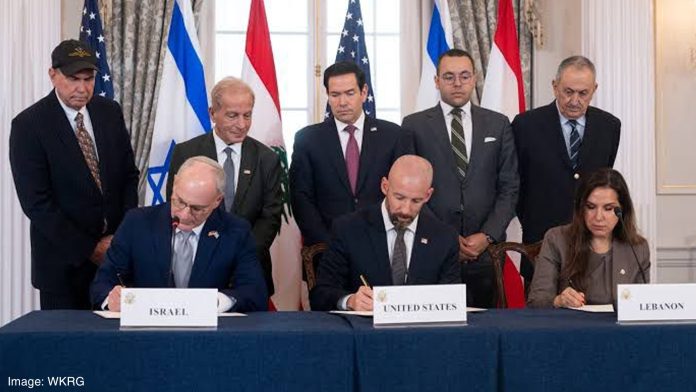
The United States, Lebanon and Isr*el signed a new framework agreement in Washington on June 26 that was presented as a first step toward ending the fighting in Lebanon. US Secretary of State Marco Rubio said the deal creates a structured process to restore Lebanon’s sovereignty, disarm Hezbollah, dismantle its military infrastructure, and eventually allow Isr*el to return to its borders once threats to its citizens are removed. (Reuters | Times of Israel)

The framework also creates a US-facilitated Military Coordination Group for Lebanon and promises immediate American support, including $100 million in humanitarian assistance and more than $30 million to strengthen the Lebanese Armed Forces. (Reuters | AP News)

On paper, it sounds like a sovereignty deal. On the ground, it may become something far more dangerous.

THE FORCE AT THE CENTER OF THE DEAL WAS NOT IN THE ROOM

The agreement depends on the disarmament of Hezbollah and other non-state armed groups. But Hezbollah was not part of the Washington talks. That is the central flaw. (Reuters | Axios)

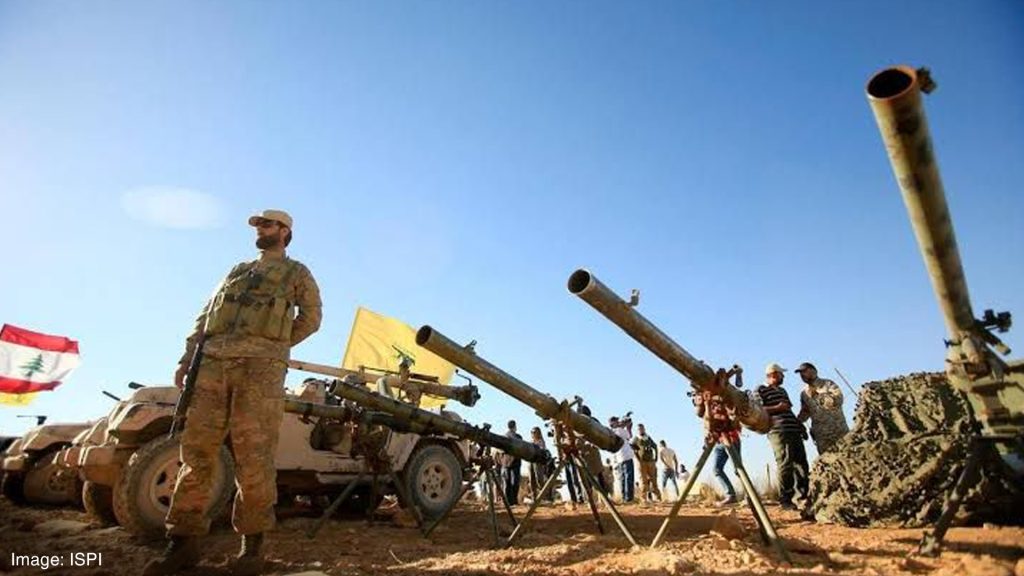
Lebanon’s army is being asked to restore state control over territory where Hezbollah remains deeply armed and politically powerful. Isr*el says it will not fully withdraw from southern Lebanon until Hezbollah is disarmed. Hezbollah says it will not surrender its weapons while Isr*el remains in Lebanon. That means the deal places the Lebanese state between two forces that are already refusing to move first. (Al Jazeera | Times of Israel)

This is why the agreement does not simply end the war. It risks moving the confrontation inward, from Isr*el and Hezbollah into Lebanon’s own political and military system.
ISR*EL SIGNED THE DEAL, BUT KEPT ITS MILITARY LEVERAGE

The framework promises a path toward Isr*eli withdrawal, but it does not force Isr*el to leave immediately. Netanyahu has said Isr*eli forces may remain in southern Lebanon until Hezbollah is completely disarmed. Israeli Defence Minister Israel Katz went further, saying Isr*el would not leave its security zone in Lebanon even if “the United States demands it.” (Al Jazeera | Reuters)

That position gives Isr*el a built-in reason to stay as long as it says Hezbollah remains a threat. It also gives Hezbollah a built-in reason to reject disarmament as surrender under occupation.

The contradiction was visible almost immediately. As the framework was being announced, southern Lebanon was still facing strikes, military warnings and evacuation pressure. An Isr*eli air raid killed two people in Mayfadoun on the day of signing. Airstrikes also hit Nabatieh al-Fawqa, and Isr*eli forces dropped leaflets ordering residents to leave al-Mansouri. Isr*el claimed it had killed Hezbollah members near territory it occupies. (Al Jazeera | Reuters)

The strain between Washington and Tel Aviv has become impossible to ignore. At the G7 summit earlier this month, Trump confirmed he had called Netanyahu “crazy,” even as he insisted the Israeli leader remained a “very good man.” “We have a little dispute over Lebanon,” Trump said. That dispute is now written into the framework’s contradictions. (Newsweek)

HEZBOLLAH WARNED OF CIVIL WAR, AND THE BACKLASH HIT BEIRUT

Hezbollah rejected the logic of the framework and warned that trying to enforce it could push Lebanon toward civil war. Hezbollah lawmaker Hassan Fadlallah said Lebanese authorities would not be able to implement the Washington agreement unless they went, with American support, “to civil war.” (AP News | Times of India)

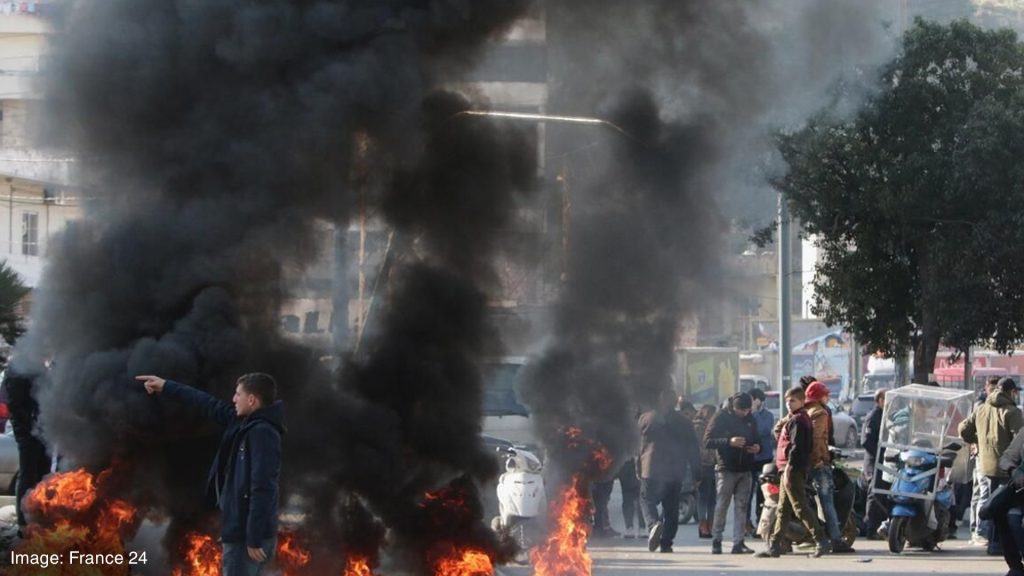
The backlash was not only rhetorical. Hezbollah supporters protested in Beirut, riding motorbikes through the capital and blocking at least one road with burning tyres. Lebanon’s army dispersed protesters and reopened the airport road. (AP News)

That image matters. A deal meant to bring peace with Isr*el quickly forced Lebanon’s own army to confront anger inside Lebanon. The state is now being asked to absorb pressure from Washington, pressure from Isr*el, pressure from Hezbollah, and pressure from civilians living under the consequences.

LEBANON’S SOVEREIGNTY IS THE PROMISE AND THE BATTLEGROUND

Lebanon’s leaders have presented the framework as a path to restoring sovereignty. President Joseph Aoun welcomed it as a first step toward restoring Lebanese authority and allowing civilians to return to liberated and rebuilt land. Prime Minister Nawaf Salam framed the deal around Isr*eli withdrawal and Lebanese state control. (Times of Israel | Al Jazeera)
But sovereignty is not restored by signatures alone. It has to be enforced on the ground. That means confronting the reality of Isr*eli military control across 570 square kilometres of southern Lebanon, Hezbollah’s weapons, over one million displaced civilians, damaged towns, and a Lebanese army being pushed into the centre of a conflict it may not be strong enough to resolve alone. (Middle East Eye | Al Jazeera)

The economic cost of that deadlock falls on ordinary Lebanese. Farms abandoned. Homes demolished. Businesses shuttered across the south. The $100 million the US pledged in humanitarian assistance does not reach families who cannot return to what is left of their villages. (AP News)

A DEAL THAT COULD STABILIZE LEBANON, OR BREAK IT OPEN

The Lebanon framework is being sold as the beginning of peace. But its structure is brutally fragile.

Isr*el wants Hezbollah disarmed before it leaves. Hezbollah says it will not disarm while Isr*el remains. Lebanon’s government wants sovereignty, but enforcing the deal could mean internal confrontation. The United States wants a regional diplomatic win, but the backlash has already begun.

That is why this is not just a ceasefire story. It is a sovereignty crisis. It is a test of whether Lebanon can regain control without being pushed into civil conflict.

For now, the deal does not look like the end of war. It looks like the war being moved inside Lebanon.

*By Verity Quill | verumnetwork.com*

SOURCES

Reuters | Al Jazeera | Axios | Arab News | Times of Israel | Middle East Eye | Newsweek | NPR
THAT IS NOT PEACE. THAT IS A TRAP WITH SIGNATURES ON IT.

It asks the Lebanese state to restore control over its territory, but only after Hezbollah disarms. Hezbollah says it will not surrender its weapons while Isr*el remains in Lebanon. Isr*el says it may remain until Hezbollah disarms. And Lebanon, a country that has lost more than 4,000 people in this war and seen more than one million of its citizens displaced, is now being asked to enforce a deal that two of the most powerful forces inside and around it have already refused to accept. (AP News | Middle East Eye)

A PEACE FRAMEWORK SIGNED FAR FROM THE WAR

The United States, Lebanon and Isr*el signed a new framework agreement in Washington on June 26 that was presented as a first step toward ending the fighting in Lebanon. US Secretary of State Marco Rubio said the deal creates a structured process to restore Lebanon’s sovereignty, disarm Hezbollah, dismantle its military infrastructure, and eventually allow Isr*el to return to its borders once threats to its citizens are removed. (Reuters | Times of Israel)

The framework also creates a US-facilitated Military Coordination Group for Lebanon and promises immediate American support, including $100 million in humanitarian assistance and more than $30 million to strengthen the Lebanese Armed Forces. (Reuters | AP News)

On paper, it sounds like a sovereignty deal. On the ground, it may become something far more dangerous.

THE FORCE AT THE CENTER OF THE DEAL WAS NOT IN THE ROOM

The agreement depends on the disarmament of Hezbollah and other non-state armed groups. But Hezbollah was not part of the Washington talks. That is the central flaw. (Reuters | Axios)

Lebanon’s army is being asked to restore state control over territory where Hezbollah remains deeply armed and politically powerful. Isr*el says it will not fully withdraw from southern Lebanon until Hezbollah is disarmed. Hezbollah says it will not surrender its weapons while Isr*el remains in Lebanon. That means the deal places the Lebanese state between two forces that are already refusing to move first. (Al Jazeera | Times of Israel)

This is why the agreement does not simply end the war. It risks moving the confrontation inward, from Isr*el and Hezbollah into Lebanon’s own political and military system.

ISR*EL SIGNED THE DEAL, BUT KEPT ITS MILITARY LEVERAGE

The framework promises a path toward Isr*eli withdrawal, but it does not force Isr*el to leave immediately. Netanyahu has said Isr*eli forces may remain in southern Lebanon until Hezbollah is completely disarmed. Israeli Defence Minister Israel Katz went further, saying Isr*el would not leave its security zone in Lebanon even if “the United States demands it.” (Al Jazeera | Reuters)

That position gives Isr*el a built-in reason to stay as long as it says Hezbollah remains a threat. It also gives Hezbollah a built-in reason to reject disarmament as surrender under occupation.

The contradiction was visible almost immediately. As the framework was being announced, southern Lebanon was still facing strikes, military warnings and evacuation pressure. An Isr*eli air raid killed two people in Mayfadoun on the day of signing. Airstrikes also hit Nabatieh al-Fawqa, and Isr*eli forces dropped leaflets ordering residents to leave al-Mansouri. Isr*el claimed it had killed Hezbollah members near territory it occupies. (Al Jazeera | Reuters)

The strain between Washington and Tel Aviv has become impossible to ignore. At the G7 summit earlier this month, Trump confirmed he had called Netanyahu “crazy,” even as he insisted the Israeli leader remained a “very good man.” “We have a little dispute over Lebanon,” Trump said. That dispute is now written into the framework’s contradictions. (Newsweek)

HEZBOLLAH WARNED OF CIVIL WAR, AND THE BACKLASH HIT BEIRUT

Hezbollah rejected the logic of the framework and warned that trying to enforce it could push Lebanon toward civil war. Hezbollah lawmaker Hassan Fadlallah said Lebanese authorities would not be able to implement the Washington agreement unless they went, with American support, “to civil war.” (AP News | Times of India)

The backlash was not only rhetorical. Hezbollah supporters protested in Beirut, riding motorbikes through the capital and blocking at least one road with burning tyres. Lebanon’s army dispersed protesters and reopened the airport road. (AP News)

That image matters. A deal meant to bring peace with Isr*el quickly forced Lebanon’s own army to confront anger inside Lebanon. The state is now being asked to absorb pressure from Washington, pressure from Isr*el, pressure from Hezbollah, and pressure from civilians living under the consequences.

LEBANON’S SOVEREIGNTY IS THE PROMISE AND THE BATTLEGROUND

Lebanon’s leaders have presented the framework as a path to restoring sovereignty. President Joseph Aoun welcomed it as a first step toward restoring Lebanese authority and allowing civilians to return to liberated and rebuilt land. Prime Minister Nawaf Salam framed the deal around Isr*eli withdrawal and Lebanese state control. (Times of Israel | Al Jazeera)

But sovereignty is not restored by signatures alone. It has to be enforced on the ground. That means confronting the reality of Isr*eli military control across 570 square kilometres of southern Lebanon, Hezbollah’s weapons, over one million displaced civilians, damaged towns, and a Lebanese army being pushed into the centre of a conflict it may not be strong enough to resolve alone. (Middle East Eye | Al Jazeera)

The economic cost of that deadlock falls on ordinary Lebanese. Farms abandoned. Homes demolished. Businesses shuttered across the south. The $100 million the US pledged in humanitarian assistance does not reach families who cannot return to what is left of their villages. (AP News)

A DEAL THAT COULD STABILIZE LEBANON, OR BREAK IT OPEN

The Lebanon framework is being sold as the beginning of peace. But its structure is brutally fragile.

Isr*el wants Hezbollah disarmed before it leaves. Hezbollah says it will not disarm while Isr*el remains. Lebanon’s government wants sovereignty, but enforcing the deal could mean internal confrontation. The United States wants a regional diplomatic win, but the backlash has already begun.

That is why this is not just a ceasefire story. It is a sovereignty crisis. It is a test of whether Lebanon can regain control without being pushed into civil conflict.

For now, the deal does not look like the end of war. It looks like the war being moved inside Lebanon.

*By Verity Quill | verumnetwork.com*

SOURCES

Reuters | Al Jazeera | Axios | Arab News | Times of Israel | Middle East Eye | Newsweek | NPR

spot_img

Explore more

spot_img
Global Affairs

China Has Written Uyghur Erasure Into Law.

Christopher Nolan Filmed The Odyssey On Occupied Land. Behind It Sits...

From Teen Suicide To Fake Nudes: The Human Cost Of The...

She Was Blinded At 14. Bollywood Called It “Limited Damage.”

Isr*el’s Sexual Abuse Crisis Is Not A Scandal. It Is A...

Qualified, Shortlisted, Then Shut Out: Black Doctors In The UK Face...

Behind Messi’s Silence On Gaza Lies A Web Of Isr*eli Ties

The Fight For Jerusalem Begins With Who Controls Its Story