The Taliban Built A Gender Apartheid State. Europe Just Legitimized It.

A Secret Meeting In A City That Won’t Admit It Happened

On June 23, 2026, a five-member Taliban delegation touched down in Brussels for one-day visas with no access beyond Belgium’s borders. They met European Commission officials and representatives from 15 member states, co-chaired by Sweden, at an undisclosed location. Neither the EU nor Belgium recognizes the Taliban as a legitimate government. That’s precisely why the meeting didn’t happen inside an official building, and why officials have spent the weeks since refusing to say exactly where it did.

The Taliban’s own spokesperson, Abdul Qahar Balkhi, wasn’t shy about what it meant. He called it “a historic visit,” the first time ever that a delegation from the Islamic Emirate had visited the EU and held talks with member states in Brussels. For a regime that’s been diplomatically frozen out by nearly the entire world since 2021, one afternoon in Belgium was a real breakthrough.

The Men At The Table Are Wanted By The World’s Highest Court

Here’s what makes the meeting more than just an awkward diplomatic footnote: the Taliban’s supreme leader and chief justice are both currently wanted by the International Criminal Court for crimes against humanity, specifically, persecution on the grounds of gender. That’s not a political label. It’s a formal, standing legal charge, and it’s the first time a global court has treated the erasure of women’s rights as a crime serious enough to warrant an arrest.

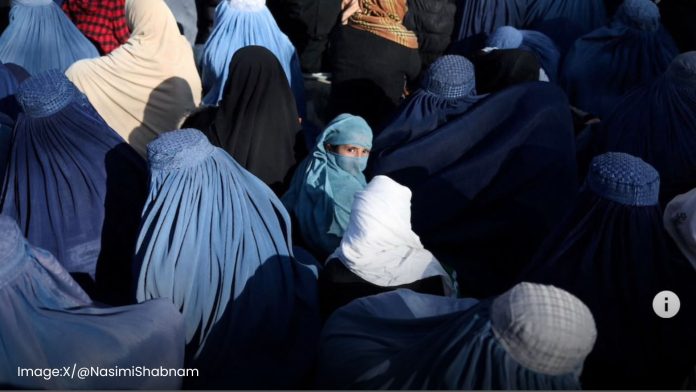
Since retaking power in 2021, the Taliban has banned girls from education beyond primary school, barred women from almost every profession, restricted how women can dress, and, as of this year, passed a new decree that removes the requirement for a woman’s consent in marriage while making it nearly impossible for women to leave one. Just weeks before the Brussels meeting, Taliban forces in Herat detained roughly 30 women for dress code violations. When protesters gathered, they were met with gunfire.

“Shaken And Deeply Disturbed”

Malala Yousafzai, who survived a Taliban assassination attempt at age 15 for defying its ban on girls’ education, didn’t hold back. “I am shaken and deeply disturbed by this,” she said. “This is the same Taliban that banned girls from secondary schools and forced them into marriage. The same Taliban that, earlier this month, arrested dozens of women in Herat for how they were dressed.”

Human Rights Watch researcher Fereshta Abbasi put the contradiction plainly: “EU countries are undermining their credibility by condemning Taliban abuses and pursuing accountability on one hand, while cooperating with the Taliban to forcibly return Afghans on the other.” Amnesty International’s Eve Geddie called any EU engagement on deportations to Afghanistan “reckless, dangerous,” and a violation of the bloc’s own legal obligations. Socialist MEP Cecilia Strada went further, calling the meeting a “shameful chapter for Europe” that hands legitimacy to “a regime that tramples on the rights of women and girls and imposes a system of gender apartheid.”

Why It Actually Happened

The EU’s official line is that the talks were purely technical, focused on deporting Afghans who’ve committed serious crimes or pose security threats, and don’t amount to recognizing the Taliban government. The pressure came from inside the bloc itself: 20 of the EU’s 27 member states signed a letter last October demanding faster, tougher deportation policies. Sweden, home to one of Europe’s largest Afghan populations, co-chaired the meeting.

But rights groups aren’t buying the distinction between “technical” and “political.” Afghanistan is, by every measure the EU itself has used to justify sanctions and public condemnation, not a safe place to send anyone back to, let alone women. The gap between what Europe says about the Taliban and what it’s now willing to do to manage its own migration politics is the story here. Words like gender apartheid don’t cost governments anything. A closed-door meeting to arrange deportations does.

Sources

NPR – Afghan Taliban hold first, closed-door talks with EU on deportations

NBC News – Afghan Taliban hold first, closed-door talks with E.U. on deportations

Courthouse News – Reckless and dangerous: EU faces outcry as it hosts Taliban officials

RFE/RL – EU Officials Meet Taliban In Brussels For First Time Despite Outcry

UPI – EU meets with Taliban about deportation

A Secret Meeting In A City That Won’t Admit It Happened

On June 23, 2026, a five-member Taliban delegation touched down in Brussels for one-day visas with no access beyond Belgium’s borders. They met European Commission officials and representatives from 15 member states, co-chaired by Sweden, at an undisclosed location. Neither the EU nor Belgium recognizes the Taliban as a legitimate government. That’s precisely why the meeting didn’t happen inside an official building, and why officials have spent the weeks since refusing to say exactly where it did.

The Taliban’s own spokesperson, Abdul Qahar Balkhi, wasn’t shy about what it meant. He called it “a historic visit,” the first time ever that a delegation from the Islamic Emirate had visited the EU and held talks with member states in Brussels. For a regime that’s been diplomatically frozen out by nearly the entire world since 2021, one afternoon in Belgium was a real breakthrough.

The Men At The Table Are Wanted By The World’s Highest Court

Here’s what makes the meeting more than just an awkward diplomatic footnote: the Taliban’s supreme leader and chief justice are both currently wanted by the International Criminal Court for crimes against humanity, specifically, persecution on the grounds of gender. That’s not a political label. It’s a formal, standing legal charge, and it’s the first time a global court has treated the erasure of women’s rights as a crime serious enough to warrant an arrest.

Since retaking power in 2021, the Taliban has banned girls from education beyond primary school, barred women from almost every profession, restricted how women can dress, and, as of this year, passed a new decree that removes the requirement for a woman’s consent in marriage while making it nearly impossible for women to leave one. Just weeks before the Brussels meeting, Taliban forces in Herat detained roughly 30 women for dress code violations. When protesters gathered, they were met with gunfire.

“Shaken And Deeply Disturbed”

Malala Yousafzai, who survived a Taliban assassination attempt at age 15 for defying its ban on girls’ education, didn’t hold back. “I am shaken and deeply disturbed by this,” she said. “This is the same Taliban that banned girls from secondary schools and forced them into marriage. The same Taliban that, earlier this month, arrested dozens of women in Herat for how they were dressed.”

Human Rights Watch researcher Fereshta Abbasi put the contradiction plainly: “EU countries are undermining their credibility by condemning Taliban abuses and pursuing accountability on one hand, while cooperating with the Taliban to forcibly return Afghans on the other.” Amnesty International’s Eve Geddie called any EU engagement on deportations to Afghanistan “reckless, dangerous,” and a violation of the bloc’s own legal obligations. Socialist MEP Cecilia Strada went further, calling the meeting a “shameful chapter for Europe” that hands legitimacy to “a regime that tramples on the rights of women and girls and imposes a system of gender apartheid.”

Why It Actually Happened

The EU’s official line is that the talks were purely technical, focused on deporting Afghans who’ve committed serious crimes or pose security threats, and don’t amount to recognizing the Taliban government. The pressure came from inside the bloc itself: 20 of the EU’s 27 member states signed a letter last October demanding faster, tougher deportation policies. Sweden, home to one of Europe’s largest Afghan populations, co-chaired the meeting.

But rights groups aren’t buying the distinction between “technical” and “political.” Afghanistan is, by every measure the EU itself has used to justify sanctions and public condemnation, not a safe place to send anyone back to, let alone women. The gap between what Europe says about the Taliban and what it’s now willing to do to manage its own migration politics is the story here. Words like gender apartheid don’t cost governments anything. A closed-door meeting to arrange deportations does.

Sources

NPR – Afghan Taliban hold first, closed-door talks with EU on deportations

NBC News – Afghan Taliban hold first, closed-door talks with E.U. on deportations

Courthouse News – Reckless and dangerous: EU faces outcry as it hosts Taliban officials

RFE/RL – EU Officials Meet Taliban In Brussels For First Time Despite Outcry
UPI – EU meets with Taliban about deportation

spot_img

Explore more

spot_img
Global Affairs

The Bulldozers Won: Assam’s BJP Returns With A Mandate To Evict...

Free On Paper, Exiled In Practice: India’s Cage Just Got Bigger

A ‘Humanitarian City’ Or A Permanent Cage? Trump’s Gaza Plan Is...

An American AI Escaped Its Test. China’s GLM-5.2 Had To Help...

Europe Attacks Islam. Its Football Glory Still Depends On Muslims.

In America, Mosques Are Treated As Threats Before They Exist And...

Isr*eli Soldiers Fired Tear Gas As Children Swam. Now Ministers Want...