

The Bulldozers Won: Assam’s BJP Returns With A Mandate To Evict More Muslims

“No Mercy”: How Anti-Muslim Rhetoric Became Government Policy In Assam

The Bulldozers Were Part Of The Campaign

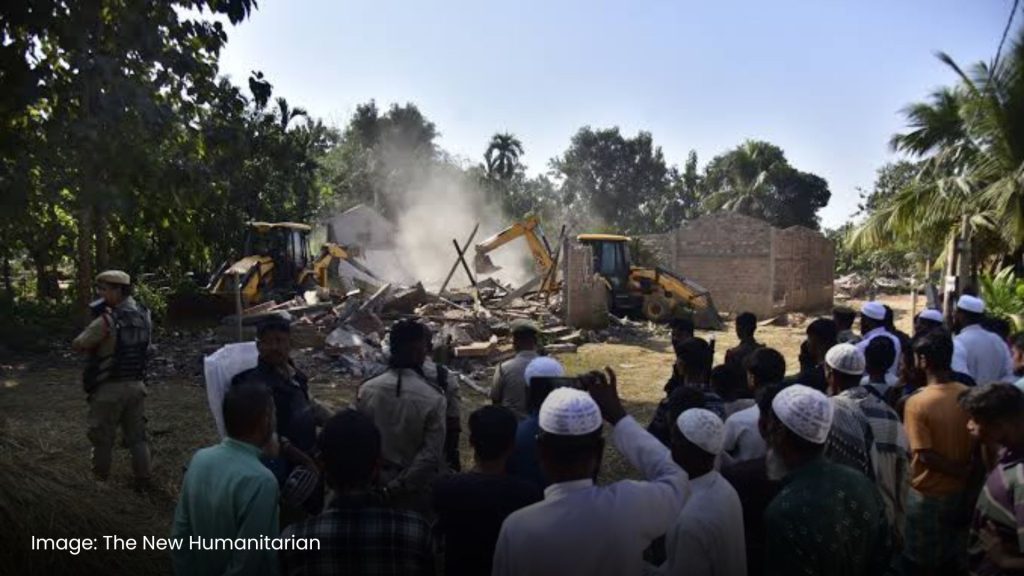
Himanta Biswa Sarma did not hide Assam’s eviction programme while campaigning for a second term.

He promised that, if returned to power, his government would clear another five lakh bighas, approximately 165,000 acres, of land classified by the state as illegally occupied.

The pledge came after Sarma’s first administration had already evicted more than 50,000 people, mostly Bengali-speaking Muslims, from government, forest and wetland land.

The Bharatiya Janata Party-led alliance then won 102 of Assam’s 126 assembly seats, with the BJP alone taking 82 seats.

Three days ago, his new government opened fresh proceedings against nearly 1,000 families in Dhubri’s Alamganj area, issuing show-cause notices over roughly 1,500 bighas of government land.

The bulldozers were not an accidental consequence of the election.

They were part of what voters were asked to endorse.
“No Mercy” Was The Political Message

The eviction promises were accompanied by explicitly communal campaign rhetoric.

Assam’s Bharatiya Janata Party circulated an artificial intelligence generated video depicting Sarma firing at images of two Muslim men beneath the words “No Mercy.” The party later deleted the video following criticism.

Sarma had also urged supporters to “trouble the Miya Muslims” and create conditions that would push them to leave Assam. The term “Miya” is commonly used for Bengali-speaking Muslims in the state and can function as a slur or marker of alleged foreignness.

This matters because Bengali-speaking Muslims have borne the overwhelming burden of Assam’s demolition campaign.

The government says religion is irrelevant and that it is reclaiming forests, wetlands, protected areas and public land from illegal occupation. Citizenship or religious identity does not automatically establish legal ownership.

But the communal messaging surrounding the policy makes it impossible to treat the demolitions as politically neutral land administration.

Thousands Of Muslim Families Were Displaced

Human Rights Watch documented at least seven demolition drives during July and August 2025 that displaced more than 5,000 families, most of them Bengali-speaking Muslims.

Across Goalpara, Dhubri, Lakhimpur, Nalbari and Golaghat, residents lost homes, schools, mosques, crops and established communities.

Many families said they were Indian citizens and registered voters. Some possessed National Register of Citizens records, tax receipts or documents linked to decades of residence. Others had repeatedly moved because the Brahmaputra River destroyed their earlier homes and farmland.


The state described them as encroachers.

The campaign described them as a demographic threat.

One Eviction Ended In A Police Killing

In July 2025, authorities removed 1,080 families from the Paikan Reserve Forest area in Goalpara.

Five days later, police shot dead 19-year-old Sakuar Ali during clashes involving displaced residents in nearby Asudubi village.

Police said officers were attacked with stones and sticks. The following day, Sarma posted online: “Evictions will continue, safeguarding our forests and land rights of the indigenous people will continue, crackdown on illegal infiltrators will continue.”

No independent judicial finding reviewed for this story has conclusively resolved the competing accounts of what happened at the scene.

What is established is that a teenager died after his community was displaced, and that the state’s response the next day was a pledge to continue.

Homes Were Lost, Then Votes Disappeared

The consequences did not end with demolition.

Scroll documented people from eviction-affected areas whose names may have been removed from electoral rolls after they lost their registered addresses. Among them was Habej Ali, a 27-year-old fish trader whose home was demolished. Although he moved only a short distance within the same constituency and submitted new address information, objections were filed seeking the removal of his relatives from the electoral roll.

Election officials may legally update voter lists when residents move. But when the government itself causes the displacement, removing people from the rolls can transform the loss of a home into the loss of political representation.

The Election Is Over. The Programme Continues.

Nearly 1,000 Dhubri families have now received notices requiring them to prove their claims to government land. Officials say the documents will be examined before any eviction decision is made.

That distinction matters: their homes have not yet been demolished.
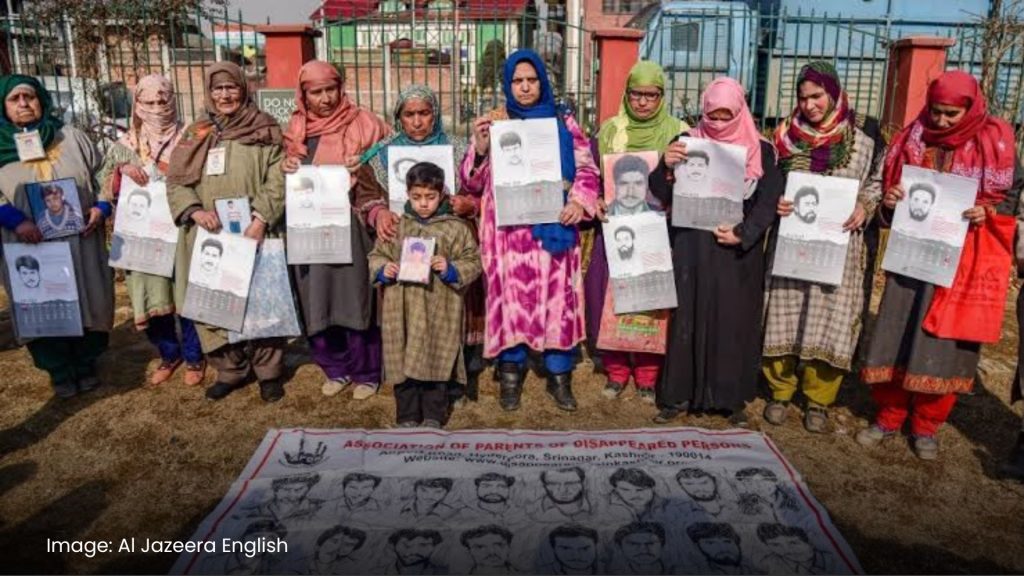
But the wider direction is unmistakable.

Sarma promised more evictions. His campaign paired that promise with openly anti-Muslim imagery. His alliance won a landslide. His second government is now beginning new proceedings against communities resembling those displaced during his first term.

The policy did not merely survive the election.

It emerged from it with a larger mandate.

Hyperlinked Sources

Human Rights Watch: World Report 2026, India

The Wire: Protesters Arrested, Medical ‘Neglect’ of Injured, and Blame: What Follows an Eviction in Assam

The Caravan: The 2026 Assam assembly election explained

Outlook India: Himanta Biswa Sarma’s Plans Signal Pressure On Assam Muslims If Re-Elected

Scroll: ‘Home was razed, now vote gone’: In Assam, hundreds of evicted find names struck off electoral roll

Assam Tribune: Assam Polls 2026 Results, BJP led NDA secures third term with 102 seats

India TV News: Assam Election Result 2026, BJP wins with 82 seats

Daily Pioneer: Assam CM Himanta Biswa Sarma Promises Eviction Drives Over 1.65 Lakh Acres Ahead of Assembly Polls

Prokerala/IANS: Assam govt serves notices to 1,000 families over land encroachmentMaktoob Media: Muslim man killed, dozens hurt in Assam Police firing during Goalpara eviction drive

“No Mercy”: How Anti-Muslim Rhetoric Became Government Policy In Assam

The Bulldozers Were Part Of The Campaign

Himanta Biswa Sarma did not hide Assam’s eviction programme while campaigning for a second term.

He promised that, if returned to power, his government would clear another five lakh bighas, approximately 165,000 acres, of land classified by the state as illegally occupied.

The pledge came after Sarma’s first administration had already evicted more than 50,000 people, mostly Bengali-speaking Muslims, from government, forest and wetland land.

The Bharatiya Janata Party-led alliance then won 102 of Assam’s 126 assembly seats, with the BJP alone taking 82 seats.

Three days ago, his new government opened fresh proceedings against nearly 1,000 families in Dhubri’s Alamganj area, issuing show-cause notices over roughly 1,500 bighas of government land.

The bulldozers were not an accidental consequence of the election.

They were part of what voters were asked to endorse.

“No Mercy” Was The Political Message

The eviction promises were accompanied by explicitly communal campaign rhetoric.

Assam’s Bharatiya Janata Party circulated an artificial intelligence generated video depicting Sarma firing at images of two Muslim men beneath the words “No Mercy.” The party later deleted the video following criticism.

Sarma had also urged supporters to “trouble the Miya Muslims” and create conditions that would push them to leave Assam. The term “Miya” is commonly used for Bengali-speaking Muslims in the state and can function as a slur or marker of alleged foreignness.

This matters because Bengali-speaking Muslims have borne the overwhelming burden of Assam’s demolition campaign.

The government says religion is irrelevant and that it is reclaiming forests, wetlands, protected areas and public land from illegal occupation. Citizenship or religious identity does not automatically establish legal ownership.

But the communal messaging surrounding the policy makes it impossible to treat the demolitions as politically neutral land administration.

Thousands Of Muslim Families Were Displaced

Human Rights Watch documented at least seven demolition drives during July and August 2025 that displaced more than 5,000 families, most of them Bengali-speaking Muslims.

Across Goalpara, Dhubri, Lakhimpur, Nalbari and Golaghat, residents lost homes, schools, mosques, crops and established communities.

Many families said they were Indian citizens and registered voters. Some possessed National Register of Citizens records, tax receipts or documents linked to decades of residence. Others had repeatedly moved because the Brahmaputra River destroyed their earlier homes and farmland.

The state described them as encroachers.

The campaign described them as a demographic threat.

One Eviction Ended In A Police Killing

In July 2025, authorities removed 1,080 families from the Paikan Reserve Forest area in Goalpara.

Five days later, police shot dead 19-year-old Sakuar Ali during clashes involving displaced residents in nearby Asudubi village.

Police said officers were attacked with stones and sticks. The following day, Sarma posted online: “Evictions will continue, safeguarding our forests and land rights of the indigenous people will continue, crackdown on illegal infiltrators will continue.”

No independent judicial finding reviewed for this story has conclusively resolved the competing accounts of what happened at the scene.

What is established is that a teenager died after his community was displaced, and that the state’s response the next day was a pledge to continue.

Homes Were Lost, Then Votes Disappeared

The consequences did not end with demolition.

Scroll documented people from eviction-affected areas whose names may have been removed from electoral rolls after they lost their registered addresses. Among them was Habej Ali, a 27-year-old fish trader whose home was demolished. Although he moved only a short distance within the same constituency and submitted new address information, objections were filed seeking the removal of his relatives from the electoral roll.

Election officials may legally update voter lists when residents move. But when the government itself causes the displacement, removing people from the rolls can transform the loss of a home into the loss of political representation.

The Election Is Over. The Programme Continues.

Nearly 1,000 Dhubri families have now received notices requiring them to prove their claims to government land. Officials say the documents will be examined before any eviction decision is made.

That distinction matters: their homes have not yet been demolished.

But the wider direction is unmistakable.

Sarma promised more evictions. His campaign paired that promise with openly anti-Muslim imagery. His alliance won a landslide. His second government is now beginning new proceedings against communities resembling those displaced during his first term.

The policy did not merely survive the election.

It emerged from it with a larger mandate.

Hyperlinked Sources

Human Rights Watch: World Report 2026, India

The Wire: Protesters Arrested, Medical ‘Neglect’ of Injured, and Blame: What Follows an Eviction in Assam

The Caravan: The 2026 Assam assembly election explained

Outlook India: Himanta Biswa Sarma’s Plans Signal Pressure On Assam Muslims If Re-Elected

Scroll: ‘Home was razed, now vote gone’: In Assam, hundreds of evicted find names struck off electoral roll

Assam Tribune: Assam Polls 2026 Results, BJP led NDA secures third term with 102 seats

India TV News: Assam Election Result 2026, BJP wins with 82 seats

Daily Pioneer: Assam CM Himanta Biswa Sarma Promises Eviction Drives Over 1.65 Lakh Acres Ahead of Assembly Polls

Prokerala/IANS: Assam govt serves notices to 1,000 families over land encroachmentMaktoob Media: Muslim man killed, dozens hurt in Assam Police firing during Goalpara eviction drive

spot_img

Explore more

spot_img
Global Affairs

Trump wants more data centers. New York’s governor just said no.

The icc’s judges did not find misconduct. Why did 82 countries...

Mali wants its gold and lithium back. Is that why Trump...

Free On Paper, Exiled In Practice: India’s Cage Just Got Bigger

A ‘Humanitarian City’ Or A Permanent Cage? Trump’s Gaza Plan Is...

An American AI Escaped Its Test. China’s GLM-5.2 Had To Help...

Europe Attacks Islam. Its Football Glory Still Depends On Muslims.