Two AI Alliances Are Forming, and Countries Are Being Asked to Pick a Side

Two AI Alliances, One Global Divide: Inside China’s WAICO and America’s Pax Silica

Maryam Tariq

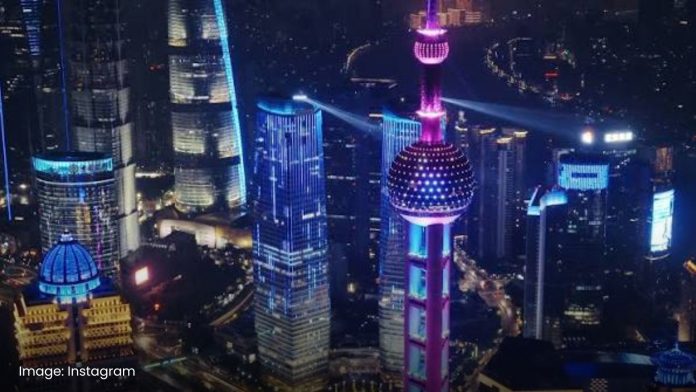
Artificial intelligence has quietly produced its own version of a nonaligned movement moment. This week, Chinese President Xi Jinping personally unveiled a new 29 nation coalition called the World Artificial Intelligence Cooperation Organization, or WAICO, in Shanghai. It arrives eight months after the United States launched its own rival coalition, Pax Silica, which has already grown to 35 member countries. Between them, these two blocs are quietly asking the rest of the world to choose whose AI order to build inside.

What China Announced With WAICO

Xi delivered his first keynote address at the World AI Conference on July 17, calling for countries to treat AI development as a symphony of international cooperation rather than a solo performance by any single nation. Chinese Foreign Minister Wang Yi had signed WAICO’s founding agreement a day earlier alongside representatives from 29 countries, with UN Secretary General Antonio Guterres attending the ceremony, a notable diplomatic presence for a body still short on enforcement power. The founding members skew heavily toward the Global South, including Russia, Pakistan, Indonesia, Brazil, Cuba, Venezuela, Kazakhstan, Laos, and roughly ten African nations. No G7 economy signed on. Headquartered in Shanghai, WAICO is structured as an independent intergovernmental body operating under UN Charter principles, with a stated mission of ensuring AI develops in a way that is beneficial, safe and equitable for all participating countries, not just the most technologically advanced ones.

Why America’s Pax Silica Got There First

WAICO is not entering an empty field. The Trump administration launched Pax Silica in December 2025 as the State Department’s flagship initiative on AI and supply chain security, built around coordinating compute power, semiconductors, critical minerals and energy among trusted partners. Founding members included Israel, Australia, Japan, Singapore and South Korea, with the UAE and Qatar joining in January. By late June, membership had expanded to 35 countries, with India expected to join soon after. Under Secretary of State Jacob Helberg has described the initiative as an economic security coalition built on the idea that national security is now inseparable from technological edge, explicitly framing Pax Silica as a way to reduce global dependence on China.

The Resource Gap Driving Both Sides

China’s position in this rivalry is shaped by a specific imbalance. Beijing trails the US on access to the most advanced semiconductors, but it holds a real advantage in the infrastructure needed to actually run AI at scale, generating more than twice as much electricity as the US and dominating the production of rare earth minerals essential to chip manufacturing. That combination, cheap power plus raw material control, gives China leverage even without matching America’s chip technology directly. The US, meanwhile, is using its lead in frontier AI models as its own point of control, a dynamic Axios has reported creates friction even among allies, since countries can join Pax Silica while still facing restrictions on accessing the most powerful American AI systems.

Why Neither Bloc Guarantees Full Access

This is where the two coalition strategy gets complicated for member countries. Pax Silica offers supply chain security and diplomatic proximity to Washington, but not automatic access to cutting edge models. WAICO offers a seat in shaping global AI governance discussions, but researchers, including Nature’s China correspondent, have already suggested it is unlikely to function as an enforceable regulatory body. In practice, both alliances currently function more as diplomatic positioning tools than technical governance structures, useful for building influence at bodies like the UN, but not yet capable of setting binding rules either country’s AI companies must follow.

What This Means Going Forward

The bigger story isn’t which alliance is currently larger or more capable, it’s that the world is now organizing around two separate technological spheres of influence for the first time since the early internet era. Governance expert Arindrajit Basu has noted that as Washington pulls back from multilateral tech diplomacy, Beijing is stepping directly into that vacuum, particularly with Global South countries who see WAICO as a seat at a table the US led system has been slower to offer them. Whether that translates into real regulatory power, or simply two competing spheres of influence with no shared rulebook at all, is the question both blocs are now racing to answer first.

Sources:

Inanc

·  China’s Xi Jinping launches new AI alliance, what is it — Al Jazeera: https://www.aljazeera.com/news/2026/7/17/chinas-xi-jinping-launches-new-ai-alliance-what-is-it

·  Xi Unveils WAICO as China Builds 29-Nation AI Alliance to Shape Global Rules — IBTimes Singapore: https://www.ibtimes.sg/xi-unveils-waico-china-builds-29-nation-ai-alliance-shape-global-rules-provide-affordable-models-89952

·  29 Nations Join China-Led World AI Cooperation Organization — PYMNTS: https://www.pymnts.com/news/artificial-intelligence/2026/29-nations-join-china-led-world-ai-cooperation-organization/

·  Trump puts allies on notice, AI power comes first — Axios: https://www.axios.com/2026/07/02/trump-allies-ai-power

Two AI Alliances, One Global Divide: Inside China’s WAICO and America’s Pax Silica

Maryam Tariq

Artificial intelligence has quietly produced its own version of a nonaligned movement moment. This week, Chinese President Xi Jinping personally unveiled a new 29 nation coalition called the World Artificial Intelligence Cooperation Organization, or WAICO, in Shanghai. It arrives eight months after the United States launched its own rival coalition, Pax Silica, which has already grown to 35 member countries. Between them, these two blocs are quietly asking the rest of the world to choose whose AI order to build inside.

What China Announced With WAICO

Xi delivered his first keynote address at the World AI Conference on July 17, calling for countries to treat AI development as a symphony of international cooperation rather than a solo performance by any single nation. Chinese Foreign Minister Wang Yi had signed WAICO’s founding agreement a day earlier alongside representatives from 29 countries, with UN Secretary General Antonio Guterres attending the ceremony, a notable diplomatic presence for a body still short on enforcement power. The founding members skew heavily toward the Global South, including Russia, Pakistan, Indonesia, Brazil, Cuba, Venezuela, Kazakhstan, Laos, and roughly ten African nations. No G7 economy signed on. Headquartered in Shanghai, WAICO is structured as an independent intergovernmental body operating under UN Charter principles, with a stated mission of ensuring AI develops in a way that is beneficial, safe and equitable for all participating countries, not just the most technologically advanced ones.

Why America’s Pax Silica Got There First

WAICO is not entering an empty field. The Trump administration launched Pax Silica in December 2025 as the State Department’s flagship initiative on AI and supply chain security, built around coordinating compute power, semiconductors, critical minerals and energy among trusted partners. Founding members included Israel, Australia, Japan, Singapore and South Korea, with the UAE and Qatar joining in January. By late June, membership had expanded to 35 countries, with India expected to join soon after. Under Secretary of State Jacob Helberg has described the initiative as an economic security coalition built on the idea that national security is now inseparable from technological edge, explicitly framing Pax Silica as a way to reduce global dependence on China.

The Resource Gap Driving Both Sides

China’s position in this rivalry is shaped by a specific imbalance. Beijing trails the US on access to the most advanced semiconductors, but it holds a real advantage in the infrastructure needed to actually run AI at scale, generating more than twice as much electricity as the US and dominating the production of rare earth minerals essential to chip manufacturing. That combination, cheap power plus raw material control, gives China leverage even without matching America’s chip technology directly. The US, meanwhile, is using its lead in frontier AI models as its own point of control, a dynamic Axios has reported creates friction even among allies, since countries can join Pax Silica while still facing restrictions on accessing the most powerful American AI systems.

Why Neither Bloc Guarantees Full Access

This is where the two coalition strategy gets complicated for member countries. Pax Silica offers supply chain security and diplomatic proximity to Washington, but not automatic access to cutting edge models. WAICO offers a seat in shaping global AI governance discussions, but researchers, including Nature’s China correspondent, have already suggested it is unlikely to function as an enforceable regulatory body. In practice, both alliances currently function more as diplomatic positioning tools than technical governance structures, useful for building influence at bodies like the UN, but not yet capable of setting binding rules either country’s AI companies must follow.

What This Means Going Forward

The bigger story isn’t which alliance is currently larger or more capable, it’s that the world is now organizing around two separate technological spheres of influence for the first time since the early internet era. Governance expert Arindrajit Basu has noted that as Washington pulls back from multilateral tech diplomacy, Beijing is stepping directly into that vacuum, particularly with Global South countries who see WAICO as a seat at a table the US led system has been slower to offer them. Whether that translates into real regulatory power, or simply two competing spheres of influence with no shared rulebook at all, is the question both blocs are now racing to answer first.

Sources:

Inanc

·  China’s Xi Jinping launches new AI alliance, what is it — Al Jazeera: https://www.aljazeera.com/news/2026/7/17/chinas-xi-jinping-launches-new-ai-alliance-what-is-it

·  Xi Unveils WAICO as China Builds 29-Nation AI Alliance to Shape Global Rules — IBTimes Singapore: https://www.ibtimes.sg/xi-unveils-waico-china-builds-29-nation-ai-alliance-shape-global-rules-provide-affordable-models-89952

·  29 Nations Join China-Led World AI Cooperation Organization — PYMNTS: https://www.pymnts.com/news/artificial-intelligence/2026/29-nations-join-china-led-world-ai-cooperation-organization/

·  Trump puts allies on notice, AI power comes first — Axios: https://www.axios.com/2026/07/02/trump-allies-ai-power
spot_img

Explore more

spot_img
Global Affairs

France Bans Social Media for Kids Under 15

Satellite Images Show Israel’s Is Building a Wall Going Past Gaza’s...

US to Let Saudi Enrich Uranium, the Same Thing It Fought...

Delaware County’s First Muslim Sheriff Targeted With Racist Death Threats

Gaza’s Population Has Dropped by Nearly 10 Percent Since October 2023

Venezuela, Iran, Cuba: The Oil Pattern Behind Trump’s Three Targets

US Senators Push Bill to Punish India and China for Buying...

Behind the Cockroach Protests: A Broken Exam System That’s Cost Students...