
The War Over Palestine’s Olive Trees Is Really About Land
By Shizza Umer
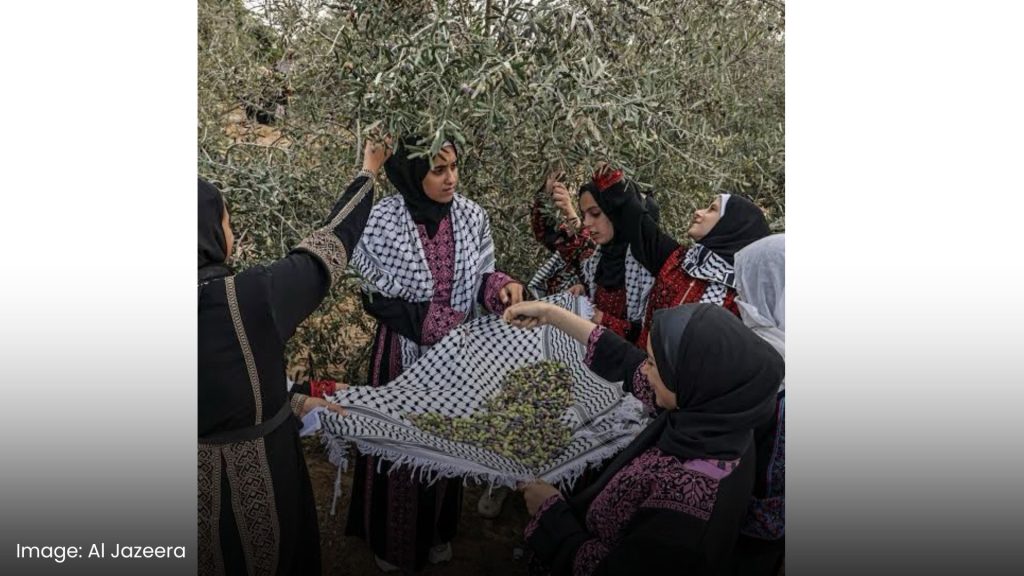
Every autumn, Palestinian families across the occupied West Bank gather to harvest olives. The season is more than an agricultural event. It is when generations come together, when family land is tended, and when a year’s work turns into food, oil and income.
The 2026 harvest opened with a killing, a beaten journalist and tens of thousands of damaged trees.
A Deadly Start to the 2026 Olive Harvest
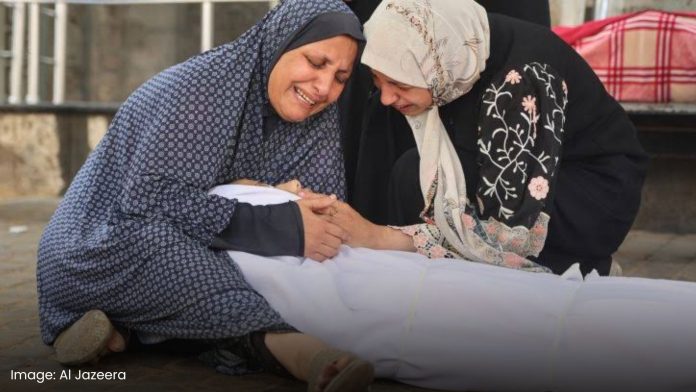
On 7 October, Ali Hassan Yasser al-Bazzari, 44, from Burqa, was killed on farmland west of Nablus while Palestinians were picking olives. The Palestinian Ministry of Health described the attack as a pogrom by settlers operating under the protection of Israeli forces. Two people treated at the scene had gunshot wounds. Nobody has been identified as firing the fatal shot.
One death changes the calculation for an entire district. When reaching a grove carries the risk of being shot, families stop going. The fear generated by a single incident spreads to neighbouring villages long before anyone counts the lost fruit.
A Photographer Attacked Two Harvests Running
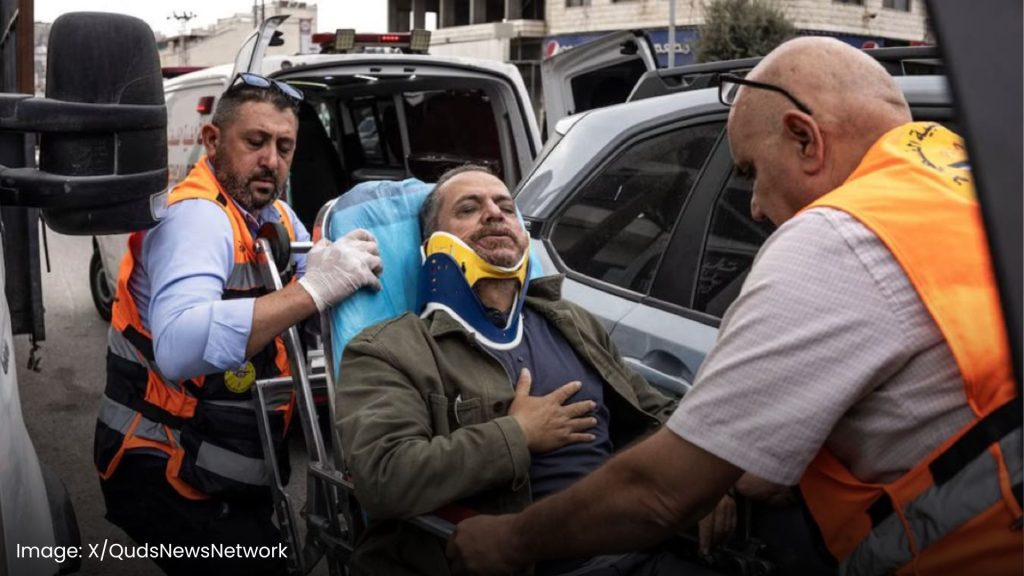
On 6 October, AFP photographer Jaafar Ashtiyeh, 58, was beaten with rifle butts near Aqraba, south of Nablus. He was trying to get into a car marked PRESS. His camera equipment was taken. A second AFP photographer was held at gunpoint and a Palestinian was shot in the foot in the same incident.
At least a dozen fully equipped Israeli soldiers stood roughly 500 metres away. They did not intervene.
Ashtiyeh had been attacked while covering the olive harvest once before, in Beita in October 2025. Two harvests, the same photographer, the same season.
Cameras do not prevent violence here. Sometimes they draw it.
49,000 Trees in Eight Months
Beyond individual attacks, Palestinian agricultural land has absorbed sustained damage. Roughly 49,000 olive trees were damaged or targeted across the West Bank in the first eight months of 2026, against 26,988 in the same period of 2025. That is an increase of about 81%.
An olive tree is not a crop that regrows in a season. Young trees eventually bear fruit, but a mature tree represents decades of cultivation, and its loss follows a household for years.
Repeated damage also changes the arithmetic of farming. A family may hold the deed and still struggle to justify investing in land where trees, equipment and access routes are all vulnerable.
The Land Is There. Access Is Another Matter.
Owning agricultural land and reaching it are two different things. Farmers in 98 Palestinian communities need prior military coordination to access certain areas near Israeli settlements. Visiting privately owned land depends on arrangements with Israeli authorities rather than the farmer’s own schedule.
Timing decides everything during the harvest. Pick too early or too late and both quality and yield fall.
The separation barrier adds another layer. UN reporting on the 2025 harvest documented 62 agricultural gates, about 74% of which opened only on limited days. A grove can stand untouched, its paperwork unchanged, while its practical value drains away because nobody can get to it reliably.
Beit Ula: How a Grove Becomes Unreachable
UN OCHA documented severe access constraints affecting roughly 1,500 dunams of agricultural land in Beit Ula, near Hebron, around half of it planted with olives. A nearby settler outpost, intimidation and military measures all contributed. OCHA separately identified about 1,300 dunams under a military closure order, overlapping rather than additional land.
Pruning, maintaining and harvesting are what keep an olive grove productive. When farmers cannot reach their trees consistently, the land itself deteriorates. Beit Ula shows how restrictions produce economic effects without a single plot formally changing hands.
What 80,000 Families Stand to Lose
The value of these trees is not measured only in olive oil. Olive trees cover about 86,000 hectares in the West Bank, roughly 47% of cultivated agricultural land, and between 80,000 and 100,000 families depend on olives as a main or secondary income. The sector also employs more than 15% of working women.
For families with few alternatives, a lost harvest is not a bad year. It is a hole in the household budget that nothing else fills.
The damage is cultural as well. A missed harvest costs revenue. Repeated missed harvests break the chain through which farming knowledge passes from grandparents to grandchildren.
Is This a Struggle Over Territory?
Israeli authorities cite security considerations for access controls and military measures. Palestinian farmers and human rights organisations argue the combined effect of restrictions, settler violence and expanding outposts is making Palestinian communities economically unviable on their own land.
Both positions are on the record. What happens in the groves is a separate question.
If a farmer owns a grove but cannot reach it, the gap between formal ownership and effective control is the whole story. Households lose income. Land goes untended. Young people leave for work elsewhere. None of it requires a transfer of title.
That is the real question raised by the 2026 harvest. The olives are the crop. The land is the stake.
By Shizza Umer
Sources
Al Jazeera · Al Jazeera · Al Jazeera · Associated Press · Reuters via Investing.com · AFP via Khaleej Times · The Guardian · The Washington Post · The Washington Post · UN OCHA · UN OCHA · UN OCHA · United Nations · The Jordan Times · Al-Monitor · Al-Monitor · WAFA · WAFA · The New Arab · The Times of Israel · The Times of Israel · Turkiye Today · Reuters Connect
Original social references: Quds News Network · TRT World · Dr Hossam Samy · Yesh Din · Quds News Network · Ashok Swain