Maryam Tariq
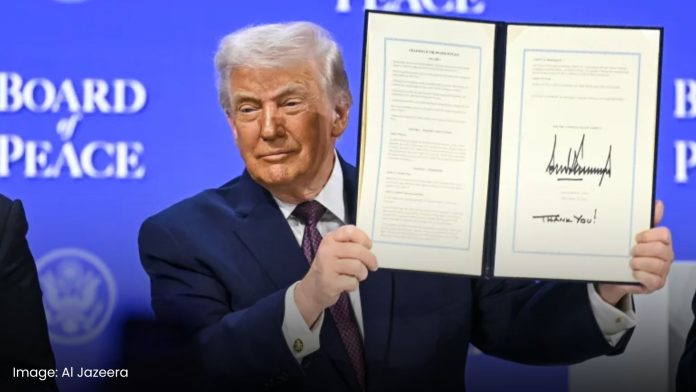
A civilian nuclear cooperation agreement between the United States and Saudi Arabia was signed Wednesday with no mention of Israel attached to it at all. By Thursday, President Trump had publicly declared the entire deal was now contingent on Saudi Arabia normalizing relations with Israel, a condition that appeared nowhere in the actual signed agreement or the White House’s original announcement just one day earlier.
What Was Actually Signed on Wednesday
US Energy Secretary Chris Wright and Saudi Energy Minister Prince Abdulaziz bin Salman signed the civilian nuclear cooperation agreement at a ceremony in Riyadh, alongside a separate bilateral nuclear safeguards agreement. The Department of Energy described it as the foundation for a decades long, multibillion dollar nuclear partnership, expected to run 30 years and involve US companies in developing Saudi Arabia’s nuclear program. Riyadh’s own statement at the time focused entirely on domestic goals, saying the pact was designed to diversify energy sources, advance technology, and expand cooperation under high international safety standards. Nothing in that announcement referenced Israel or the Abraham Accords.
How the Condition Appeared Overnight
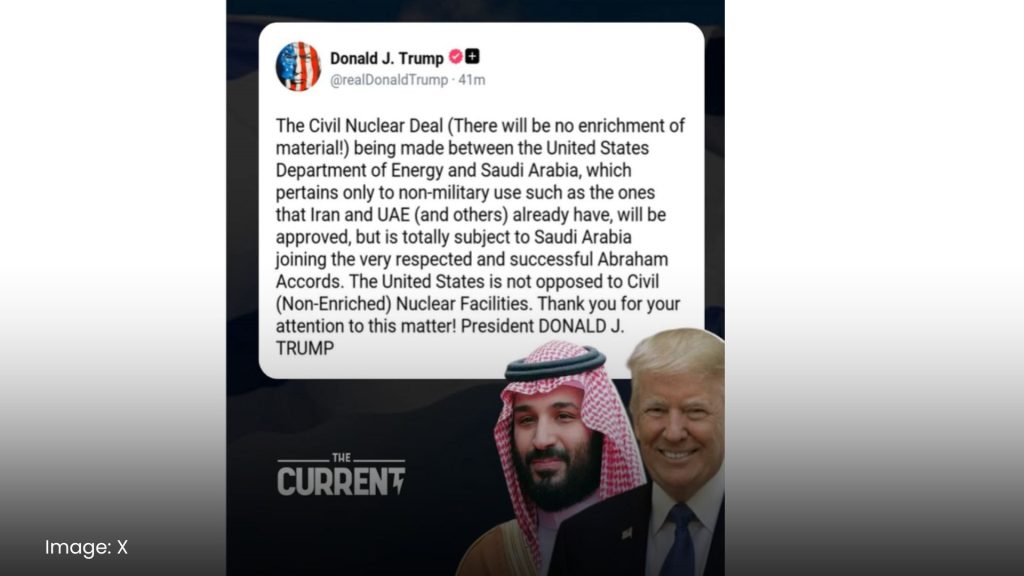
That changed the next morning. In a Truth Social post, Trump wrote that the civil nuclear deal, which he insisted involves no enrichment of material, would be approved but is totally subject to Saudi Arabia joining the very respected and successful Abraham Accords. White House press secretary Karoline Leavitt confirmed the shift to reporters, stating plainly that without Saudi recognition of Israel, the deal is off. When a reporter directly asked why this condition hadn’t been part of the original announcement, Leavitt responded that Trump is the final dealmaker and had raised the request with Gulf leaders on numerous occasions, without explaining why it was left out of the signed agreement itself.
A Reversal From Trump’s Own Earlier Position
The timing is notable given Trump’s own recent history on this exact issue. According to reporting from the New York Times, Trump had previously rejected the idea of tying nuclear cooperation to broader regional diplomacy, a linkage the Biden administration had pursued as part of a larger Middle East strategy. In May, Trump said it should be mandatory for Saudi Arabia to join the Abraham Accords, a demand that was reportedly ignored at the time. Reports in the lead up to Wednesday’s signing suggested Trump would not enforce any such condition on this particular deal, which is part of what made Thursday’s reversal catch observers off guard.
Why Saudi Arabia Isn’t Expected to Simply Agree
Saudi Arabia has maintained a consistent, long standing position that it will not normalize relations with Israel without a credible, guaranteed pathway toward Palestinian statehood. Israeli Prime Minister Benjamin Netanyahu has explicitly ruled out the creation of a Palestinian state, leaving the two conditions directly at odds with each other. As of Thursday, neither the Saudi Ministry of Foreign Affairs nor the Saudi Embassy in Washington had issued any public response to Trump’s new condition. A Saudi source told the Times of Israel simply that tweets don’t overturn signed agreements, a comment that captures the awkward position Riyadh now finds itself in, a signed deal with an unsigned condition attached to it after the fact.
The Enrichment Question Adds Another Layer
Complicating things further, Trump’s insistence that there will be no enrichment of material appears to conflict with reporting from the Wall Street Journal, which found the agreement includes a joint US Saudi study into potential future uranium enrichment inside the kingdom. The agreement also does not require Saudi Arabia to sign the IAEA’s Additional Protocol, which allows international inspectors to conduct snap inspections of nuclear sites, a safeguard most similar agreements include.
What Happens Next
The deal must now go before the US Congress, which has 90 session days to review, debate or potentially block it under the Atomic Energy Act. With Saudi Arabia yet to respond to the new condition and Netanyahu’s government publicly welcoming the reversal, the agreement now sits in what regional analysts have called a state of diplomatic suspension, a deal that was negotiated and signed, only to have its central condition attached in public after the fact.
Sources:
· Saudis must recognise Israel for nuclear deal, says Trump — BBC: https://www.bbc.com/news/articles/cwye71yq8wwo
· Trump says Saudi nuclear deal bars enrichment, requires Israel normalization — Axios: https://www.axios.com/2026/07/23/url-slug-trump-saudi-nuclear-deal-enrichment-israel
· Trump adds new condition to Saudi nuclear deal, says kingdom must normalize relations with Israel — PBS News: https://www.pbs.org/newshour/world/trump-adds-new-condition-to-saudi-nuclear-deal-says-kingdom-must-normalize-relations-with-israel · Trump says Saudi nuclear deal contingent on relations with Israel, does not include enrichment — CNBC: https://www.cnbc.com/2026/07/23/trump-saudi-arabia-nuclear-power.html