A French MP Used AI to Strip a Real Woman’s Hijab From Her Own Photo, Without Her Consent

A French MP Used AI to Strip a Real Woman’s Hijab From Her Own Photo, Without Her Consent

Maryam Tariq

A controversy has erupted in France after National Rally spokesperson and MP Julien Odoul published an AI-altered photo of a real, identifiable woman, digitally removing her hijab and changing her clothing before sharing the edited image on X with the caption “Liberté française,” French freedom.

Where the Photo Actually Came From

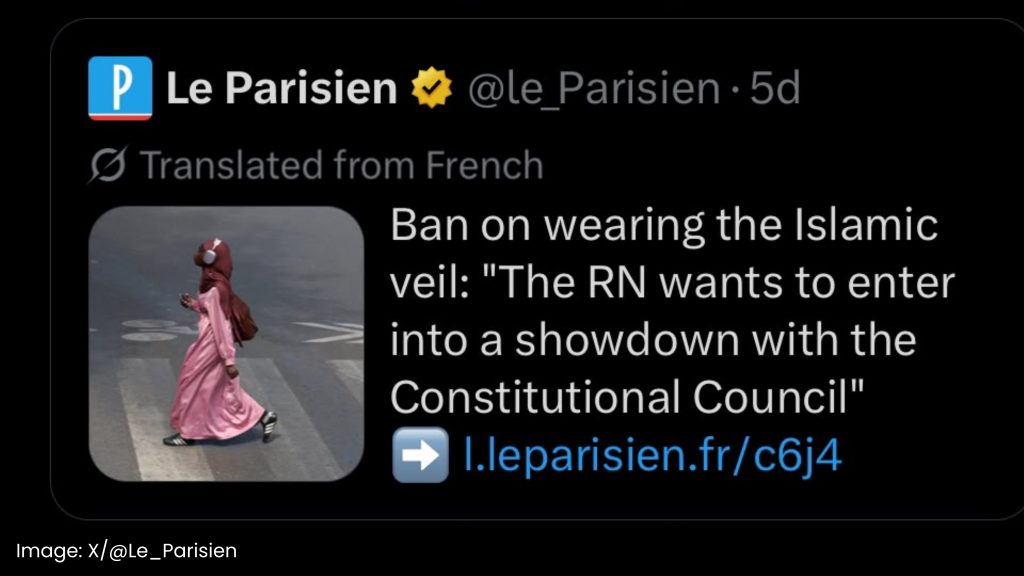
The image at the center of the controversy did not originate with Odoul. It was originally published by the newspaper Le Parisien to illustrate a news report on the National Rally’s proposed ban on wearing the Islamic veil in public spaces, along with the financial penalties the party has floated for violations. Odoul took that journalistic photograph and used generative AI to alter it, replacing the woman’s headscarf with uncovered hair and swapping her actual clothing for a white tank top and pants.
What Actually Happened to the Woman in the Photo

The core issue critics have raised isn’t simply that the image was AI generated, it’s that it depicts a real, identifiable private citizen whose appearance was rewritten against her will and redistributed without her knowledge or consent. Social media users and political opponents pointed out that altering how a woman dresses because it doesn’t align with a specific political agenda is a direct violation of her personal dignity and image rights, regardless of the technology used to do it. X automatically flagged the post with a mandatory “Made with AI” label, a platform level acknowledgment that the image had been digitally manipulated.

Why This Fits a Longer Pattern for Odoul

This is not Odoul’s first controversy involving a Muslim woman’s hijab. In October 2019, he publicly demanded that a woman chaperoning a school trip remove her headscarf during a regional council meeting in Bourgogne-Franche-Comté, an incident that drew national condemnation after footage showed her comforting her crying son amid the confrontation. Then Education Minister Jean-Michel Blanquer said at the time that the law did not prohibit veiled mothers from accompanying school trips, even as he expressed his own discomfort with the practice. Odoul has continued making similar public statements since, including posts describing the hijab as incompatible with French culture and arguing it should have no place in French public life.

The Political Fight Behind the Image

The altered photo lands directly inside an active political debate. The National Rally has pushed forward proposals to legally ban the hijab in all public spaces if the party wins power in France’s 2027 presidential election. Appearing opposite Odoul on BFMTV, human rights lawyer Arié Alimi, a member of the Ligue des droits de l’Homme, called the proposal a provocation toward religious discrimination targeting Muslim women specifically, and said several anti-racism organizations were considering filing legal complaints against the politicians advancing the proposal in public debate.

The Deeper Debate Over What “Freedom” Means Here

Odoul’s chosen caption, French Freedom, has become a flashpoint of its own. Odoul and the National Rally frame removing the veil, even symbolically through an edited photo, as a defense of French secularism and national values. Opponents argue the opposite, that genuine freedom means allowing a woman full autonomy over how she dresses without a politician rewriting her appearance to fit his own ideological message, especially when that rewriting happens without her ever being asked.

A Broader Technology Problem This Fits Into

The incident also lands inside a documented, separate pattern involving AI image tools more broadly. A Berkeley Law researcher who tested more than 25 different AI headshot generator apps found that every single one automatically removed the hijab from her photos by default, without ever asking whether she wanted to keep it, while other clothing and accessories like glasses were treated as optional to preserve. That research raises a broader question about whether this kind of erasure is becoming quietly built into AI image tools themselves, independent of any individual politician’s specific intent.

What Comes Next

With anti-racism groups reportedly weighing legal action and the National Rally continuing to push its proposed hijab ban ahead of the 2027 election, the altered photo has become more than a single controversial post, it’s now a concrete example critics are pointing to directly in the fight over what the party’s broader legislative proposal would actually mean for real women’s autonomy and consent.

Sources:

·  Voile dans l’espace public, un député RN modifie par IA la photo d’une femme voilée et suscite une polémique — Anadolu Agency (French): https://www.aa.com.tr/fr/france/-voile-dans-lespace-public-un-d%C3%A9put%C3%A9-rn-modifie-par-ia-la-photo-d-une-femme-voil%C3%A9e-et-suscite-une-pol%C3%A9mique/4048785

·  Right-Wing Politician Demands Woman Remove Hijab — Brut: https://brut.media/us/news/right-wing-politician-demands-woman-remove-hijab-b6b19ca4-c788-4ba9-b175-925ad5d72cab

·  AI headshot apps removed her hijab, a Berkeley Law researcher wants to know why — Berkeley Law: https://www.law.berkeley.edu/article/ai-headshot-apps-remove-hijab-berkeley-law-researcher-wants-to-know-why/

A French MP Used AI to Strip a Real Woman’s Hijab From Her Own Photo, Without Her Consent

Maryam Tariq

A controversy has erupted in France after National Rally spokesperson and MP Julien Odoul published an AI-altered photo of a real, identifiable woman, digitally removing her hijab and changing her clothing before sharing the edited image on X with the caption “Liberté française,” French freedom.

Where the Photo Actually Came From

The image at the center of the controversy did not originate with Odoul. It was originally published by the newspaper Le Parisien to illustrate a news report on the National Rally’s proposed ban on wearing the Islamic veil in public spaces, along with the financial penalties the party has floated for violations. Odoul took that journalistic photograph and used generative AI to alter it, replacing the woman’s headscarf with uncovered hair and swapping her actual clothing for a white tank top and pants.

What Actually Happened to the Woman in the Photo

The core issue critics have raised isn’t simply that the image was AI generated, it’s that it depicts a real, identifiable private citizen whose appearance was rewritten against her will and redistributed without her knowledge or consent. Social media users and political opponents pointed out that altering how a woman dresses because it doesn’t align with a specific political agenda is a direct violation of her personal dignity and image rights, regardless of the technology used to do it. X automatically flagged the post with a mandatory “Made with AI” label, a platform level acknowledgment that the image had been digitally manipulated.

Why This Fits a Longer Pattern for Odoul

This is not Odoul’s first controversy involving a Muslim woman’s hijab. In October 2019, he publicly demanded that a woman chaperoning a school trip remove her headscarf during a regional council meeting in Bourgogne-Franche-Comté, an incident that drew national condemnation after footage showed her comforting her crying son amid the confrontation. Then Education Minister Jean-Michel Blanquer said at the time that the law did not prohibit veiled mothers from accompanying school trips, even as he expressed his own discomfort with the practice. Odoul has continued making similar public statements since, including posts describing the hijab as incompatible with French culture and arguing it should have no place in French public life.

The Political Fight Behind the Image

The altered photo lands directly inside an active political debate. The National Rally has pushed forward proposals to legally ban the hijab in all public spaces if the party wins power in France’s 2027 presidential election. Appearing opposite Odoul on BFMTV, human rights lawyer Arié Alimi, a member of the Ligue des droits de l’Homme, called the proposal a provocation toward religious discrimination targeting Muslim women specifically, and said several anti-racism organizations were considering filing legal complaints against the politicians advancing the proposal in public debate.
The Deeper Debate Over What “Freedom” Means Here

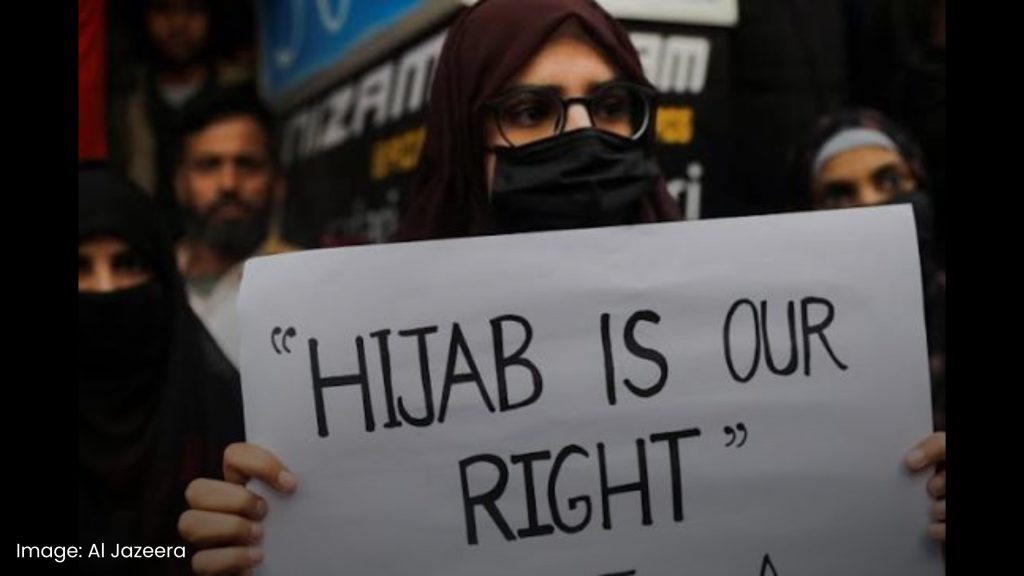
Odoul’s chosen caption, French Freedom, has become a flashpoint of its own. Odoul and the National Rally frame removing the veil, even symbolically through an edited photo, as a defense of French secularism and national values. Opponents argue the opposite, that genuine freedom means allowing a woman full autonomy over how she dresses without a politician rewriting her appearance to fit his own ideological message, especially when that rewriting happens without her ever being asked.

A Broader Technology Problem This Fits Into

The incident also lands inside a documented, separate pattern involving AI image tools more broadly. A Berkeley Law researcher who tested more than 25 different AI headshot generator apps found that every single one automatically removed the hijab from her photos by default, without ever asking whether she wanted to keep it, while other clothing and accessories like glasses were treated as optional to preserve. That research raises a broader question about whether this kind of erasure is becoming quietly built into AI image tools themselves, independent of any individual politician’s specific intent.

What Comes Next

With anti-racism groups reportedly weighing legal action and the National Rally continuing to push its proposed hijab ban ahead of the 2027 election, the altered photo has become more than a single controversial post, it’s now a concrete example critics are pointing to directly in the fight over what the party’s broader legislative proposal would actually mean for real women’s autonomy and consent.

Sources:

·  Voile dans l’espace public, un député RN modifie par IA la photo d’une femme voilée et suscite une polémique — Anadolu Agency (French): https://www.aa.com.tr/fr/france/-voile-dans-lespace-public-un-d%C3%A9put%C3%A9-rn-modifie-par-ia-la-photo-d-une-femme-voil%C3%A9e-et-suscite-une-pol%C3%A9mique/4048785

·  Right-Wing Politician Demands Woman Remove Hijab — Brut: https://brut.media/us/news/right-wing-politician-demands-woman-remove-hijab-b6b19ca4-c788-4ba9-b175-925ad5d72cab

·  AI headshot apps removed her hijab, a Berkeley Law researcher wants to know why — Berkeley Law: https://www.law.berkeley.edu/article/ai-headshot-apps-remove-hijab-berkeley-law-researcher-wants-to-know-why/

spot_img

Explore more

spot_img
Global Affairs

Europe’s “Toughest Ever” Migration Crackdown Is Arriving

Another Trump Post, Another Diplomatic Backlash

Who Was Ratko Mladić OR Why Are Thousands Celebrating a Convicted...

Chinese Nationals Smuggled Human Tissue Out of Pakistani Hospitals to Sell...

History Is Repeating. A Cold War Soviet Playbook Is Running Across...

Germany’s Power Grid Attacks Fit a Pattern Tied to Ukraine Support

Is the US-Venezuela Oil Deal Really About Gas Prices, or a...

How Ratko Mladic Personally Ignited and Directed the Bosnian Genocide