
Political Terrorism Is Rising Fast in the US, and the Country Has Never Felt This Unstable
Maryam Tariq
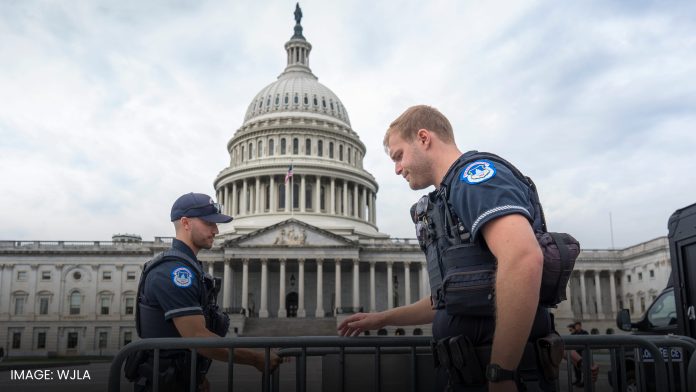
Over the past three years, the United States has experienced a wave of political violence unlike anything researchers have documented in decades, assassinations, arson attacks, targeted shootings, and a rising undercurrent of threats against elected officials. What makes this moment genuinely alarming isn’t any single incident, it’s the trajectory. By nearly every measure researchers track, political violence in America is accelerating, even as the country’s overall crime rate has fallen to historic lows.

A Timeline That Keeps Expanding
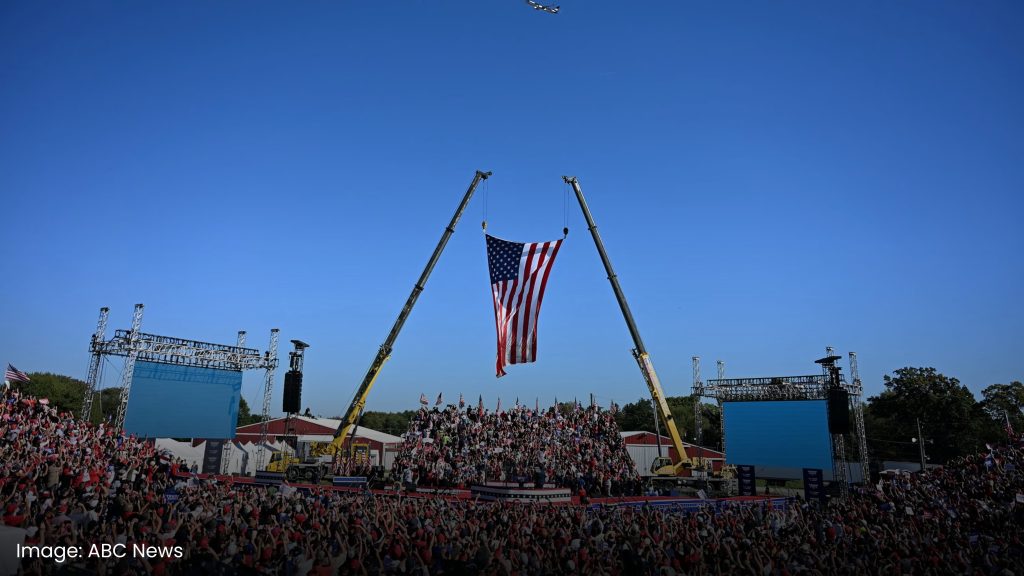
The scale of recent political violence spans both parties and multiple branches of public life. Donald Trump survived two separate assassination attempts in 2024, one in Butler, Pennsylvania that killed bystander Corey Comperatore, another outside his Florida golf course. Pennsylvania Governor Josh Shapiro’s residence was firebombed in April 2025 while his family slept inside. UnitedHealthcare CEO Brian Thompson was shot and killed in December 2024. A gunman killed two Israeli Embassy staffers outside Washington’s Capital Jewish Museum in May 2025. Minnesota state Rep. Melissa Hortman and her husband were killed in their home that June, with a second lawmaker and his wife shot in a related attack. Charlie Kirk was assassinated at a public speaking event that September. Each incident generated its own news cycle. Together, they describe a pattern.
What the Actual Data Shows
Independent researchers have quantified this trend directly. According to the Bridging Divides Initiative at Princeton University, reported incidents of targeted political violence grew more than 30 percent from 2024 to 2025, according to data from the National Consortium for the Study of Terrorism and Responses to Terrorism, known as START. Separately, researcher Michael Jensen, now director of the Polarization and Extremism Research and Innovation Lab at American University, documented more than 520 incidents of terrorism and targeted violence in just the first six months of 2025, a roughly 40 percent increase compared to the same period in 2024, resulting in 96 deaths and 329 injuries across every state except Montana and Wyoming. Threats specifically directed at members of Congress rose 58 percent over the same period, according to US Capitol Police data, with the largest single spike occurring in September 2025, immediately following the Kirk assassination.
A Striking Contrast With Overall Crime Trends
What makes this rise particularly notable is that it runs directly counter to America’s broader crime trends. The nation’s overall murder rate fell to its lowest level in 125 years in 2025. Political violence is one of the only categories moving in the opposite direction, rising sharply even as violent crime broadly continues to decline, a divergence researchers say reflects something distinct happening specifically within the political and ideological sphere rather than a general breakdown in public safety.
A Shift in Who’s Actually Carrying Out These Attacks
Researchers have also identified a meaningful shift in who is behind this violence. Organized extremist groups historically prone to violence, including groups like the Proud Boys, have generally pulled back from direct offline action in 2025, some viewing the current political administration as broadly aligned with their interests on issues like immigration, and shifting their activity toward online threats, harassment, and doxing instead. At the same time, individual, often unaffiliated attackers have carried out most of the deadliest recent incidents, a shift that makes this violence harder to anticipate through traditional monitoring of organized extremist networks.
Why 2026 Looks Even More Volatile
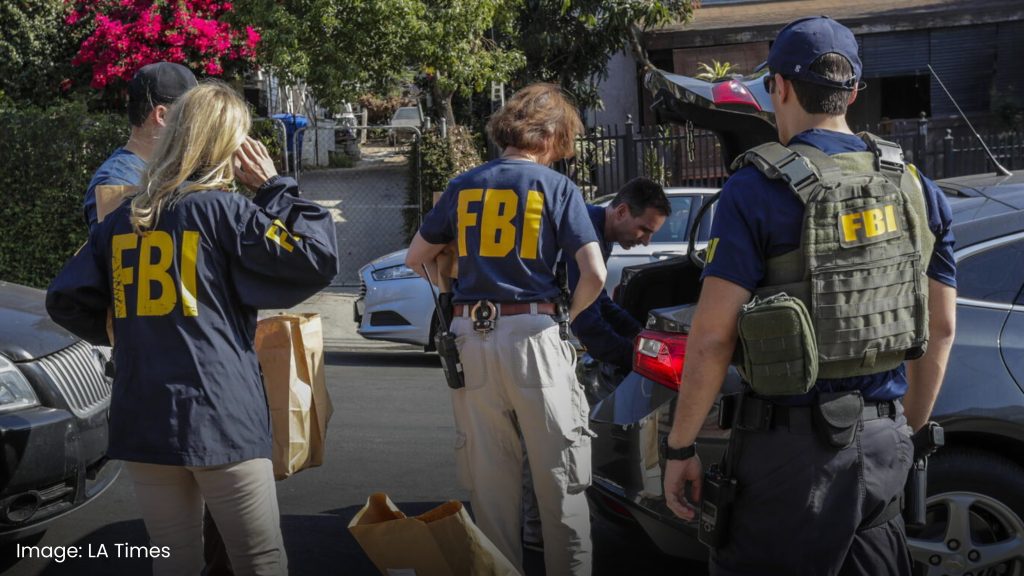
Rather than cooling off, the risk environment has continued intensifying into 2026. Researchers specifically point to the fatal shootings of two individuals, Renee Nicole Good and Alex Pretti, by federal agents in Minnesota, the Trump administration’s consideration of invoking the Insurrection Act, expanded federal deployments, and an FBI raid on a Georgia election facility ahead of the midterms as fresh flashpoints. Analysts at the Bridging Divides Initiative specifically warn that aggressive federal directives combined with increasingly combative tactics from federal agencies are likely to generate further confrontation throughout the year, rather than a return to calm.
Why This Represents Genuine National Instability
What distinguishes this moment from a simple partisan conflict is the breadth of who’s been targeted, a Republican president, a Democratic governor, Republican and Democratic state lawmakers, a corporate executive, foreign embassy staff, and a conservative activist have all been victims within roughly three years. Researchers increasingly frame this pattern not as one side attacking the other, but as a broader erosion of tolerance for political disagreement itself, a dynamic that, if current trends hold, shows little sign of reversing as the country heads deeper into a contentious midterm election cycle.

Sources:
· Gunfire, arson and vandalism, Tracking political violence in America — Fox News: https://www.foxnews.com/us/gunfire-arson-vandalism-tracking-political-violence-america
· Key Political Violence and Resilience Trends From 2025 — Bridging Divides Initiative, Princeton University: https://bridgingdivides.princeton.edu/key-political-violence-and-resilience-trends-2025
· Political violence in US is rising, What health reporters should know — Association of Health Care Journalists: https://healthjournalism.org/blog/2026/03/political-violence-in-us-rising/
· Left-Wing Terrorism and Political Violence in the United States, What the Data Tells Us — CSIS: https://www.csis.org/analysis/left-wing-terrorism-and-political-violence-united-states-what-data-tells-us
· Views on democracy and political violence in the United States in 2025 — National Institutes of Health, PMC: https://pmc.ncbi.nlm.nih.gov/articles/PMC13214363/