What Happens When Anti-Muslim Hate Becomes Normal? Britain May Be Finding Out.

Public Suspicion Is Becoming Measurable

A national poll involving more than 4,000 adults found that 42% of Britons believe Muslims cannot successfully integrate into British society, rising to 71% among Reform UK supporters.

Yet 85% of British Muslims surveyed said they favour integration. The contrast suggests the debate may be less about whether Muslims want to participate in British life and more about whether the wider public accepts them as belonging to it.

The research also found distrust among Muslims themselves, highlighting a broader erosion of social trust rather than a simple one-sided divide.

The Hostility Is Appearing in Official Crime Data

The latest official statistics show a 19% increase in religious hate crimes targeting Muslims across comparable police-force data, with a spike following the Southport murders and subsequent disorder.
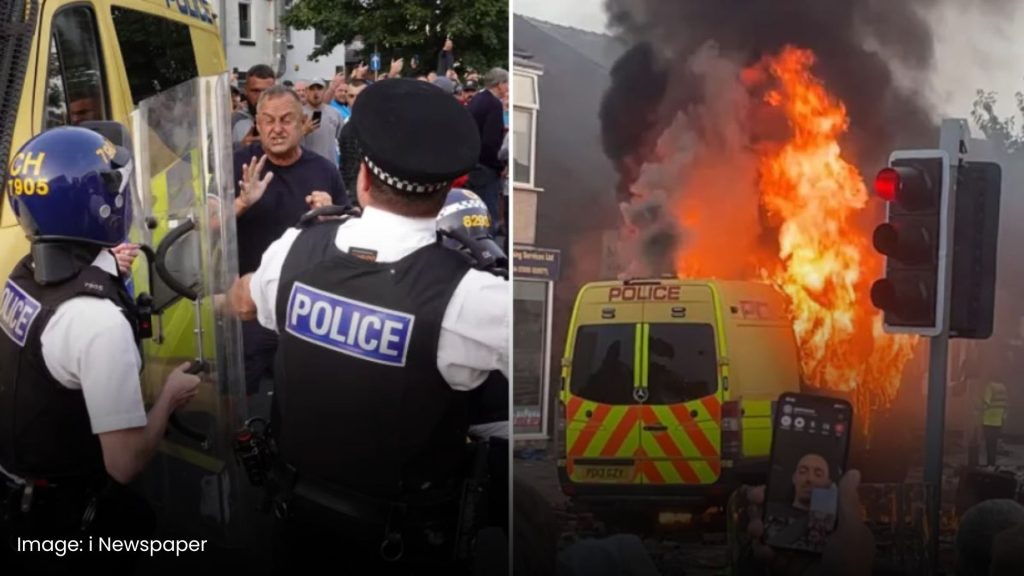
Muslims accounted for 45% of recorded religious hate crimes where the targeted religion was identified.

A separate spike appeared the previous reporting year, driven by the start of the Isr∗el-G∗za w∗r in October 2023, when anti-Muslim hate crimes rose 13% and antisemitic hate crimes more than doubled over the same period. The two spikes sit in different reporting cycles with different triggers, but the pattern is consistent: recorded anti-Muslim hate rises sharply after major events, then holds at a new, higher baseline rather than fully receding.

The Metropolitan Police was excluded from the year-on-year comparison because a recording-system change made its latest figures incomparable with previous years. That qualification matters: the 19% increase is strong evidence of rising recorded anti-Muslim hate in comparable forces, not a clean nationwide prevalence estimate.

The Consequences Reach Mosques, Homes and Children

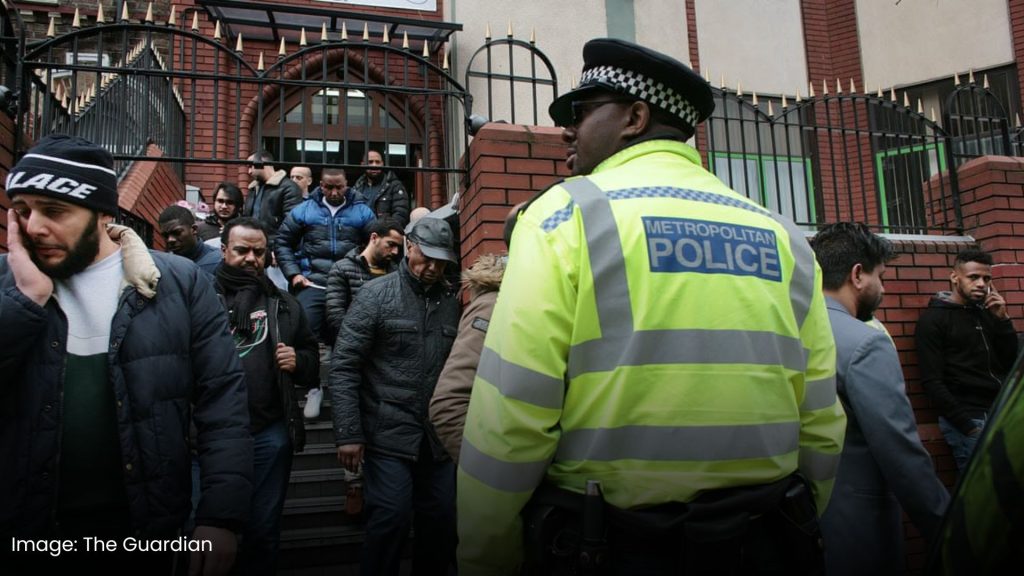
The British Muslim Trust documented more than 70 incidents targeting Muslim places of worship over 12 months, equivalent to roughly one every five days.

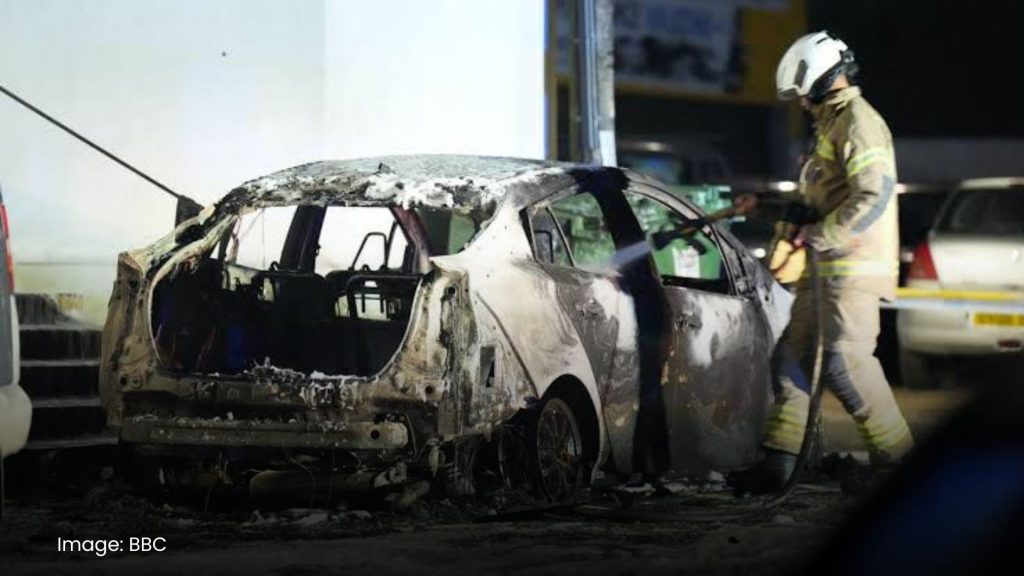
Recent reporting has documented intimidation, vandalism and arson-related incidents, alongside Muslim leaders describing hostility reaching their homes and children. The broader human impact includes Muslims changing how safely they feel able to worship and move through public life.

The fear is therefore no longer confined to political rhetoric. It is reaching the places where Muslims pray, live and raise their families.
The Threats Have Escalated

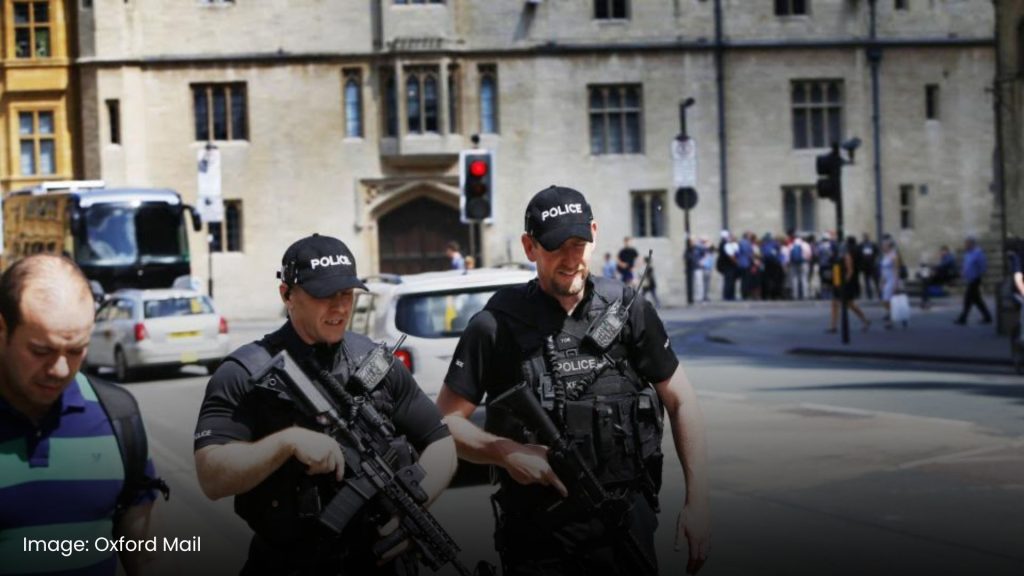
A major Islamic gathering at Shrubland Hall in Suffolk was cut short after police identified a suspected extreme-right terrorism threat. Twelve people were arrested, including three on suspicion of conspiracy to murder and eight under terrorism legislation.

The gathering involved thousands of Muslim attendees. Senior government figures publicly praised the police intervention.

In a separate active criminal case, a 14-year-old boy was charged over an alleged extreme-right plot targeting two mosques in south London. He has pleaded not guilty. The allegations remain unproven, an important distinction while proceedings continue.

Protection Exists, but Urgency Appears Uneven

In February, the government announced up to £40 million for protective security at mosques and Muslim faith schools during 2026-27.

Muslim organisations have nevertheless reported lengthy waits for security measures, with recent reporting examining both those delays and the human consequences of Britain’s anti-Muslim hostility.

After escalating antisemitic attacks, the government separately announced more than £250 million over three years for Jewish-community security, including funding for more than 500 additional police officers.

These are not equivalent programmes, and Jewish communities facing antisemitic threats clearly required protection. The legitimate question is one of institutional urgency: why did one escalating threat produce a major new emergency response while Muslim communities facing their own documented threats continued relying on an existing programme criticised for delays?
Even the Attention Appears Unequal

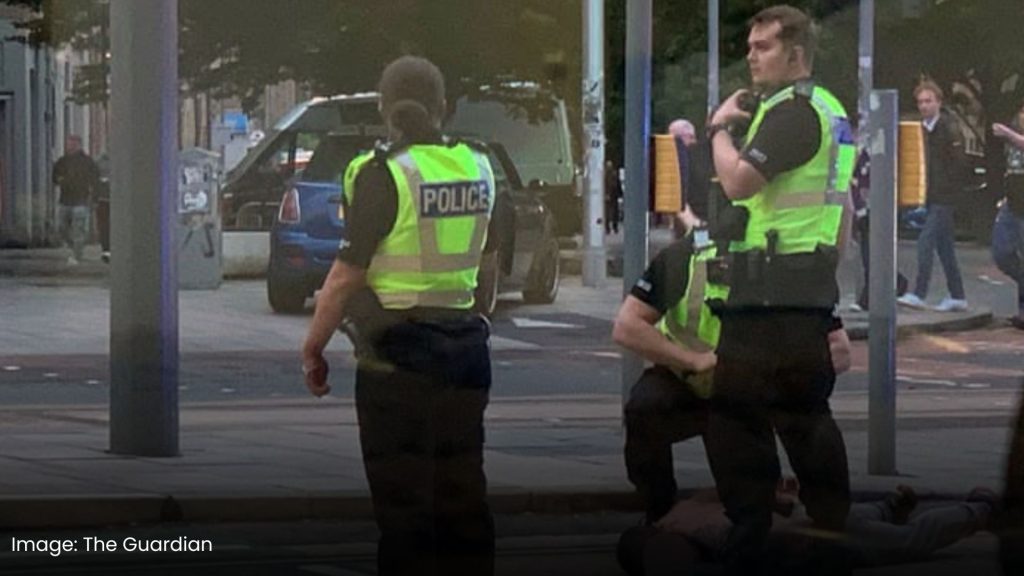
Broadcast monitoring found that the Edinburgh anti-Muslim terror case received 160 minutes of UK television coverage compared with 1,107 minutes for the Golders Green antisemitic attack.

The calculation is stark: 1,107 ÷ 160 = 6.92, meaning the Golders Green case received approximately 6.9 times as much airtime.

The comparison does not prove deliberate bias. But it does provide measurable evidence of a substantial difference in attention. Against the wider backdrop of rising recorded hate, threats against mosques and debates over protection, it raises a harder question: whose fear becomes nationally urgent, and whose danger risks becoming ordinary?

The Mayor Himself Confirms the Pattern

On 7 August, London’s Muslim mayor, Sir Sadiq Khan, told The Telegraph that Britain currently runs on an unspoken hierarchy of hostility. “I understand at the moment that when it comes to the hierarchy of people who are trodden upon, Muslims are at the bottom,” he said.

Khan connected this directly to the risk of radicalisation, warning that treating ordinary Muslim visibility, including events like London’s open-air Iftar, as provocation makes people feel like “second-class citizens” and is “music to the ears of those who are radicalising young people.”
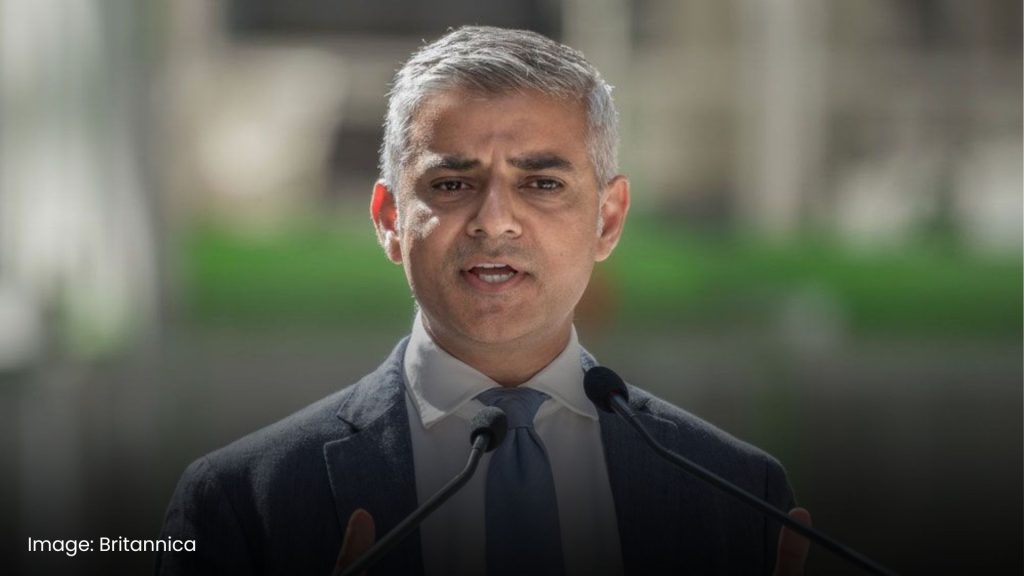
His comments followed newly released Metropolitan Police figures showing Islamophobic hate crimes rose 33% between April and May 2026 alone, a more recent spike than the year-ending-March data cited above.

By Shizza Umer

HYPERLINKED SOURCES

BBC — Religious hate crime at record high, figures show

GOV.UK — Hate crime, England and Wales, year ending March 2025

GOV.UK — Record funding to protect faith communities

GOV.UK — Record investment to protect Jewish communities

Al Jazeera — UK arrests 12 over extreme right-wing ‘terror’ threat to Muslim event

Al Jazeera — Fourteen-year-old boy charged over alleged plot targeting London mosques

Byline Times — Edinburgh Attacks Expose ‘Two-Tier’ Coverage of Racism in UK

The New Arab — After £250m for Jewish security, UK offers no new Muslim funding

The New Arab — One UK mosque attacked every 5 days as security funding stalls

Eastern Eye — Two in Five Britons Say Muslims Cannot Integrate: Report

The Telegraph — Sadiq Khan interview: London crime and Islamophobia

Public Suspicion Is Becoming Measurable

A national poll involving more than 4,000 adults found that 42% of Britons believe Muslims cannot successfully integrate into British society, rising to 71% among Reform UK supporters.

Yet 85% of British Muslims surveyed said they favour integration. The contrast suggests the debate may be less about whether Muslims want to participate in British life and more about whether the wider public accepts them as belonging to it.

The research also found distrust among Muslims themselves, highlighting a broader erosion of social trust rather than a simple one-sided divide.

The Hostility Is Appearing in Official Crime Data

The latest official statistics show a 19% increase in religious hate crimes targeting Muslims across comparable police-force data, with a spike following the Southport murders and subsequent disorder.

Muslims accounted for 45% of recorded religious hate crimes where the targeted religion was identified.

A separate spike appeared the previous reporting year, driven by the start of the Isr∗el-G∗za w∗r in October 2023, when anti-Muslim hate crimes rose 13% and antisemitic hate crimes more than doubled over the same period. The two spikes sit in different reporting cycles with different triggers, but the pattern is consistent: recorded anti-Muslim hate rises sharply after major events, then holds at a new, higher baseline rather than fully receding.

The Metropolitan Police was excluded from the year-on-year comparison because a recording-system change made its latest figures incomparable with previous years. That qualification matters: the 19% increase is strong evidence of rising recorded anti-Muslim hate in comparable forces, not a clean nationwide prevalence estimate.

The Consequences Reach Mosques, Homes and Children

The British Muslim Trust documented more than 70 incidents targeting Muslim places of worship over 12 months, equivalent to roughly one every five days.

Recent reporting has documented intimidation, vandalism and arson-related incidents, alongside Muslim leaders describing hostility reaching their homes and children. The broader human impact includes Muslims changing how safely they feel able to worship and move through public life.

The fear is therefore no longer confined to political rhetoric. It is reaching the places where Muslims pray, live and raise their families.

The Threats Have Escalated

A major Islamic gathering at Shrubland Hall in Suffolk was cut short after police identified a suspected extreme-right terrorism threat. Twelve people were arrested, including three on suspicion of conspiracy to murder and eight under terrorism legislation.

The gathering involved thousands of Muslim attendees. Senior government figures publicly praised the police intervention.

In a separate active criminal case, a 14-year-old boy was charged over an alleged extreme-right plot targeting two mosques in south London. He has pleaded not guilty. The allegations remain unproven, an important distinction while proceedings continue.

Protection Exists, but Urgency Appears Uneven

In February, the government announced up to £40 million for protective security at mosques and Muslim faith schools during 2026-27.

Muslim organisations have nevertheless reported lengthy waits for security measures, with recent reporting examining both those delays and the human consequences of Britain’s anti-Muslim hostility.

After escalating antisemitic attacks, the government separately announced more than £250 million over three years for Jewish-community security, including funding for more than 500 additional police officers.

These are not equivalent programmes, and Jewish communities facing antisemitic threats clearly required protection. The legitimate question is one of institutional urgency: why did one escalating threat produce a major new emergency response while Muslim communities facing their own documented threats continued relying on an existing programme criticised for delays?

Even the Attention Appears Unequal

Broadcast monitoring found that the Edinburgh anti-Muslim terror case received 160 minutes of UK television coverage compared with 1,107 minutes for the Golders Green antisemitic attack.

The calculation is stark: 1,107 ÷ 160 = 6.92, meaning the Golders Green case received approximately 6.9 times as much airtime.

The comparison does not prove deliberate bias. But it does provide measurable evidence of a substantial difference in attention. Against the wider backdrop of rising recorded hate, threats against mosques and debates over protection, it raises a harder question: whose fear becomes nationally urgent, and whose danger risks becoming ordinary?

The Mayor Himself Confirms the Pattern

On 7 August, London’s Muslim mayor, Sir Sadiq Khan, told The Telegraph that Britain currently runs on an unspoken hierarchy of hostility. “I understand at the moment that when it comes to the hierarchy of people who are trodden upon, Muslims are at the bottom,” he said.

Khan connected this directly to the risk of radicalisation, warning that treating ordinary Muslim visibility, including events like London’s open-air Iftar, as provocation makes people feel like “second-class citizens” and is “music to the ears of those who are radicalising young people.”

His comments followed newly released Metropolitan Police figures showing Islamophobic hate crimes rose 33% between April and May 2026 alone, a more recent spike than the year-ending-March data cited above.

By Shizza Umer

HYPERLINKED SOURCES

BBC — Religious hate crime at record high, figures show

GOV.UK — Hate crime, England and Wales, year ending March 2025

GOV.UK — Record funding to protect faith communities

GOV.UK — Record investment to protect Jewish communities

Al Jazeera — UK arrests 12 over extreme right-wing ‘terror’ threat to Muslim event

Al Jazeera — Fourteen-year-old boy charged over alleged plot targeting London mosques

Byline Times — Edinburgh Attacks Expose ‘Two-Tier’ Coverage of Racism in UK

The New Arab — After £250m for Jewish security, UK offers no new Muslim funding

The New Arab — One UK mosque attacked every 5 days as security funding stalls

Eastern Eye — Two in Five Britons Say Muslims Cannot Integrate: Report

The Telegraph — Sadiq Khan interview: London crime and Islamophobia

spot_img

Explore more

spot_img
Global Affairs

The UAE Files: Gold. W.rs. Spies. And One Disturbing Pattern.

Yemen Just Became Everyone’s Problem

Isr.el’s W.r on G.za’s Children: K.lled, Starved, Orphaned and Scarred

$1 BILLION For Isr.ael. A Palestinian Lawyer In Handcuffs. Welcome To...

Did the Houthis T*rget Makkah? Or Is Makkah Being Used To...

Sheeran’s own band quit, and named the “z*ionist lobby” on their...

Mosques. Homes. Water. Madrasas. How far will BJP go against India’s...

Fuel prices jumped 40%. Now Syria is erupting. Is Sharaa the...