The rivalry between the United States and China is often described through tariffs, semiconductors, artificial intelligence and military power. But increasingly, one of the most consequential elements of the relationship lies in something far less visible: rare earths.
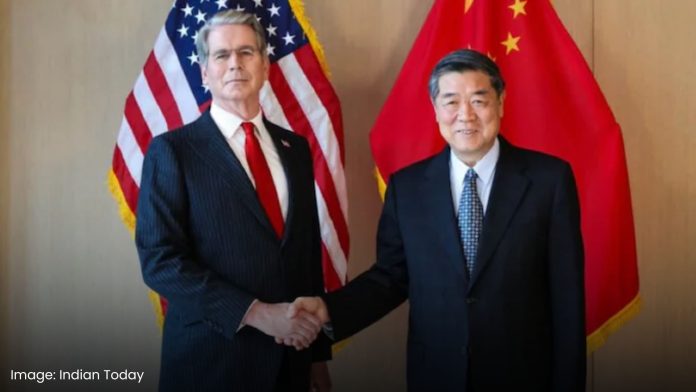
As US President Donald Trump prepares to meet Chinese President Xi Jinping at the White House on September 24, China’s dominance over the global rare-earth supply chain has emerged as an important constraint on Washington’s ability to escalate economic pressure on Beijing. Reuters reports that the Trump administration has adopted a less confrontational tone toward China ahead of the summit, avoiding some of the aggressive tariff and technology-export threats that accompanied previous negotiations.
The shift illustrates a broader reality of contemporary geopolitics: economic dependence can become a source of strategic power.
The resource behind modern technology
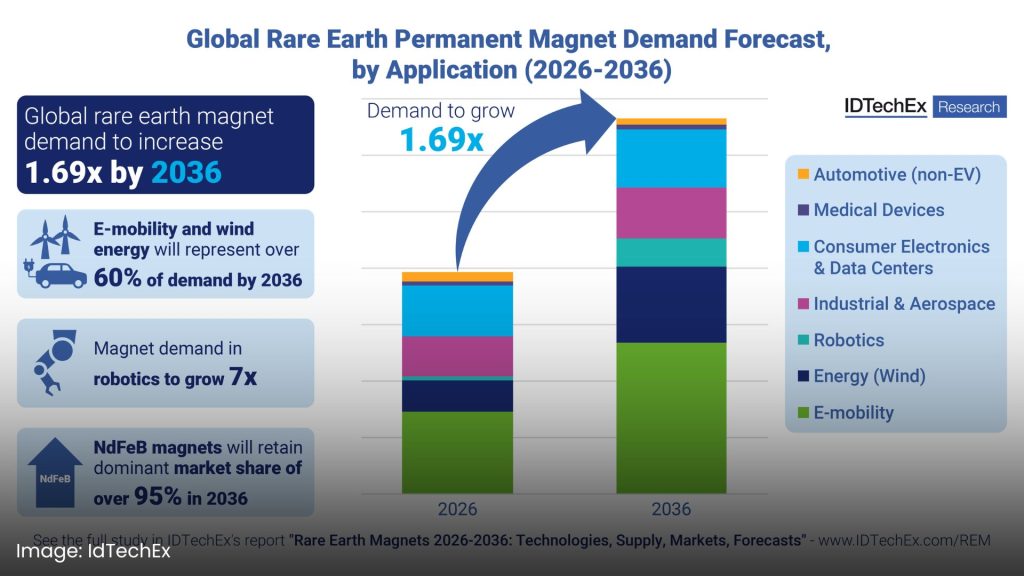
Rare earths are a group of 17 metallic elements that possess properties particularly useful for modern technology and industrial manufacturing. They are used in permanent magnets, electric vehicles, electronics, renewable-energy technologies and a range of advanced defence systems.
Their importance does not necessarily come from their absolute scarcity. Many rare-earth elements exist in relatively large quantities in the Earth’s crust. The difficulty lies in extracting, separating and processing them economically and at the scale required by modern industry.
This is where China has developed a significant advantage. According to estimates, China accounts for as much as 70% of global rare-earth mining, 85% of refining capacity and approximately 90% of rare-earth metal alloy and magnet production.
That concentration gives Beijing influence over a supply chain on which major industrial economies depend. For Washington, this creates an uncomfortable contradiction. The United States can impose tariffs and restrict Chinese access to advanced technologies, but American industries remain exposed to Chinese dominance in some critical mineral supply chains.
From economic interdependence to geopolitical leverage
This vulnerability became particularly visible during the escalation of the US-China trade conflict. When Washington increased pressure on Chinese trade and technology, Beijing responded with restrictions affecting rare-earth exports. The disruption demonstrated how quickly a seemingly specialised commodity could become a strategic instrument.
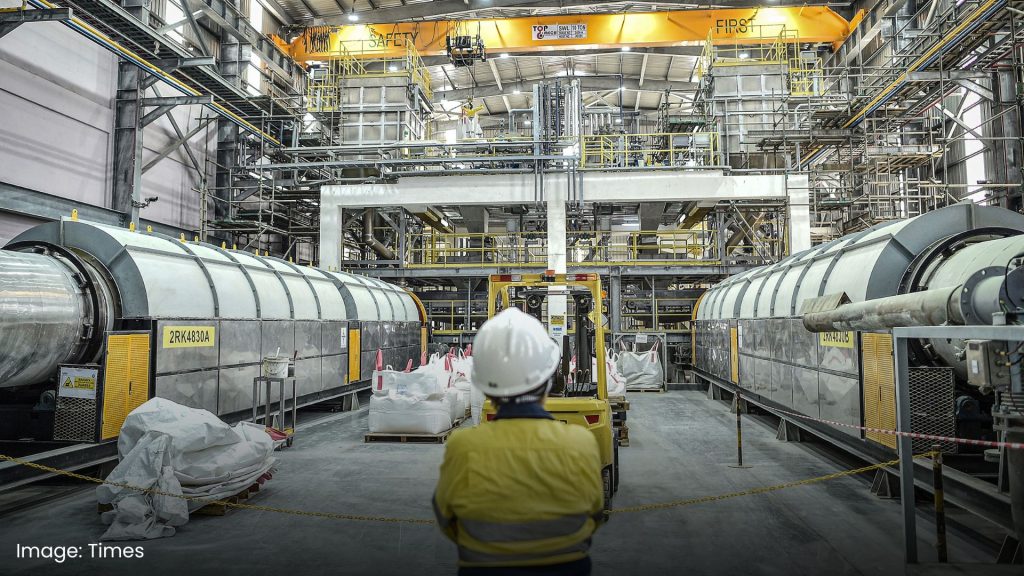
The importance of rare earths lies in the fact that replacing China’s role is not simply a matter of finding another source of ore. Building mines is only one part of the process. The minerals must then be separated, refined and transformed into materials and components that manufacturers can actually use.
Those downstream capabilities require substantial investment, technical expertise and time to develop. Consequently, even countries with their own rare-earth deposits can remain dependent on China for processing.
This distinction between resource ownership and supply-chain control is crucial to understanding China’s leverage. A country does not necessarily need to possess every resource itself to become strategically vulnerable. It can also become dependent on another state because that state controls the infrastructure and industrial capacity required to turn raw materials into usable products.
Why the United States cannot simply walk away
Washington has increasingly recognised the strategic vulnerability created by dependence on Chinese critical minerals and has sought to diversify supply chains.
The United States has encouraged domestic production, developed partnerships with other countries and invested in alternative processing capacity. These efforts are intended to reduce China’s influence over critical mineral supply chains.
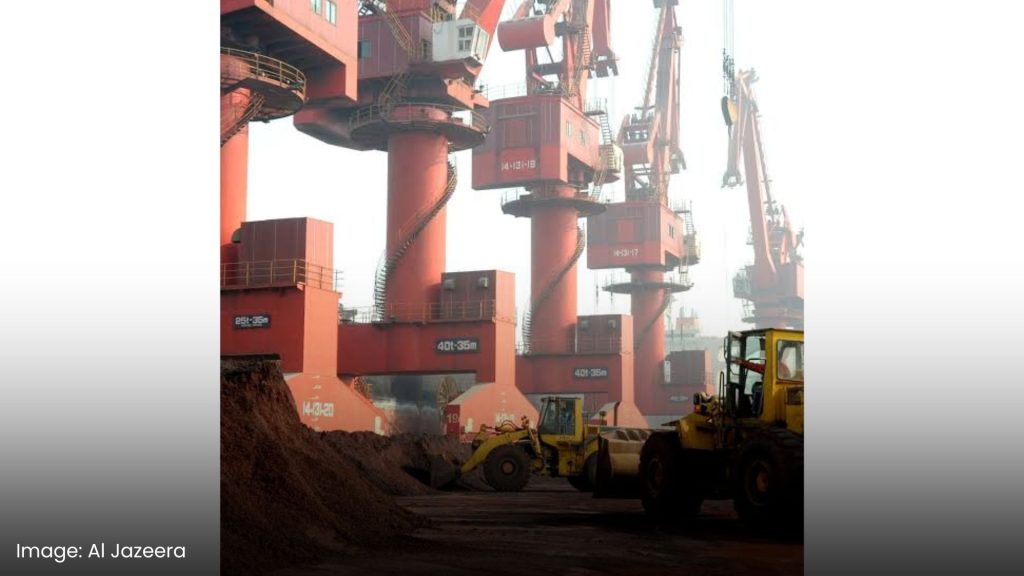
But diversification cannot happen overnight. Mining projects can take years to develop, while processing facilities require significant capital investment and specialised technology. Establishing an alternative supply chain therefore involves considerably more than simply finding another country with rare-earth deposits.
This creates a short-term constraint on US policy. The United States may want to reduce its economic dependence on China, but until alternative supply chains are sufficiently developed, China remains embedded in industries that Washington itself considers strategically important.
A different kind of balance of power
The rare-earth issue also reveals how the meaning of power is changing in international relations. Traditional discussions of great-power competition tend to focus on military capabilities, economic size or technological superiority. But strategic power can also emerge from control over chokepoints specific parts of a supply chain that are difficult for others to replace.
China’s position in rare-earth processing and magnet manufacturing represents one such chokepoint. The United States, meanwhile, possesses its own sources of leverage. Washington has significant influence over advanced semiconductor technology, financial systems and access to the American market. Its restrictions on advanced technologies have demonstrated that economic interdependence can work in both directions. This creates a complicated relationship in which neither side possesses complete control. Instead, both powers have developed forms of mutual vulnerability.
The Trump-Xi meeting
This context makes the upcoming Trump-Xi meeting significant. Reuters reports that Trump has adopted a less hostile tone toward China ahead of the September 24 meeting, while negotiations continue over trade and critical minerals.
That does not mean the underlying strategic competition has disappeared.The United States continues to seek greater supply-chain security and technological advantages, while China has strong incentives to protect its position in critical minerals and challenge restrictions on Chinese access to advanced technology.
The negotiations therefore involve more than the immediate question of tariffs.They are also about who controls the inputs, technologies and markets that modern economies depend upon.


The strategic lesson
The rare-earth dispute demonstrates that globalisation has not eliminated geopolitical competition. In some cases, it has simply changed its form. For decades, economic interdependence was often associated with the idea that countries connected through trade would have greater incentives to avoid confrontation. But interdependence can also create vulnerabilities that states can exploit during periods of strategic competition.
The lesson for Washington is that technological leadership alone does not guarantee supply-chain security. For Beijing, rare-earth dominance provides leverage, but using that leverage too aggressively could also encourage other countries to accelerate efforts to develop alternative sources and processing capacity.
That creates a strategic dilemma for both sides. The more aggressively China uses its mineral advantage, the stronger the incentive for other countries to reduce their dependence on China. The longer the United States remains dependent on Chinese processing, the harder it becomes to apply maximum economic pressure without risking consequences for its own industries.
This is why rare earths have become much more than a commodity issue. They represent a new dimension of great-power competition in which mines, processing plants, supply chains and industrial chokepoints can matter almost as much as tariffs, weapons and technology.
As Trump and Xi sit down to negotiate, the question is therefore not simply who has more economic power. It is increasingly about who can withstand dependence and who can turn that dependence into leverage.
References