
The New Delhi Declaration: Can BRICS Bridge Its Own Fault Lines?

Beyond the Handshakes: What the 2026 BRICS Summit Reveals About the Changing World Order

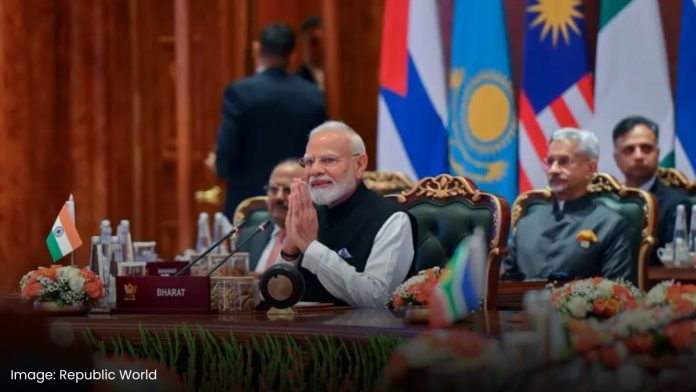
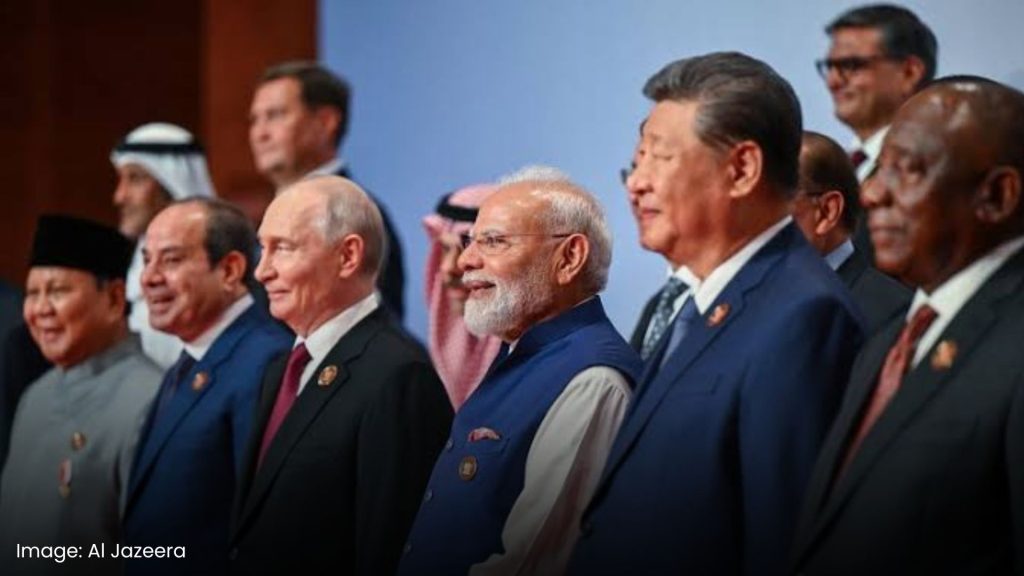
The 18th BRICS Summit in New Delhi brought together leaders from an increasingly influential group of emerging powers, including China, Russia, India, Iran and the United Arab Emirates. Their adoption of the New Delhi Declaration projected an image of solidarity around multilateralism, economic cooperation and a more representative international order. But beyond the handshakes and carefully negotiated language lies a more complicated reality that is, BRICS is gaining geopolitical weight precisely as the world becomes more fragmented and that fragmentation exists within BRICS itself.

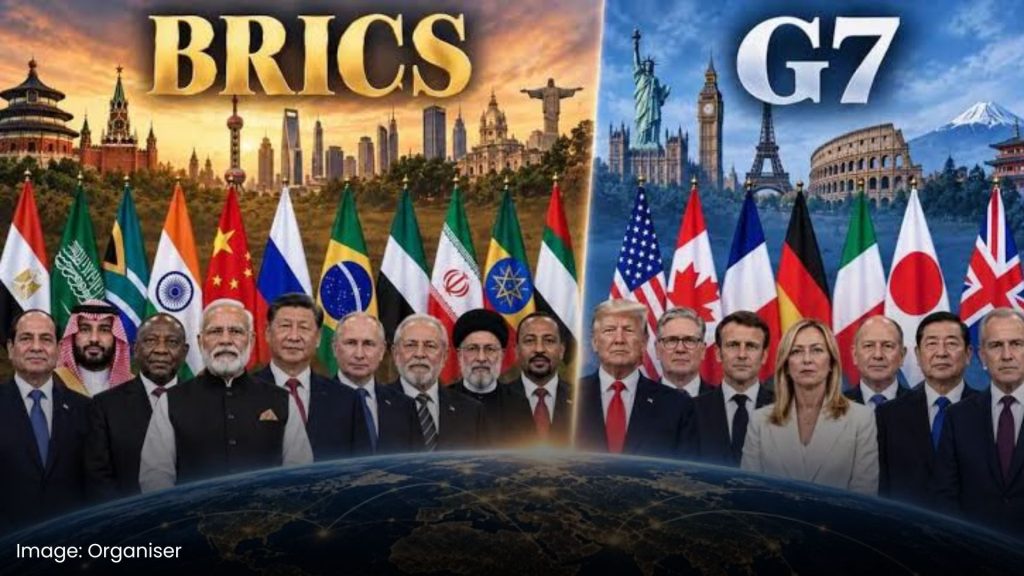
The summit therefore offers a useful lens through which to understand the changing world order. BRICS is not replacing the Western-led system. Rather, it is contributing to a gradual shift toward a more multipolar and contested international system, in which emerging powers seek greater autonomy without necessarily sharing the same strategic objectives.
From a BRICS Currency to Economic De-risking

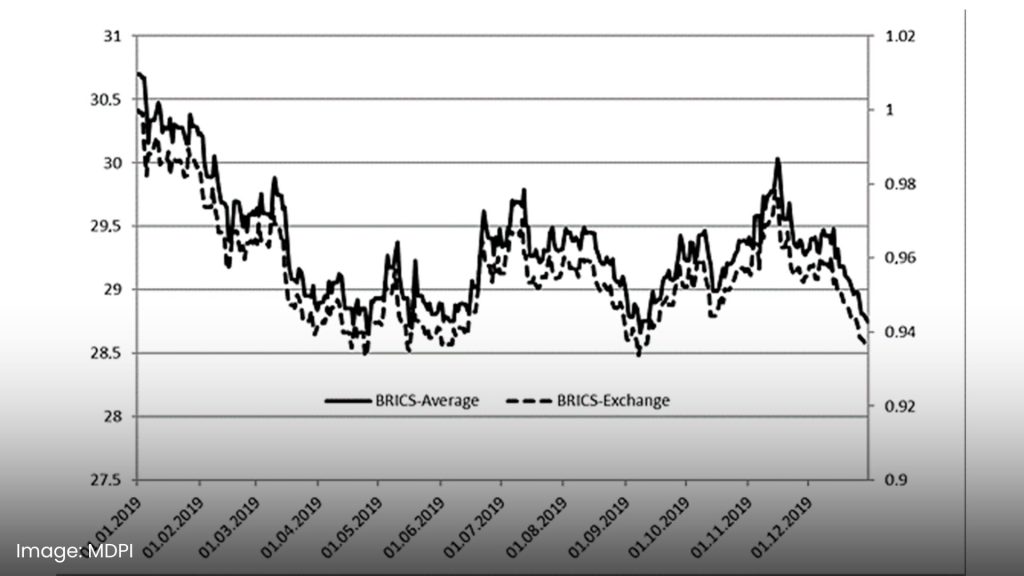
One of the most misunderstood aspects of BRICS is its supposed ambition to create a common currency. The New Delhi Summit demonstrated that the bloc is pursuing a considerably more pragmatic approach.

Instead of attempting to immediately construct a shared currency, members are emphasizing greater use of national currencies in trade and investment and exploring interoperability between national payment systems. The New Development Bank is also being encouraged to expand local-currency financing.

This is significant because it represents de-risking rather than an immediate attempt to overthrow the dollar. For countries vulnerable to sanctions or excessive dependence on Western financial infrastructure, alternative payment channels can provide greater economic autonomy. The objective is therefore not necessarily to create one BRICS financial system overnight, but to gradually create enough alternatives that dependence on existing Western mechanisms becomes less absolute.

The Middle East Reveals BRICS’ Internal Fault Lines

The summit also exposed the limits of BRICS’ political cohesion. The continuing conflict in the Middle East placed Iran and the UAE inside the same diplomatic framework. Yet both supported language calling for restraint and diplomacy. Reuters described this as an important demonstration of diplomatic progress despite the divisions surrounding the conflict.

This illustrates an important characteristic of BRICS: it can accommodate geopolitical rivals without resolving their rivalries.

The bloc can agree on broad principles such as sovereignty, diplomacy and opposition to unilateral sanctions, while avoiding positions that would force members to choose sides. This flexibility helps preserve consensus, but it also limits how far BRICS can act as a unified geopolitical actor.
What BRICS Leaves Unsaid Matters

The New Delhi Declaration’s language on major conflicts is equally revealing.

Rather than directly naming every actor involved in the Russia-Ukraine conflict or the Middle East crisis, the declaration relies heavily on diplomatic formulations. Reporting on the summit noted that it avoided directly referencing the Russia-Ukraine war while addressing broader questions of conflict, sanctions and international law.

Russia has an interest in opposing Western sanctions. India seeks strategic autonomy while maintaining relations with both Russia and Western powers. China has its own rivalry with Washington, while Gulf states continue to maintain important relationships with the United States. Expecting such countries to adopt identical positions on every global crisis would make consensus nearly impossible.

BRICS therefore speaks most clearly where its members share interests—and becomes deliberately vague where those interests diverge.

Challenging the Institutions, Not Yet Replacing Them

BRICS’ broader ambition is visible in its demand for reform of international institutions.

The New Delhi Declaration calls for a more representative and equitable international order and greater participation for emerging and developing countries in global governance.

Yet there is an important distinction between challenging the existing order and replacing it. BRICS members share dissatisfaction with aspects of the IMF, World Bank and UN system, but they do not necessarily share a single blueprint for what should replace them. Their interests, political systems and strategic priorities remain substantially different.

This makes BRICS less like an emerging NATO and more like a platform through which non-Western powers can collectively negotiate greater influence.

The Real Power of BRICS Is Economic

The most consequential development may therefore not be military at all. BRICS has no NATO-style collective-defence mechanism. Its potential influence lies in building parallel economic channels, that is local-currency trade, payment-system interoperability, development financing, investment mechanisms and broader South-South cooperation.

This is a slower form of geopolitical competition, but potentially a more sustainable one. If these mechanisms become sufficiently functional, BRICS members could reduce their vulnerability to sanctions and external financial pressure without formally abandoning the existing global economic system. That is a more realistic form of transformation than the idea of a sudden “BRICS currency” replacing the dollar.

Conclusion: A More Multipolar World, Not Yet a Post-Western One

The 2026 BRICS Summit does not demonstrate the emergence of a unified anti-Western bloc. Instead, it reveals something more subtle: the international system is becoming harder for any single power to dominate.

BRICS’ strength lies in its diversity. Its members do not have to agree on every war, alliance or regional dispute to cooperate on trade, finance and institutional reform. Yet that same diversity is also its greatest limitation. The future significance of BRICS will therefore depend less on summit declarations than on implementation. Can local-currency trade expand? Can alternative payment systems become genuinely interoperable? Can BRICS translate its economic weight into institutional influence? And can its members maintain cooperation despite their competing geopolitical interests?

The answer will determine whether BRICS becomes merely a forum for expressing dissatisfaction with the existing order—or a durable pillar of a genuinely multipolar one.

For now, the evidence points to the latter possibility, but not yet to a post-Western world.

BRICS is not dismantling the existing order. It is helping create a world in which that order has more challengers, more centres of influence, and fewer uncontested rules.

 References

https://www.reuters.com/business/aerospace-defense/brics-agrees-joint-declaration-before-new-delhi-summit-sources-say-2026-09-12
https://www.bbc.com/news/articles/ce8767g4jdpo
https://responsiblestatecraft.org/brics-summit-2026

https://www.mea.gov.in/bilateral-documents?dtl/41776 https://www.thehindu.com/business/Economy/brics-treads-carefully-on-de-dollarisation-finance-track-talks-payments-not-a-common-currency/article71459353.ece

Beyond the Handshakes: What the 2026 BRICS Summit Reveals About the Changing World Order

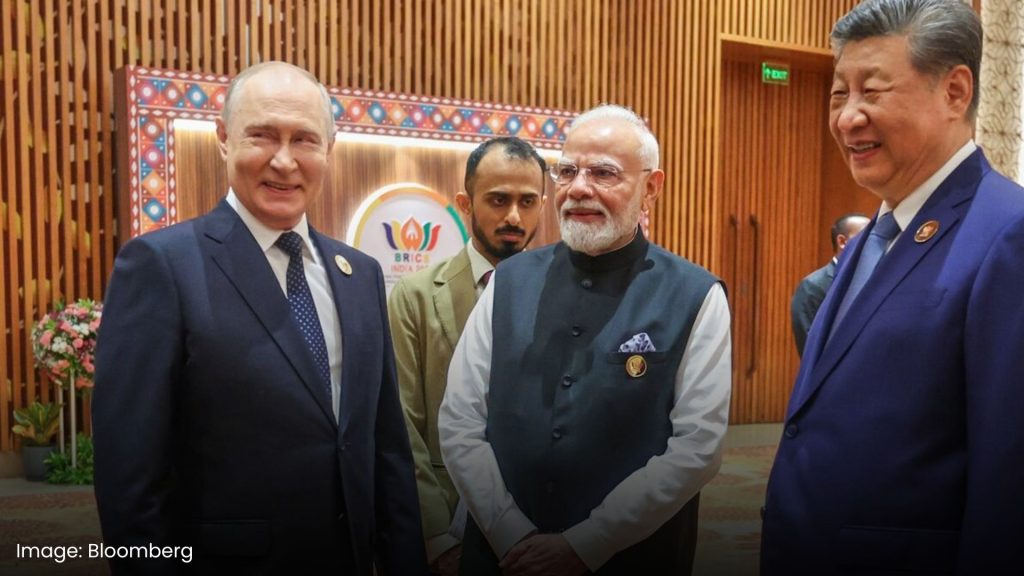
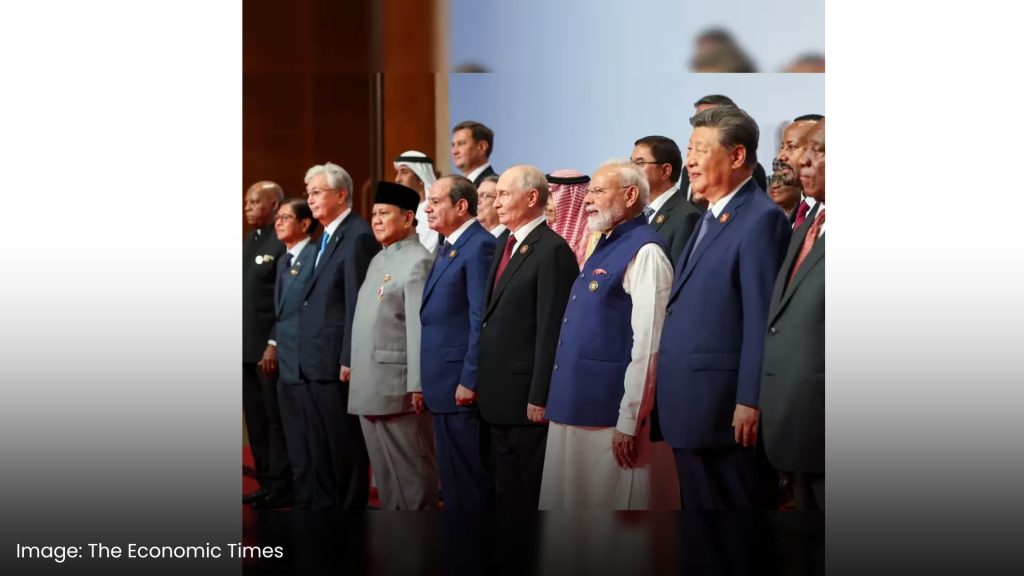
The 18th BRICS Summit in New Delhi brought together leaders from an increasingly influential group of emerging powers, including China, Russia, India, Iran and the United Arab Emirates. Their adoption of the New Delhi Declaration projected an image of solidarity around multilateralism, economic cooperation and a more representative international order. But beyond the handshakes and carefully negotiated language lies a more complicated reality that is, BRICS is gaining geopolitical weight precisely as the world becomes more fragmented and that fragmentation exists within BRICS itself.

The summit therefore offers a useful lens through which to understand the changing world order. BRICS is not replacing the Western-led system. Rather, it is contributing to a gradual shift toward a more multipolar and contested international system, in which emerging powers seek greater autonomy without necessarily sharing the same strategic objectives.

From a BRICS Currency to Economic De-risking

One of the most misunderstood aspects of BRICS is its supposed ambition to create a common currency. The New Delhi Summit demonstrated that the bloc is pursuing a considerably more pragmatic approach.

Instead of attempting to immediately construct a shared currency, members are emphasizing greater use of national currencies in trade and investment and exploring interoperability between national payment systems. The New Development Bank is also being encouraged to expand local-currency financing.

This is significant because it represents de-risking rather than an immediate attempt to overthrow the dollar. For countries vulnerable to sanctions or excessive dependence on Western financial infrastructure, alternative payment channels can provide greater economic autonomy. The objective is therefore not necessarily to create one BRICS financial system overnight, but to gradually create enough alternatives that dependence on existing Western mechanisms becomes less absolute.

The Middle East Reveals BRICS’ Internal Fault Lines

The summit also exposed the limits of BRICS’ political cohesion. The continuing conflict in the Middle East placed Iran and the UAE inside the same diplomatic framework. Yet both supported language calling for restraint and diplomacy. Reuters described this as an important demonstration of diplomatic progress despite the divisions surrounding the conflict.

This illustrates an important characteristic of BRICS: it can accommodate geopolitical rivals without resolving their rivalries.

The bloc can agree on broad principles such as sovereignty, diplomacy and opposition to unilateral sanctions, while avoiding positions that would force members to choose sides. This flexibility helps preserve consensus, but it also limits how far BRICS can act as a unified geopolitical actor.
What BRICS Leaves Unsaid Matters

The New Delhi Declaration’s language on major conflicts is equally revealing.

Rather than directly naming every actor involved in the Russia-Ukraine conflict or the Middle East crisis, the declaration relies heavily on diplomatic formulations. Reporting on the summit noted that it avoided directly referencing the Russia-Ukraine war while addressing broader questions of conflict, sanctions and international law.

Russia has an interest in opposing Western sanctions. India seeks strategic autonomy while maintaining relations with both Russia and Western powers. China has its own rivalry with Washington, while Gulf states continue to maintain important relationships with the United States. Expecting such countries to adopt identical positions on every global crisis would make consensus nearly impossible.

BRICS therefore speaks most clearly where its members share interests—and becomes deliberately vague where those interests diverge.

Challenging the Institutions, Not Yet Replacing Them

BRICS’ broader ambition is visible in its demand for reform of international institutions.

The New Delhi Declaration calls for a more representative and equitable international order and greater participation for emerging and developing countries in global governance.

Yet there is an important distinction between challenging the existing order and replacing it. BRICS members share dissatisfaction with aspects of the IMF, World Bank and UN system, but they do not necessarily share a single blueprint for what should replace them. Their interests, political systems and strategic priorities remain substantially different.

This makes BRICS less like an emerging NATO and more like a platform through which non-Western powers can collectively negotiate greater influence.
The Real Power of BRICS Is Economic

The most consequential development may therefore not be military at all. BRICS has no NATO-style collective-defence mechanism. Its potential influence lies in building parallel economic channels, that is local-currency trade, payment-system interoperability, development financing, investment mechanisms and broader South-South cooperation.

This is a slower form of geopolitical competition, but potentially a more sustainable one. If these mechanisms become sufficiently functional, BRICS members could reduce their vulnerability to sanctions and external financial pressure without formally abandoning the existing global economic system. That is a more realistic form of transformation than the idea of a sudden “BRICS currency” replacing the dollar.

Conclusion: A More Multipolar World, Not Yet a Post-Western One

The 2026 BRICS Summit does not demonstrate the emergence of a unified anti-Western bloc. Instead, it reveals something more subtle: the international system is becoming harder for any single power to dominate.

BRICS’ strength lies in its diversity. Its members do not have to agree on every war, alliance or regional dispute to cooperate on trade, finance and institutional reform. Yet that same diversity is also its greatest limitation. The future significance of BRICS will therefore depend less on summit declarations than on implementation. Can local-currency trade expand? Can alternative payment systems become genuinely interoperable? Can BRICS translate its economic weight into institutional influence? And can its members maintain cooperation despite their competing geopolitical interests?

The answer will determine whether BRICS becomes merely a forum for expressing dissatisfaction with the existing order—or a durable pillar of a genuinely multipolar one.

For now, the evidence points to the latter possibility, but not yet to a post-Western world.

BRICS is not dismantling the existing order. It is helping create a world in which that order has more challengers, more centres of influence, and fewer uncontested rules.
 References

https://www.reuters.com/business/aerospace-defense/brics-agrees-joint-declaration-before-new-delhi-summit-sources-say-2026-09-12
https://www.bbc.com/news/articles/ce8767g4jdpo
https://responsiblestatecraft.org/brics-summit-2026

https://www.mea.gov.in/bilateral-documents?dtl/41776 https://www.thehindu.com/business/Economy/brics-treads-carefully-on-de-dollarisation-finance-track-talks-payments-not-a-common-currency/article71459353.ece
spot_img

Explore more

spot_img
Global Affairs

Political Terrorism Is Rising Fast in the US, and the Country...

25 Years After 9/11, DHS Declares Itself Permanently at W*r

US Stopped Tracking Famine Risk in Afghanistan, Somalia and Yemen

Europe’s “Toughest Ever” Migration Crackdown Is Arriving

Another Trump Post, Another Diplomatic Backlash

Who Was Ratko Mladić OR Why Are Thousands Celebrating a Convicted...

A French MP Used AI to Strip a Real Woman’s Hijab...

Chinese Nationals Smuggled Human Tissue Out of Pakistani Hospitals to Sell...