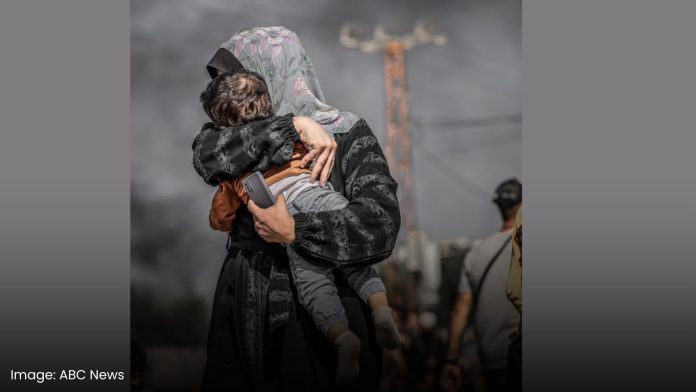
Isr.el’s W.r on G.za’s Children: K.lled, Starved, Orphaned and Scarred
By Shizza Umer
Nidal Abu Rabeea was two and a half years old when he d.ed in G.za in February 2026.
His family said he suffered from an enlarged liver and spent 14 months waiting to leave G.za for medical treatment, despite having medical referral documents. Hospitals inside G.za could not provide the treatment he needed. He d.ed before he could leave.
But Nidal was not the only sick child in his family.
His baby sister, Rital, was also hospitalised at Al-Aqsa Martyrs Hospital with a serious liver condition and had a medical referral for treatment abroad. Their mother, Iman Hamdouna, told Al Jazeera she feared losing her daughter after already losing her son.
G.za’s Health Ministry said at the time that 1,360 patients had d.ed while waiting to travel for treatment since the Rafah crossing was closed on 7 May 2024.
Nidal’s d.ath is one child’s story. The wider numbers describe something much larger.
More Than 20,000 Children K.lled in Two Years
The UN Independent International Commission of Inquiry reported that at least 20,179 Palestinian children were k.lled and 44,143 injured as a direct result of hostilities between 7 October 2023 and 7 October 2025.
Children represented approximately 30% of those k.lled and 26% of those injured during that two-year period.
That means more than 64,000 children were k.lled or injured within the Commission’s reporting window alone.
The cutoff matters. These are not September 2026 cas.alty figures. Later reported totals are higher.
And the k.lling of children did not end when a ceasef.re was announced.
On 6 August 2026, UNICEF reported that at least 300 children had reportedly been k.lled during the 300 days since the October 2025 ceasef.re announcement.
That averages one child every day.
Hundreds more were injured during the same period.
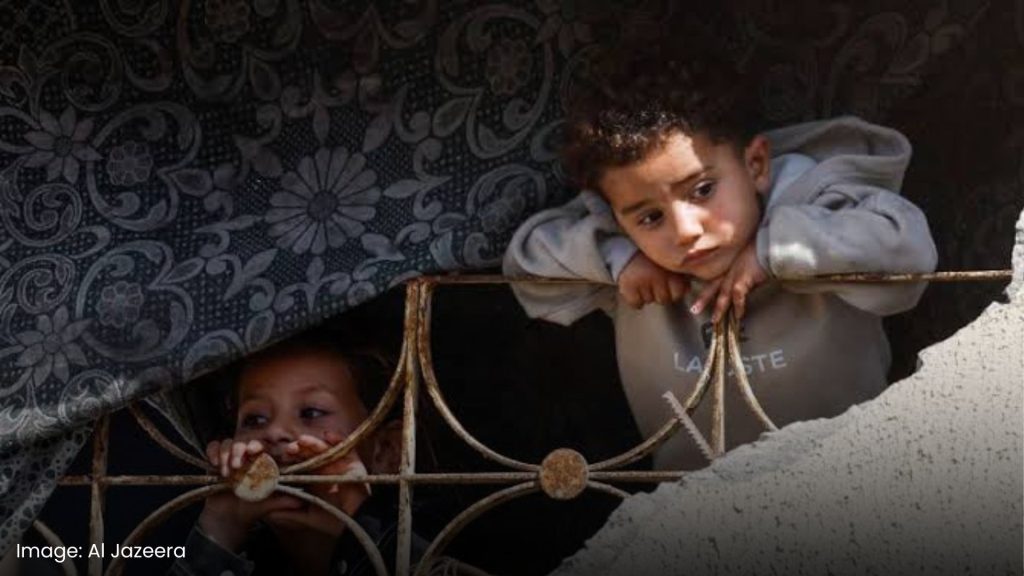
Surviving Can Mean Living With the Damage for Life
D.ath is only one measure of what has happened.
In May 2026, the World Health Organization estimated that approximately 43,000 of the 172,000 people injured in G.za were living with life-changing injuries.
Up to a quarter were children, putting the estimate at approximately 10,000 children.
Across all ages, WHO estimated more than 22,000 major limb injuries, more than 5,000 traumatic amputations, more than 3,400 major burns, over 2,000 spinal-cord injuries and more than 1,300 major traumatic brain injuries.
WHO also noted that almost 5,000 additional injuries had been recorded since its previous report in September 2025, and that nearly half of those occurred after the ceasef.re was announced.
For thousands of children, surviving the immediate injury may therefore be only the beginning of a lifelong medical and rehabilitation burden.
The Damage Is Appearing in Children’s Growth
There is another consequence that is less visible than an injury.
A UNICEF SMART nutrition survey published in August 2026 found 12.2% of children under five surveyed in accessible areas of G.za were stunted.
Stunting is impaired growth reflecting accumulated nutritional and health deprivation over time.
Only 22.4% of children aged six to 23 months in the survey received a minimum acceptable diet, while 73% had consumed unhealthy foods during the previous day.
The survey covered around 83% of G.za’s estimated population. The remaining 17% could not be included because of security and access limitations, and the report states that conditions in those excluded areas cannot be inferred from its findings.
There is an important qualification: acute malnutrition had improved substantially following increased humanitarian assistance. The survey therefore does not show that conditions remained identical to the worst period of hunger.
What it does show is evidence of chronic developmental harm.
At Nasser Medical Complex, pediatrician Dr Ahmad al-Farra has separately reported seeing children failing to grow normally in height and warned that prolonged malnutrition could have lasting developmental consequences.
Tens of Thousands Have Lost Their Parents
Family loss creates another set of numbers.
On 29 July 2026, G.za’s Health Ministry reported that 60,737 children had lost at least one parent since October 2023.
According to the ministry:
52,095 had lost their fathers.
5,929 had lost their mothers.
2,713 had lost both parents.
The ministry also reported that 2,276 families, comprising 8,858 people, had been completely erased from the civil registry.
These are G.za Health Ministry figures and should not be confused with separate UN or Palestinian government estimates that use different dates and definitions.
Behind every dataset is the same reality: tens of thousands of children are growing up after losing a parent, and thousands have reportedly lost both.
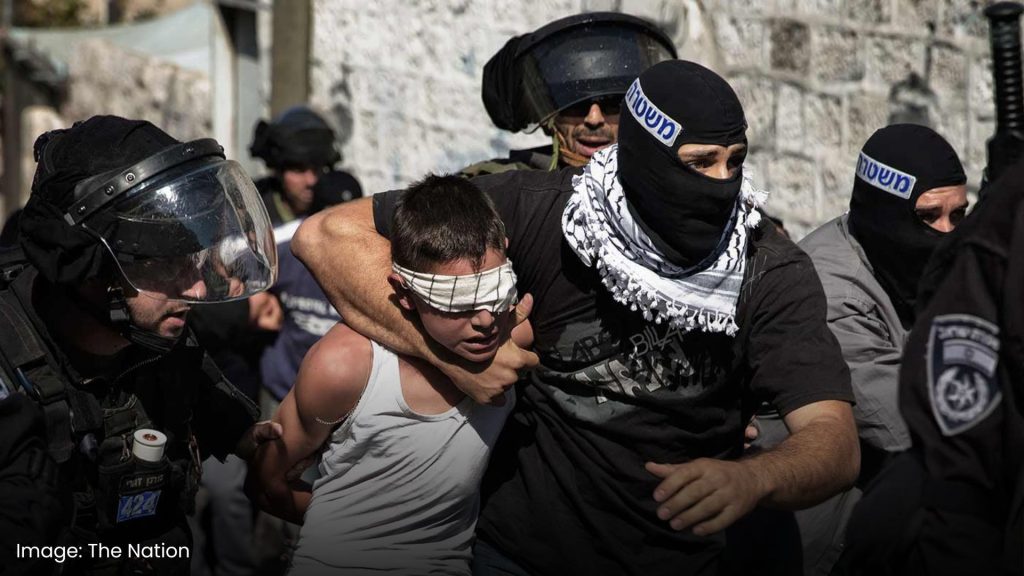
More Than Half of Det.ined Children Face No Charge
The harm to children is not confined to G.za’s cas.alty lists.
Defense for Children International Palestine reported in March 2026 that 351 Palestinian children were held in Isr.eli pr.sons as of 31 December 2025, using Isr.el Pr.son Service data.
Of those, 180 children, 51%, were held in administrative det.ntion without charge or trial. That is both the highest number and the highest proportion recorded since DCIP began monitoring in 2008.
Administrative det.ntion allows det.ntion for renewable six-month periods without charge. Children have consistently described being withheld adequate food and water, beatings, denial of medical care and solitary confinement. The UN Commission found that Isr.eli security forces used s.xual vi.lence against children in det.ntion, and that families were given no information about where their children were being held.
Two School Years, Gone
For those still in G.za, an entire stage of education has disappeared.
UNICEF estimates more than 630,000 children missed two full years of schooling, with only around 100,000 able to return to classes by late 2025.
Almost every school in the territory has been d.stroyed or severely dam.ged. Many still standing are being used as shelters for displaced families.
The Commission found that the dismantling of education facilities and orphanages, in both G.za and the occupied West Bank, obstructed children’s cognitive, social and emotional development and disrupted the foundations of Palestinian society.
An Att.ck on the Next Generation
One of the Commission’s most legally serious findings concerns children who were never born.
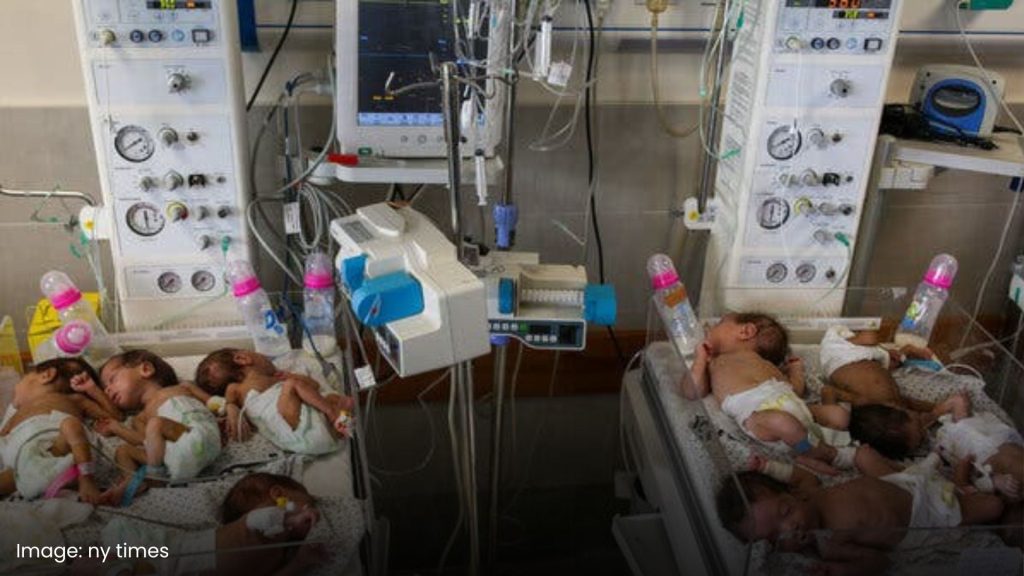
It found that Isr.el’s t.rgeting of neonatal and maternity care centres directly harmed newborn survival, with rises in miscarriages, birth defects and lasting vulnerabilities among infants.
The Commission described this as harm to Palestinians’ reproductive future and to the continuity of the population itself.
G.za’s Health Ministry has separately reported maternal mortality rising from 13.6 d.aths per 100,000 live births in 2022 to 33.4.
This Is Not Only G.za
The Commission’s findings also cover the occupied West Bank.
UN human rights monitors have verified 241 children k.lled by Isr.eli security forces and settlers in the West Bank since 7 October 2023, nearly one in five of the 1,103 Palestinians k.lled there. Most, 213 of the 241, were teenage boys.
In June 2026, seven-month-old Sam Fahed Abu Haykal was shot d.ad in his parents’ car near a Hebron checkpoint, the bullet passing through his head and injuring both parents. Footage analysed by an Isr.eli human rights organisation showed the car was slowing and posed no threat, and that no aid was offered to the family afterwards.
Now D.ath Is Appearing in Children’s Games
Perhaps one of the starkest indications of what prolonged exposure to d.ath is doing to children emerged not from a hospital or cas.alty database, but from the way they play.
In April 2026, Save the Children documented children holding funerals for dolls, pretending to sho.t one another and playing d.ad.
Staff described children modifying hide-and-seek into a game they called “w.r”. When someone was found, children would pretend to sho.t them with their hands before the other child played d.ad.
One Save the Children staff member described seeing her three-year-old daughter and another child reenacting a funeral with a doll.
These behaviours do not mean every child responds to trauma in the same way. Save the Children notes that play can itself be one way children process experiences too painful or complicated to articulate.
But what those children are reenacting tells its own story.
Funerals, sho.tings and d.ath have entered the vocabulary of childhood.
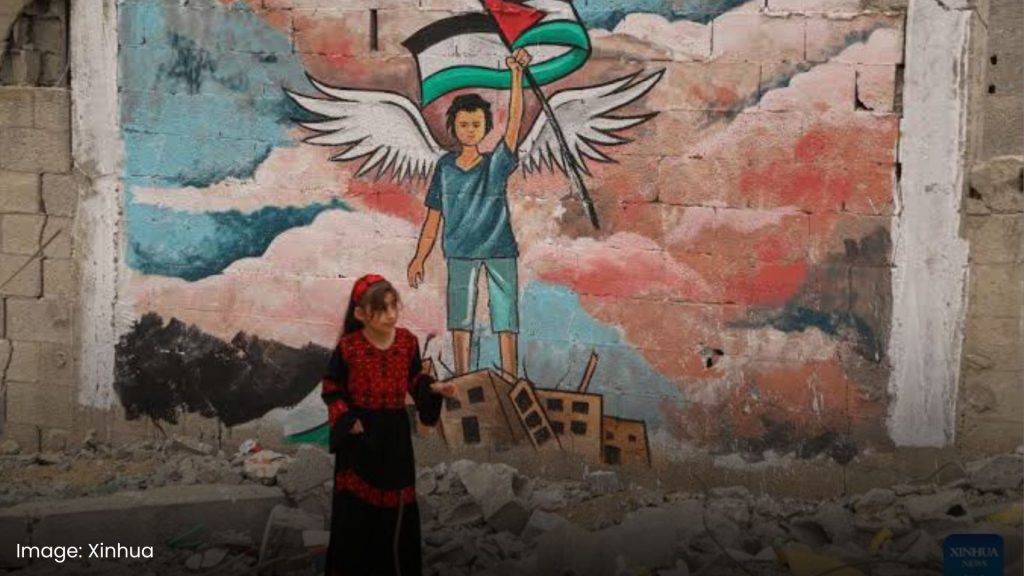
“The Essence of Childhood Has Been D.stroyed”
In June 2026, the UN Independent International Commission of Inquiry published a report with an extraordinary title:
“The essence of childhood has been d.stroyed.”
The Commission examined k.llings and injuries, det.ntion and alleged t.rture, s.xual and gender-based vi.lence, att.cks affecting healthcare and education, reproductive harm and the severe psychological consequences experienced by Palestinian children.
Its conclusion went beyond saying children were collateral victims of the conflict.
The Commission concluded that Isr.eli authorities and security forces had deliberately t.rgeted Palestinian children, resulting, in its findings, in gen.cide, cr.mes against humanity and w.r cr.mes in G.za, as well as w.r cr.mes in the occupied West Bank.
Commission chair Srinivasan Muralidhar put it directly: by t.rgeting children, Isr.el is att.cking the very capacity of the Palestinian people to exist and to determine their future.
He also warned that even if the bombs and guns fall silent, Palestinian children will not simply recover overnight, and that the destruction of their health, education and development is irreversible.
These are findings of an independent UN Commission of Inquiry. They are not a final judgment by an international court.
Isr.el rejected the Commission’s conclusions. Its mission in Geneva described the report as defamatory and argued that it ignored H.mas’s conduct and use of civilian areas. The Commission has separately found that H.mas and other Palestinian armed groups committed w.r cr.mes against Isr.eli civilians, including children, on and after 7 October 2023.
The Bill Nobody Has Costed
There is a financial dimension to this that is rarely stated.
UN experts have estimated that rebuilding G.za could take years and cost approximately $70 billion. That figure covers buildings.
It does not cover the cost of 10,000 children needing decades of prosthetics, physiotherapy and surgical revision as they grow. It does not cover two lost school years for 630,000 children, or the lifetime earnings gap that follows interrupted education. It does not cover mental health care for a population where nearly every child needs psychological support.
Those costs will be paid, by somebody, for the next fifty years.
None of that changes the question raised by the evidence concerning G.za’s children.
What happens to a generation when tens of thousands are k.lled or injured, thousands live with permanent disabilities, children lose parents, years of education disappear, physical growth is impaired and some children begin reenacting funerals during play?
The cas.alty numbers tell us how many children were k.lled.
The harder question is what has happened to the children who survived.
By Shizza Umer
Sources
OHCHR, Isr.el continues to commit gen.cide by deliberately t.rgeting Palestinian children
UNICEF, more than 64,000 children k.lled or injured in G.za
UNICEF, new SMART survey on child and maternal nutrition in accessible areas of G.za
Save the Children, children holding funerals with dolls and playing d.ad
Al Jazeera, Nidal Abu Rabeea d.es waiting for medical evacuation
UN in Palestine, Isr.eli vi.lence is subjecting Palestinian children to catastrophic levels of harm
Al Jazeera, the race to reopen G.za’s schools
Express Tribune, over 60,000 children orphaned in G.za since October 2023