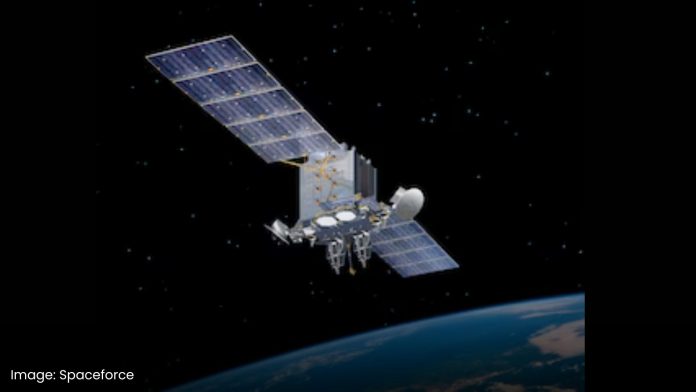
The United States has publicly acknowledged that it has deployed weapons in space, marking a significant development in the militarisation of Earth’s orbit. At a defence conference this week, US Air Force Secretary Troy Meink said the United States has fielded “on-orbit space control weapons” capable of defending US forces against hostile actions. US Space Force chief Douglas Schiess subsequently confirmed that personnel operate weapons in orbit, describing their purpose as defending the joint force against space-enabled attacks.
Neither official disclosed what weapons or systems they were referring to. The disclosure comes within a broader transformation in how major powers approach space. Satellites have long served military functions, supporting communications, navigation, intelligence and missile warning. What is changing is the increasing development of capabilities intended to interfere with or neutralise another state’s space assets.

Reuters reports that these capabilities can include technologies such as signal jamming, lasers capable of blinding sensors and systems capable of manoeuvring around or potentially capturing other spacecraft. China demonstrated in 2022 that it could command a satellite to grapple with and move another spacecraft in orbit.
Washington presents its new capabilities primarily through the language of deterrence. US officials argue that potential adversaries are developing capabilities to deny the United States access to key space systems and that American forces therefore need the ability to protect themselves. This creates a familiar security dilemma. A state may develop a weapon because it believes doing so will make it safer. Its rival, however, may interpret that same capability as evidence of offensive intentions and respond by developing its own countermeasure. The result can be an arms competition in which both sides describe their actions as defensive.
Space is particularly vulnerable to this dynamic because the technologies involved can have both defensive and offensive applications, while the intentions behind them are difficult to determine from outside.


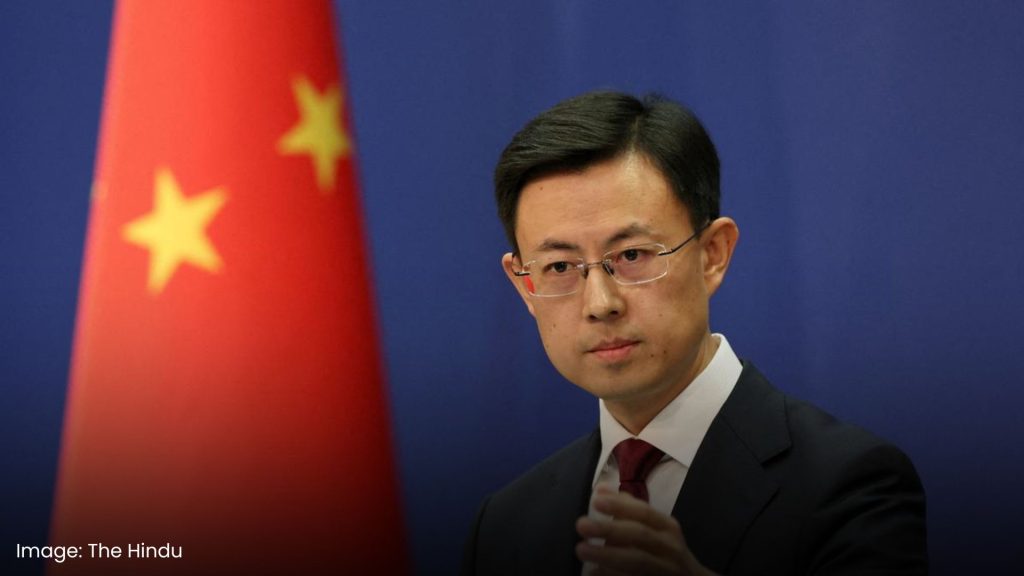
China has responded directly to the American announcement. Foreign Ministry spokesperson Guo Jiakun said China supports the peaceful use of outer space and opposes an arms race or attempts to weaponize space and turn it into a warzone. Beijing urged Washington to stop expanding its military preparations in outer space and called for actions that preserve global strategic stability.
China’s position is not simply rhetorical opposition to US capabilities. Beijing has itself developed sophisticated military space capabilities, and the US military identifies China as a major competitor in the space domain. China established the People’s Liberation Army Strategic Support Force in 2015 and later reorganised its space-related capabilities under the PLA Aerospace Force in 2024. Its military activities in space have also generated concern in Washington.
That context matters. The emerging competition cannot accurately be reduced to one country militarising an otherwise peaceful domain. Multiple major powers are developing counter-space capabilities. What is new in the current moment is the increasing willingness to publicly acknowledge and normalise those capabilities.
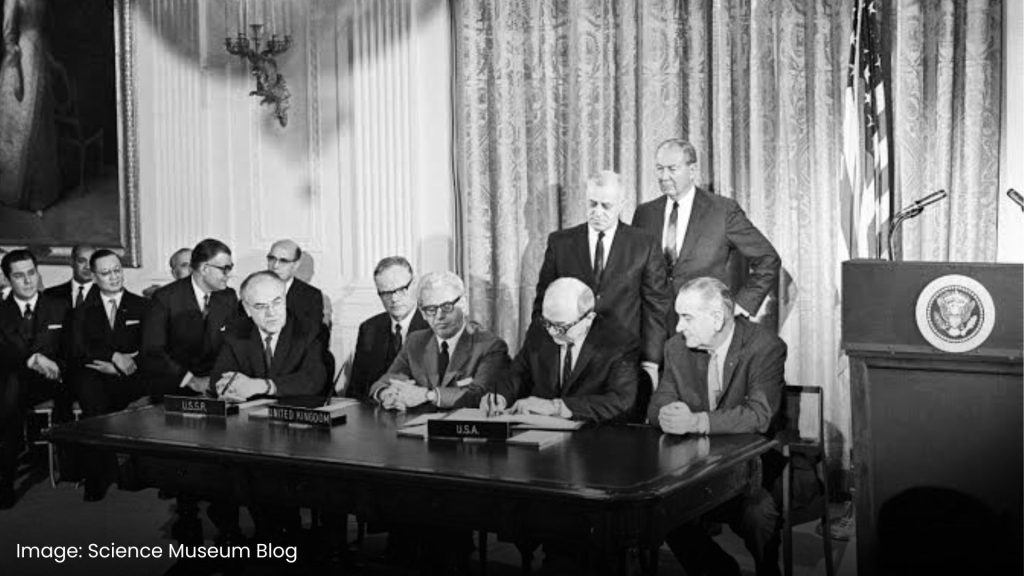
That is where the question of international rules becomes particularly important. The 1967 Outer Space Treaty remains the central legal framework governing activities in space. Both the United States and China are parties to it. The treaty prohibits placing nuclear weapons or other weapons of mass destruction in orbit and establishes that the Moon and other celestial bodies are to be used exclusively for peaceful purposes. But the treaty does not prohibit every conventional military activity in space. It therefore leaves substantial room for the development and deployment of conventional counter-space capabilities.
This distinction is essential. The US announcement should not automatically be described as a violation of the Outer Space Treaty. The precise nature of the weapons remains undisclosed, and the treaty does not ban all conventional weapons in orbit. The more difficult issue is therefore normative rather than simply legal. If major powers increasingly treat weapons in orbit, preparations for space warfare and competition over military space capabilities as inevitable components of national security, militarisation itself risks becoming normalised.
That could have consequences well beyond the United States and China.
Modern societies depend heavily on satellites for civilian and military infrastructure. Disrupting space systems could affect communications, navigation, intelligence and early-warning capabilities on Earth. A conflict in orbit could therefore generate consequences far beyond the spacecraft directly involved.
The United States argues that preparing for such a conflict strengthens deterrence. China argues that expanding military capabilities in space threatens strategic stability. Both positions reflect the logic of an increasingly competitive international system.
But if every major power responds to another’s military preparations by expanding its own, deterrence can become indistinguishable from an arms race. The United States has long presented itself as a defender of international rules and global stability. That makes its approach to space particularly consequential. The issue is not whether Washington has legitimate security concerns; it is whether responding to those concerns through increasingly sophisticated weapons in orbit will produce greater security—or establish a precedent in which military competition becomes the accepted foundation of space governance.
China, meanwhile, is making its own case for peaceful use while simultaneously expanding its space capabilities. Its stated position therefore also needs to be evaluated against its actual behaviour, rather than accepted solely at the level of diplomatic rhetoric.
The challenge for the international community is consequently broader than determining who has the more advanced space weapons. It is whether states can establish clearer rules, greater transparency and stronger mechanisms for preventing escalation before space becomes another permanently militarised theatre of strategic competition. Space was once presented primarily as a domain for scientific exploration and international cooperation. It is now an increasingly important component of national security. The question is whether that transition will be allowed to become permanent. The issue is no longer whether space has become strategically important. It is whether militarisation will be accepted as the inevitable price of keeping it secure.
References