Trump’s Gaza Peace Board Wants Total Legal Immunity & Free Access to Palestinian land
Trump’s Board of Peace Wants Immunity From Gaza’s Courts. Critics Say It Is Building a Legal Black Hole.
Isla Montclair
A leaked draft resolution obtained by the Guardian shows the body tasked with overseeing Gaza’s reconstruction is planning to shield itself, its soldiers and its contractors from any legal accountability on the ground. Here is what the document says and why legal experts are alarmed.
What the Leaked Resolution Actually Says
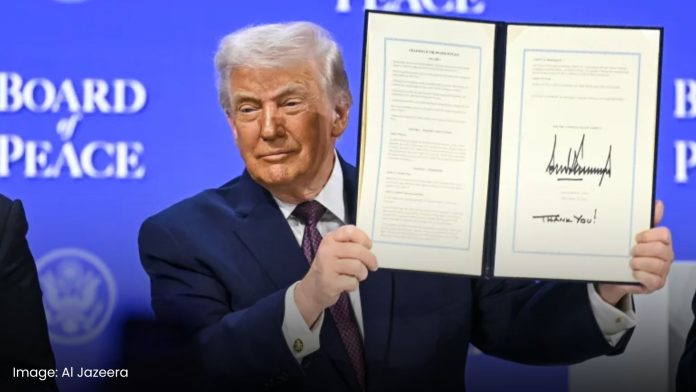
The document at the centre of this story is a four page draft titled Resolution No 2026/3, labelled “sensitive but unclassified.” The UN-sanctioned Board of Peace announced by Donald Trump earlier this year to rule Gaza is planning a sweeping grant of legal immunity for itself, according to the draft obtained by the Guardian. The draft language would also let the organization obtain public property in Gaza free of charge.
The resolution extends broad protections to every member of the Board of Peace and its administrative affiliate, the Office of the High Representative, as well as to Palestinian technocrats, international military forces and nonresident contractors lined up to perform work in Gaza. It defines the legal processes from which they would be immune as any arrest, detention or legal proceedings in the courts or other entities in Gaza. It remains unclear if the document attempts to shield the Board and its affiliates from prosecution in international courts as well.
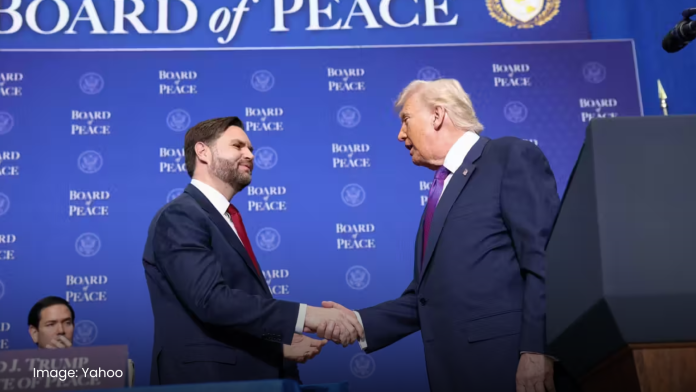
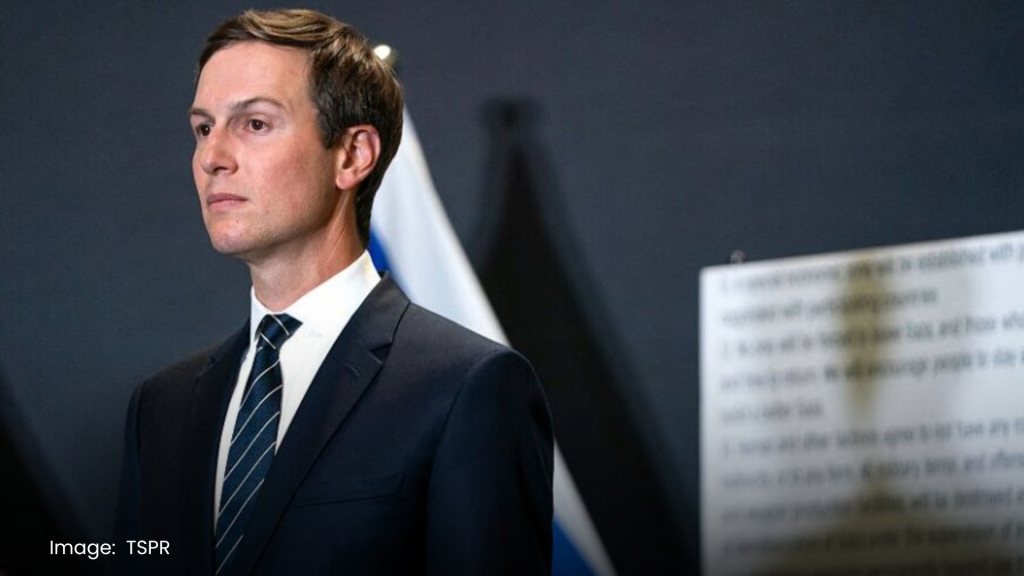
Trump, who chairs the Board of Peace, would have the right to waive someone’s legal immunity, pending majority support from the board, according to the June 2026 draft. The seven member executive board includes Trump’s son-in-law Jared Kushner, special envoy Steve Witkoff, chief of staff Susie Wiles, and national security adviser Marco Rubio.
Free Land and a Legal System That Judges Itself
Beyond personal immunity, the draft contains a clause legal experts have called particularly dangerous. The final section of the draft resolution, titled Premises of the Board of Peace, OHR, and ISF, states that the group shall be provided, free of charge, public premises and facilities needed for the accomplishment of its missions in Gaza. Legal experts said this phrase could open the door to illegal confiscation of Palestinian property, and it remains unclear which body, Israel, Hamas or the Palestinian Authority, would actually be responsible for providing those facilities.
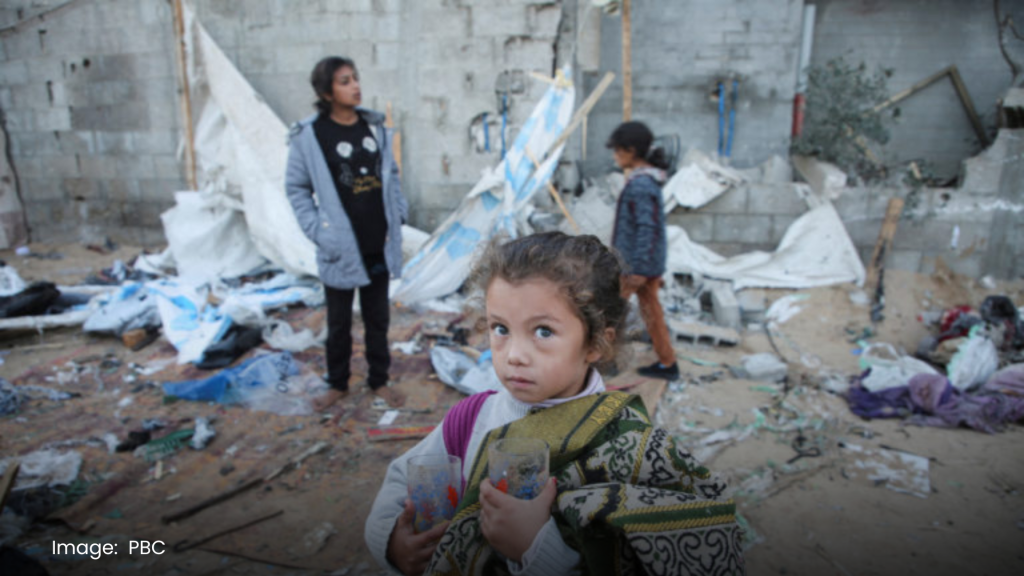
The draft also addresses what happens if Board operations harm Gaza residents. Section 7 of the resolution, titled Third Party Liability/Claims, lays out a system for the Board of Peace itself to consider and adjudicate any claims for property loss or damage and for personal injury, illness or death arising from its work in Gaza. International law professor Noura Erakat described the effect bluntly: “They are basically saying there’s no external oversight, including applicable international law regarding occupation. It’s creating a legal system unto itself.”
Why Legal Experts Are Comparing This to Iraq and Afghanistan
Six lawyers specializing in US contracting law and international armed conflict reviewed the draft for the Guardian. They said that if the resolution goes into force, it is unclear how Board of Peace officials, soldiers and contractors would be held accountable for shootings or accidents affecting Gaza residents, or even how routine disputes over business or land use would be resolved.
US-led reconstruction efforts in Iraq and Afghanistan were often plagued by controversies involving corruption, civilian deaths and abuse at the hands of American contractors, including those working for Blackwater and KBR, who have since faced litigation in US courts. Any reconstruction effort in Gaza could face similar challenges.
Emily Schaeffer Omer-Man, an expert in litigating international humanitarian law, was direct about the intent of the document. “It looks like an attempt to exempt the board, and all of its personnel, from accountability for potential legal violations,” she said.
Dawn executive director Omar Shakir went further, drawing a comparison to Israeli policy in the occupied territories. “By unilaterally declaring the power to seize Palestinian land, property and buildings for their own use without consent, compensation or redress, the Board of Peace is taking a page out of Israel’s repressive playbook,” he said. “Far from signaling an end to genocide, apartheid and occupation, this document suggests entrenching some of its ugliest signature characteristics. This risks not only complicity, but direct perpetration of grave abuses.”
The Missing Legal Framework and the Palestinians Left Out
A central legal problem underlying the entire resolution is that there is no formal agreement governing how foreign forces and contractors should operate in Gaza. Laws governing international contractors and military forces are usually outlined in status of forces agreements between countries, but no such document exists for Gaza. Brad Parker of the Center for Constitutional Rights questioned the entire legal basis for the Board’s claimed authority: “If they don’t have a status of forces agreement with Israel, then it’s not clear what the board’s legal authority would be.”
One American security contractor explained that Israeli officials do not want to negotiate a status of forces agreement for Gaza because Israel does not want to recognize Gaza as a state.
Perhaps most strikingly, the people the Board claims to be helping have not seen the document. Nickolay Mladenov, the Board of Peace’s high representative for Gaza, has been meeting in Cairo with Palestinian administrators selected to govern Gaza, but the prospective immunity resolution has not been shared with the Palestinian cohort.
What the Board of Peace Has Said in Response
The Board has firmly denied the existence of any operative immunity framework. An official said in a statement: “There is no operative resolution or immunity framework of the kind described in your questions. Any suggestion that this process is designed to create lawlessness or impunity is wrong, misleading and gets the issue entirely backwards.” The official added that the suggestion the President will have a role in establishing or waiving immunity in Gaza is categorically false, and said the Board will ensure all personnel, contractors and participating entities follow applicable law and operate under clear rules, oversight and accountability mechanisms. The official did not explain what those mechanisms would be.
The UN Security Council authorised the Board of Peace to oversee Gaza’s administration until 31 December 2027. Whether the body governing one of the most devastated territories on earth will operate under accountable law or under rules it writes for itself remains, for now, an open and deeply contested question.
Sources:
· Trump’s Board of Peace plans to grant itself sweeping immunity, documents show, The Guardian: https://www.theguardian.com/law/2026/jun/27/board-of-peace-legal-immunity-un · Trump’s Gaza board accused of creating legal black hole to protect officials and contractors, Middle East Monitor: https://www.middleeastmonitor.com/20260629-trumps-gaza-board-accused-of-creating-legal-black-hole-to-protect-officials-and-contractors/