A Super El Nino Could Cost the World Up to 7 Trillion Dollars

The Economic Cost of the 2026 Super El Nino, Region by Region

Maryam Tariq

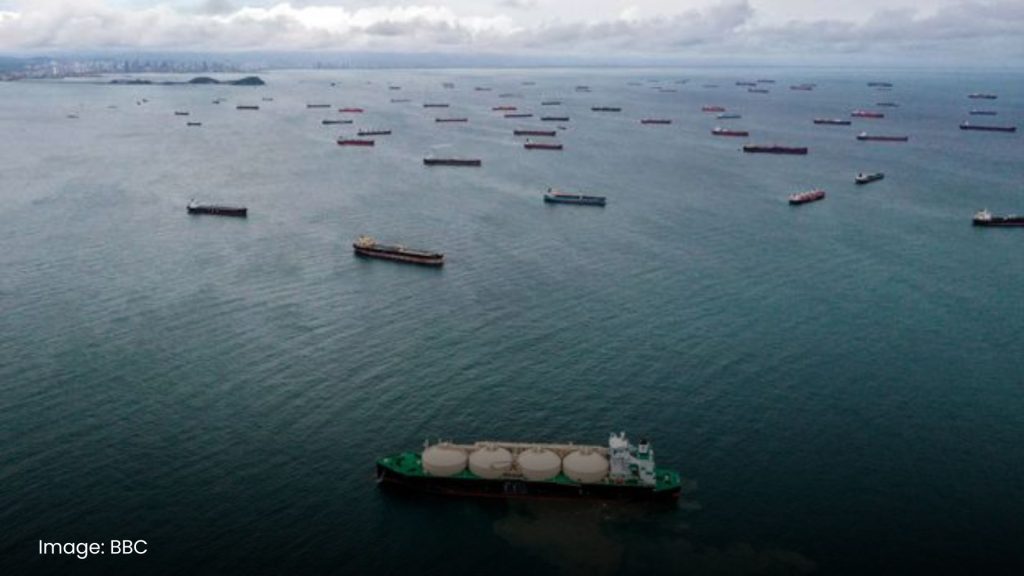
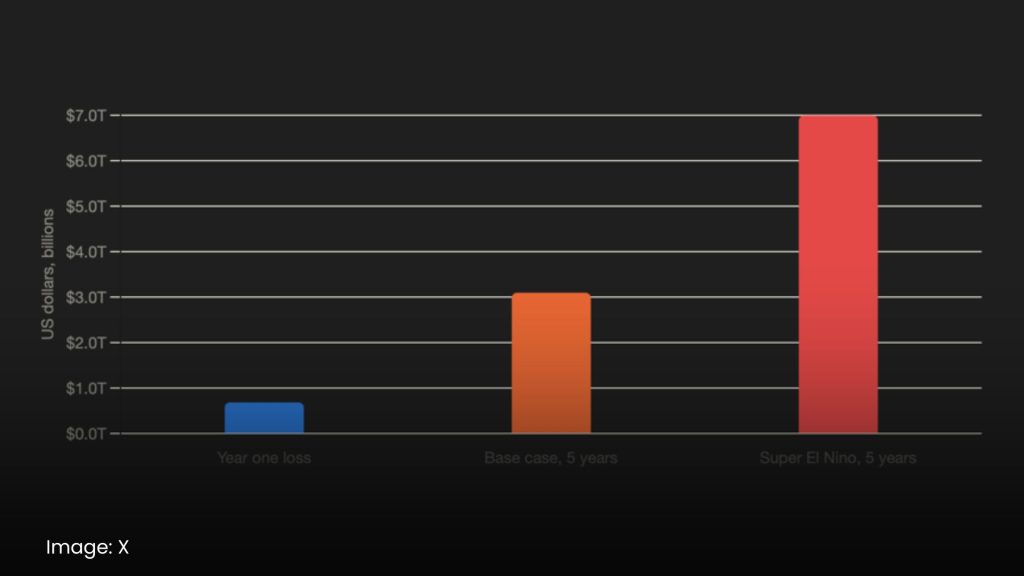
A strong El Nino has officially returned, and economists are warning it could become one of the costliest natural climate events in modern history. According to a Peterson Institute for International Economics analysis, the global economy could lose approximately 686 billion dollars in the first year alone, with cumulative five year losses reaching as high as 7 trillion dollars in a worst case Super El Nino scenario, according to Citigroup’s economic research.
What Is Driving the Global Cost

El Nino is the warm phase of a recurring Pacific Ocean weather pattern that raises temperatures and disrupts rainfall across large parts of the world. The US National Oceanic and Atmospheric Administration currently puts the odds of a very strong event by the end of 2026 at 63 percent. According to research published in Science by Callahan and Mankin, El Nino events don’t just cause a single economic shock, they leave a lasting scar by diverting investment away from growth and toward disaster recovery, which is why losses tend to compound over roughly five years rather than fading quickly.

The Food and Supply Chain Shock

Agriculture is expected to absorb the heaviest direct blow, with global farm production projected to fall by as much as 14.3 percent, a 342 billion dollar hit. Prices for rice, sugar, palm oil and coffee could surge 50 to 100 percent as droughts hit India’s monsoon season alongside Southern Africa and parts of South America simultaneously. Citigroup notes this shock is landing on top of an already fragile global economy, one still absorbing inflation from the recent closure of the Strait of Hormuz, meaning the two disruptions together could push global food inflation to an annualized 5 percent rate by early next year.
How Africa, Asia and Australia Are Being Hit

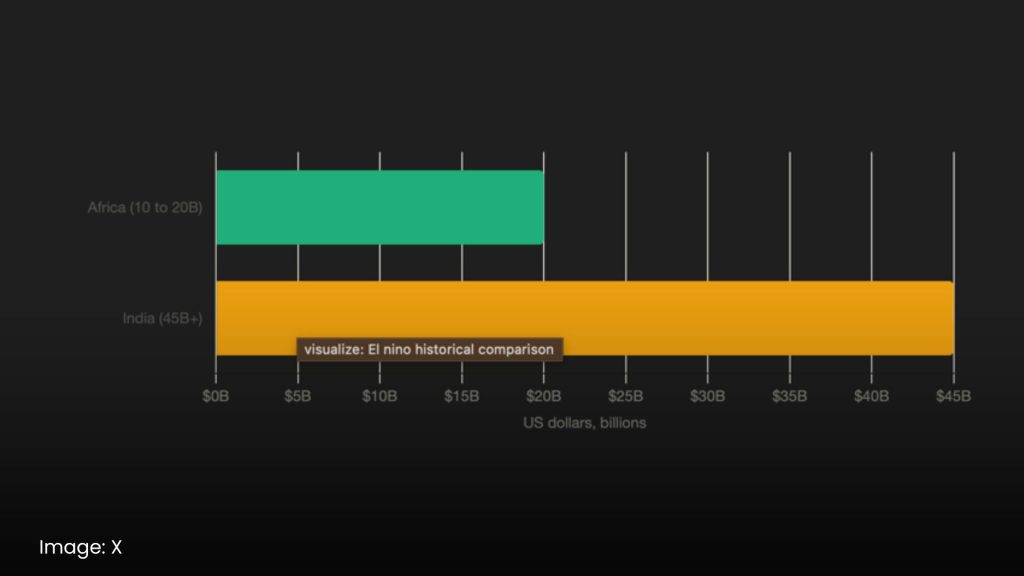
According to the African Development Bank, Africa faces a direct economic hit of 10 to 20 billion dollars this year alone, with climate adaptation costs ballooning toward 100 billion dollars to manage crop failures, mass displacement, and a projected 1 to 4 percent drop in fisheries output.

India faces losses exceeding 45 billion dollars as a weakened monsoon damages rice, sugar and wheat yields. Because India is the world’s largest rice exporter, any resulting export restrictions could ripple into a broader global food supply shock. Indonesia and Thailand face similar pressure on palm oil and rubber production, while lower river levels disrupt inland shipping routes critical to manufacturing supply chains. Australia, meanwhile, faces a multi billion dollar hit to wheat and beef exports due to drought.
How Latin America Is Being Hit

Latin America faces a distinct infrastructure problem. Low water levels are forcing the Panama Canal Authority to cut daily ship transits, pushing global shipping companies toward longer, more expensive routes and driving up costs for goods bound for North America and Europe. Off the coast of Peru and Chile, warmer ocean temperatures threaten to collapse the anchovy fishing industry, the world’s primary source of fishmeal, with knock on effects for global livestock feed prices. In Brazil, drought driven strain on hydroelectric reservoirs is forcing a costly shift toward fossil fuel power, raising domestic electricity bills.

How North America and Europe Are Affected

Wealthier economies aren’t immune, they simply absorb the shock differently, mainly through consumer prices rather than infrastructure collapse. Rising global costs for coffee, cocoa, sugar and electronics components are expected to feed directly into grocery and retail inflation. Insurance markets are also under strain, as extreme storms in the US and heatwaves across Southern Europe drive billions in property damage, pushing reinsurance companies to raise premiums for homeowners and businesses worldwide.

The Historical Pattern

This isn’t uncharted territory. The 1997 to 1998 El Nino, considered the most economically destructive on record, cost the global economy an estimated 5.7 trillion dollars in long term income losses. The 1982 to 1983 event cost roughly 4.1 trillion dollars. Researchers warn that if mitigation and infrastructure investment aren’t prioritized, cumulative global income losses from these recurring cycles could reach 84 trillion dollars by the year 2100.

What Can Still Be Done

Economists argue the first year’s losses are largely unavoidable at this point, but the additional multi year damage isn’t fixed yet. PIIE researchers are calling for multilateral development banks to pre position emergency credit for vulnerable economies now, rather than after losses hit, alongside urgent early funding for global food reserve programs before shortages compound into 2027.

Sources:

El Nino could drag down the global economy by almost 700 billion or 3 trillion, and the choice is ours — Peterson Institute for International Economics: https://www.piie.com

El Nino’s coming back, and could cost the global economy trillions — Morningstar / Dow Jones: https://www.morningstar.com

Super El Nino could cause global food price shock lasting years — The Guardian: https://www.theguardian.com

The Economic Cost of the 2026 Super El Nino, Region by Region

Maryam Tariq

A strong El Nino has officially returned, and economists are warning it could become one of the costliest natural climate events in modern history. According to a Peterson Institute for International Economics analysis, the global economy could lose approximately 686 billion dollars in the first year alone, with cumulative five year losses reaching as high as 7 trillion dollars in a worst case Super El Nino scenario, according to Citigroup’s economic research.

What Is Driving the Global Cost

El Nino is the warm phase of a recurring Pacific Ocean weather pattern that raises temperatures and disrupts rainfall across large parts of the world. The US National Oceanic and Atmospheric Administration currently puts the odds of a very strong event by the end of 2026 at 63 percent. According to research published in Science by Callahan and Mankin, El Nino events don’t just cause a single economic shock, they leave a lasting scar by diverting investment away from growth and toward disaster recovery, which is why losses tend to compound over roughly five years rather than fading quickly.

The Food and Supply Chain Shock

Agriculture is expected to absorb the heaviest direct blow, with global farm production projected to fall by as much as 14.3 percent, a 342 billion dollar hit. Prices for rice, sugar, palm oil and coffee could surge 50 to 100 percent as droughts hit India’s monsoon season alongside Southern Africa and parts of South America simultaneously. Citigroup notes this shock is landing on top of an already fragile global economy, one still absorbing inflation from the recent closure of the Strait of Hormuz, meaning the two disruptions together could push global food inflation to an annualized 5 percent rate by early next year.

How Africa, Asia and Australia Are Being Hit

According to the African Development Bank, Africa faces a direct economic hit of 10 to 20 billion dollars this year alone, with climate adaptation costs ballooning toward 100 billion dollars to manage crop failures, mass displacement, and a projected 1 to 4 percent drop in fisheries output.

India faces losses exceeding 45 billion dollars as a weakened monsoon damages rice, sugar and wheat yields. Because India is the world’s largest rice exporter, any resulting export restrictions could ripple into a broader global food supply shock. Indonesia and Thailand face similar pressure on palm oil and rubber production, while lower river levels disrupt inland shipping routes critical to manufacturing supply chains. Australia, meanwhile, faces a multi billion dollar hit to wheat and beef exports due to drought.

How Latin America Is Being Hit

Latin America faces a distinct infrastructure problem. Low water levels are forcing the Panama Canal Authority to cut daily ship transits, pushing global shipping companies toward longer, more expensive routes and driving up costs for goods bound for North America and Europe. Off the coast of Peru and Chile, warmer ocean temperatures threaten to collapse the anchovy fishing industry, the world’s primary source of fishmeal, with knock on effects for global livestock feed prices. In Brazil, drought driven strain on hydroelectric reservoirs is forcing a costly shift toward fossil fuel power, raising domestic electricity bills.

How North America and Europe Are Affected

Wealthier economies aren’t immune, they simply absorb the shock differently, mainly through consumer prices rather than infrastructure collapse. Rising global costs for coffee, cocoa, sugar and electronics components are expected to feed directly into grocery and retail inflation. Insurance markets are also under strain, as extreme storms in the US and heatwaves across Southern Europe drive billions in property damage, pushing reinsurance companies to raise premiums for homeowners and businesses worldwide.

The Historical Pattern

This isn’t uncharted territory. The 1997 to 1998 El Nino, considered the most economically destructive on record, cost the global economy an estimated 5.7 trillion dollars in long term income losses. The 1982 to 1983 event cost roughly 4.1 trillion dollars. Researchers warn that if mitigation and infrastructure investment aren’t prioritized, cumulative global income losses from these recurring cycles could reach 84 trillion dollars by the year 2100.

What Can Still Be Done

Economists argue the first year’s losses are largely unavoidable at this point, but the additional multi year damage isn’t fixed yet. PIIE researchers are calling for multilateral development banks to pre position emergency credit for vulnerable economies now, rather than after losses hit, alongside urgent early funding for global food reserve programs before shortages compound into 2027.

Sources:

El Nino could drag down the global economy by almost 700 billion or 3 trillion, and the choice is ours — Peterson Institute for International Economics: https://www.piie.com

El Nino’s coming back, and could cost the global economy trillions — Morningstar / Dow Jones: https://www.morningstar.com

Super El Nino could cause global food price shock lasting years — The Guardian: https://www.theguardian.com
spot_img

Explore more

spot_img
Global Affairs

Foreign Countries Are Fueling Myanmar’s War for Their Own Benefit

What Are the US and Iran Actually Negotiating Through Oman

UN Official Calls West Bank Attacks “Pogroms,” Wants Weapons Ban on...

UN Rights Chief Wins Second Term, But the US, Israel and...

Trump to Use Frozen Iranian Money, Worth Billions, to Pay for...

Iran Rejects New US Ceasefire Offer, Says It Rejected a Broken...

Houthis Strike Two Saudi Oil Tankers, Block Red Sea as Oil...