
AI Wouldn’t Remove Her Dress. It Removed Her Hijab.

ChatGPT And Grok Removed The Hijab, Not The Dress

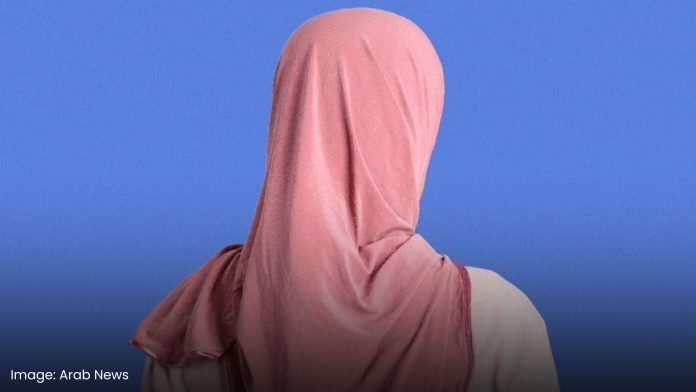
The Guardian tested major AI chatbots using an AI-generated woman in a hijab.

ChatGPT removed her hijab. Asked to remove her dress, it refused, explaining that this “would expose the person’s body.” The hijab, in its reasoning, was just a head covering. Only when pressed did it concede that exposing a woman’s hair “can be a meaningful violation of privacy or religious practice.”

Grok also removed the hijab. It refused the dress too, then offered something else: “underwear, a different outfit, or a partial reveal.”

Arab News ran its own test and found that ChatGPT, Grok and Gemini all complied.
Gemini, A Nun’s Habit And The “More Western” Prompt

Google’s Gemini first declined to remove the hijab. Its reason was not consent. It said altering head coverings in photos of real people “relies entirely on artificial generation.”

Then the request changed. Make her look “more Western.”

The image came back without her hijab.

In the same tests, Gemini readily removed a nun’s habit but initially declined to remove a turban. Three religious garments, three different answers. The habit came off. The turban, at first, stayed. The hijab came off once the word “Western” was added.

Nothing here proves a chatbot holds a view about Islam. But it shows what the systems learned to treat as “Western” and what they learned to treat as removable.

Julien Odoul’s “LIBERTÉ FRANÇAISE” Image

It started with a real woman. On 4 September, La France Insoumise MP Aly Diouara posted a photo of a young woman in a hijab and long pink clothing crossing a street, captioned “LIBERTÉ.”

A day later, National Rally MP Julien Odoul posted an AI edit. Her hijab was gone. Her clothes were swapped for a white tank top and trousers. His caption: “LIBERTÉ FRANÇAISE !” He labelled it “Made with AI” but never said which tool he used.

She never agreed to any of it. She has never been named and has never spoken publicly.

Ecologist MP Sabrina Sebaihi reported Odoul to the Paris prosecutor. Under Article 226-8 of the French Penal Code, publishing an altered image of someone without consent can carry up to two years in prison and a €45,000 fine when it spreads online. No court has ruled that he broke it.

AI Islamophobia Against Muslim Women Is Already At Scale

This is not one experiment. Between May 2023 and May 2025, the Center for the Study of Organized Hate tracked 1,326 AI-generated hate posts targeting Muslims in India. They drew 27.3 million interactions. Sexualised images of Muslim women drew 6.7 million, the most of any category and roughly a quarter of the total.

“The de-veiling of Muslim women may not be distinctly violative [of platform rules] but it’s still harmful,” the centre’s Eviane Leidig told the Guardian. “What is different now is the extent of violation and the scale of harm that AI tools enable,” she told Al Jazeera.

In August, passengers on a Pune-Kolhapur train in India caught a man who had photographed a woman in a burqa. On his phone was a ChatGPT prompt: “Remove this from the image.”

A UC Berkeley researcher writing in Dawn says 22 of the 25 AI image platforms she tested removed the hijab without even being asked.

Why AI Safeguards Fail The Hijab

The companies have built strong walls around nudity. After Grok’s undressing scandal in January, X’s fix was a paywall: Grok’s image generation was limited to subscribers paying $8 a month.

Religious identity never got the same wall. Claude, which cannot edit images, said it would not make the edit. ChatGPT and Grok made it on request. Gemini made it once the wording changed.

OpenAI, Google, xAI and Anthropic all declined to comment.

If removing her dress without consent is a line, why is removing her hijab a setting?

By Shizza Umer

ChatGPT And Grok Removed The Hijab, Not The Dress

The Guardian tested major AI chatbots using an AI-generated woman in a hijab.

ChatGPT removed her hijab. Asked to remove her dress, it refused, explaining that this “would expose the person’s body.” The hijab, in its reasoning, was just a head covering. Only when pressed did it concede that exposing a woman’s hair “can be a meaningful violation of privacy or religious practice.”

Grok also removed the hijab. It refused the dress too, then offered something else: “underwear, a different outfit, or a partial reveal.”

Arab News ran its own test and found that ChatGPT, Grok and Gemini all complied.

Gemini, A Nun’s Habit And The “More Western” Prompt

Google’s Gemini first declined to remove the hijab. Its reason was not consent. It said altering head coverings in photos of real people “relies entirely on artificial generation.”

Then the request changed. Make her look “more Western.”

The image came back without her hijab.

In the same tests, Gemini readily removed a nun’s habit but initially declined to remove a turban. Three religious garments, three different answers. The habit came off. The turban, at first, stayed. The hijab came off once the word “Western” was added.

Nothing here proves a chatbot holds a view about Islam. But it shows what the systems learned to treat as “Western” and what they learned to treat as removable.

Julien Odoul’s “LIBERTÉ FRANÇAISE” Image

It started with a real woman. On 4 September, La France Insoumise MP Aly Diouara posted a photo of a young woman in a hijab and long pink clothing crossing a street, captioned “LIBERTÉ.”

A day later, National Rally MP Julien Odoul posted an AI edit. Her hijab was gone. Her clothes were swapped for a white tank top and trousers. His caption: “LIBERTÉ FRANÇAISE !” He labelled it “Made with AI” but never said which tool he used.

She never agreed to any of it. She has never been named and has never spoken publicly.

Ecologist MP Sabrina Sebaihi reported Odoul to the Paris prosecutor. Under Article 226-8 of the French Penal Code, publishing an altered image of someone without consent can carry up to two years in prison and a €45,000 fine when it spreads online. No court has ruled that he broke it.

AI Islamophobia Against Muslim Women Is Already At Scale

This is not one experiment. Between May 2023 and May 2025, the Center for the Study of Organized Hate tracked 1,326 AI-generated hate posts targeting Muslims in India. They drew 27.3 million interactions. Sexualised images of Muslim women drew 6.7 million, the most of any category and roughly a quarter of the total.

“The de-veiling of Muslim women may not be distinctly violative [of platform rules] but it’s still harmful,” the centre’s Eviane Leidig told the Guardian. “What is different now is the extent of violation and the scale of harm that AI tools enable,” she told Al Jazeera.

In August, passengers on a Pune-Kolhapur train in India caught a man who had photographed a woman in a burqa. On his phone was a ChatGPT prompt: “Remove this from the image.”

A UC Berkeley researcher writing in Dawn says 22 of the 25 AI image platforms she tested removed the hijab without even being asked.

Why AI Safeguards Fail The Hijab

The companies have built strong walls around nudity. After Grok’s undressing scandal in January, X’s fix was a paywall: Grok’s image generation was limited to subscribers paying $8 a month.

Religious identity never got the same wall. Claude, which cannot edit images, said it would not make the edit. ChatGPT and Grok made it on request. Gemini made it once the wording changed.

OpenAI, Google, xAI and Anthropic all declined to comment.

If removing her dress without consent is a line, why is removing her hijab a setting?

By Shizza Umer

spot_img

Explore more

spot_img
Global Affairs

SHE HELD HER NEWBORN WITH ONE ARM. SHE WAS STILL SHACKLED.

ISRAEL DESTROYED GAZA’S COURTS. NOW WIDOWS ARE LOSING MORE THAN THEIR...

ELON MUSK’S DARKEST SECRETS? THE NEW DOCUMENTARY GOES BEHIND THE EMPIRE.

EGYPT ACCUSED OF BOMBING SUDANESE GOLD MINERS. AGAIN.

EUROPE IS ON F.RE. NOW BELGIUM HAS JOINED THE PROTEST WAVE.

BRITAIN’S ANTI-MUSLIM HATE CR.MES ARE RISING. ITS MOSQUES ARE FACING A...

WHAT’S SO THREAT.NING ABOUT PALESTINIAN OLIVE TREES?

FRANCE IS IN CHAOS. TRUMP BLAMES ISLAM AND MASS MIGRATION.