
BULLDOZER JUSTICE EVOLVED: HOW INDIA USED THE LAW TO REMOVE FIVE HISTORIC MOSQUES
India’s Supreme Court has already condemned what became known as “bulldozer justice”: demolishing properties associated with accused people, frequently Muslims, before any court has established their guilt. Its November 2024 ruling required advance notice, hearings, reasoned orders and documented demolition procedures. But what happened in Varanasi’s Dalmandi district reveals a more sophisticated mechanism. The state did not openly defy the law. It used acquisition notices, compensation, court approval and overwhelming security to produce an equally irreversible result.
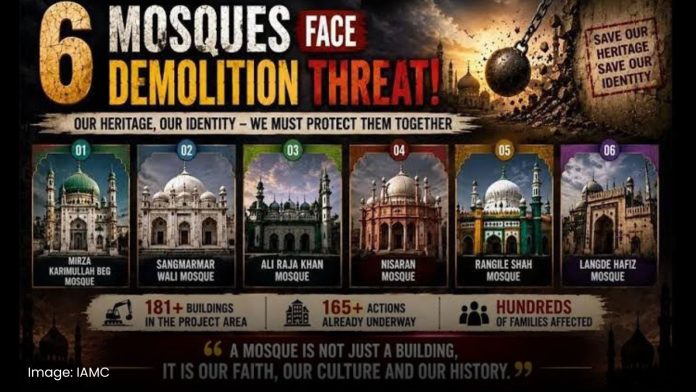
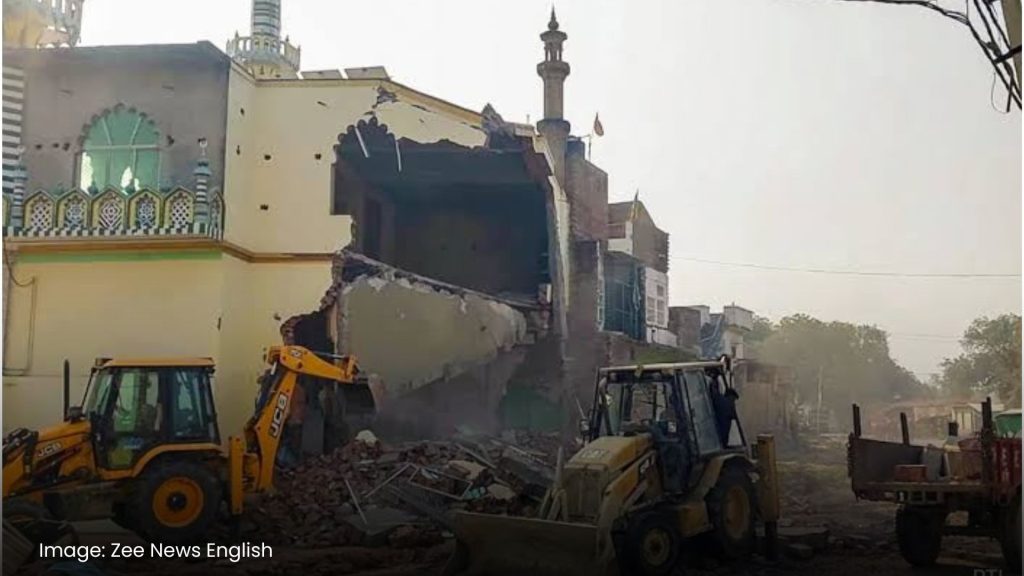
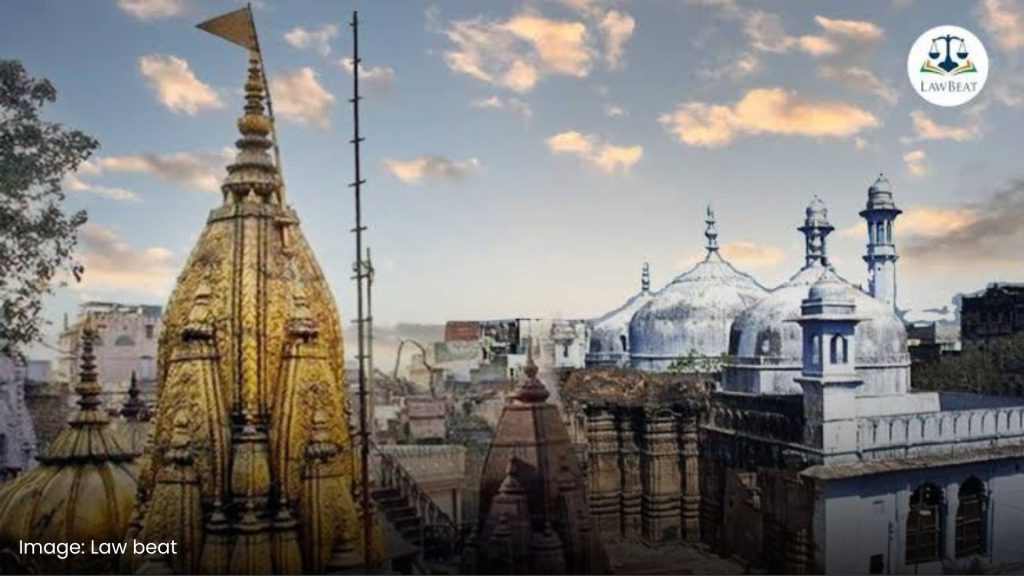
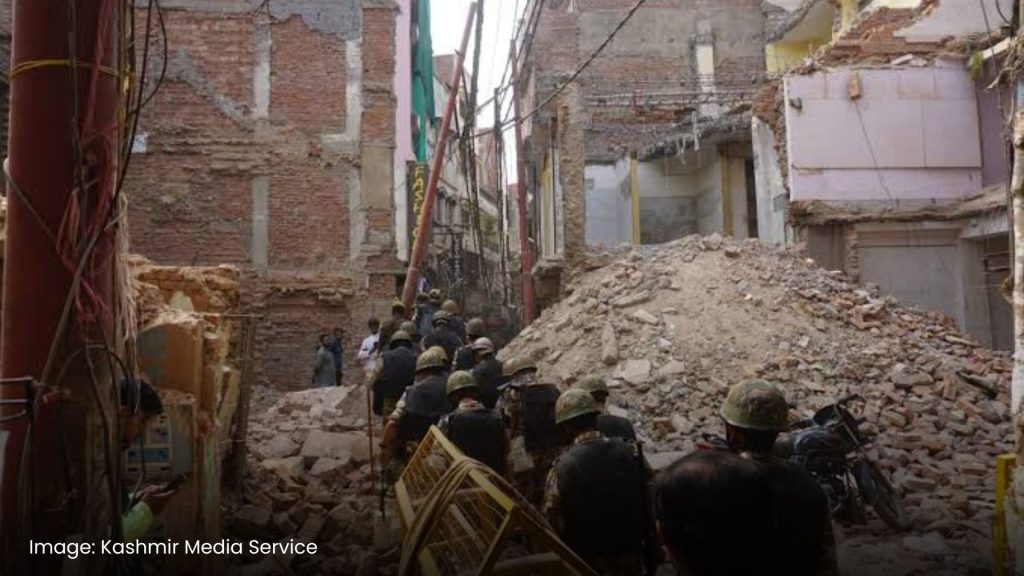
On 1 July 2026, authorities demolished five historic mosques in Dalmandi. They included Mirza Karimullah Beg Mosque, reported by local caretakers to be around 226 years old, alongside Nisaran Mosque, Rangeele Shah Mosque, Ali Raza Khan Mosque and Sangmarmar Mosque. A sixth, Langde Hafiz Mosque, remained caught in a separate dispute over waqf authority and acquisition.
A Road Through Varanasi’s Muslim Commercial Quarter
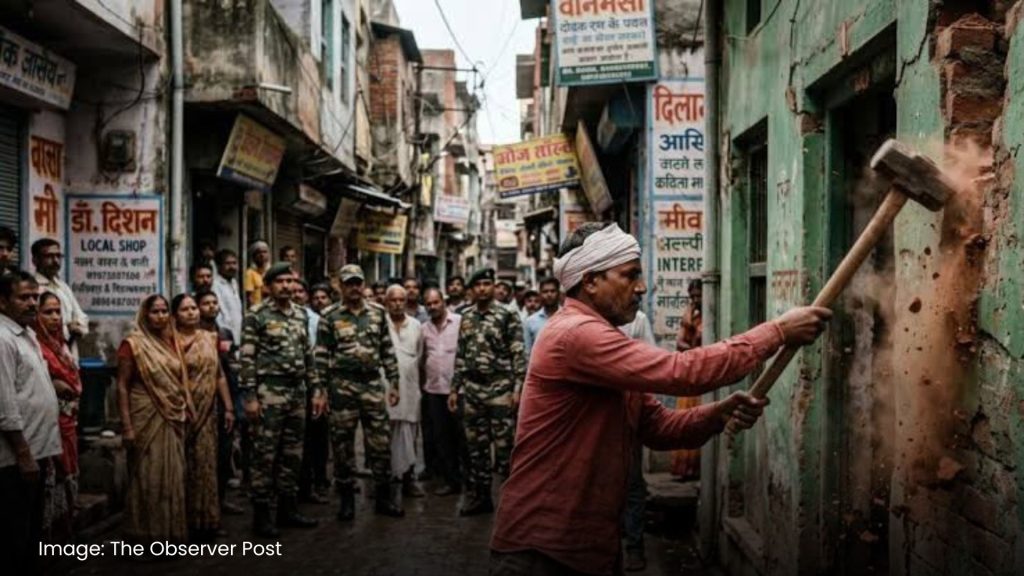
The operation forms part of a ₹224 crore road-widening project affecting 187 structures. It will transform a narrow, 650-metre stretch of Dalmandi into a 17.4-metre road, improving access to Gate 4 of Kashi Vishwanath Dham and relieving congestion on surrounding routes.
The project does not affect only mosques. Homes, shops and properties with Hindu and Muslim ownership were also acquired. But Dalmandi is a historic Muslim commercial district built on generations of small trade, and the removal of centuries-old religious structures represents a cultural and economic loss that cannot be measured only by whether acquisition rules were applied uniformly. Traders who built their livelihoods in Dalmandi’s narrow lanes now face relocation, lost customers and years of rebuilding, on top of what the mosque committees have already lost.
Authorities had paid more than ₹32 crore to 176 shareholders by March 2026 as demolition continued under police, provincial armed forces, central paramilitary personnel and drone surveillance. The state describes this as lawful urban development. Traders and Muslim leaders describe it as the physical dismantling of a community whose businesses, religious institutions and social networks developed across generations.
The Demolitions Happened Behind Security Lines
The mosque operation was conducted under extraordinary security. Roads were barricaded, sheets concealed demolition areas and public access was restricted. Reports said journalists were prevented from freely documenting the work from inside the controlled zone. Officials presented the deployment as necessary to prevent unrest. Critics argued that it reduced public scrutiny while sacred structures were dismantled.
Five mosque committees reportedly accepted removal of the affected sections following compensation or relocation negotiations. Babu Jaan, muezzin of the Karimullah Beg Mosque, said the community would cooperate only if legal procedures were followed, warning that any unconstitutional action would be strongly opposed, and asked that if the mosque had to go, it be “established respectfully at another place.” But that consent came after the route had been approved, acquisition had advanced and the state retained compulsory powers. Communities were choosing between negotiated compliance and government action, hardly the boundless freedom usually implied by the word “consent.”
The Court Protected Acquisition, Not Heritage
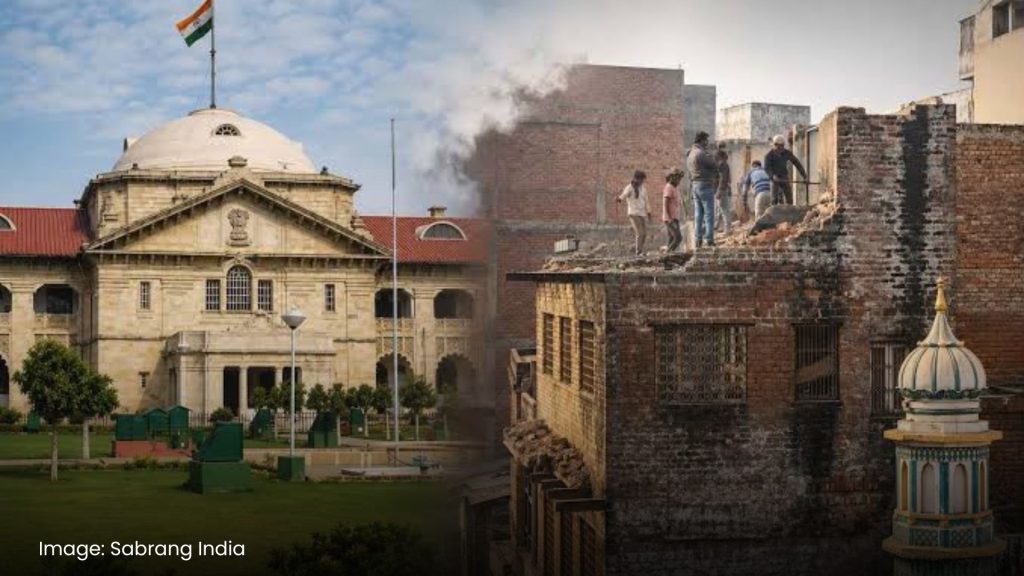
On 2 July, the Allahabad High Court dismissed a challenge to the project. It ruled that the Places of Worship Act prohibits changing a site from one religious character to another, but does not stop the state from acquiring religious property for a secular public purpose.
That distinction is legally important. Dalmandi was not a straightforward violation of the Supreme Court’s safeguards against punitive demolition. The state followed an acquisition process, offered compensation or replacement land and presented the work as infrastructure development.
But procedure does not settle the moral question.
When Demolition Becomes Respectable
Dalmandi demonstrates how minority heritage can disappear without an openly illegal act. It can happen through administrative files, property valuations, negotiated settlements and judicial approval. Once the paperwork is complete, demolition becomes redevelopment. Resistance becomes obstruction. The destroyed mosque becomes compensated property.
The road will become wider. Access to Kashi Vishwanath Dham will become easier. But Dalmandi’s Muslim quarter will emerge smaller, with historic mosques demolished and generations of community life displaced.
India did not have to ignore the law to remove these mosques. It only had to ensure the law recognised the road more clearly than the community standing in its path.
SOURCES
Allahabad High Court judgment: Syed Rashid Ali and Others v State of Uttar Pradesh
Times of India: Partial demolition of five mosques amid tight security (unlinked — no verified URL found)
Times of India: Dalmandi widening resumes under heavy security (unlinked — no verified URL found)
Times of India: Muslim leaders seek an alternative route (unlinked — no verified URL found)
Maktoob Media: Bulldozers clear path to Kashi Temple, leaving Dalmandi in ruins
United News of India: Demolition begins in Dalmandi (unlinked — no verified URL found)
Reuters: Supreme Court condemns arbitrary “bulldozer justice” (unlinked — no verified Reuters URL found)
Supreme Court Observer: Bulldozer demolitions — pan-India guidelines
ANI: Security beefed up in Varanasi’s Dalmandi as demolition enters day two
IndiaTomorrow: Five mosques demolished; sixth mosque case pending in court
Clarion India: Demolition notices to six mosques deepen anxiety
NewsDrum: Varanasi on alert ahead of demolition of 226-year-old mosque