
Britain Bans Settlement Goods. Isr*el Retaliates Immediately.

The US Hits Iran. Houthis Hit Saudi Arabia. Oil Hits $100.

By Shizza Umer

Houthi strikes bring Saudi Arabia back into the conflict

A major Houthi missile and drone offensive has brought Saudi Arabia directly back into an increasingly interconnected regional crisis.

At least 73 people, including women and children, were wounded after attacks struck Abha, Khamis Mushait, Jazan and Najran in southern Saudi Arabia. Civilian and economic sites were hit, while fires disrupted operations at some energy facilities, according to Reuters.

The targets included energy infrastructure around Jazan, home to Saudi Aramco’s approximately 400,000-barrel-per-day refinery.

Ansar Allah, the Houthi movement that controls much of northern Yemen, says the operation followed more than 120 Saudi strikes on Yemen over three days. The movement has also pointed to a strike on a prison in Jawf that reportedly killed seven people, including a child, as part of its justification for retaliation. None of the seven have been publicly identified by name so far.

Yemen’s fragile truce is collapsing

The escalation follows the breakdown of a truce that had dramatically reduced Saudi-Houthi fighting for years.

Saudi-backed Yemeni forces have advanced on several fronts, including Hodeida, Taiz and Al Bayda, while renewed strikes and counterstrikes have pulled Saudi Arabia and the Houthis back toward direct confrontation.

But the anti-Houthi camp itself has changed.

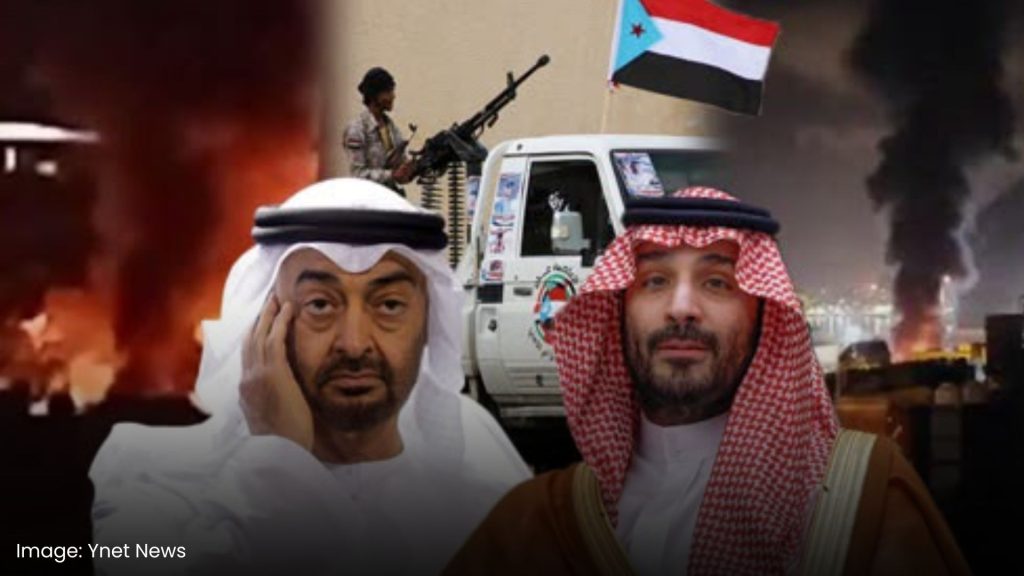
In late 2025, Saudi Arabia accused UAE-backed southern separatists of receiving weapons through Mukalla and struck the port. The rupture was followed by the United Arab Emirates withdrawing its remaining forces from Yemen, weakening the coalition structure Riyadh had relied upon since the intervention began in 2015.
The US-Iran confrontation is escalating simultaneously

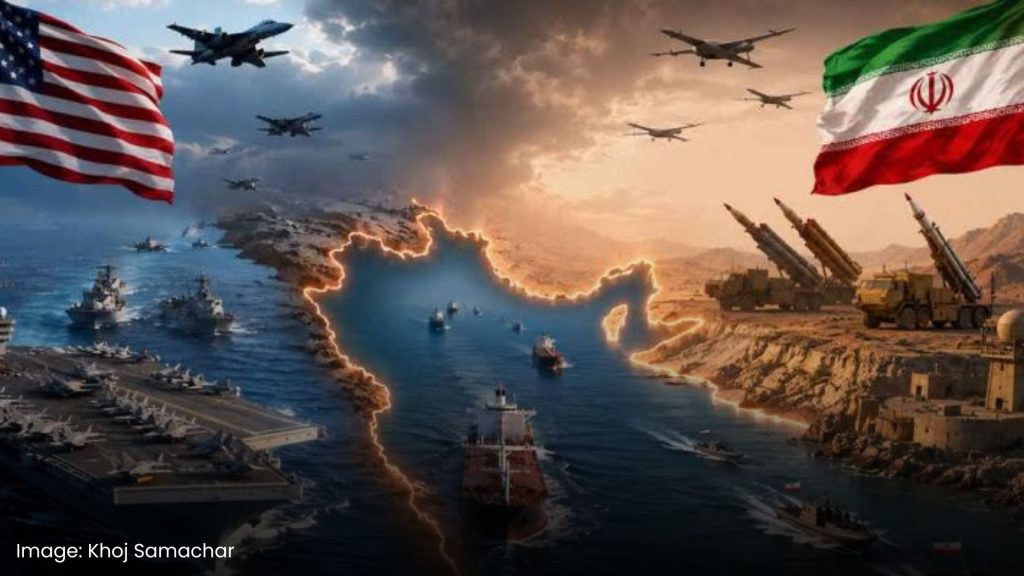
While Saudi Arabia faces renewed attacks from Yemen, Washington and Tehran are engaged in their own direct escalation.

US Central Command said it destroyed five Iranian oil tankers after Iran’s Revolutionary Guard twice attempted to strike a US Navy warship with ballistic missiles. Iran retaliated by firing 20 ballistic missiles toward a US base near Al Azraq, Jordan. Jordan’s military said its air defences intercepted 18 of them, with the remaining two falling in unpopulated areas and no casualties reported.

Footage circulating online has also been described as showing Isr*eli soldiers filming missiles hitting US facilities in Jordan.

The result is that events in Yemen, Saudi Arabia, Iran and the Gulf are increasingly affecting the same security and energy system.

Did Washington offer Ansar Allah control over Yemen?

Another striking claim has emerged amid the escalation.

Political analyst Aziz Qassem, speaking in remarks carried by Al Mayadeen, a Lebanon-based outlet aligned with Iran and Hezbollah’s regional bloc, claimed Washington offered Ansar Allah sweeping concessions including dominance over Yemen, reconstruction, salary payments and reopened airports in exchange for abandoning its support for Pal*stine.

According to the claim, the proposal was rejected. No independent outlet has corroborated it as of publication.

If accurate, it would suggest an attempt to separate Yemen from the wider regional confrontation through political and economic concessions.

Hormuz disruption makes Saudi Arabia’s Red Sea route critical

The energy implications may ultimately be the most globally consequential part of the crisis.

The Strait of Hormuz, historically one of the world’s most important energy chokepoints, has been severely disrupted by the US-Iran confrontation.

Saudi Arabia can bypass Hormuz by moving crude west through its East-West pipeline to Yanbu on the Red Sea.

But that solution creates another vulnerability.

US Energy Information Administration data shows crude oil and petroleum-liquid flows through Hormuz falling from approximately 21.6 million barrels per day in late 2025 to 4.9 million in Q2 2026, a decline of roughly 77%.

Meanwhile, flows through Bab el-Mandeb increased from approximately 5.4 million to 8.1 million barrels per day, a 50% rise, as Saudi Arabia rerouted crude away from Hormuz through its East-West pipeline to Yanbu.

The route gaining importance as Hormuz struggles is therefore becoming more exposed just as Houthi attacks against Saudi energy infrastructure and threats around Red Sea shipping intensify.

Oil crosses $100 as the risk spreads globally

Brent crude has now moved above $100 per barrel amid the widening regional confrontation. Euronews reported the benchmark crossing that threshold for the first time since July.

The potential downside is considerably larger.

Wood Mackenzie, a global energy research and consultancy firm, has modeled Brent approaching $200 per barrel under a severe scenario involving prolonged disruption around Hormuz through year-end.

The central risk is therefore no longer confined to one battlefield. Iran and the US are trading strikes, Houthis are hitting Saudi Arabia, Hormuz is severely disrupted, and the Red Sea corridor is becoming more strategically important.

If pressure intensifies around both routes simultaneously, the consequences could travel far beyond the Middle East through oil prices, shipping costs and inflation worldwide.

Sources

Reuters

Associated Press

Al Jazeera

US Energy Information Administration

Wood Mackenzie

The US Hits Iran. Houthis Hit Saudi Arabia. Oil Hits $100.

By Shizza Umer

Houthi strikes bring Saudi Arabia back into the conflict

A major Houthi missile and drone offensive has brought Saudi Arabia directly back into an increasingly interconnected regional crisis.

At least 73 people, including women and children, were wounded after attacks struck Abha, Khamis Mushait, Jazan and Najran in southern Saudi Arabia. Civilian and economic sites were hit, while fires disrupted operations at some energy facilities, according to Reuters.

The targets included energy infrastructure around Jazan, home to Saudi Aramco’s approximately 400,000-barrel-per-day refinery.

Ansar Allah, the Houthi movement that controls much of northern Yemen, says the operation followed more than 120 Saudi strikes on Yemen over three days. The movement has also pointed to a strike on a prison in Jawf that reportedly killed seven people, including a child, as part of its justification for retaliation. None of the seven have been publicly identified by name so far.

Yemen’s fragile truce is collapsing

The escalation follows the breakdown of a truce that had dramatically reduced Saudi-Houthi fighting for years.

Saudi-backed Yemeni forces have advanced on several fronts, including Hodeida, Taiz and Al Bayda, while renewed strikes and counterstrikes have pulled Saudi Arabia and the Houthis back toward direct confrontation.

But the anti-Houthi camp itself has changed.

In late 2025, Saudi Arabia accused UAE-backed southern separatists of receiving weapons through Mukalla and struck the port. The rupture was followed by the United Arab Emirates withdrawing its remaining forces from Yemen, weakening the coalition structure Riyadh had relied upon since the intervention began in 2015.

The US-Iran confrontation is escalating simultaneously

While Saudi Arabia faces renewed attacks from Yemen, Washington and Tehran are engaged in their own direct escalation.

US Central Command said it destroyed five Iranian oil tankers after Iran’s Revolutionary Guard twice attempted to strike a US Navy warship with ballistic missiles. Iran retaliated by firing 20 ballistic missiles toward a US base near Al Azraq, Jordan. Jordan’s military said its air defences intercepted 18 of them, with the remaining two falling in unpopulated areas and no casualties reported.

Footage circulating online has also been described as showing Isr*eli soldiers filming missiles hitting US facilities in Jordan.

The result is that events in Yemen, Saudi Arabia, Iran and the Gulf are increasingly affecting the same security and energy system.

Did Washington offer Ansar Allah control over Yemen?

Another striking claim has emerged amid the escalation.

Political analyst Aziz Qassem, speaking in remarks carried by Al Mayadeen, a Lebanon-based outlet aligned with Iran and Hezbollah’s regional bloc, claimed Washington offered Ansar Allah sweeping concessions including dominance over Yemen, reconstruction, salary payments and reopened airports in exchange for abandoning its support for Pal*stine.

According to the claim, the proposal was rejected. No independent outlet has corroborated it as of publication.

If accurate, it would suggest an attempt to separate Yemen from the wider regional confrontation through political and economic concessions.

Hormuz disruption makes Saudi Arabia’s Red Sea route critical

The energy implications may ultimately be the most globally consequential part of the crisis.

The Strait of Hormuz, historically one of the world’s most important energy chokepoints, has been severely disrupted by the US-Iran confrontation.

Saudi Arabia can bypass Hormuz by moving crude west through its East-West pipeline to Yanbu on the Red Sea.

But that solution creates another vulnerability.

US Energy Information Administration data shows crude oil and petroleum-liquid flows through Hormuz falling from approximately 21.6 million barrels per day in late 2025 to 4.9 million in Q2 2026, a decline of roughly 77%.

Meanwhile, flows through Bab el-Mandeb increased from approximately 5.4 million to 8.1 million barrels per day, a 50% rise, as Saudi Arabia rerouted crude away from Hormuz through its East-West pipeline to Yanbu.

The route gaining importance as Hormuz struggles is therefore becoming more exposed just as Houthi attacks against Saudi energy infrastructure and threats around Red Sea shipping intensify.

Oil crosses $100 as the risk spreads globally

Brent crude has now moved above $100 per barrel amid the widening regional confrontation. Euronews reported the benchmark crossing that threshold for the first time since July.

The potential downside is considerably larger.

Wood Mackenzie, a global energy research and consultancy firm, has modeled Brent approaching $200 per barrel under a severe scenario involving prolonged disruption around Hormuz through year-end.

The central risk is therefore no longer confined to one battlefield. Iran and the US are trading strikes, Houthis are hitting Saudi Arabia, Hormuz is severely disrupted, and the Red Sea corridor is becoming more strategically important.

If pressure intensifies around both routes simultaneously, the consequences could travel far beyond the Middle East through oil prices, shipping costs and inflation worldwide.

Sources

Reuters

Associated Press

Al Jazeera

US Energy Information Administration

Wood Mackenzie

spot_img

Explore more

spot_img
Business

Your receding hairline may be Wall Street’s next goldmine.

Jews then. Muslims now? Germany’s far right is rising again.

Lindsay Clancy’s Trial Ends in Mistrial. Then Two More Mothers Face...

THE UN JUST ADMITTED THE 1.5°C PROMISE IS BROKEN

Mark Ruffalo’s Hollywood Showdown

WHO CONTROLS THE INDUS? THE HAGUE AND INDIA ARE NOW IN...

Two News Crews. Four Days. Both Att∗acked By Isr∗eli Settlers.

THE RSS TAKES MADISON SQUARE GARDEN
