
How Foreign Powers Are Fueling Both Sides of Myanmar’s War
Maryam Tariq
Myanmar’s military junta has sharply escalated its campaign against civilians in 2026, according to a new report from conflict monitor ACLED, deploying specialized fighter squads to carry out sustained bombing campaigns against schools, hospitals, churches and religious festivals. But this violence isn’t happening in a vacuum. Behind the junta’s ability to keep fighting a war it is steadily losing on the ground sits a web of foreign countries, several backing the junta and at least one backing its opponents, each for reasons that have little to do with Myanmar’s own people.
What’s Actually Happening on the Ground
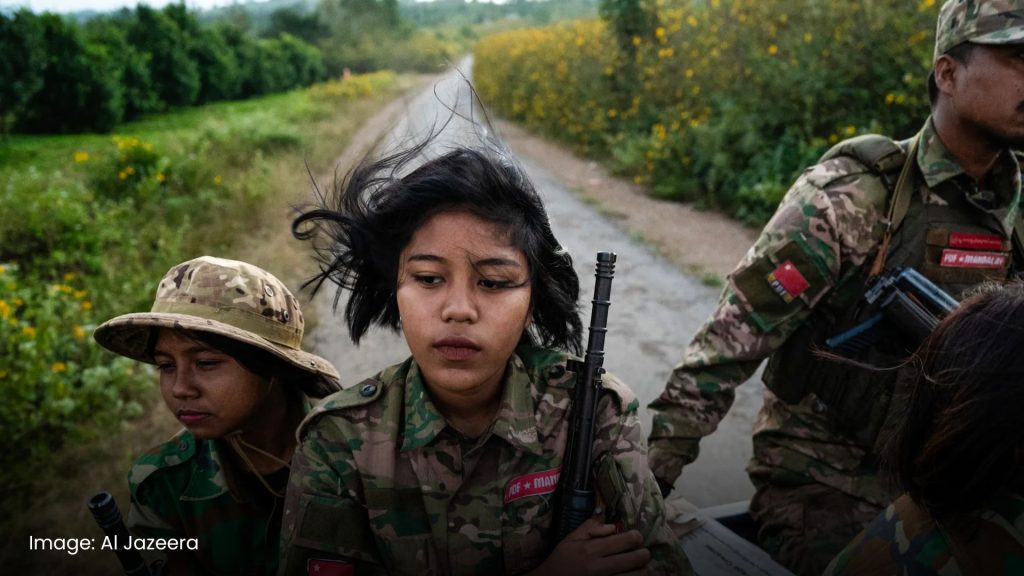
Five years after the 2021 coup, Myanmar remains locked in a multi front civil war between the junta and a coalition of pro-democracy fighters and ethnic armed groups. The junta currently controls as little as 21 percent of the country’s territory, while rebel and ethnic forces hold roughly 42 percent, dominating much of the countryside. Unable to match resistance forces in ground warfare, the military has pivoted to state sponsored air terror. ACLED documented more than a dozen distinct mass killing events in the first half of the year alone, resulting in over 450 confirmed civilian deaths, with roughly 40 percent concentrated in Myanmar’s central Anyar region, a critical trade crossroads containing key infrastructure for the China Myanmar Economic Corridor. In one especially brutal incident, around 700 junta troops swept through Myit Chay township, looting property, beating residents and executing at least 40 people. More than 125,000 homes have been destroyed by arson since the coup began.
Why China Keeps the Junta Afloat
China’s role is central and deeply strategic. Beijing supplies the junta with advanced fighter jets, drones and heavy artillery, while using its UN Security Council veto to shield the regime from international sanctions. China’s motivation is largely economic, protecting its roughly 1 billion dollar China Myanmar Economic Corridor, a project that gives Beijing direct access to the Indian Ocean. Notably, China plays both sides, while backing the junta in the capital, it also quietly permits Chinese made weapons to reach certain ethnic militias along its northern border, like the United Wa State Army, keeping leverage over the region regardless of who eventually wins.
Russia’s Role as Weapons Supplier
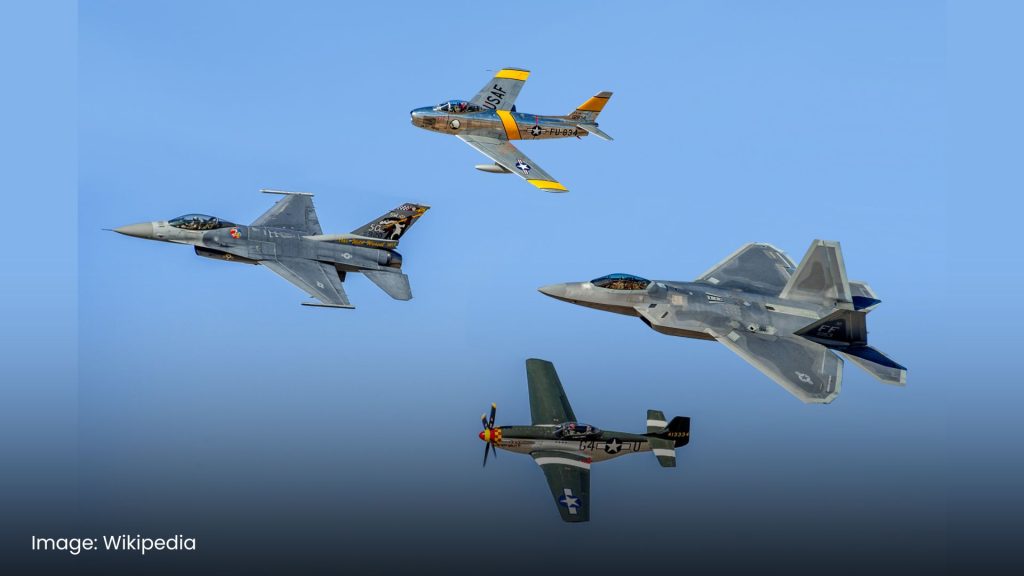
Russia has become the junta’s most dependable military partner since the coup, supplying the Sukhoi Su-30 and MiG-29 fighter jets currently being used in the deadly civilian bombing campaigns ACLED documented. In return, the junta purchases Russian oil, giving Moscow a paying customer and a strategic foothold in Southeast Asia.
India’s Border Anxiety
India’s involvement is driven less by opportunity and more by fear. Concerned about growing Chinese influence along its border with Myanmar, India has maintained steady diplomatic ties with the junta and continued supplying military grade hardware, radar equipment and telecom technology.
The Quiet Financial Pipelines
Beyond direct weapons suppliers, other countries keep the junta financially afloat without ever sending arms. Thailand’s state owned energy companies continue purchasing billions of dollars in natural gas from Myanmar, providing hard foreign currency the junta uses to buy jet fuel. Singapore, despite tightening some restrictions, has been repeatedly flagged by international investigators for banks and shell companies operating as transit points through which the junta purchases weapons parts and aviation fuel.
The United States Funds the Other Side
The junta isn’t the only side receiving foreign backing. The United States supports the pro-democracy resistance through the BURMA Act, which authorizes non-lethal assistance, technical training and financial funding to Myanmar’s National Unity Government and allied ethnic groups, while imposing strict sanctions specifically targeting the junta’s aviation fuel supply chains. This means the conflict isn’t simply a case of authoritarian backers versus an unsupported resistance, it is a proxy dynamic where multiple outside powers are funding opposite sides of the same war, each pursuing its own regional interest.
The Diplomatic Cover Completing the Picture
While the bombing campaign intensifies, junta leader Min Aung Hlaing has pursued a parallel diplomatic strategy, stepping down as military chief to assume the title of civilian president, while touring China and India and securing an upcoming state visit to Thailand, seeking the kind of international legitimacy that makes continued foreign support easier to justify publicly.
Why This Pattern Matters
Taken together, these relationships describe a war that keeps running not simply because of internal Myanmar politics, but because multiple external powers, on both sides, each derive enough strategic or financial value from an ongoing conflict that ending it decisively would require several countries to give up benefits they currently have little incentive to walk away from.
Sources:
· State repression increases under the Myanmar military’s new command — ACLED: https://acleddata.com
· Civil War in Myanmar — Council on Foreign Relations Global Conflict Tracker: https://www.cfr.org/global-conflict-tracker/conflict/myanmar
· What to Know About Myanmar’s Chaotic War — The New York Times: https://www.nytimes.com



