

A Decades-Old Soviet Playbook Is Running Across Europe, and Barely Anyone’s Watching
Maryam Tariq
While international attention has stayed fixed on Gaza, Ukraine’s shifting frontlines, and the war with Iran, a quieter and increasingly urgent campaign has been unfolding across Europe throughout the summer. According to intelligence historians, this isn’t a new or improvised strategy. It’s the deliberate execution of a Soviet sabotage doctrine, recently reconstructed from newly available Cold War archives, now being run again at a pace and scale the doctrine’s original architects never achieved, mostly without the global attention that scale would seem to demand.
Where This Doctrine Actually Came From
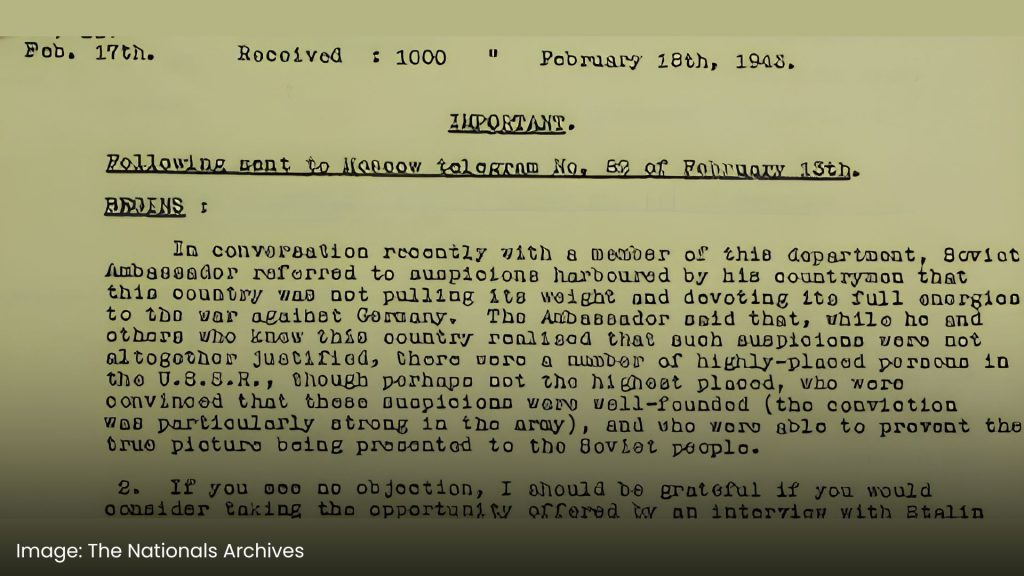
Daniela Richterova, an associate professor in Intelligence Studies at King’s College London’s Department of War Studies, used recent discoveries in the Czech Security Service Archive to reconstruct the sabotage doctrine that guided the Soviet Bloc’s approach for much of the 20th century. Her research, published through War on the Rocks, drew direct parallels between that historical doctrine and the wave of suspected sabotage attacks seen across Europe and the United States since Russia’s full scale invasion of Ukraine began. The comparison isn’t loose. The specific categories of targets favored under the old doctrine, transport infrastructure, industrial and logistics sites, government and political facilities, closely match what’s being hit today, drone factories, ammunition plants, defense manufacturers, cargo hubs.
What the Original Doctrine Was Actually Built For
The Cold War version of this strategy was never designed for immediate, dramatic effect. Instead, it called for maintaining a steady undercurrent of small, deniable attacks during ordinary peacetime, operations quiet and limited enough to avoid triggering a major response, but capable of rapidly scaling up the moment open war actually began. It functioned as groundwork, positioning capabilities years or decades before they might ever be needed at full scale.


What Makes the Current Wave Genuinely Different
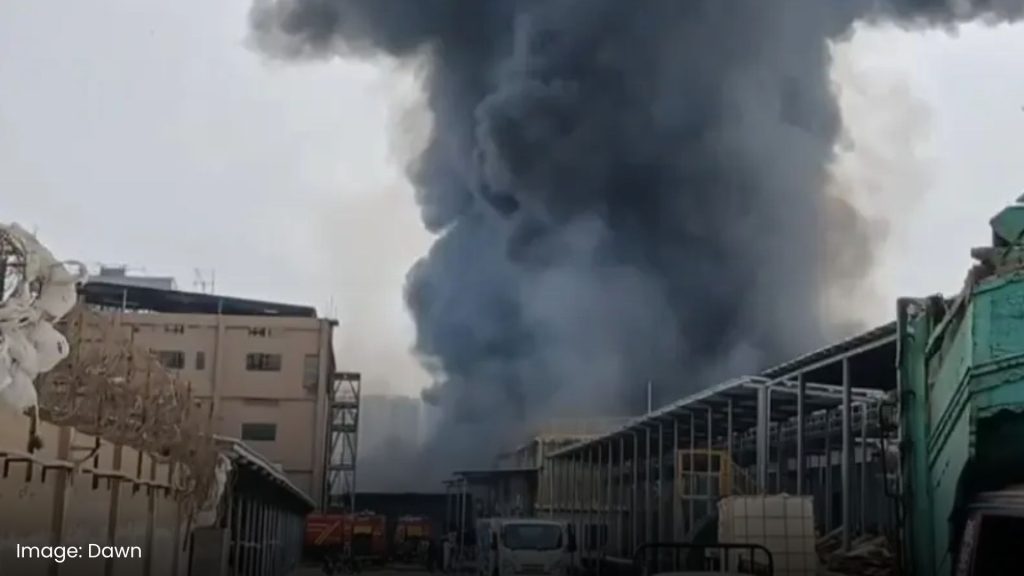
While the targets have stayed remarkably consistent with that old doctrine, the pace has not. Richterova and her co-authors, writing in The RUSI Journal, describe the West as currently experiencing the most intense era of sabotage since the Second World War. This summer alone brought a documented sequence across multiple countries within weeks, drones at Leipzig airport, a Bulgarian factory fire, an Italian ammunition plant explosion, an Estonian drone factory burned down, an arson plot stopped in Slovakia, and further fires in Poland, a concentration of incidents researchers say significantly outpaces anything recorded during the actual Cold War.
The Modern Twist That Makes It Cheaper to Run
What’s allowed this old doctrine to scale so dramatically is a distinctly modern operational shift. Richterova’s research describes Russian sabotage increasingly organized around gig economy principles, officers make contact with intermediaries through encrypted apps like Telegram, who then recruit local people, often with no ideological motivation, paid in cryptocurrency for as little as a few hundred dollars a job. Many reportedly have no idea they’re ultimately working for Russian intelligence at all, a structure that dramatically lowers the cost and risk of running the doctrine at scale.
Why This Keeps Slipping Past the News
Individually, each fire or drone discovery tends to generate a single local news cycle before fading from coverage entirely, rarely connected back to the broader historical pattern. That’s not accidental, researchers argue, attacks built around ambiguity and low individual severity are easy for a distracted global audience to overlook, especially with major, higher-visibility crises already dominating attention elsewhere. German federal police reportedly logged more than 165 suspected sabotage cases nationwide this year alone, a scale that has still barely registered in most international coverage.


Why the Silence Is Part of the Risk
The significance of tracing this pattern back to an actual historical doctrine, rather than treating each incident as isolated noise, is that it reframes the current wave as deliberate strategic positioning rather than scattered vandalism. Richterova has described the current moment as sitting in a grey zone between peacetime and open conflict, the exact space the original Soviet doctrine was designed to exploit, but warns that the volume and intensity of recent attacks is actively shrinking that zone, whether or not the rest of the world is paying attention while it happens.
Sources:
· The Long Shadow of Soviet Sabotage Doctrine — War on the Rocks: https://warontherocks.com/2024/08/the-long-shadow-of-soviet-sabotage-doctrine/
· Russian Sabotage in the Gig-Economy Era — The RUSI Journal via King’s College London: https://kclpure.kcl.ac.uk/portal/en/publications/russian-sabotage-in-the-gig-economy-era/
· How Russia is bringing the cost of global sabotage to zero — Lux Capital: https://www.luxcapital.com/content/how-russia-is-bringing-the-cost-of-global-sabotage-to-zero
· Europe targeted by spiralling campaign of sabotage and Russia is the chief suspect — BBC: https://www.bbc.com/news/articles/cabotage-europe-russia
· The Telegraph: Russia launches wave of sabotage attacks on weapons factories in Europe — Ukrainska Pravda: https://www.pravda.com.ua/eng/news/2026/08/23/8049959/