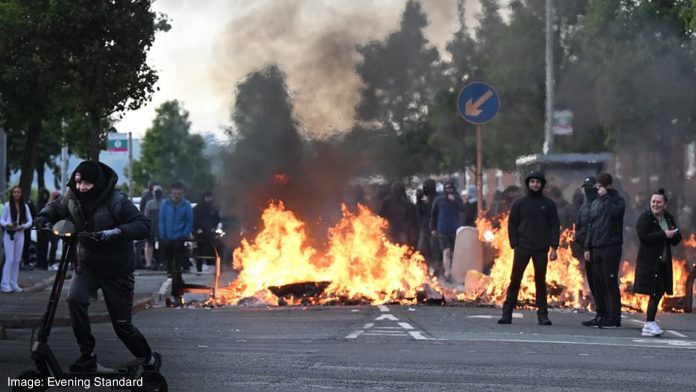
Musk Amplified The Rage. AI Made The Hitlist. Belfast Burned.

Belfast Riots: The Internet Did Not Stay Online

The internet did not stay online.

It found the street.

A stabbing in Belfast became content. A protest call became a signal. An AI-generated list became a map. Then homes burned, families fled, and a baby had to be rescued from the violence.

The original crime was real. Stephen Ogilvie, a 44-year-old disabled man, was stabbed in Belfast on June 8. A Sudanese man was charged with attempted murder. But almost immediately, the story was dragged out of the courtroom and into the algorithm. Far-right accounts turned one suspect into a reason to target immigrants as a group. ABC News reported that Tommy Robinson and Elon Musk both used the stabbing to push anti-immigration messaging online.

Elon Musk, Tommy Robinson And The Protest Signal

This is where the story became bigger than Belfast.
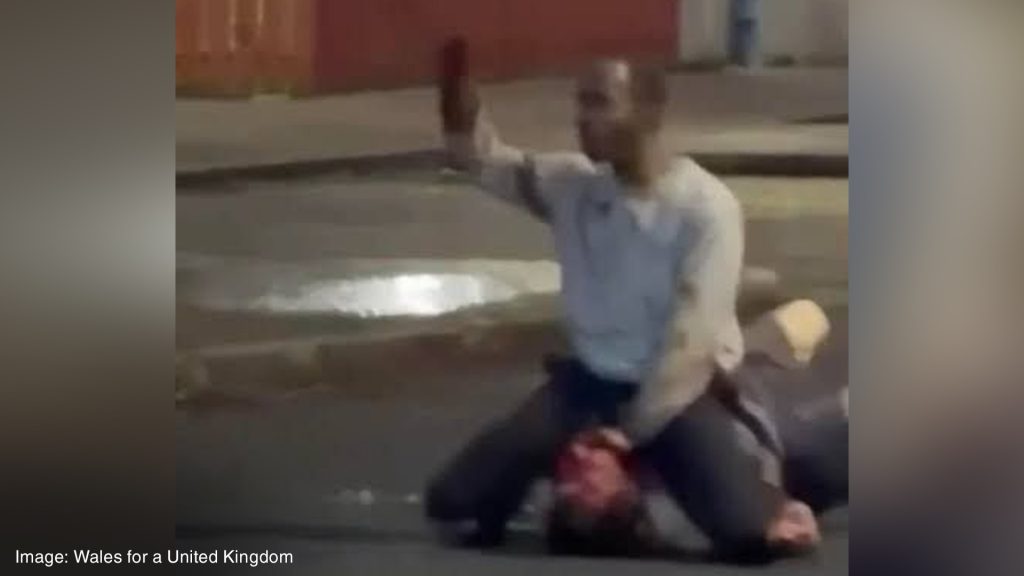
Tommy Robinson shared protest posts after the stabbing, framing the attack as part of a wider anti-immigrant narrative. Then Elon Musk amplified one of those posts to his enormous audience on X. ABC News reported that Musk wrote: “Only by protesting REPEATEDLY and LOUDLY will there be any change!!”

Musk did not throw a petrol bomb. But he did amplify the outrage. And when one of the world’s most powerful social media accounts pushes a protest call during a racially charged crisis, the rage is no longer local. It gets a global megaphone.

The Guardian reported that politicians accused figures including Musk and Robinson of inflaming unrest, while police made arrests after two nights of rioting. The issue is not whether a tweet alone caused a riot. The issue is how quickly a violent incident was turned into a mobilisation tool.

The Family Of The Man Who Was Stabbed Had A Message For The Rioters

Stephen Ogilvie had not asked for this.

His own family issued a public statement condemning the riots that were being carried out in his name. “We do not want this terrible tragedy to be used to divide people or fuel hostility,” they said. “We have many migrants who make a deeply valuable contribution to our country, including in our healthcare system and hospitality sector, and we depend on them to make our country work.”

The rioters used his name. His family rejected them.

AI Hitlist: When Hate Became A Map

Then came the most disturbing part.

An AI-generated list of locations began circulating online. Al Jazeera reported that streets and locations were shared during the unrest, while police warned that spreading such material could be a criminal offence.

That is what makes this story feel new and terrifying. The hate was not just emotional. It was logistical. It was not only “go protest.” It was “here is where to look.”

And the authorities had been warned. The Accountability Project Northern Ireland, a volunteer group monitoring far-right activity online, sent the specific address list to the PSNI in January 2026. Five months before the riots, police had the intelligence. The riots happened in June. The same addresses were targeted.

The algorithm did not stop at outrage. It helped turn fear into direction. For Belfast’s immigrants, the question became brutally simple: what if the mob knew where to go?

Immigrant Homes Burned As Belfast Rioters Went Door To Door

Then the digital fear became physical.

Masked mobs moved through Belfast streets looking for immigrants. Homes were attacked. Vehicles were burned. A bus was torched. The fire brigade attended 62 incidents across Belfast in a single night. The Washington Post reported that attackers torched neighbourhoods after the arrest of the Sudanese suspect, while The Guardian spoke to Ugandan care workers who said they were trapped for hours as smoke entered their home and flames spread nearby.

One Romani family had their home set on fire. It was the third time they had been burned out of a property.

Those families had nothing to do with the stabbing. They were not suspects. They were not involved. They were simply immigrants in the wrong place when online rage became street violence.

Reports described immigrant families fleeing, homes burning, and a two-month-old baby being rescued. This is the part that cannot be softened. A criminal case became collective punishment.

Far-Right Youth Radicalisation In Belfast

Some of the people in the streets were not grown men.

Witnesses described young boys in black clothing and masks. The Guardian quoted one Ugandan care worker describing marchers as “young boys between the age of 10 and 20.” WIRED reported that Active Clubs, a global neo-Nazi online network, and its Youth Club wing played a role “in not only stoking tensions, but advising and orchestrating the masked youths who spearheaded much of the violence.” The network activated within hours of the stabbing, with groups across the US helping promote the violence in Belfast and already using it as a template for others to follow.

That is not just a riot. That is a recruitment pipeline.

A child watches the feed. A far-right account gives him a story. A list gives him a place to go. A masked group gives him belonging. Then the street gives him permission.

What Belfast Shows About Online Hate

Belfast did not just burn because of one stabbing.

It burned because a violent crime was converted into content, amplified by powerful accounts, sharpened by AI-generated targeting, and carried into the streets by mobs looking for immigrants.

This is what far-right hate looks like when the algorithm hands it a map.

By Verity Quill | verumnetwork.com

SOURCES

ABC News | The Guardian | Al Jazeera | The Washington Post | WIRED

Belfast Riots: The Internet Did Not Stay Online

The internet did not stay online.

It found the street.

A stabbing in Belfast became content. A protest call became a signal. An AI-generated list became a map. Then homes burned, families fled, and a baby had to be rescued from the violence.

The original crime was real. Stephen Ogilvie, a 44-year-old disabled man, was stabbed in Belfast on June 8. A Sudanese man was charged with attempted murder. But almost immediately, the story was dragged out of the courtroom and into the algorithm. Far-right accounts turned one suspect into a reason to target immigrants as a group. ABC News reported that Tommy Robinson and Elon Musk both used the stabbing to push anti-immigration messaging online.

Elon Musk, Tommy Robinson And The Protest Signal

This is where the story became bigger than Belfast.
Tommy Robinson shared protest posts after the stabbing, framing the attack as part of a wider anti-immigrant narrative. Then Elon Musk amplified one of those posts to his enormous audience on X. ABC News reported that Musk wrote: “Only by protesting REPEATEDLY and LOUDLY will there be any change!!”

Musk did not throw a petrol bomb. But he did amplify the outrage. And when one of the world’s most powerful social media accounts pushes a protest call during a racially charged crisis, the rage is no longer local. It gets a global megaphone.

The Guardian reported that politicians accused figures including Musk and Robinson of inflaming unrest, while police made arrests after two nights of rioting. The issue is not whether a tweet alone caused a riot. The issue is how quickly a violent incident was turned into a mobilisation tool.

The Family Of The Man Who Was Stabbed Had A Message For The Rioters

Stephen Ogilvie had not asked for this.

His own family issued a public statement condemning the riots that were being carried out in his name. “We do not want this terrible tragedy to be used to divide people or fuel hostility,” they said. “We have many migrants who make a deeply valuable contribution to our country, including in our healthcare system and hospitality sector, and we depend on them to make our country work.”

The rioters used his name. His family rejected them.

AI Hitlist: When Hate Became A Map

Then came the most disturbing part.

An AI-generated list of locations began circulating online. Al Jazeera reported that streets and locations were shared during the unrest, while police warned that spreading such material could be a criminal offence.

That is what makes this story feel new and terrifying. The hate was not just emotional. It was logistical. It was not only “go protest.” It was “here is where to look.”

And the authorities had been warned. The Accountability Project Northern Ireland, a volunteer group monitoring far-right activity online, sent the specific address list to the PSNI in January 2026. Five months before the riots, police had the intelligence. The riots happened in June. The same addresses were targeted.

The algorithm did not stop at outrage. It helped turn fear into direction. For Belfast’s immigrants, the question became brutally simple: what if the mob knew where to go?

Immigrant Homes Burned As Belfast Rioters Went Door To Door

Then the digital fear became physical.

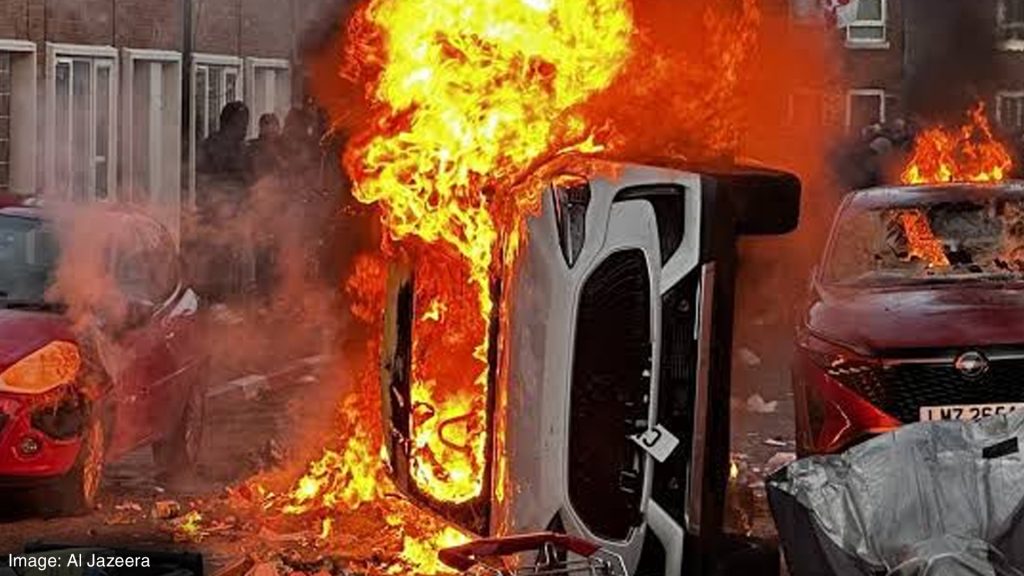
Masked mobs moved through Belfast streets looking for immigrants. Homes were attacked. Vehicles were burned. A bus was torched. The fire brigade attended 62 incidents across Belfast in a single night. The Washington Post reported that attackers torched neighbourhoods after the arrest of the Sudanese suspect, while The Guardian spoke to Ugandan care workers who said they were trapped for hours as smoke entered their home and flames spread nearby.

One Romani family had their home set on fire. It was the third time they had been burned out of a property.

Those families had nothing to do with the stabbing. They were not suspects. They were not involved. They were simply immigrants in the wrong place when online rage became street violence.

Reports described immigrant families fleeing, homes burning, and a two-month-old baby being rescued. This is the part that cannot be softened. A criminal case became collective punishment.

Far-Right Youth Radicalisation In Belfast

Some of the people in the streets were not grown men.

Witnesses described young boys in black clothing and masks. The Guardian quoted one Ugandan care worker describing marchers as “young boys between the age of 10 and 20.” WIRED reported that Active Clubs, a global neo-Nazi online network, and its Youth Club wing played a role “in not only stoking tensions, but advising and orchestrating the masked youths who spearheaded much of the violence.” The network activated within hours of the stabbing, with groups across the US helping promote the violence in Belfast and already using it as a template for others to follow.

That is not just a riot. That is a recruitment pipeline.

A child watches the feed. A far-right account gives him a story. A list gives him a place to go. A masked group gives him belonging. Then the street gives him permission.

What Belfast Shows About Online Hate

Belfast did not just burn because of one stabbing.

It burned because a violent crime was converted into content, amplified by powerful accounts, sharpened by AI-generated targeting, and carried into the streets by mobs looking for immigrants.

This is what far-right hate looks like when the algorithm hands it a map.

By Verity Quill | verumnetwork.com

SOURCES

ABC News | The Guardian | Al Jazeera | The Washington Post | WIRED
spot_img

Explore more

spot_img
Global Affairs

Hope Returned To The Middle East. So Did The Fear.

Trump Cut Off Cuba’s Oil. Now Its People Are Preparing For...

A French Company Paid Terrorists To Keep A Factory Running. Now...

They Were Burned Alive In Their Sleep. Police Say Their Classmates...

Five Days. Three Mosques Demolished. One Question India Still Won’t Answer.

From Settlement Sales To Celebrity Ads: The Business Of Selling Israeli...

Bodies Of Evidence: The Explosive Al Jazeera Film Exposing Horrors Inside...

Isr*el Is Burning Lebanon From The Sky