
Anthropic’s $1.5 billion copyright settlement has been described as a historic victory for authors and publishers. But the most consequential part of the case may not be the financial penalty.
It may be the distinction the court drew between obtaining books through piracy and purchasing physical books before cutting them apart, scanning them and discarding the originals.
That distinction could help determine how artificial intelligence companies acquire human knowledge for years to come.
The piracy behind the historic settlement
The case began after authors, including thriller novelist Andrea Bartz, accused Anthropic of downloading millions of books from pirate libraries, including Library Genesis, Books3 and Pirate Library Mirror.
Court records described a central digital library containing roughly seven million books. Hundreds of thousands of copyrighted titles from that collection were eventually covered by a class-action settlement.
In July 2026, a federal judge approved the $1.5 billion agreement. More than 482,000 books were eligible, with approximately 91 percent claimed by authors or publishers. Eligible rights holders are expected to receive roughly $3,000 for each covered work.
Plaintiffs called it the largest known copyright recovery in history. Anthropic did not admit liability through the settlement.
The agreement also requires the company to destroy the covered pirated datasets and prevent their future commercial use.
The court’s controversial distinction
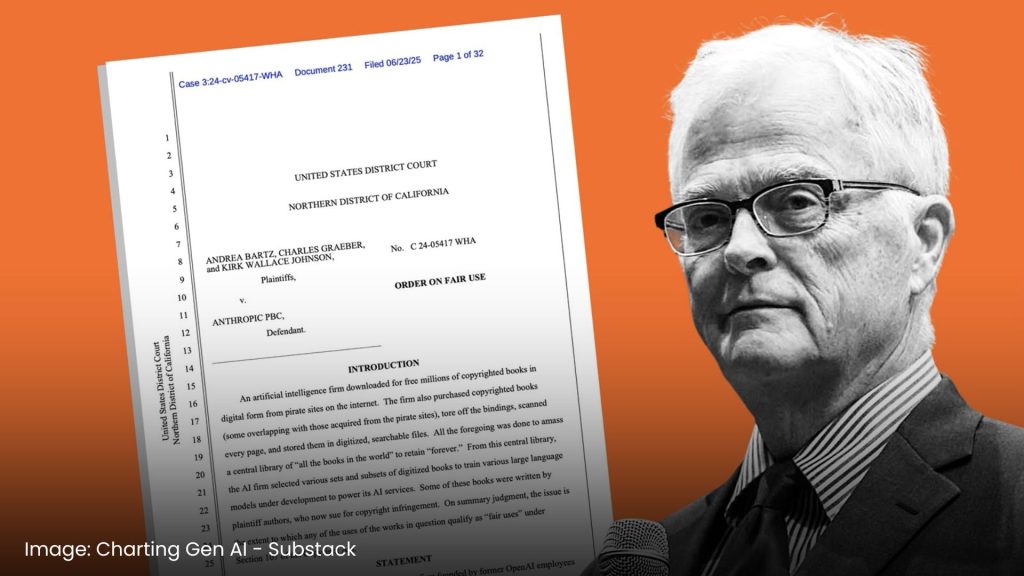
The ruling did not declare that training an artificial intelligence model on copyrighted books was automatically unlawful.
Judge William Alsup found that using books to train Anthropic’s models was transformative and qualified as fair use under the circumstances examined in the case. He also ruled that converting a lawfully purchased physical book into an internal digital copy could qualify as fair use, provided that the company did not retain both versions as separate additions to its library.
The legal problem was therefore not simply that Claude learned from books. It was that Anthropic had obtained millions of books from pirate sources and stored them in a permanent central library.
The decision was specific to the facts of the case and does not permanently settle every copyright dispute involving artificial intelligence, and other courts may interpret different circumstances differently.
Inside Project Panama
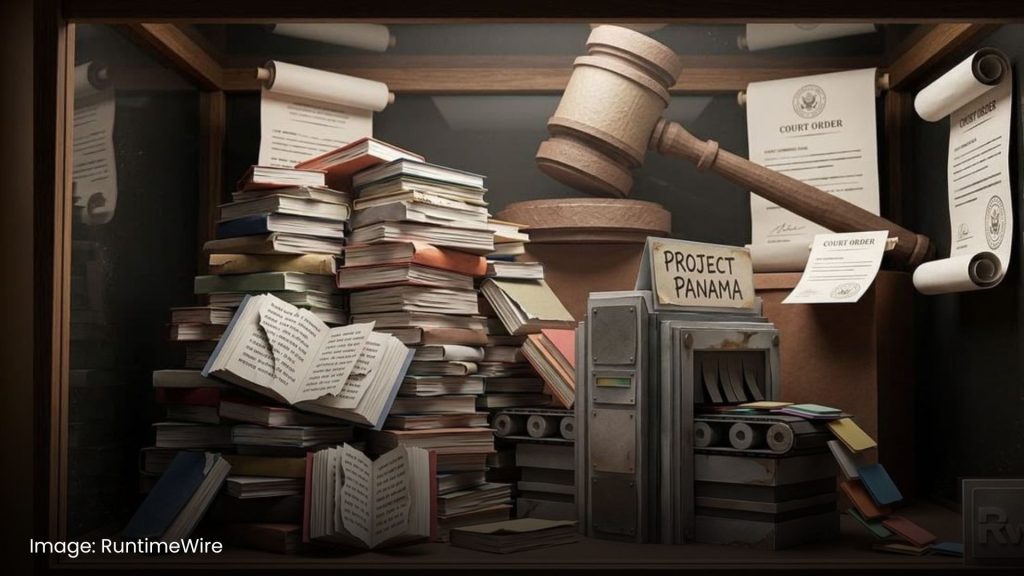
Separate court disclosures exposed a physical acquisition operation known as Project Panama. Beginning in 2024, Anthropic purchased millions of used books. Vendors removed their bindings, cut their spines and fed the separated pages through industrial scanners. The paper copies were then discarded or recycled while the digitised text was retained.
Internal documents described the initiative as an effort to “destructively scan all the books in the world.” Reporting based on the filings also indicated that executives wanted the project kept quiet.
Because the physical books had been legally purchased, the court treated the process differently from the pirate-library downloads.
The result is an extraordinary legal contrast. Downloading an unauthorised digital copy can create enormous liability. Buying the same book, dismantling it and retaining only a corporate digital version may be lawful.
The darker allegations remain unproven
Project Panama has since become entangled with broader claims about unidentified buyers purchasing enormous quantities of books, confidentiality agreements imposed on sellers and unusual demand for obscure or older material.
Some online accounts allege that scarce books are being deliberately targeted because they contain high-quality text that predates the flood of AI-generated material online. Others fear that destructive scanning could remove rare, annotated or difficult-to-replace editions from circulation.
Those claims have not been conclusively established in Anthropic’s case.
There is no complete public inventory of every title acquired or destroyed. There is also no verified evidence that Project Panama was designed to suppress knowledge, eliminate public access or deliberately target the final surviving copies of rare works.
The anonymous quotation circulating online about preventing “data poisoning” also remains unverified.
But the secrecy creates a legitimate public-interest question. Without disclosure, libraries, researchers and readers cannot determine what was destroyed, what remains available or whether some texts have become more accessible to private models than to human beings.
Preservation or private control?
Books do more than store words. They can circulate between readers, schools, libraries, archives and future generations without requiring permission from a technology company.
When a corporation buys a book, destroys the object and absorbs its contents into a proprietary system, the words may survive. Public access, however, becomes dependent on corporate ownership, software policies and commercial pricing.
Project Panama may therefore represent more than efficient digitisation.
It raises a question the court did not answer: if a handful of companies can acquire, dismantle and privately absorb vast amounts of written knowledge, are they preserving humanity’s intellectual inheritance or concentrating control over it?
The settlement punished piracy. The fair-use ruling permitted destructive scanning under specific circumstances.
Society must now decide whether legality is enough.
By Shizza Umer
Sources
- Reuters – final approval of the $1.5 billion settlement
- Associated Press – settlement approval and covered works
- U.S. District Court order on fair use, Bartz v. Anthropic
- Reuters-hosted court document on the fair-use ruling
- The Washington Post – investigation into Project Panama
- Reuters – preliminary approval of the settlement
- Reuters – settlement terms and destruction of pirated datasets
- Authors Alliance – analysis of the fair-use decision