
Smart Glasses Look Harmless. That May Be What Makes Them So Dangerous.

Smart glasses were supposed to make technology disappear into everyday life. That is increasingly the problem.

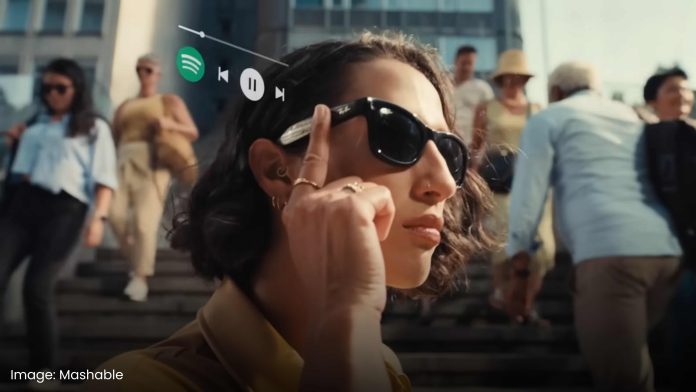
Meta’s Ray-Ban glasses can take photos and video hands-free, play audio, translate speech and provide AI assistance while looking much closer to conventional eyewear than a phone or body camera. Every pair has a capture LED that flashes during recording, and Meta says blocking or damaging the light disables the camera. But as the devices spread, businesses and public institutions are confronting a harder question: is a small light enough when the camera itself no longer looks like a camera?

The bans are no longer isolated

The backlash has moved well beyond one nervous venue. Wetherspoon says customers cannot film people without permission in its pubs, while Soho House, restaurant groups and ATG Theatres have also restricted recording with smart glasses. Courts have gone further still: every criminal, civil and family court in England and Wales will now confiscate Meta glasses at the door, a policy written after a witness was caught being coached through cross-examination using the glasses’ audio channel. New York’s court system adopted a similar ban across all 1,240 of its courthouses the month before. Even DEF CON, the world’s largest hacker conference, banned the glasses outright, with no exception for prescription lenses.

The reasons differ by setting. Pubs and restaurants worry about customers and staff being filmed. Theatres protect performers and copyrighted material. Courts have to protect witnesses, jurors and the basic fairness of a trial. Security conferences have treated wearable recording devices as an information-security problem in their own right.

The common thread is that recording can become much less obvious.

A recording light is not the same as consent

Meta’s safeguard matters. The capture LED is designed to tell people nearby that a photo or video is being taken, and the company says newer protections stop users from defeating that signal by simply covering or damaging it.

But meaningful consent requires more than technically displaying an indicator. A stranger has to notice a small light, understand what it signifies, realize they may be within the camera’s field of view, and have a realistic opportunity to object. That is a very different social interaction from watching someone raise a phone, point it toward you, and begin filming.
Then there is the question of where the footage goes

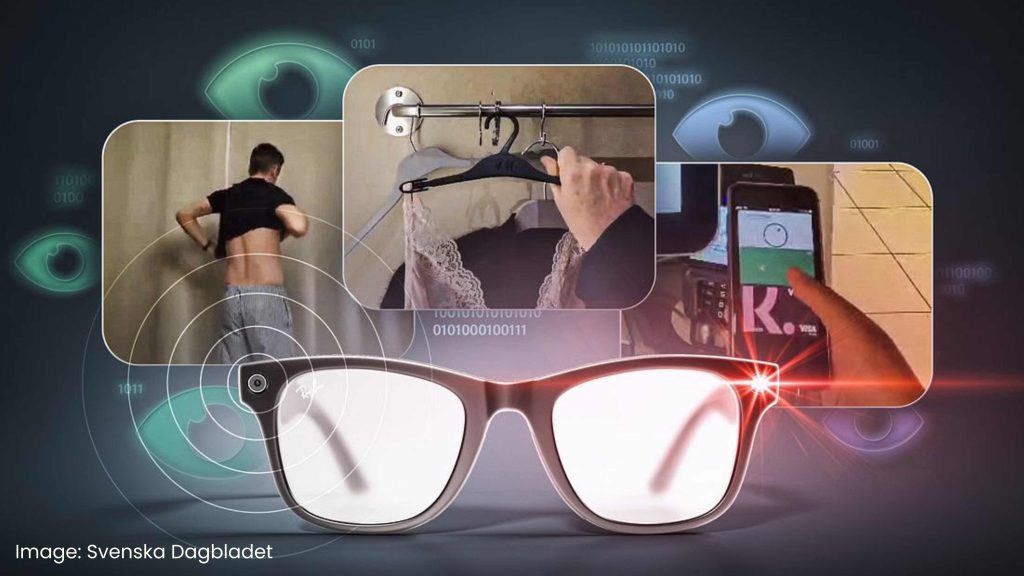
The privacy debate became more serious after workers at a Kenya-based data-annotation contractor described reviewing highly sensitive footage associated with Ray-Ban Meta devices while performing AI-training work. Reporting based on interviews with those workers included accounts of material showing people undressing, using bathrooms and having sex.

That reporting does not establish that every smart-glasses recording is sent to human reviewers. It does establish that some intimate material captured through the devices entered human data-review workflows, reviewed by people who never consented to seeing it any more than the people on camera consented to being filmed. Meta ended its contract with the Kenyan firm afterward. For the people appearing in those recordings, the unsettling issue is not merely that a wearable camera captured an intimate moment. It is that the data could travel far beyond the person wearing the glasses, and the financial and legal fallout is already landing on Meta in the form of a class-action suit and open regulatory probes.

What happens when the camera can identify you?

Meta glasses do not currently provide a built-in feature that identifies strangers by looking at them. But Harvard students AnhPhu Nguyen and Caine Ardayfio demonstrated why the underlying hardware raises a broader concern. Their I-XRAY proof of concept combined Ray-Ban Meta glasses with face-search engines, large language models and public databases, showing how a person encountered in public could potentially be linked to a name, address, phone number and other publicly available information in real time.

The researchers presented it as a warning, not a product. Their point was uncomfortable precisely because much of the technology already existed.

The technology also has real benefits

The answer is not as simple as declaring smart glasses inherently dangerous. Meta highlights hands-free calls, translation and AI assistance, and the American Foundation for the Blind’s own review found real, if imperfect, value for low-vision users in object recognition, environmental description and reading text, while noting the glasses weren’t designed for that purpose in the first place and remain, in the reviewer’s words, an accessibility tool “only by coincidence.”
That makes the policy problem harder, not easier. The question is whether society can preserve those benefits while still protecting the privacy of everyone standing on the other side of the lens.

When cameras stop looking like cameras, relying on people to notice that they are being watched may no longer be enough.

By Shizza Umer

Sources

Fortune, Yahoo News, Engadget, Tech Times, The Register, TechCrunch, TechCrunch (I-XRAY), The Next Web, American Foundation for the Blind


Smart glasses were supposed to make technology disappear into everyday life. That is increasingly the problem.

Meta’s Ray-Ban glasses can take photos and video hands-free, play audio, translate speech and provide AI assistance while looking much closer to conventional eyewear than a phone or body camera. Every pair has a capture LED that flashes during recording, and Meta says blocking or damaging the light disables the camera. But as the devices spread, businesses and public institutions are confronting a harder question: is a small light enough when the camera itself no longer looks like a camera?

The bans are no longer isolated

The backlash has moved well beyond one nervous venue. Wetherspoon says customers cannot film people without permission in its pubs, while Soho House, restaurant groups and ATG Theatres have also restricted recording with smart glasses. Courts have gone further still: every criminal, civil and family court in England and Wales will now confiscate Meta glasses at the door, a policy written after a witness was caught being coached through cross-examination using the glasses’ audio channel. New York’s court system adopted a similar ban across all 1,240 of its courthouses the month before. Even DEF CON, the world’s largest hacker conference, banned the glasses outright, with no exception for prescription lenses.

The reasons differ by setting. Pubs and restaurants worry about customers and staff being filmed. Theatres protect performers and copyrighted material. Courts have to protect witnesses, jurors and the basic fairness of a trial. Security conferences have treated wearable recording devices as an information-security problem in their own right.

The common thread is that recording can become much less obvious.

A recording light is not the same as consent

Meta’s safeguard matters. The capture LED is designed to tell people nearby that a photo or video is being taken, and the company says newer protections stop users from defeating that signal by simply covering or damaging it.

But meaningful consent requires more than technically displaying an indicator. A stranger has to notice a small light, understand what it signifies, realize they may be within the camera’s field of view, and have a realistic opportunity to object. That is a very different social interaction from watching someone raise a phone, point it toward you, and begin filming.

Then there is the question of where the footage goes

The privacy debate became more serious after workers at a Kenya-based data-annotation contractor described reviewing highly sensitive footage associated with Ray-Ban Meta devices while performing AI-training work. Reporting based on interviews with those workers included accounts of material showing people undressing, using bathrooms and having sex.

That reporting does not establish that every smart-glasses recording is sent to human reviewers. It does establish that some intimate material captured through the devices entered human data-review workflows, reviewed by people who never consented to seeing it any more than the people on camera consented to being filmed. Meta ended its contract with the Kenyan firm afterward. For the people appearing in those recordings, the unsettling issue is not merely that a wearable camera captured an intimate moment. It is that the data could travel far beyond the person wearing the glasses, and the financial and legal fallout is already landing on Meta in the form of a class-action suit and open regulatory probes.

What happens when the camera can identify you?

Meta glasses do not currently provide a built-in feature that identifies strangers by looking at them. But Harvard students AnhPhu Nguyen and Caine Ardayfio demonstrated why the underlying hardware raises a broader concern. Their I-XRAY proof of concept combined Ray-Ban Meta glasses with face-search engines, large language models and public databases, showing how a person encountered in public could potentially be linked to a name, address, phone number and other publicly available information in real time.

The researchers presented it as a warning, not a product. Their point was uncomfortable precisely because much of the technology already existed.

The technology also has real benefits

The answer is not as simple as declaring smart glasses inherently dangerous. Meta highlights hands-free calls, translation and AI assistance, and the American Foundation for the Blind’s own review found real, if imperfect, value for low-vision users in object recognition, environmental description and reading text, while noting the glasses weren’t designed for that purpose in the first place and remain, in the reviewer’s words, an accessibility tool “only by coincidence.”

That makes the policy problem harder, not easier. The question is whether society can preserve those benefits while still protecting the privacy of everyone standing on the other side of the lens.

When cameras stop looking like cameras, relying on people to notice that they are being watched may no longer be enough.

By Shizza Umer

Sources

Fortune, Yahoo News, Engadget, Tech Times, The Register, TechCrunch, TechCrunch (I-XRAY), The Next Web, American Foundation for the Blind

spot_img

Explore more

spot_img
Global Affairs

From “The Problem Is Islam” to Praising Sharia: The Right’s Reversal

India Is Blocking Speech Every 68 Seconds

The ICC Went After Netanyahu. Now Trump Is Going After the...

Iran Is Rebuilding. Isr*el Is Escalating. Diplomacy Is Failing.

“Free Pal*stine” Won Chelsea’s Vote. Then Got Deleted.

The UAE Denied Paying Off Iran Before. The Flights Kept Happening...

Your Boss May Know When You Can’t Afford To Say No

What’s Really Happening Aboard the USS Abraham Lincoln?