
The World’s Largest AI Data Center Is Being Built in Texas. Here Is What It Could Do to the Land Around It.
Isla Montclair
Project Matador promises to power the future of artificial intelligence. It is being built on top of one of America’s most critical and rapidly disappearing water supplies, and it plans to run nearly 100 gas turbines before a single cleaner alternative comes online.
What Project Matador Actually Is
Project Matador is a planned AI data center and private energy campus covering more than 7,500 acres just northeast of Amarillo in the Texas Panhandle. Developed by Fermi America, a company co-founded by former Texas Governor Rick Perry, the project is designed to be the largest data center campus on earth. Its target power output sits between 11 and 17 gigawatts, generated through a combination of natural gas, nuclear reactors and solar energy. The campus is officially named the President Donald J. Trump Advanced Energy and Intelligence Campus.
To avoid dependence on the local electricity grid, which cannot handle demand at this scale, Fermi America is building its own private power network, which the company calls the HyperGrid. The campus is planned to eventually house between 15 and 18 million square feet of AI-ready facility space. The NRC recently selected Project Matador as the first private participant in a pilot program aimed at cutting environmental review times by 50 percent.
The ambition is enormous. So is the footprint.
The Ogallala Aquifer and the Water Crisis Nobody Wants to Talk About
The Texas Panhandle sits above the Ogallala Aquifer, one of the largest underground freshwater systems in the world. It supports roughly 30 percent of all US crop and animal production. It is also already in serious long-term decline. Decades of agricultural use have drawn it down faster than rainfall can replenish it, and in drought-prone regions like the Texas Panhandle, replenishment is extremely slow.
Data centers consume water in enormous quantities for cooling. Standard evaporative cooling systems for facilities housing large-scale AI computing infrastructure can consume up to 5 million gallons of water per day. Unlike agricultural use, which naturally rises and falls with the seasons, a data center cooling system runs continuously, 365 days a year, regardless of drought conditions.
The scale of Project Matador makes this particularly alarming. Early project proposals included an option to sell up to 10 million gallons of water per day sourced from regional water rights. Environmental advocates and local farmers have raised sustained objections, and one of the sharpest came after Fermi America executives suggested the company could sidestep municipal water agreements entirely by purchasing 11 local cornfields solely to acquire the groundwater rights beneath them. The proposal drew immediate and fierce public criticism.
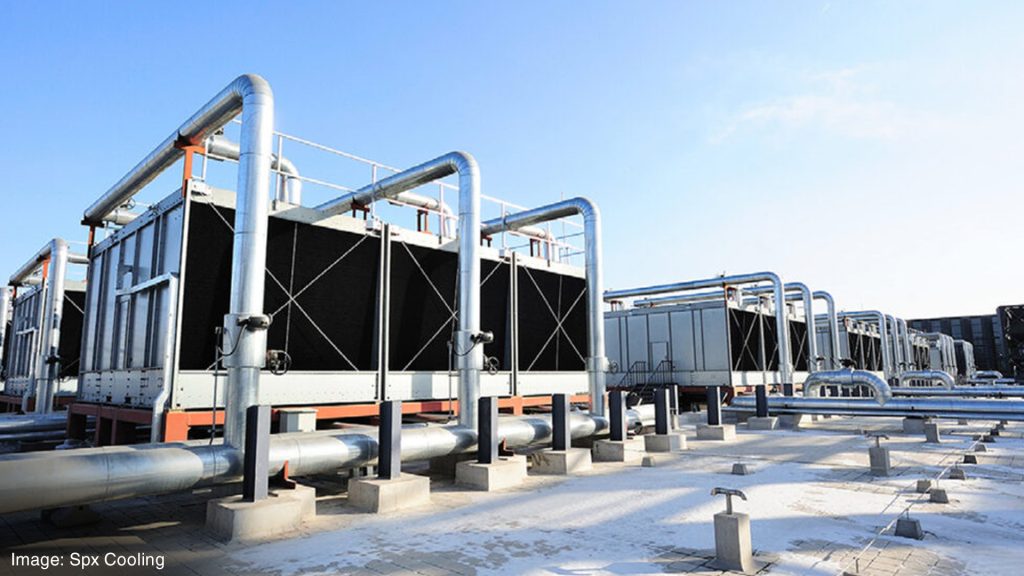
Fermi America responded by testifying before the Texas House Natural Resources Committee, where company representatives promised an advanced closed-loop cooling system using air-cooled condensers that they claim will reduce water consumption by 80 percent compared to traditional facilities. They also pledged to comply strictly with the Panhandle Groundwater Conservation District’s baseline rule of one acre-foot of water per acre of land annually.
Critics point out that even an 80 percent reduction at this scale still represents an immense daily draw on a water source that is already disappearing.
93 Gas Turbines and a Clean Air Permit That Alarmed Environmentalists
The water threat is serious. The air quality threat is significant too.
To power a campus of this magnitude before its nuclear reactors come online, Project Matador’s permit applications allow for the construction of up to 93 gas-fired turbines generating more than 5,100 megawatts of electricity. The Sierra Club and other environmental organisations have argued this would make Project Matador one of the single largest gas-powered emitting facilities in the entire United States, with a dramatic impact on regional greenhouse gas levels and local air quality.
Despite fierce opposition from environmental watchdogs, the Texas Commission on Environmental Quality approved a Clean Air Permit for 6 gigawatts of gas-based generation. State regulators confirmed the project meets current baseline emissions standards. Critics argue that meeting a baseline is not the same as being safe, and that approving a facility of this size in an already drought-stressed region using current standards sets a deeply troubling precedent for how the AI industry’s energy demands will be balanced against environmental protections.
Nuclear Power Is the Plan. But It Is Five Years Away.
Fermi America does have a longer-term plan to reduce the campus’s fossil fuel dependence. The company has applied with the US Nuclear Regulatory Commission to build and operate four Westinghouse AP1000 nuclear reactors on the campus. These reactors produce zero direct carbon emissions and require significantly less water than traditional cooling-intensive power plants.
Under the most optimistic construction timelines, the first reactor is projected to become operational by April 2031. That is at minimum five years away. In the meantime, the gas turbines will run. The water will be drawn. And the Ogallala Aquifer, which took thousands of years to fill, will continue to be depleted at a rate that no amount of future clean energy can reverse.
The Bigger Question the Project Raises
Project Matador is not unique in the pressures it creates. It is simply the largest and most visible example of a problem the AI industry is beginning to create across the United States and beyond: the infrastructure required to run artificial intelligence at scale demands extraordinary quantities of water, land and energy, and it tends to be built in places where at least one of those resources is already under strain.
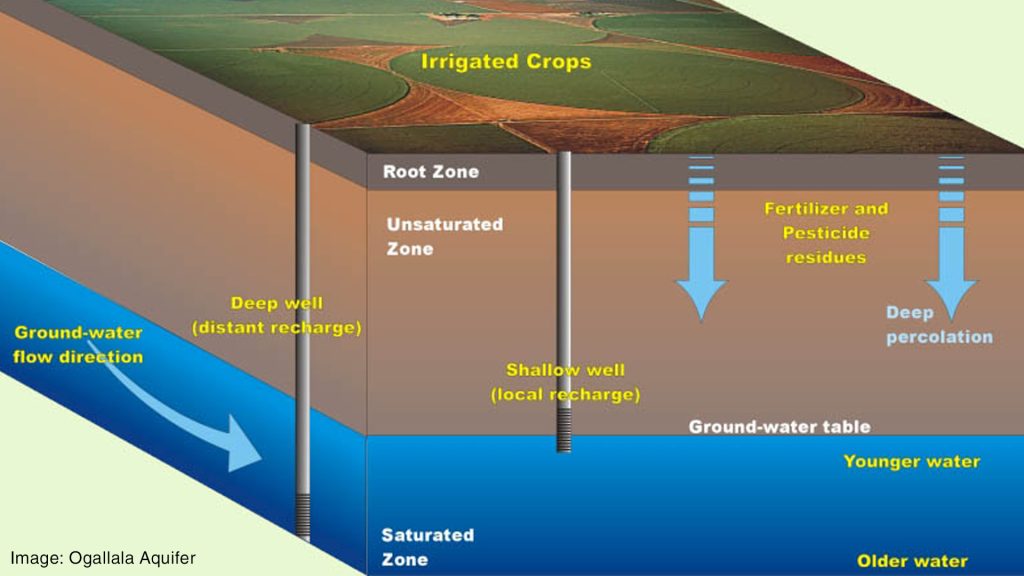
The Texas Panhandle is a region built on farming, dependent on groundwater, and increasingly vulnerable to drought. Whether it can absorb the demands of the world’s largest AI campus without permanent ecological damage is a question that permit approvals and company testimonies cannot fully answer. The Ogallala Aquifer does not refill on a human timescale. What is drawn from it now will not come back.
Sources:
· Project Matador: Massive AI Data Center in Texas Panhandle, Fermi America official site: https://www.fermiamerica.com
· Project Matador joins EIS pilot program; NRC seeks public input, American Nuclear Society: https://www.ans.org/news/article-6726/project-matador-joins-eis-pilot-program-nrc-seeks-public-input/
· Sierra Club commentary on Project Matador gas emissions, Sierra Club: https://www.sierraclub.org
· Fermi America testimony on water usage, Texas House Natural Resources Committee: https://capitol.texas.gov
· Project Matador environmental and water concerns, Kiowa County Independent: https://www.kiowacountypress.net