
A 38-Year-Old Chorister In Bunia
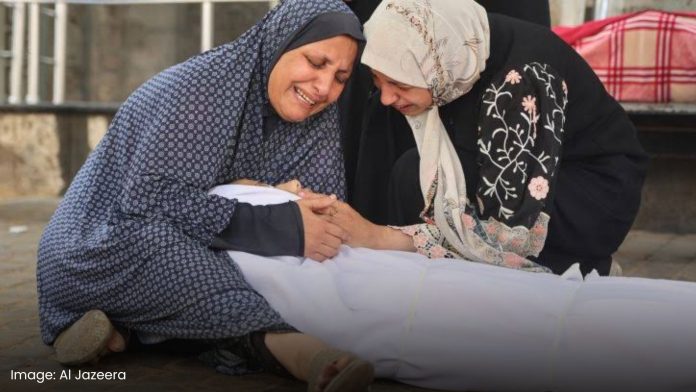
Abineno Justine was 38 and sang in a choir. She complained of slight headaches, went to hospital, and was diagnosed with Ebola. On Friday 4 September, health workers in Bunia disinfected her coffin and buried her under safe-burial protocol. Her mother, Sofia Wanito, was only allowed to see her daughter through the window of the hospital ward, and was not allowed to touch the coffin. “In the past, we didn’t die like this,” she said.
By 26 September, DR Congo had recorded 8,067 confirmed cases and 3,901 deaths, a crude confirmed-case fatality ratio of 48.4%. Forty-nine of those deaths were recorded in a single day. The outbreak has reached 63 health zones across seven provinces, with Ituri accounting for 76.4% of cumulative cases. It is the largest Ebola outbreak in DRC’s history and the second-largest recorded globally. It passed that threshold in July, with almost no international coverage.
Why This Ebola Outbreak Is Different
Phylogenetic analysis of 22 genomes indicates the outbreak began with a new zoonotic spillover rather than a resurgence of the viruses behind the 2007 Uganda or 2012 DRC outbreaks. Researchers found 219 nucleotide differences between a 2026 genome and those from 2007, placing this virus on its own branch of the Bundibugyo family tree.
That matters because of what the strain is. ERVEBO, the only licensed Ebola vaccine, works against Ebola virus, formerly called Zaire ebolavirus. WHO states there is no licensed vaccine and no specific therapeutics against Bundibugyo virus disease. Any use of ERVEBO here sits inside a research protocol. WHO was first alerted on 5 May, but initial tests came back negative because they were not designed to detect this strain. The outbreak was declared on 15 May and a public health emergency of international concern was declared on 17 May.
Why Contact Tracing Is Falling Behind
The latest data show only 74.7% of identified contacts under follow-up, with 773 patients hospitalised in isolation and North Kivu recording 1,523 cases and 906 deaths, a fatality ratio near 60%.
Africa CDC has described a far larger gap. Around 60 contacts should be traced for every confirmed case, which at roughly 7,000 cases means about 420,000 people. Responders have about 30,000 on the list, and more than 80% of new confirmed cases are being found among people who were never on it. “When the outbreak is at community level, we cannot talk about control,” said Africa CDC’s director-general, Jean Kaseya. WHO’s regional emergency director says around one in three new cases is only identified after the person has already died at home, and that children are a disproportionate share of those deaths.
Hunger, Conflict And Mistrust
Ebola is spreading through communities already dealing with armed conflict, displacement and severe food insecurity. In June, eleven patients fled isolation facilities in Ituri, and others left treatment centres in search of food. “Ebola feeds on delay, fear and hunger,” said the acting head of the World Food Programme. Women and girls account for the majority of laboratory-confirmed cases.
In Butembo, a city of two million, all 29 beds at the Kitatumba treatment centre were full last week. Some residents refuse temperature checks, some believe going to hospital means automatic transfer to an Ebola centre, and one man said simply: “For me, Ebola does not exist.” On some roads into the city, armed men now run the handwashing stations, and one of their leaders warned that people who keep refusing could be taken to treatment centres by force and whipped.
That mistrust turned lethal. Marie-Celestin Karondwa, a senior ruling-party official, went on radio urging residents to take Ebola seriously. Later that day he was attacked, robbed, his home set on fire, and he died of his injuries. His party linked the attack to his Ebola advocacy; the attackers’ motive has not been independently established. It has happened before. In November 2019, Radio Lwemba host Papy Mumbere Mahamba, 35, was stabbed to death at his home in Ituri after broadcasting about Ebola, his wife wounded and their house burned.
The Frontline Is Under Pressure Too
Health workers in Ituri have struck over unpaid wages, with some receiving only partial payment or none. A single Ebola treatment centre requires around 300 workers. “We are building Ebola treatment centres but do not always have the human resources needed to operate them,” said WHO’s representative in Congo, Anne Ancia. “Those health workers must be paid.” More than 4,000 additional professionals have been deployed and it is still not enough.
Who Was Paying For This, And What Changed
Every major Ebola response of the past decade rested on USAID, the US CDC and WHO working together. That partnership is now in tatters: USAID dissolved, CDC cut including seasoned outbreak responders, WHO reduced after the US withdrew funding. In 2024, the last year USAID was fully operational, the United States provided more than $906 million in humanitarian funding to DRC across 38 organisations; roughly a quarter of that has been disbursed in 2026. One humanitarian organisation says the cuts contributed to delayed detection of this outbreak. The State Department rejects that.
Money is now moving again. Nearly $2.9 billion was pledged at a US-convened meeting in New York on 24 September, including $886 million from the United States. Whether it reaches a ward in Butembo, and how fast, is a different question from whether it was announced.
Why Are Countries Tightening Borders?
Canada has extended its Ebola border measures to 27 November, suspending immigration documents for residents of DRC, Uganda and South Sudan and barring most foreign nationals who have been in DRC in the previous 21 days. The United States restricts travel after recent presence in DRC and routes some travellers through designated airports for screening.
WHO nevertheless assesses the risk as very high inside DRC, high for countries sharing land borders, and low for the rest of Africa and globally, and advises against restrictions on travel or trade.
Could This Become The Next Pandemic?
Ebola can cross borders, but it does not spread like COVID-19. Transmission generally requires direct contact with infected blood or other bodily fluids, and people generally do not spread the virus before they feel ill. That makes sustained worldwide transmission considerably harder than with a respiratory virus, and no Ebola outbreak has ever spread enough internationally to meet the threshold of a pandemic.
Uganda is the proof. It had the same strain, declared its outbreak over in late August after 42 days without a case, and finished with 20 cases. Congo is at 8,067 and climbing.
So the evidence does not support panic. It does support urgency. The real question is whether contact tracing, treatment capacity, community trust, food support and international financing can catch up before the outbreak expands further.
By Shizza Umer
Sources
Reuters · Reuters · The Guardian · Daily Nation · The Express Tribune · ECDC · WHO Disease Outbreak News · WHO · WHO Director-General · WHO Africa · Nature Medicine · University of St Andrews · The Washington Post · PBS NewsHour · UN News · UN News · Bloomberg · NPR · CNN · MSF · Refugees International · Council on Foreign Relations · Government of Canada · US CDC