
The UAE Denied Paying Off Iran Before. The Flights Kept Happening Anyway.

Two short flights have reopened questions about one of the Gulf’s strangest relationships: the UAE and Iran are confronting each other publicly while continuing to maintain channels of communication behind the scenes.

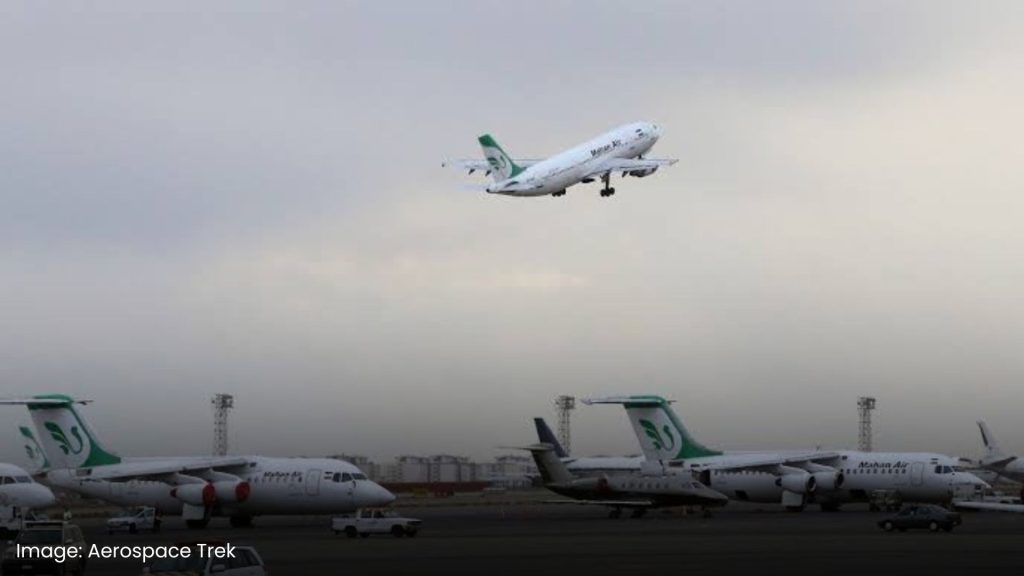
A Boeing Business Jet registered A6-RJA reportedly made short trips from Abu Dhabi into Iran on August 11 and 12. Flight-tracking reports place the aircraft at Tehran’s Mehrabad Airport and Payam International Airport near Karaj, with brief stops before returning to the UAE.

The flights themselves are the solid part of the story. What was onboard is not.

The UAE-Iran gold claim spreading online

The most dramatic claim is that the aircraft carried two tonnes of gold worth roughly $283 million, alongside Iranian assets allegedly being released by the UAE.

That allegation traces back to a single X account, The Hormuz Letter, citing unnamed “senior sources in Tehran.” A number of websites and social-media accounts subsequently repeated the claim, but no independent evidence currently establishes what cargo was onboard. The claim was enough on its own to send oil prices lower and give Bitcoin a rebound within hours, before any government confirmed a thing.

That distinction matters. Flight tracking can show that an aircraft traveled between two airports. It cannot reveal whether that aircraft was carrying officials, documents, gold, cash or nothing politically significant at all.

The claim may eventually be corroborated. Right now, it remains unverified.
Secret UAE-Iran talks were already being reported

The larger story began months earlier.

In June, four sources described a UAE-Iran financial arrangement designed to reduce tensions following Iranian attacks affecting the Emirates. Sources put the proposed arrangement at between $10 billion and $20 billion, while some claimed an initial $3 billion had already been delivered or made available.

The diplomacy reportedly went beyond money. Iranian Revolutionary Guard officials traveled to Abu Dhabi, where they met Sheikh Tahnoun bin Zayed Al Nahyan, the UAE’s national security adviser and one of Abu Dhabi’s most powerful figures, at his private guest house. Emirati officials subsequently traveled to Tehran as discussions continued.

So whatever happened on the August flights, quiet UAE-Iran communication did not begin with them.

The UAE categorically denied the financial transfer

There is a major contradiction.

The UAE Ministry of Foreign Affairs rejected the alleged financial transfer, calling reports involving $3 billion “entirely false and unfounded.” The ministry said no frozen Iranian assets had been released, transferred or facilitated through UAE channels.

That denial cannot simply be brushed aside. Multiple sources described one version of events. Abu Dhabi publicly and categorically rejected the central financial claim.

The existence of diplomacy is much better established than the alleged transfer of billions.

Iran, the UAE and the Strait of Hormuz

The relationship has only become more complicated.

On August 14, ADNOC confirmed one of its vessels was attacked while transiting the Strait of Hormuz, the latest in a string of incidents that included two more ADNOC vessels hit the evening before. UAE officials have blamed Iran for the attacks while simultaneously continuing to emphasize diplomacy and regional de-escalation.

Iran has also kept financial demands tied to the wider confrontation. Current negotiations around Hormuz include Iranian demands for sanctions relief and the unconditional release of frozen Iranian assets.

That makes financial discussions plausible. It does not prove the August aircraft carried gold.

The backchannel may be the real story

Maybe independent evidence eventually confirms the gold allegation. Maybe it does not.

Either way, the documented picture is already remarkable: officials have reportedly traveled between Abu Dhabi and Tehran, multibillion-dollar arrangements have been discussed and disputed, public diplomacy has continued, and UAE-linked aircraft are again flying into Iran while tensions remain high.

The mystery is not simply what was onboard A6-RJA.

It is what Abu Dhabi and Tehran are still negotiating while confrontation and diplomacy continue at the same time.

Read more about this at verumnetwork.com.

By Shizza Umer

Sources

Middle East Eye: UAE paid Iran billions of dollars to halt strikes

UAE Ministry of Foreign Affairs: Statement denying Iran fund-transfer reports

Al Jazeera: UAE accuses Iran of attacks on two ADNOC vessels in Strait of Hormuz

CBS News: Iran war, US negotiation, Strait of Hormuz live updates

Yahoo Finance: UAE reportedly released Iran’s frozen assets, Bitcoin rebounds

The Hormuz Letter (X): original gold-transfer claim

Two short flights have reopened questions about one of the Gulf’s strangest relationships: the UAE and Iran are confronting each other publicly while continuing to maintain channels of communication behind the scenes.

A Boeing Business Jet registered A6-RJA reportedly made short trips from Abu Dhabi into Iran on August 11 and 12. Flight-tracking reports place the aircraft at Tehran’s Mehrabad Airport and Payam International Airport near Karaj, with brief stops before returning to the UAE.

The flights themselves are the solid part of the story. What was onboard is not.

The UAE-Iran gold claim spreading online

The most dramatic claim is that the aircraft carried two tonnes of gold worth roughly $283 million, alongside Iranian assets allegedly being released by the UAE.

That allegation traces back to a single X account, The Hormuz Letter, citing unnamed “senior sources in Tehran.” A number of websites and social-media accounts subsequently repeated the claim, but no independent evidence currently establishes what cargo was onboard. The claim was enough on its own to send oil prices lower and give Bitcoin a rebound within hours, before any government confirmed a thing.

That distinction matters. Flight tracking can show that an aircraft traveled between two airports. It cannot reveal whether that aircraft was carrying officials, documents, gold, cash or nothing politically significant at all.

The claim may eventually be corroborated. Right now, it remains unverified.

Secret UAE-Iran talks were already being reported

The larger story began months earlier.

In June, four sources described a UAE-Iran financial arrangement designed to reduce tensions following Iranian attacks affecting the Emirates. Sources put the proposed arrangement at between $10 billion and $20 billion, while some claimed an initial $3 billion had already been delivered or made available.

The diplomacy reportedly went beyond money. Iranian Revolutionary Guard officials traveled to Abu Dhabi, where they met Sheikh Tahnoun bin Zayed Al Nahyan, the UAE’s national security adviser and one of Abu Dhabi’s most powerful figures, at his private guest house. Emirati officials subsequently traveled to Tehran as discussions continued.

So whatever happened on the August flights, quiet UAE-Iran communication did not begin with them.

The UAE categorically denied the financial transfer

There is a major contradiction.

The UAE Ministry of Foreign Affairs rejected the alleged financial transfer, calling reports involving $3 billion “entirely false and unfounded.” The ministry said no frozen Iranian assets had been released, transferred or facilitated through UAE channels.

That denial cannot simply be brushed aside. Multiple sources described one version of events. Abu Dhabi publicly and categorically rejected the central financial claim.

The existence of diplomacy is much better established than the alleged transfer of billions.
Iran, the UAE and the Strait of Hormuz

The relationship has only become more complicated.

On August 14, ADNOC confirmed one of its vessels was attacked while transiting the Strait of Hormuz, the latest in a string of incidents that included two more ADNOC vessels hit the evening before. UAE officials have blamed Iran for the attacks while simultaneously continuing to emphasize diplomacy and regional de-escalation.

Iran has also kept financial demands tied to the wider confrontation. Current negotiations around Hormuz include Iranian demands for sanctions relief and the unconditional release of frozen Iranian assets.

That makes financial discussions plausible. It does not prove the August aircraft carried gold.

The backchannel may be the real story

Maybe independent evidence eventually confirms the gold allegation. Maybe it does not.

Either way, the documented picture is already remarkable: officials have reportedly traveled between Abu Dhabi and Tehran, multibillion-dollar arrangements have been discussed and disputed, public diplomacy has continued, and UAE-linked aircraft are again flying into Iran while tensions remain high.

The mystery is not simply what was onboard A6-RJA.
It is what Abu Dhabi and Tehran are still negotiating while confrontation and diplomacy continue at the same time.

Read more about this at verumnetwork.com.

By Shizza Umer

Sources

Middle East Eye: UAE paid Iran billions of dollars to halt strikes

UAE Ministry of Foreign Affairs: Statement denying Iran fund-transfer reports

Al Jazeera: UAE accuses Iran of attacks on two ADNOC vessels in Strait of Hormuz

CBS News: Iran war, US negotiation, Strait of Hormuz live updates

Yahoo Finance: UAE reportedly released Iran’s frozen assets, Bitcoin rebounds

The Hormuz Letter (X): original gold-transfer claim

spot_img

Explore more

spot_img
Global Affairs

India Is Blocking Speech Every 68 Seconds

The ICC Went After Netanyahu. Now Trump Is Going After the...

Iran Is Rebuilding. Isr*el Is Escalating. Diplomacy Is Failing.

“Free Pal*stine” Won Chelsea’s Vote. Then Got Deleted.

Your Boss May Know When You Can’t Afford To Say No

What’s Really Happening Aboard the USS Abraham Lincoln?

Smart Glasses Look Harmless. That May Be What Makes Them So...

Five Years In, the Taliban Has Turned Women’s Exclusion Into a...