
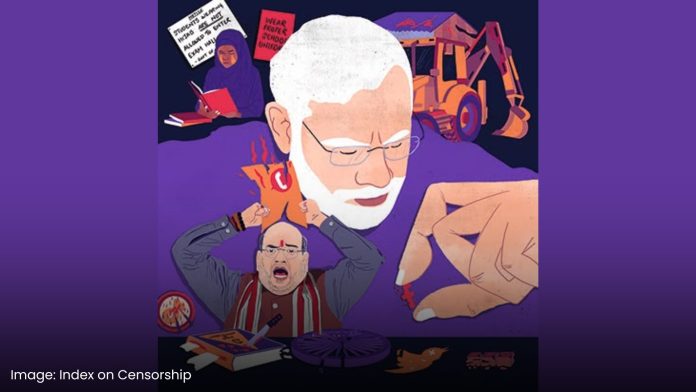
India Is Blocking Speech Every 68 Seconds

India’s online content enforcement system has expanded at extraordinary speed.

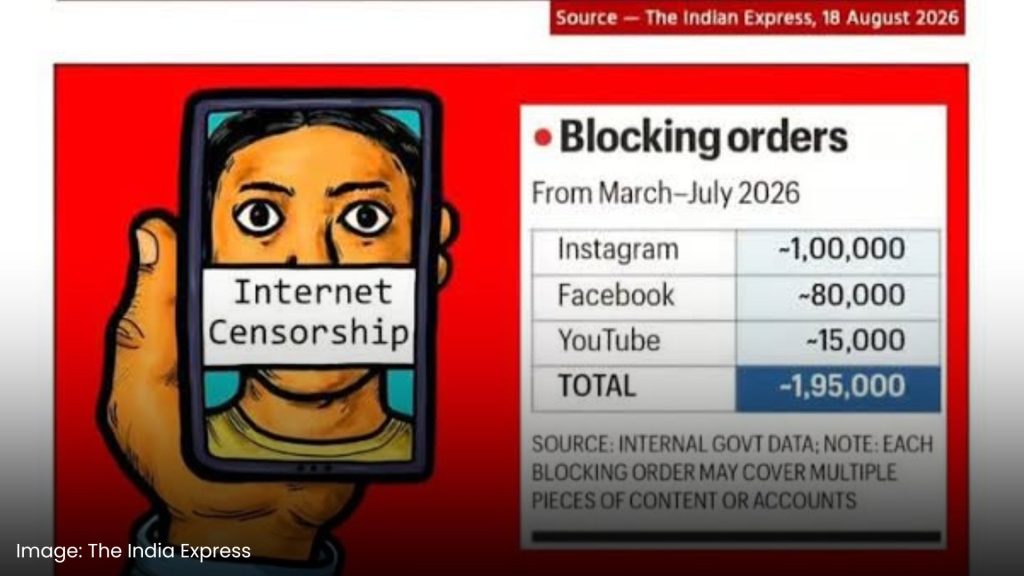
Between March and July 2026, government agencies reportedly sent nearly 195,000 blocking orders to Instagram, Facebook and YouTube. That works out to roughly 1,275 orders per day, or one every 68 seconds. The same reporting put Instagram at almost 100,000 orders, Facebook around 80,000 and YouTube near 15,000.

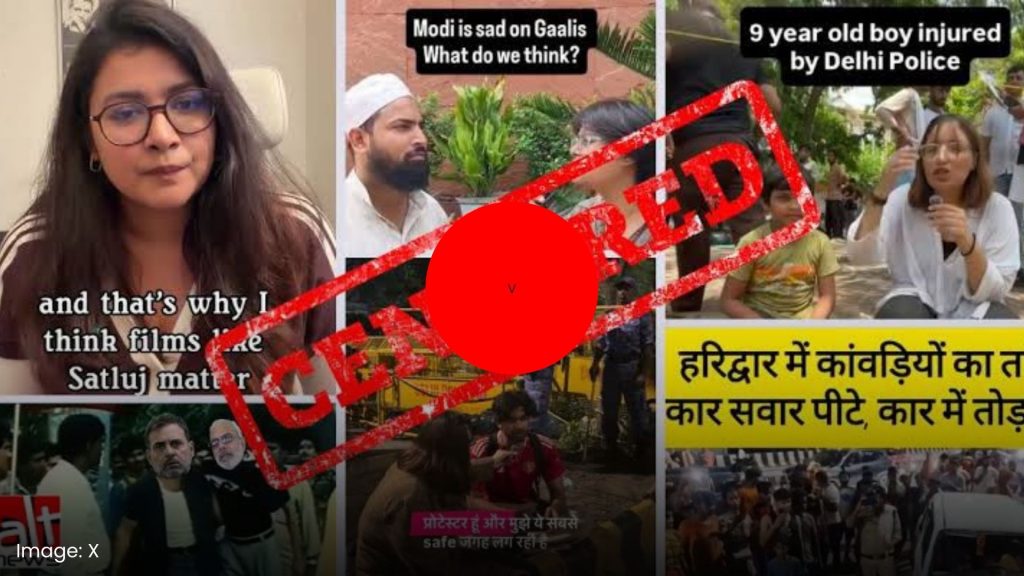
The scale matters because restrictions have extended beyond alleged scams and deepfakes into protest content, political criticism and other forms of online expression.

Two Different Countdowns

Two separate numbers describe India’s “before” picture, and they are not measuring the same thing. The Sahyog portal itself averaged roughly six orders a day between October 2024 and October 2025, which is the direct baseline behind the current 1,275-a-day figure and the source of the 200-times surge at the centre of this story. A separate, older enforcement track under the traditional Section 69A process produced a different total: government blocking orders roughly doubled to about 24,000 in a year, with more than half directed at X alone. That figure covers a different legal mechanism, a different time window and largely a single platform, so it should not be read as the same trend line as the Sahyog numbers above. What it does show is that even before Sahyog scaled up, India’s blocking apparatus was already climbing fast on a completely separate track.
How the Sahyog Portal Works

At the centre of the controversy is Sahyog, a government-linked portal designed to connect authorised agencies directly with online platforms.

Court records show dozens of platforms had already joined Sahyog, with additional companies in the process of connecting. Through the system, authorised officials can identify URLs, posts or accounts they consider connected to unlawful activity and send notices directly to participating intermediaries.

The mechanism operates alongside Section 79(3)(b) of India’s Information Technology Act, which can affect a platform’s legal protection if it fails to act on qualifying government notices.

Digital rights activist Apar Gupta has put the effect bluntly: “machine-to-machine execution converts a conditional legal duty into an unconditional compliance.” Critics argue that speed and opacity leave users unable to see the underlying order or meaningfully challenge a restriction before content disappears.

The Window Keeps Shrinking

The compliance clock has tightened too. In February 2026, amended IT rules cut the takedown window for platforms from 24-36 hours down to just 2-3 hours. Platforms now have less time to review a government order than most people spend on a long-haul flight, before the content comes down regardless of whether they had a real chance to assess it.

India Says Enforcement. Critics Say Censorship.

The government argues that fast takedown systems are necessary to address unlawful content, fraud, misinformation, deepfakes and public-order threats.

Authorities have also considered expanding direct blocking authority to additional ministries.

Digital rights advocates counter that the same machinery can reach political criticism, protest footage, satire and journalism, turning a system designed for unlawful material into a potentially much broader instrument of executive control.

X Took India’s Government to Court, and Lost the First Round

The dispute has already become a legal battle.

X sued the Indian government over the expanding blocking architecture, arguing that Sahyog and related notices create a parallel route for restricting online speech outside the stricter safeguards attached to India’s older blocking framework. A Karnataka High Court ruling in September 2025 upheld the Sahyog system, and X appealed. The Supreme Court stayed related proceedings on August 7, 2026 while it decides whether to take up the constitutional question itself.

India rejects X’s characterization and says the system is an efficient mechanism for enforcing existing law.

Reuters Was Caught in the Fight Too

One of the most striking earlier disputes involved Reuters.

In July 2025, X said the Indian government had ordered it to block 2,355 accounts inside India, including @Reuters and @ReutersWorld. The Reuters accounts became temporarily inaccessible before being restored.

India disputed X’s version, saying there had been no fresh July order directing it to block Reuters and that officials had pushed for access to be restored. That episode foreshadowed the larger fight now unfolding over who ultimately controls online visibility in India.

It’s Already Happening Again, Right Now

The system’s limits are not theoretical. This week, Meta has not restored the Aam Aadmi Party’s blocked Instagram accounts despite a Supreme Court order requiring it, and reporters checking independently found a second AAP account still blocked that was not even named in the court’s order.

With nearly 195,000 reported orders in five months, and a court order for restoration still unmet, this is no longer a debate about isolated takedowns. It is about infrastructure capable of restricting speech at enormous scale, faster than the people affected by it can respond.

Read more about this at verumnetwork.com.

By Shizza Umer

Sources

Indian Express: One blocking order every 68 seconds

Indian Express (Tamil): Surge in state-backed blocking orders

Indian Express: Blocking orders double to 24,000 in a year

Indian Express: Centre looks to empower more ministries

Indian Kanoon: Court record on Sahyog

Newslaundry: Social media takedowns leaving users in the dark

National Herald: One blocking order every 68 seconds

National Herald: X to appeal Karnataka HC verdict

MediaNama: Why hasn’t Meta restored AAP’s blocked accounts

Reuters: Musk vs Modi, inside the battle over India’s internet censorship

Reuters: X says Indian government ordered it to block Reuters accounts

Indian Express: X refutes govt received orders to block Reuters

India Today: India says it did not issue fresh order

India’s online content enforcement system has expanded at extraordinary speed.

Between March and July 2026, government agencies reportedly sent nearly 195,000 blocking orders to Instagram, Facebook and YouTube. That works out to roughly 1,275 orders per day, or one every 68 seconds. The same reporting put Instagram at almost 100,000 orders, Facebook around 80,000 and YouTube near 15,000.

The scale matters because restrictions have extended beyond alleged scams and deepfakes into protest content, political criticism and other forms of online expression.

Two Different Countdowns

Two separate numbers describe India’s “before” picture, and they are not measuring the same thing. The Sahyog portal itself averaged roughly six orders a day between October 2024 and October 2025, which is the direct baseline behind the current 1,275-a-day figure and the source of the 200-times surge at the centre of this story. A separate, older enforcement track under the traditional Section 69A process produced a different total: government blocking orders roughly doubled to about 24,000 in a year, with more than half directed at X alone. That figure covers a different legal mechanism, a different time window and largely a single platform, so it should not be read as the same trend line as the Sahyog numbers above. What it does show is that even before Sahyog scaled up, India’s blocking apparatus was already climbing fast on a completely separate track.
How the Sahyog Portal Works

At the centre of the controversy is Sahyog, a government-linked portal designed to connect authorised agencies directly with online platforms.

Court records show dozens of platforms had already joined Sahyog, with additional companies in the process of connecting. Through the system, authorised officials can identify URLs, posts or accounts they consider connected to unlawful activity and send notices directly to participating intermediaries.

The mechanism operates alongside Section 79(3)(b) of India’s Information Technology Act, which can affect a platform’s legal protection if it fails to act on qualifying government notices.

Digital rights activist Apar Gupta has put the effect bluntly: “machine-to-machine execution converts a conditional legal duty into an unconditional compliance.” Critics argue that speed and opacity leave users unable to see the underlying order or meaningfully challenge a restriction before content disappears.

The Window Keeps Shrinking

The compliance clock has tightened too. In February 2026, amended IT rules cut the takedown window for platforms from 24-36 hours down to just 2-3 hours. Platforms now have less time to review a government order than most people spend on a long-haul flight, before the content comes down regardless of whether they had a real chance to assess it.

India Says Enforcement. Critics Say Censorship.

The government argues that fast takedown systems are necessary to address unlawful content, fraud, misinformation, deepfakes and public-order threats.

Authorities have also considered expanding direct blocking authority to additional ministries.

Digital rights advocates counter that the same machinery can reach political criticism, protest footage, satire and journalism, turning a system designed for unlawful material into a potentially much broader instrument of executive control.

X Took India’s Government to Court, and Lost the First Round

The dispute has already become a legal battle.

X sued the Indian government over the expanding blocking architecture, arguing that Sahyog and related notices create a parallel route for restricting online speech outside the stricter safeguards attached to India’s older blocking framework. A Karnataka High Court ruling in September 2025 upheld the Sahyog system, and X appealed. The Supreme Court stayed related proceedings on August 7, 2026 while it decides whether to take up the constitutional question itself.

India rejects X’s characterization and says the system is an efficient mechanism for enforcing existing law.

Reuters Was Caught in the Fight Too

One of the most striking earlier disputes involved Reuters.

In July 2025, X said the Indian government had ordered it to block 2,355 accounts inside India, including @Reuters and @ReutersWorld. The Reuters accounts became temporarily inaccessible before being restored.

India disputed X’s version, saying there had been no fresh July order directing it to block Reuters and that officials had pushed for access to be restored. That episode foreshadowed the larger fight now unfolding over who ultimately controls online visibility in India.

It’s Already Happening Again, Right Now

The system’s limits are not theoretical. This week, Meta has not restored the Aam Aadmi Party’s blocked Instagram accounts despite a Supreme Court order requiring it, and reporters checking independently found a second AAP account still blocked that was not even named in the court’s order.
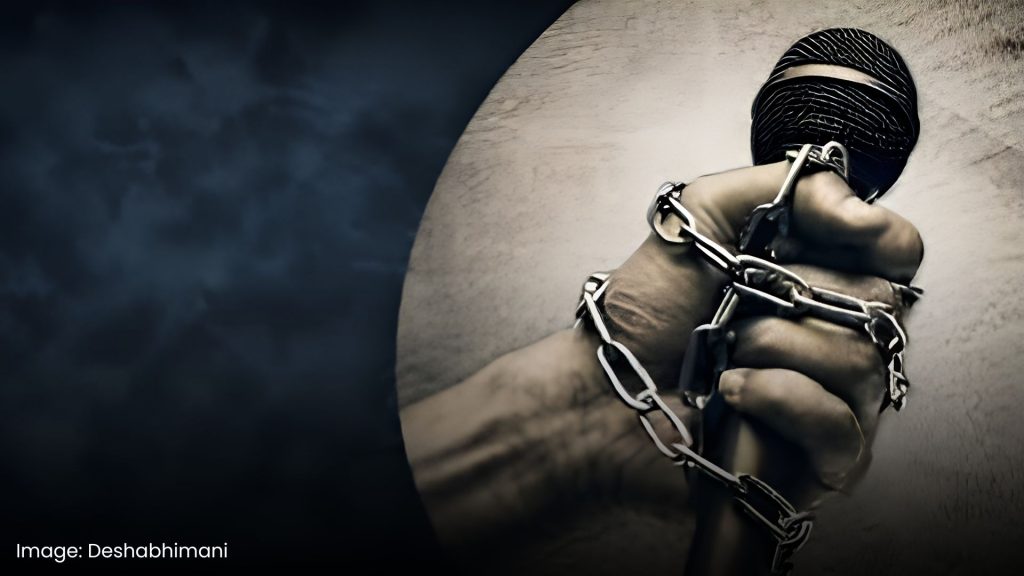
With nearly 195,000 reported orders in five months, and a court order for restoration still unmet, this is no longer a debate about isolated takedowns. It is about infrastructure capable of restricting speech at enormous scale, faster than the people affected by it can respond.

Read more about this at verumnetwork.com.

By Shizza Umer

Sources

Indian Express: One blocking order every 68 seconds

Indian Express (Tamil): Surge in state-backed blocking orders

Indian Express: Blocking orders double to 24,000 in a year

Indian Express: Centre looks to empower more ministries

Indian Kanoon: Court record on Sahyog

Newslaundry: Social media takedowns leaving users in the dark

National Herald: One blocking order every 68 seconds

National Herald: X to appeal Karnataka HC verdict

MediaNama: Why hasn’t Meta restored AAP’s blocked accounts

Reuters: Musk vs Modi, inside the battle over India’s internet censorship

Reuters: X says Indian government ordered it to block Reuters accounts

Indian Express: X refutes govt received orders to block Reuters

India Today: India says it did not issue fresh order

spot_img

Explore more

spot_img
Global Affairs

From “The Problem Is Islam” to Praising Sharia: The Right’s Reversal

The ICC Went After Netanyahu. Now Trump Is Going After the...

Iran Is Rebuilding. Isr*el Is Escalating. Diplomacy Is Failing.

“Free Pal*stine” Won Chelsea’s Vote. Then Got Deleted.

The UAE Denied Paying Off Iran Before. The Flights Kept Happening...

Your Boss May Know When You Can’t Afford To Say No

What’s Really Happening Aboard the USS Abraham Lincoln?

Smart Glasses Look Harmless. That May Be What Makes Them So...