
Trump Administration Is Making Haitians Choose Between an Ankle Monitor and Deportation

Maryam Tariq

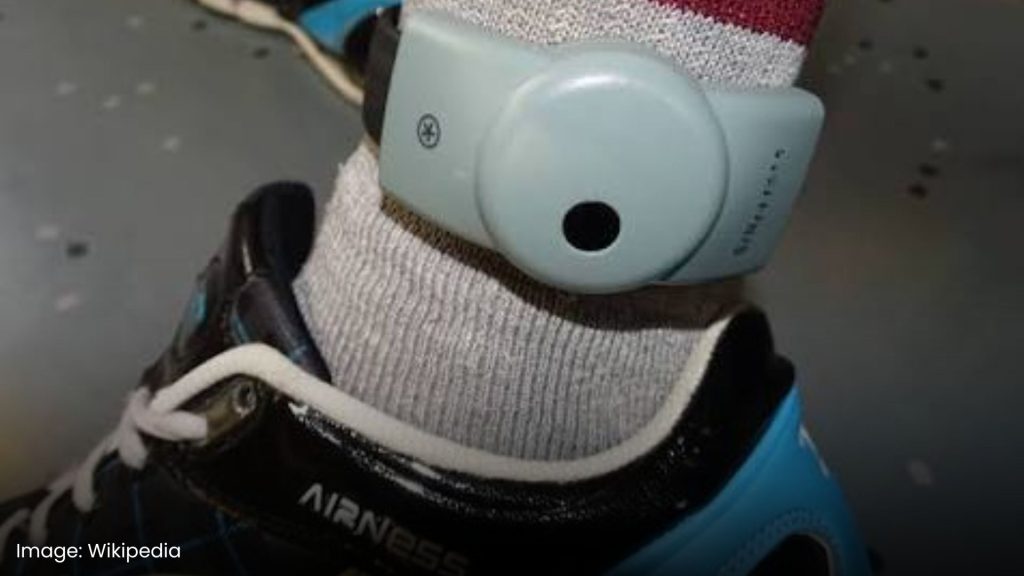
The Trump administration formally ended Temporary Protected Status for Haitian nationals on July 27, 2026, following a Supreme Court ruling that cleared the way for the termination. In the weeks since, US Immigration and Customs Enforcement has begun requiring Haitians, primarily in Springfield, Ohio, to report to field offices, where many are having their passports confiscated and being fitted with electronic ankle monitors.

Why TPS Ended and Who It Affects

TPS for Haiti was established following the country’s devastating 2010 earthquake, providing work authorization and protection from deportation for people from countries the US government deems unsafe due to armed conflict, natural disaster, or extraordinary temporary conditions. The Department of Homeland Security has argued that allowing the program to extend across 16 years of renewals functioned as a de facto amnesty program rather than the temporary protection it was designed to be. An estimated 330,000 to 350,000 Haitian nationals held TPS status before its termination.

How the Ankle Monitor Process Works

Following a Supreme Court ruling in June and a federal judge lifting a stay on the policy in late July, DHS began mailing mandatory call-in letters to Haitians, directing them to bring all immigration documents to an ICE field office appointment. In Cincinnati and Blue Ash, Ohio, dozens of Haitians have reported for these check-ins since late July. At the appointments, individuals are pressured to accept a $2,600 payment and a plane ticket to voluntarily self-deport. According to Haitian Bridge Alliance executive director Guerline Jozef, every Haitian offered that payment at an early round of appointments rejected it. Those who decline are instead fitted with GPS ankle monitors and placed under strict travel restrictions, typically barred from traveling more than 75 miles from home while awaiting immigration court dates.

Why Springfield Specifically

According to immigration attorneys and advocates tracking the practice, including Katie Kersh of Advocates for Basic Legal Equality, the use of ankle monitors appears concentrated almost exclusively in Springfield, Ohio, home to roughly 12,000 to 15,000 Haitian residents. Community leaders and lawyers representing Haitian populations in Boston, Chicago and Miami say they have not observed the same tactic being used in those cities. Springfield became a national flashpoint during the 2024 presidential campaign, when Trump repeatedly targeted the city and its Haitian community in campaign rhetoric.

Why This Marks a Departure From Normal Practice

Immigrant rights groups have emphasized that ankle monitors are typically reserved for individuals considered high flight risks or those with criminal records, not for people who have lived and worked legally in the US for years with no criminal history and consistent court attendance. NBC News reported that the shift toward intensive monitoring is driven partly by practical constraints, ICE detention facilities currently hold roughly 65,000 beds nationwide, making it logistically impossible to detain the full population of former TPS holders, pushing the administration toward electronic supervision as an alternative.
The Human Toll Described by Community Leaders

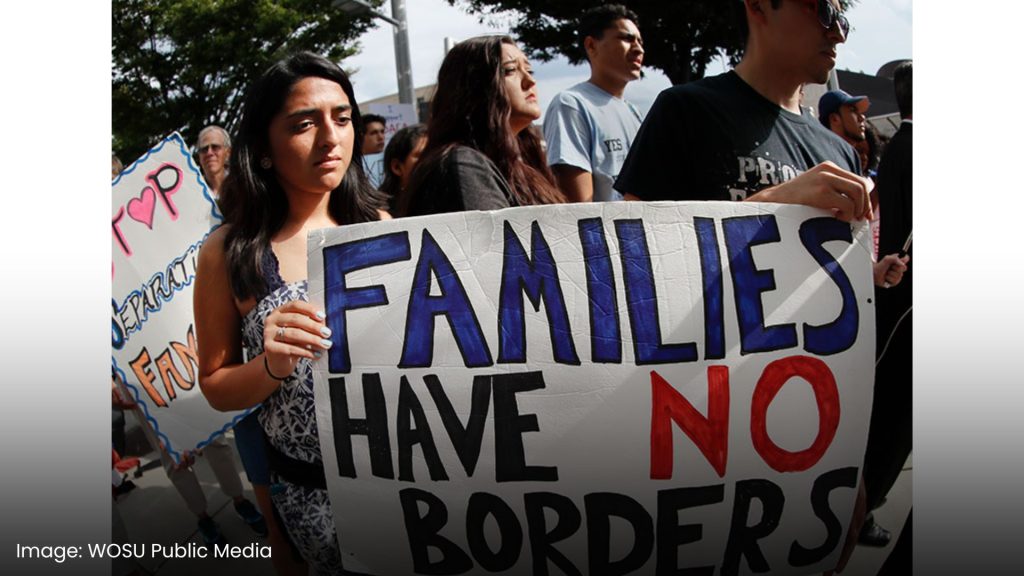
Viles Dorsainvil, executive director of the Haitian Support Center in Springfield, has accompanied numerous community members to their ICE appointments and described the emotional impact directly, saying those fitted with monitors are deeply ashamed, often reluctant to even show the device to their own children because they know they are not criminals. Protests have followed several rounds of check-ins, with hundreds of demonstrators gathering outside ICE facilities in Blue Ash and Cincinnati as Haitians emerged from appointments wearing the monitors.

Even Republican Officials Have Objected

The pushback hasn’t come solely from immigrant advocacy groups. Ohio’s Republican Governor Mike DeWine has publicly criticized the administration’s approach, describing Haitian immigrants as people who came to fill jobs that weren’t being filled by others and helped revitalize Springfield’s economy. Deporting people to Haiti right now, DeWine said, means sending them back to hell, a reference to the country’s ongoing, severe security crisis.

What Comes Next

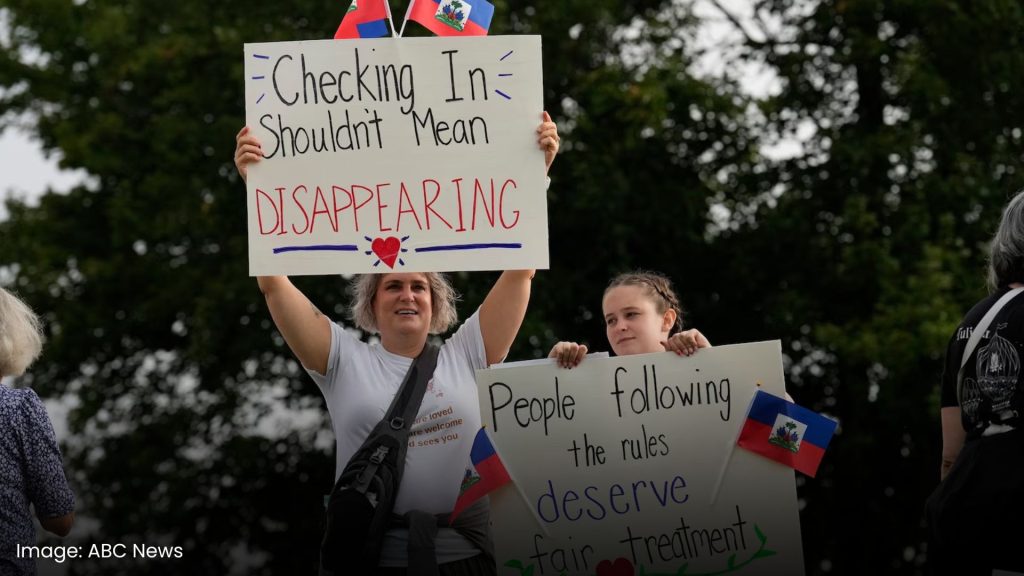
With formal TPS protections gone and Homeland Security Secretary Markwayne Mullin publicly framing the choice as either self-deportation or eventual forced removal, thousands of Haitians in Springfield and beyond now face an uncertain, closely monitored period awaiting immigration court dates, unsure whether the path they’ve chosen, wearing a monitor and staying, or accepting a payment and leaving, will ultimately determine their future ability to legally return to the United States at all.

Sources:

·  ICE Now Forcing Haitian Immigrants to Wear Ankle Monitors — The New Republic: https://newrepublic.com/post/213953/ice-haitian-immigrants-ankle-monitors

·  Some Haitians targeted for ankle monitors by ICE as they face threat of mass deportation — WLRN: https://www.wlrn.org/immigration/2026-08-10/some-haitians-targeted-for-ankle-monitors-by-ice-as-they-face-threat-of-mass-deportation

·  Some Haitian immigrants in Ohio told to report to ICE and given ankle monitors — ABC News: https://abcnews.com/US/haitian-immigrants-ohio-told-report-ice-ankle-monitors/story?id=135356277

·  ICE seizes passports, issues ankle monitors to Springfield Haitians — Dayton Daily News: https://www.daytondailynews.com/local/ice-seizes-passports-issues-ankle-monitors-to-springfield-haitians/article_571f4d5b-6afc-5e6a-9c21-a4d80486447d.html

Maryam Tariq

The Trump administration formally ended Temporary Protected Status for Haitian nationals on July 27, 2026, following a Supreme Court ruling that cleared the way for the termination. In the weeks since, US Immigration and Customs Enforcement has begun requiring Haitians, primarily in Springfield, Ohio, to report to field offices, where many are having their passports confiscated and being fitted with electronic ankle monitors.

Why TPS Ended and Who It Affects

TPS for Haiti was established following the country’s devastating 2010 earthquake, providing work authorization and protection from deportation for people from countries the US government deems unsafe due to armed conflict, natural disaster, or extraordinary temporary conditions. The Department of Homeland Security has argued that allowing the program to extend across 16 years of renewals functioned as a de facto amnesty program rather than the temporary protection it was designed to be. An estimated 330,000 to 350,000 Haitian nationals held TPS status before its termination.

How the Ankle Monitor Process Works

Following a Supreme Court ruling in June and a federal judge lifting a stay on the policy in late July, DHS began mailing mandatory call-in letters to Haitians, directing them to bring all immigration documents to an ICE field office appointment. In Cincinnati and Blue Ash, Ohio, dozens of Haitians have reported for these check-ins since late July. At the appointments, individuals are pressured to accept a $2,600 payment and a plane ticket to voluntarily self-deport. According to Haitian Bridge Alliance executive director Guerline Jozef, every Haitian offered that payment at an early round of appointments rejected it. Those who decline are instead fitted with GPS ankle monitors and placed under strict travel restrictions, typically barred from traveling more than 75 miles from home while awaiting immigration court dates.

Why Springfield Specifically

According to immigration attorneys and advocates tracking the practice, including Katie Kersh of Advocates for Basic Legal Equality, the use of ankle monitors appears concentrated almost exclusively in Springfield, Ohio, home to roughly 12,000 to 15,000 Haitian residents. Community leaders and lawyers representing Haitian populations in Boston, Chicago and Miami say they have not observed the same tactic being used in those cities. Springfield became a national flashpoint during the 2024 presidential campaign, when Trump repeatedly targeted the city and its Haitian community in campaign rhetoric.

Why This Marks a Departure From Normal Practice

Immigrant rights groups have emphasized that ankle monitors are typically reserved for individuals considered high flight risks or those with criminal records, not for people who have lived and worked legally in the US for years with no criminal history and consistent court attendance. NBC News reported that the shift toward intensive monitoring is driven partly by practical constraints, ICE detention facilities currently hold roughly 65,000 beds nationwide, making it logistically impossible to detain the full population of former TPS holders, pushing the administration toward electronic supervision as an alternative.

The Human Toll Described by Community Leaders

Viles Dorsainvil, executive director of the Haitian Support Center in Springfield, has accompanied numerous community members to their ICE appointments and described the emotional impact directly, saying those fitted with monitors are deeply ashamed, often reluctant to even show the device to their own children because they know they are not criminals. Protests have followed several rounds of check-ins, with hundreds of demonstrators gathering outside ICE facilities in Blue Ash and Cincinnati as Haitians emerged from appointments wearing the monitors.

Even Republican Officials Have Objected

The pushback hasn’t come solely from immigrant advocacy groups. Ohio’s Republican Governor Mike DeWine has publicly criticized the administration’s approach, describing Haitian immigrants as people who came to fill jobs that weren’t being filled by others and helped revitalize Springfield’s economy. Deporting people to Haiti right now, DeWine said, means sending them back to hell, a reference to the country’s ongoing, severe security crisis.

What Comes Next

With formal TPS protections gone and Homeland Security Secretary Markwayne Mullin publicly framing the choice as either self-deportation or eventual forced removal, thousands of Haitians in Springfield and beyond now face an uncertain, closely monitored period awaiting immigration court dates, unsure whether the path they’ve chosen, wearing a monitor and staying, or accepting a payment and leaving, will ultimately determine their future ability to legally return to the United States at all.

Sources:

·  ICE Now Forcing Haitian Immigrants to Wear Ankle Monitors — The New Republic: https://newrepublic.com/post/213953/ice-haitian-immigrants-ankle-monitors

·  Some Haitians targeted for ankle monitors by ICE as they face threat of mass deportation — WLRN: https://www.wlrn.org/immigration/2026-08-10/some-haitians-targeted-for-ankle-monitors-by-ice-as-they-face-threat-of-mass-deportation

·  Some Haitian immigrants in Ohio told to report to ICE and given ankle monitors — ABC News: https://abcnews.com/US/haitian-immigrants-ohio-told-report-ice-ankle-monitors/story?id=135356277

·  ICE seizes passports, issues ankle monitors to Springfield Haitians — Dayton Daily News: https://www.daytondailynews.com/local/ice-seizes-passports-issues-ankle-monitors-to-springfield-haitians/article_571f4d5b-6afc-5e6a-9c21-a4d80486447d.html


spot_img

Explore more

spot_img
Global Affairs

IDF Finally Admits It Fired on Hind Rajab’s Car. Why Now,...

Why Argentina, Not Israel, Is Leading the Push for New Allies...

Three West Bank Villages Hit at Once, Israel’s Own Ally Calls...

Al-Aqsa Incursions Are Getting Bigger and More Frequent Through 2026

West Bank Violence Is Surging as Israel Heads Toward October Elections

Netanyahu Rejects Trump’s Gaza Peace Plan, Continuing a Pattern of Defying...