Two Deals, Two Countries, One Collision: Qatari Money And Israel Can’t Agree On Anything.

Two Vetoes, One Underlying Conflict

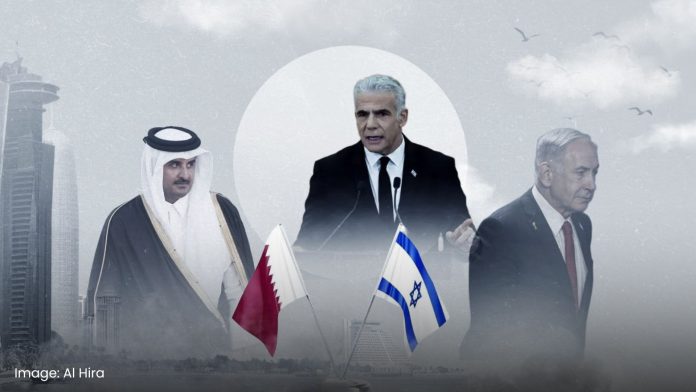
Qatar’s sovereign wealth fund and the Isr*eli government have just blocked each other’s money on opposite sides of Europe, in two deals that have nothing to do with each other except who’s involved. The Qatar Investment Authority, Volkswagen’s third-largest shareholder, vetoed a plan for Isr*eli defense firm Rafael to manufacture Iron Dome components at VW’s struggling Osnabrück plant. Weeks later, Isr*el’s own government began blocking a $4.2 billion sale of its own shipping company, specifically because the buyer has Qatari money inside it too.

The Volkswagen Veto

Rafael signed a letter of intent with Volkswagen in late April to manufacture Iron Dome missile defense components at the Osnabrück site, a plant that loses its only current product line, the T-Roc Cabriolet, in 2027 with no replacement contract in place. For 2,300 workers, the Rafael deal looked like the plant’s best shot at survival. Qatar’s QIA, which holds 17% of VW’s voting rights and two seats on its supervisory board, objected on the grounds of Qatar’s strained relations with Isr*el, and the veto was confirmed by German newspaper Bild on 10 July, though Reuters had first reported Qatari objections weeks earlier, in mid-June. QIA’s CEO and two former Qatari government officials sit on VW’s supervisory board, giving Doha direct influence inside the boardroom itself, not just leverage from the sidelines. A workaround involving Lower Saxony, VW’s second-largest shareholder with roughly 20% of voting rights, is reportedly being discussed, but nothing has been resolved, and the plant’s workforce remains in limbo.

The Reversal Nobody Expected

While that story was unfolding, a mirror-image dispute was already playing out inside Isr*el itself. Hapag-Lloyd, the German shipping giant, agreed in February to acquire Isr*eli shipping line ZIM for $4.2 billion. But Isr*eli Prime Minister Netanyahu and Defense Minister Israel Katz have both pushed back, citing exactly the reverse concern QIA raised in Germany: Hapag-Lloyd’s own shareholder base includes Qatar Holding, with a 12.3% stake, and Saudi Arabia’s Public Investment Fund, with 10.2%. Isr*el’s Defense Ministry says the current deal structure doesn’t adequately protect national security, since ZIM has served as a critical channel for ammunition, food, and medical supplies since October 2023. The Isr*eli government retains a “golden share” in ZIM, giving it the power to block the sale outright if it isn’t satisfied, and a proposed workaround creating a smaller, Isr*eli-only “New ZIM” entity has so far failed to quiet the opposition.
Why This Keeps Happening

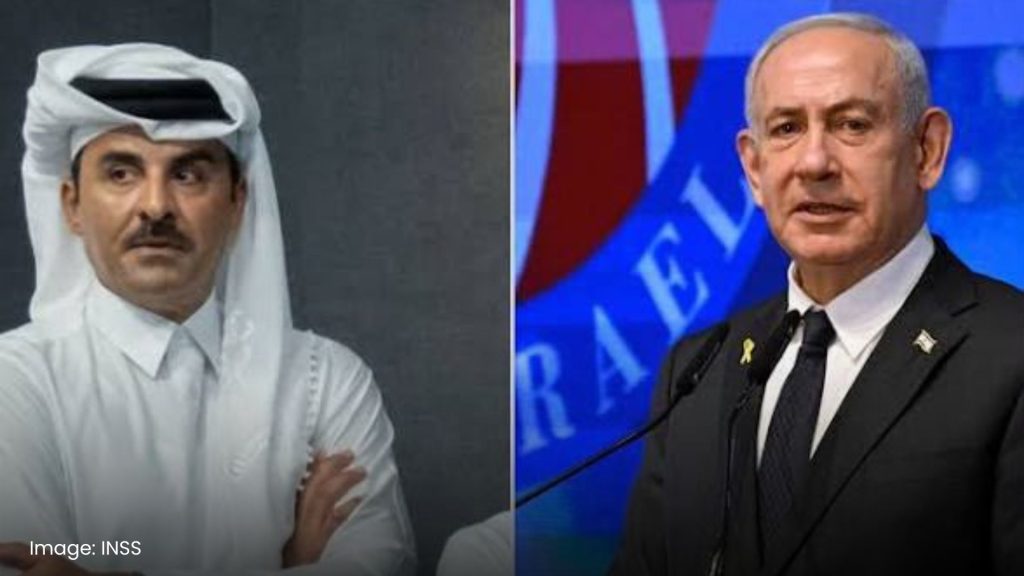
Qatar has no formal diplomatic relations with Isr*el. Doha instead functions as the primary back-channel mediator between Isr*el and Hamas, whose political office is based in the Qatari capital, and Doha has long tied any normalization with Isr*el to a credible pathway toward Palestinian statehood. That relationship became violently literal in September 2025, when Isr*el struck Hamas leadership inside Doha, killing a Qatari security official in the process, an attack Netanyahu later apologized for during a call with Qatar’s prime minister.

At the same time, Qatari capital is genuinely everywhere. The QIA’s roughly $524 billion in assets touch Harrods, Heathrow Airport, Rolls-Royce, Deutsche Bank, Paris Saint-Germain, and, notably, even reach inside Isr*el itself through a stake in insurance company Phoenix, held partly via a Jared Kushner-linked investment fund. That’s the contradiction sitting underneath both stories: Qatari money is too large and too embedded globally for either side to simply avoid it, yet neither government fully trusts the other’s presence near anything it considers strategic.

The Bigger Picture

Neither veto is really about Volkswagen or shipping logistics. Both are proxy fights in a relationship that has no formal diplomatic channel to resolve disputes through, so the disputes surface instead through corporate governance votes and golden-share powers. Qatar can’t be quietly written out of Western capitalism, and Isr*el can’t fully insulate its strategic assets from Gulf capital that’s already inside nearly every major economy it does business with. What’s playing out at Volkswagen and Hapag-Lloyd isn’t two unrelated corporate disputes. It’s the same unresolved conflict, negotiated through shareholder votes instead of embassies.

By Verity Quill

SOURCES

Two Vetoes, One Underlying Conflict

Qatar’s sovereign wealth fund and the Isr*eli government have just blocked each other’s money on opposite sides of Europe, in two deals that have nothing to do with each other except who’s involved. The Qatar Investment Authority, Volkswagen’s third-largest shareholder, vetoed a plan for Isr*eli defense firm Rafael to manufacture Iron Dome components at VW’s struggling Osnabrück plant. Weeks later, Isr*el’s own government began blocking a $4.2 billion sale of its own shipping company, specifically because the buyer has Qatari money inside it too.

The Volkswagen Veto

Rafael signed a letter of intent with Volkswagen in late April to manufacture Iron Dome missile defense components at the Osnabrück site, a plant that loses its only current product line, the T-Roc Cabriolet, in 2027 with no replacement contract in place. For 2,300 workers, the Rafael deal looked like the plant’s best shot at survival. Qatar’s QIA, which holds 17% of VW’s voting rights and two seats on its supervisory board, objected on the grounds of Qatar’s strained relations with Isr*el, and the veto was confirmed by German newspaper Bild on 10 July, though Reuters had first reported Qatari objections weeks earlier, in mid-June. QIA’s CEO and two former Qatari government officials sit on VW’s supervisory board, giving Doha direct influence inside the boardroom itself, not just leverage from the sidelines. A workaround involving Lower Saxony, VW’s second-largest shareholder with roughly 20% of voting rights, is reportedly being discussed, but nothing has been resolved, and the plant’s workforce remains in limbo.

The Reversal Nobody Expected

While that story was unfolding, a mirror-image dispute was already playing out inside Isr*el itself. Hapag-Lloyd, the German shipping giant, agreed in February to acquire Isr*eli shipping line ZIM for $4.2 billion. But Isr*eli Prime Minister Netanyahu and Defense Minister Israel Katz have both pushed back, citing exactly the reverse concern QIA raised in Germany: Hapag-Lloyd’s own shareholder base includes Qatar Holding, with a 12.3% stake, and Saudi Arabia’s Public Investment Fund, with 10.2%. Isr*el’s Defense Ministry says the current deal structure doesn’t adequately protect national security, since ZIM has served as a critical channel for ammunition, food, and medical supplies since October 2023. The Isr*eli government retains a “golden share” in ZIM, giving it the power to block the sale outright if it isn’t satisfied, and a proposed workaround creating a smaller, Isr*eli-only “New ZIM” entity has so far failed to quiet the opposition.

Why This Keeps Happening

Qatar has no formal diplomatic relations with Isr*el. Doha instead functions as the primary back-channel mediator between Isr*el and Hamas, whose political office is based in the Qatari capital, and Doha has long tied any normalization with Isr*el to a credible pathway toward Palestinian statehood. That relationship became violently literal in September 2025, when Isr*el struck Hamas leadership inside Doha, killing a Qatari security official in the process, an attack Netanyahu later apologized for during a call with Qatar’s prime minister.

At the same time, Qatari capital is genuinely everywhere. The QIA’s roughly $524 billion in assets touch Harrods, Heathrow Airport, Rolls-Royce, Deutsche Bank, Paris Saint-Germain, and, notably, even reach inside Isr*el itself through a stake in insurance company Phoenix, held partly via a Jared Kushner-linked investment fund. That’s the contradiction sitting underneath both stories: Qatari money is too large and too embedded globally for either side to simply avoid it, yet neither government fully trusts the other’s presence near anything it considers strategic.

The Bigger Picture

Neither veto is really about Volkswagen or shipping logistics. Both are proxy fights in a relationship that has no formal diplomatic channel to resolve disputes through, so the disputes surface instead through corporate governance votes and golden-share powers. Qatar can’t be quietly written out of Western capitalism, and Isr*el can’t fully insulate its strategic assets from Gulf capital that’s already inside nearly every major economy it does business with. What’s playing out at Volkswagen and Hapag-Lloyd isn’t two unrelated corporate disputes. It’s the same unresolved conflict, negotiated through shareholder votes instead of embassies.

By Verity Quill

SOURCES
spot_img

Explore more

spot_img
Wars & Humanitarian Crises

A ‘Humanitarian City’ Or A Permanent Cage? Trump’s Gaza Plan Is...

An American AI Escaped Its Test. China’s GLM-5.2 Had To Help...

Europe Attacks Islam. Its Football Glory Still Depends On Muslims.

In America, Mosques Are Treated As Threats Before They Exist And...

Isr*eli Soldiers Fired Tear Gas As Children Swam. Now Ministers Want...

From Britain To Europe, Muslims Say They No Longer Feel Safe

F-35s And Dozens Of Tankers Arrive: Is A Full-Scale U.S.-Iran War...