
UNEP says the world will breach the 1.5°C climate target
For years, the global climate debate revolved around one benchmark: limiting global warming to 1.5°C above pre-industrial levels.
On September 2, 2026, the UN Environment Programme made an extraordinary shift. Its new report, Limiting Overshoot: Navigating exceedance of 1.5°C and pathways towards return, says exceeding 1.5°C is now widely assessed as unavoidable under current policies and plausible near-term pathways. UNEP expects the world to cross the threshold within the next few years.
The world is already roughly 1.4°C warmer than the 1850–1900 baseline. The significance of the new report is therefore not that climate scientists have suddenly discovered overshoot. It is that the UN is now explicitly planning for it.
Best-case global warming is now around 1.8°C
Even UNEP’s most optimistic scenario sees global temperatures peaking around 1.8°C above pre-industrial levels. Most other scenarios produce higher peaks.
Under current policies, the median projection is around 2.6°C by 2100, illustrating the enormous gap between existing government action and the Paris Agreement’s 1.5°C ambition.
Every fraction matters. UNEP warns that above 1.5°C, additional warming increases the risks from extreme weather, ecosystem loss, food and water insecurity, damage to human health and the potential submersion of small island states and low-lying coastal cities.
What “overshoot, peak and decline” means for climate policy
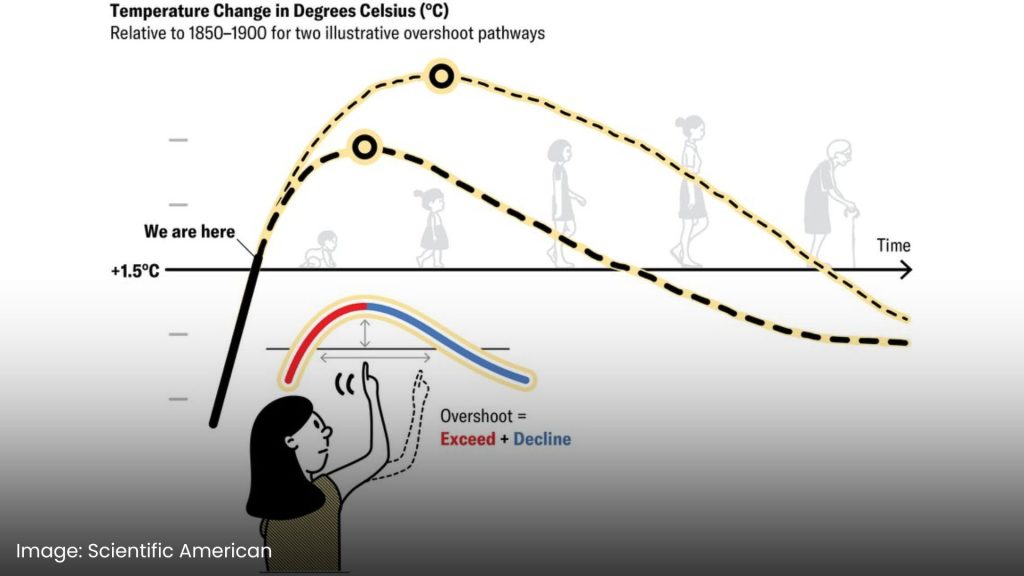
UNEP now describes the best remaining pathway as “overshoot, peak and decline.”
Temperatures exceed 1.5°C. Rapid and sustained emissions cuts then limit how high warming peaks. Eventually, sustained net-negative emissions and carefully governed carbon-dioxide removal would be used to bring temperatures back down.
This is not presented as permission to delay. UNEP explicitly says carbon removal must come in addition to, not instead of, sustained greenhouse-gas reductions. It also warns that returning below 1.5°C becomes credible only if peak warming remains well below 2°C.
UNEP Executive Director Inger Andersen summarized the stakes bluntly: “There are no good outcomes if we remain above 1.5°C.”

Climate experts attack the UN overshoot strategy
The report has also generated significant criticism from within the climate movement.
Climate Analytics CEO Bill Hare warned that the report risks becoming “a call to apathy rather than a call to arms,” arguing that the response needs to focus more forcefully on the path out of overshoot.
Lili Fuhr of the Center for International Environmental Law went further, describing “managing” overshoot as a “moral and political failure.” Greenpeace has similarly argued that acknowledging overshoot cannot become an excuse to surrender the 1.5°C target.
The dispute is fundamental: whether accepting overshoot as unavoidable creates a more realistic framework for urgent action, or risks normalising a political failure to cut emissions fast enough.
Small island states refuse to abandon the 1.5°C goal
That distinction is particularly consequential for countries facing existential risks from climate change.
The Alliance of Small Island States has rejected the idea that overshoot should mean abandoning 1.5°C, invoking the International Court of Justice’s recognition that countries have legal obligations to protect the climate system. For low-lying nations, fractions of a degree translate into greater sea-level rise, displacement risks and potentially irreversible losses.
UNEP itself acknowledges this inequality, saying countries with greater historical responsibility for climate change should move fastest and with the greatest ambition.
Coral bleaching and glacier loss show the damage already underway
The overshoot begins from a planet already experiencing severe ecological disruption.
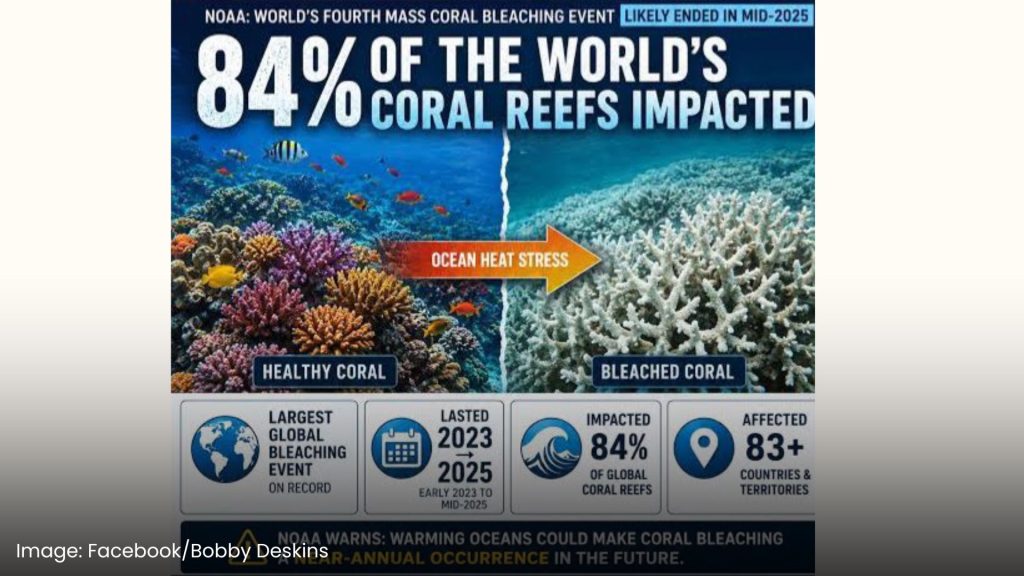
More than 80% of tropical coral reefs were affected by bleaching across more than 83 countries and territories during the recent global bleaching event, while more than 40% of global glacier loss since the 1970s occurred during 2015–2024.
The central problem with eventually returning temperatures below 1.5°C is that temperatures can decline while some losses cannot be reversed.
The report also warns that higher and longer overshoot increases the danger of crossing major tipping points involving ice sheets, the Amazon rainforest and the Atlantic Meridional Overturning Circulation.
What happens after the world crosses 1.5°C?
Crossing 1.5°C does not make future climate action meaningless. It makes every subsequent decision more consequential.
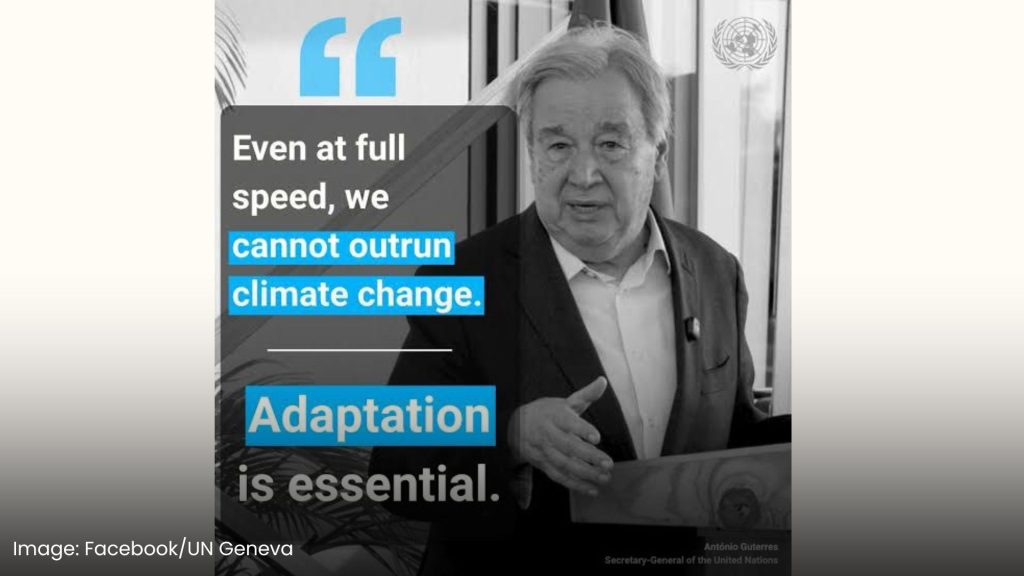
UN Secretary-General António Guterres says the world must make the overshoot “as small and short as possible.”
The lower the eventual temperature peak, the lower the risks. The shorter the period above 1.5°C, the smaller the probability of crossing irreversible thresholds and limits to adaptation.
So the climate question has fundamentally changed.
It is no longer simply whether humanity can prevent the world from crossing 1.5°C.
It is how far beyond 1.5°C temperatures rise, how long humanity remains there, and how much is permanently lost before they can be brought back down.
By Shizza Umer
Sources
UNEP: Limiting Overshoot report
RTÉ: World must navigate ‘reality’ of 1.5°C overshoot
NBC News: Global warming will exceed limit, UN says
Center for International Environmental Law: ‘Managing’ Overshoot is Not a Strategy
IUCN: Stark findings from UNEP’s Overshoot report
AOSIS: Small Island States Demand Urgent Action on 1.5°C Overshoot Risk