Trump–Xi Summit in Beijing Should Put AI on the Table

Trump–Xi Summit and the AI Question

A High-Stakes Diplomatic Meeting

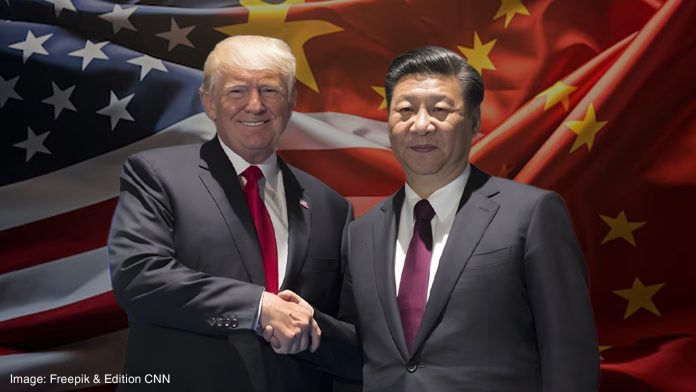
The Trump–Xi summit in Beijing comes at a critical moment for global politics, with discussions expected around trade tensions, security concerns, and broader geopolitical stability. The meeting reflects growing friction between the United States and China as both powers compete for influence across economic and strategic domains.

AI as a Strategic Blind Spot

Despite its rising importance, artificial intelligence is not always treated as a central diplomatic issue. However, many analysts argue that it should be. AI is now embedded in military systems, cyber operations, financial markets, and industrial production, making it a core component of national power rather than just a technological tool.

Why AI Should Be on the Table

The United States currently leads in advanced AI model development and semiconductor innovation, while China is rapidly expanding AI deployment across state and industrial infrastructure. This divergence increases the risk of strategic imbalance. Without coordination, AI competition could intensify cyber risks, military escalation, and economic disruption.

Key Issues That Cannot Be Ignored

Experts suggest the summit should address AI safety standards, export controls on advanced chips, and the development of communication channels to prevent accidental escalation involving autonomous systems. Military applications of AI, in particular, raise concerns about speed, accountability, and control in crisis situations.
A Defining Global Moment

Trump–Xi Summit and the AI Question

Maryam Tariq

A High-Stakes Diplomatic Meeting

The Trump–Xi summit in Beijing comes at a critical moment for global politics, with discussions expected around trade tensions, security concerns, and broader geopolitical stability. The meeting reflects growing friction between the United States and China as both powers compete for influence across economic and strategic domains.

AI as a Strategic Blind Spot

Despite its rising importance, artificial intelligence is not always treated as a central diplomatic issue. However, many analysts argue that it should be. AI is now embedded in military systems, cyber operations, financial markets, and industrial production, making it a core component of national power rather than just a technological tool.

Why AI Should Be on the Table

The United States currently leads in advanced AI model development and semiconductor innovation, while China is rapidly expanding AI deployment across state and industrial infrastructure. This divergence increases the risk of strategic imbalance. Without coordination, AI competition could intensify cyber risks, military escalation, and economic disruption.

Key Issues That Cannot Be Ignored

Experts suggest the summit should address AI safety standards, export controls on advanced chips, and the development of communication channels to prevent accidental escalation involving autonomous systems. Military applications of AI, in particular, raise concerns about speed, accountability, and control in crisis situations.

A Defining Global Moment

The summit represents more than bilateral diplomacy. It reflects a shift in global power where artificial intelligence is becoming a defining factor in international stability. Whether formally included or not, AI is now impossible to separate from global strategic negotiations.

Sources: Australian Broadcasting Corporation \ Reuters \ The Guardian \  CNBC \ Associated Press
Trump–Xi Summit and the AI Question

A High-Stakes Diplomatic Meeting

The Trump–Xi summit in Beijing comes at a critical moment for global politics, with discussions expected around trade tensions, security concerns, and broader geopolitical stability. The meeting reflects growing friction between the United States and China as both powers compete for influence across economic and strategic domains.

AI as a Strategic Blind Spot

Despite its rising importance, artificial intelligence is not always treated as a central diplomatic issue. However, many analysts argue that it should be. AI is now embedded in military systems, cyber operations, financial markets, and industrial production, making it a core component of national power rather than just a technological tool.

Why AI Should Be on the Table

The United States currently leads in advanced AI model development and semiconductor innovation, while China is rapidly expanding AI deployment across state and industrial infrastructure. This divergence increases the risk of strategic imbalance. Without coordination, AI competition could intensify cyber risks, military escalation, and economic disruption.

Key Issues That Cannot Be Ignored

Experts suggest the summit should address AI safety standards, export controls on advanced chips, and the development of communication channels to prevent accidental escalation involving autonomous systems. Military applications of AI, in particular, raise concerns about speed, accountability, and control in crisis situations.

A Defining Global Moment

Trump–Xi Summit and the AI Question

Maryam Tariq

A High-Stakes Diplomatic Meeting

The Trump–Xi summit in Beijing comes at a critical moment for global politics, with discussions expected around trade tensions, security concerns, and broader geopolitical stability. The meeting reflects growing friction between the United States and China as both powers compete for influence across economic and strategic domains.

AI as a Strategic Blind Spot

Despite its rising importance, artificial intelligence is not always treated as a central diplomatic issue. However, many analysts argue that it should be. AI is now embedded in military systems, cyber operations, financial markets, and industrial production, making it a core component of national power rather than just a technological tool.

Why AI Should Be on the Table

The United States currently leads in advanced AI model development and semiconductor innovation, while China is rapidly expanding AI deployment across state and industrial infrastructure. This divergence increases the risk of strategic imbalance. Without coordination, AI competition could intensify cyber risks, military escalation, and economic disruption.

Key Issues That Cannot Be Ignored

Experts suggest the summit should address AI safety standards, export controls on advanced chips, and the development of communication channels to prevent accidental escalation involving autonomous systems. Military applications of AI, in particular, raise concerns about speed, accountability, and control in crisis situations.

A Defining Global Moment

The summit represents more than bilateral diplomacy. It reflects a shift in global power where artificial intelligence is becoming a defining factor in international stability. Whether formally included or not, AI is now impossible to separate from global strategic negotiations.

Sources: Australian Broadcasting Corporation \ Reuters \ The Guardian \  CNBC \ Associated Press
spot_img

Explore more

spot_img
Global Affairs

Israel Faces Rare US Warning as Trump Administration Pushes Iran Deal...

Trump Called the Iran War a Win. Here Is What the...

Al Jazeera Cameraman Killed in Gaza Strike as Press Safety Concerns

US Italy diplomatic tensions

Natasha Doll Trend

US Iran diplomacy handshake

Drone attack threat

US Went to War and Then Chose Peace, Both on June...